Connect with us
Anglostratits

Business

GITEX AFRICA 2024 powers cross continental quest for an Artificial Intelligence (AI) future as region prepares for new digital era

Published

on

GITEX AFRICA

70 percent surge in year-on-year growth at Africa’s largest tech and start-up show in Morocco supercharges the epic African race to define its own digital dynasty

MARRAKECH, Morocco, May 16, 2024/APO Group/ — 

Africa’s meteoric rise as an emergent international force in digital transformation coupled with the epic AI opportunity sweeping the globe is set to propel a new era of public-private sector investment collaboration when the continent’s largest tech and start-up event opens in Morocco this month.

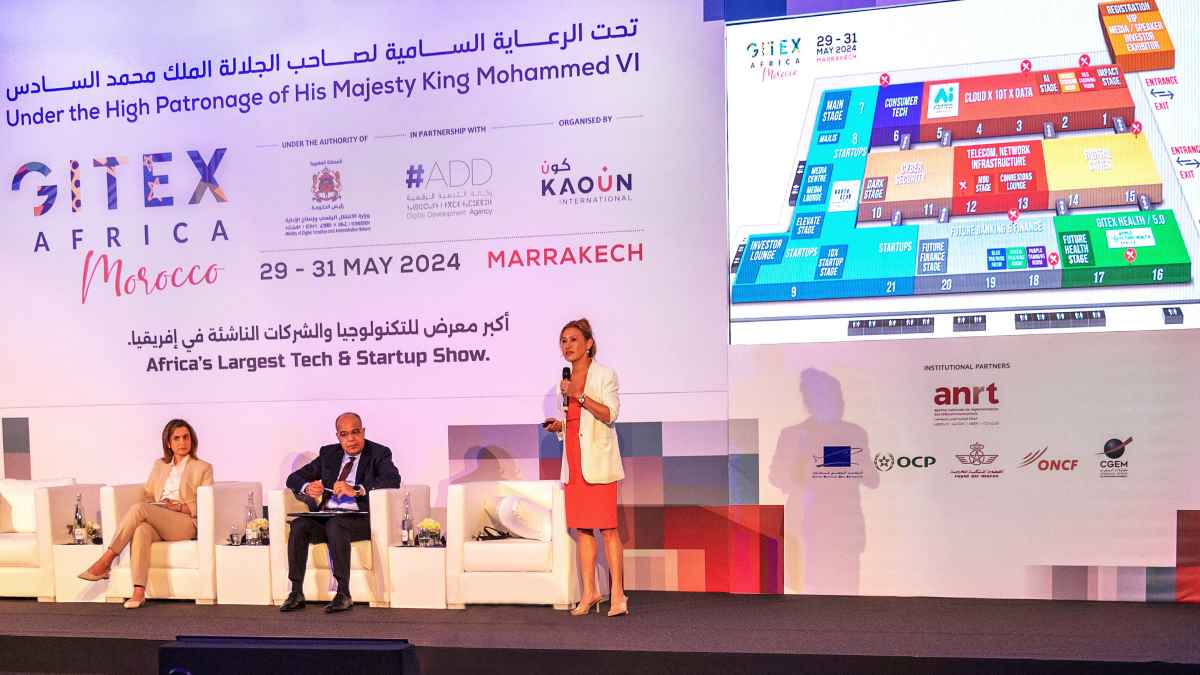
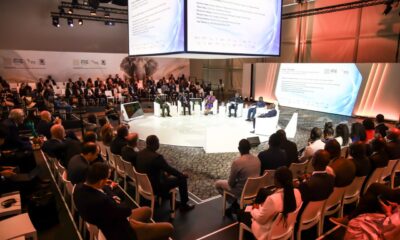
The 2nd edition of GITEX AFRICA, from 29-31 May 2024 in the vibrant city of Marrakech, shall converge global leaders and experts, governments, businesses, big tech, start-ups, investors, and academia from 130 countries to catalyse partnerships and advance the future ambitions of a continent determined to elevate its entrepreneurial innovation economy.

Under the High Patronage of His Majesty King Mohammed VI of the Kingdom of Morocco, May God Assist Him, GITEX AFRICA is held under the authority of the Moroccan Ministry of Digital Transition and Administration Reform in partnership with the Digital Development Agency (ADD).

Africa’s blockbuster tech showpiece event is organised by KAOUN International, the overseas affiliate of Dubai World Trade Centre (DWTC), which organises GITEX GLOBAL in the UAE, the world’s largest and most trusted tech and start-up event.

With the final preparations underway for a purpose-built mega venue in the heart of Marrakech, GITEX AFRICA 2024 will span 21 halls featuring 1,400 international exhibiting companies – a 70 percent year-on-year increase over the event’s record-breaking debut 2023. 

This is the year of the AI phenomenon and its tantalising all-purpose capabilities to transform diverse sectors, from cybersecurity, cloud and IoT, to finance, telecoms, agriculture, and education, amplifying hopes of greater prosperity in the world’s second most populous continent.  AI’s impact on health tech has also spurred the launch of World Future Health Africa, accelerating the continent’s ascending digital health revolution.

More than 700 of the most outstanding global start-ups from 45 countries, including 200 Moroccan start-ups, will also feature at GITEX AFRICA’s North Star Africa start-up showcase, turbo-charging a great investment revival in a resilient and vibrant start-up ecosystem that is estimated to raise US$10 billion in VC funds by 2025.

These award-winning game-changers will connect with 350 investors from 35 countries with US$200 billion worth of assets under management. Now the vital barometer of tech’s massive cross-continental advances, GITEX AFRICA 2024 shall unify the global tech community’s commitment to accelerate a responsible future in the world’s burgeoning Silicon Valley. 

Addressing media at the show’s official preview press conference this Wednesday, May 15, was H.E Dr Ghita Mezzour, Minister of the Moroccan Ministry of Digital Transition and Administration Reform; Sidi Mohammed Drissi Melyani, the General Director of ADD; and Trixie LohMirmand, CEO of organiser KAOUN International.

In attendance were GITEX AFRICA’s official institutional partners: the ANRT (Moroccan National Telecommunications Regulatory Agency), ONDA (National Airports Office), OCP, Royal Air Maroc, ONCF (Moroccan National Railway Office), and the General Confederation of Moroccan Enterprises (CGEM).

The second edition of GITEX AFRICA Morocco falls within the framework of the unwavering efforts made by our country in the field of digital transition

Ms. Ghita Mezzour, Moroccan Minister of Digital Transition and Administration Reform, said: “The second edition of GITEX AFRICA Morocco falls within the framework of the unwavering efforts made by our country in the field of digital transition, in alignment with the Royal Directives of His Majesty King Mohammed VI, May God Assist Him, who stressed on the importance to optimally leverage the enormous development opportunities digital transition provides for African countries.” Adding: “This edition will further consolidate Morocco’s position as a regional digital hub, thus creating an environment conducive to attracting more investments and stimulating job creation. “

Mr. Sidi Mohammed Drissi Melyani, said: “This 2nd edition of GITEX AFRICA Morocco is even more ambitious and inclusive, as it responds first and foremost to the enthusiasm it has aroused around the world, and in more ways than one has affirmed Morocco’s positioning as a key hub in the world of technological innovation and the attractiveness of foreign investment in the promising digital sector. This year, just as many themes and sector niches will be highlighted, such as AI, reflecting the growing interest in the new global professions of technological innovation”.

Igniting talent development, catalysing a Pan-African tech rush

AI’s existential prospects and ability to leap-frog traditional barriers of economic development in Africa will dominate discussions at GITEX AFRICA 2024, catalysing a trans-continental tech rush across diverse industries, from cloud and IOT, cybersecurity, digital health, and future finance, to consumer tech, digital cities, and telecoms.

Tech leaders estimate the AI boom will add US$1.2 trillion to Africa’s economy by 2030, boosting the continent’s GDP by 5.6 percent, and accelerating the need for urgent digital discourses to deploy the shape shifting tech that is both sustainable and ethical.

Trixie LohMirmand, CEO of KAOUN International, said: “The recent developments in AI have created new opportunities and impetus for Africa in its digital transformation mission.

“Hosted in a continent adept at leapfrogging in critical industries, GITEX AFRICA Morocco presents governments, business leaders and talents with unparalleled access to new information and expert knowledge, and big opportunities in digital convergence. This shall empower them to co-create new strategies and solutions for the betterment of society.”

Government ministers, digital visionaries tackle Africa’s pressing tech challenges   

Africa’s most progressive leadership conference programme will meanwhile gather 450-plus speakers from 70 countries, to debate, scrutinise, and tackle the greatest tech challenges and opportunities in the world’s second largest continent with bold ambitions to co-create and define its own Pan-African digital roadmap.

The GITEX AFRICA Digital Summit returns, leading ten conference stages comprising 280-plus hours of mind-stretching content advancing Africa’s digital movement. Impactful agendas will explore government policy and regulation, connectivity, digital cities and future finance, cybersecurity and health tech’s transformative opportunity, along with fast-tracking the world’s most exciting start-up ecosystem and challenging the realities of AI mania.

GITEX AFRICA 2024 is open from 10:00am to 6:00pm. Admission is for pre-registered trade professionals only with a special invitation for students aged 16 years and older on day three. More information is available at www.GITEXAFRICA.com.

Distributed by APO Group on behalf of GITEX Africa.

Energy

Guyana Confirmed to Host Caribbean Energy Week 2027 as Regional Energy Integration Gains Momentum

Published

on

Guyana

The second annual Caribbean Energy Week will take place in July 2027 in Guyana under the patronage of President Dr. Mohamed Irfaan Ali and the endorsement of The Honorable Minister of Natural Resources Vickram Bharrat, bringing together global investors and regional leaders to advance oil, gas and LNG development

GEORGETOWN, Guyana, May 25, 2026/APO Group/ –The second annual Caribbean Energy Week (CEW) will take place in Guyana in July 2027, convening regional governments, international energy companies and investors at a pivotal moment for the Caribbean’s emergence as a global energy hub. Held under the patronage of President Dr. Mohamed Irfaan Ali and with the endorsement of The Honorable Minister of Natural Resources Vickram Bharrat, the event highlights the country’s growing leadership in shaping the region’s energy future.


Under the theme, “Unlocking the Caribbean Energy Corridor: Oil, Gas, LNG & Investment for a New Global Hub,” CEW 2027 will focus on transforming the Caribbean from a set of fragmented markets into an integrated, globally competitive energy corridor. Central to this vision is deeper cross-border collaboration, accelerated infrastructure development and increased capital flows across the oil, gas and LNG value chains.

We are seeing unprecedented upstream growth in Guyana, major project development in Suriname and renewed momentum around regional gas and LNG integration in Trinidad and Tobago

Momentum across the region continues to build. In Guyana, offshore production from the ExxonMobil-led Stabroek Block averaged approximately 914,000 barrels per day in the first quarter of 2026, with output expected to exceed one million barrels per day following the startup of the Uaru development. At the same time, upstream expansion remains robust, supported by new seismic campaigns, FPSO developments and ongoing work tied to the Longtail project. In neighboring Suriname, TotalEnergies is advancing its $10.5 billion GranMorgu offshore development alongside new exploration activity, underscoring sustained investor confidence in the Guyana-Suriname Basin and reinforcing the region’s long-term growth trajectory.

In Trinidad and Tobago, the focus is shifting toward revitalizing mature gas production through new upstream partnerships and cross-border developments, including progress on projects such as Manatee and increased collaboration with Venezuela to unlock stranded reserves. At the same time, the country is advancing efforts to expand its LNG and petrochemical value chains, positioning itself to remain a key gas processing and export hub in the Atlantic Basin.

“We are seeing unprecedented upstream growth in Guyana, major project development in Suriname and renewed momentum around regional gas and LNG integration in Trinidad and Tobago,” said James Chester, CEO of Energy Capital & Power, the event organizer. “Caribbean Energy Week 2027 is about connecting those opportunities – bringing together governments, operators and investors to unlock a truly integrated energy corridor that can compete on the global stage.”

The inaugural Caribbean Energy Week in 2026 laid a strong foundation, attracting more than 400 attendees and over 90 companies, alongside high-level ministers and industry leaders from across the region and beyond. Hosted in Paramaribo, the event facilitated critical dialogue on cooperation, investment and infrastructure, while also serving as a platform for deal-making and knowledge exchange.

Building on this momentum, CEW 2027 is set to expand in both scale and impact, offering a premier platform for strategic dialogue, project showcases and investment engagement. As global demand for diversified energy supply grows, the Caribbean is increasingly well-positioned to play a central role – one defined by collaboration, connectivity and opportunity.

Distributed by APO Group on behalf of Energy Capital & Power.

Continue Reading

Business

Venezuela Under Rodriguez: Turning Back Toward Stability and Opportunity (By NJ Ayuk)

Published

on

African Energy Chamber

Venezuela possesses the world’s largest proven oil reserves, estimated at approximately 303 billion barrels or roughly 17% of global totals, with a value equating to tens of trillions of dollars

JOHANNESBURG, South Africa, May 25, 2026/APO Group/ —By NJ Ayuk, Executive Chairman, African Energy Chamber (https://EnergyChamber.org).

Just a decade ago, many had written off the Venezuelan oil industry and, by extension, Venezuela itself, determining that it was on the brink of an irreversible collapse. A more pessimistic view asserted that the country had already become a failed state, and it would just take some time for the rest of the world to see it for themselves.

On January 3, 2026, when U.S. Special Forces carried out strikes against military targets in northern Venezuela and a raid of the presidential compound in Caracas, culminating in the capture and extradition of President Nicolás Maduro and his wife to the US.  Numerous analysts predicted the shocking and sudden upheaval would inevitably result in violent civil conflict and an even greater economic disaster for a country already battered by years of economic embargoes and chaos.

In retrospect, the fallout from Maduro’s arrest and removal proved much less severe than experts predicted, and Delcy Rodríguez’s transition from executive vice president to acting president in Maduro’s absence moved forward without much turbulence.

A little less than two months later, together with my team from the African Energy Chamber (AEC), I was able to meet with President Rodríguez in Caracas. It is my great pleasure to report that we did not encounter an administration mired in uncertainty and instability but rather one demonstrating optimism and a clear sense of renewal.

Venezuela is in very good hands under President Rodríguez, who personally expressed to us her firm commitment to recovery through reforms and new partnerships.

Resurrecting a Powerhouse

Venezuela possesses the world’s largest proven oil reserves, estimated at approximately 303 billion barrels or roughly 17% of global totals, with a value equating to tens of trillions of dollars. From its most recent peak of roughly 3.5 billion barrels per day (bpd) in the late 1990s, Venezuelan oil production suffered a steep decline to 2.6 million bpd over the next few years when a 2002 strike at the national oil company Petróleos de Venezuela, S.A. (PDVSA) motivated then-President Hugo Chavez to replace nearly half the company’s workforce. While initially production remained steady at that lower rate under President Maduro, elected after Chavez’s death in 2013, the subsequent crash in global oil prices marked the start of further declines that saw production rates eventually hit new lows of only 300,000-400,000 bpd in 2020.

Production has since rebounded to about 1 million bpd as of early 2026.

With a continuation of the stability found under the Rodríguez administration, along with simplified regulations, Venezuela can attract the level of investment required to bolster production rates even further. Though it would be a best-case scenario, with these elements in place, experts project that, within a decade, Venezuela could see the return of a 2.5 million bpd output and even the historical peaks of 3.5 million bpd achieved in the 1990s. But all signals indicate that President Rodríguez is earnestly committed to that very outcome.

In January, President Rodríguez (who held the additional role of Venezuela’s oil minister until March) overhauled the country’s Organic Hydrocarbons Law, deregulating the energy sector in a move that is expected to draw in USD1.4 billion in investments this year alone.

This reform bill, while it maintains state ownership of reservoirs, eases up on the terms that once mandated a majority stake and operational control for PDVSA in joint ventures. Through what the reforms describe as “production participation contracts” — effectively a production-sharing model — the bill also grants private firms more autonomy in exploration, production, and commercialization. Other attractive changes address royalty caps, taxation, and independent/foreign dispute resolution.

In a nutshell, President Rodríguez’s reforms slash at the bureaucracy that has been keeping Venezuela from realizing its true energy potential. She has cut red tape and rollout the red carpet to energy investors and Venezuela stands to win.

President Rodríguez has also proven herself as a reliable collaborator.

By maintaining Venezuela’s commitments to OPEC, especially through the political upheaval of the past five months, President Rodríguez has done her part in supporting the stability of the global oil market while preserving her country’s beneficial ties to the other OPEC countries. Furthermore, the Rodríguez administration’s vision for Venezuela’s rebound extends beyond oil.

Venezuela’s natural gas reserves, estimated at roughly 200 trillion cubic feet (Tcf), rank the country’s holdings among the world’s largest, and President Rodríguez plans to develop these resources to their fullest.

President Rodríguez’s reforms slash at the bureaucracy that has been keeping Venezuela from realizing its true energy potential

While Venezuela’s Organic Hydrocarbons Law regulates gas associated with crude oil production, the separate Gaseous Hydrocarbons Law governs non-associated gas and offers even more flexibility on private ownership stakes and trading activities than regulations that apply to oil.

The Rodríguez administration intends to leverage these conditions to monetize offshore non-associated gas fields such as Dragon, Loran-Manatee, and Perla through partnerships with international majors like Shell, BP, Eni, and Repsol. Plans are also in place to ramp up pipeline exports to Trinidad and Tobago and to capture gas at sites where it is currently being flared to both reduce waste and supply domestic power generation.

With the rise of AI data centers increasing the demand for electricity production the world over, these strategies should attract a great deal of foreign investment to Venezuela and generate revenue at a quicker pace than many large-scale oil projects, all while improving the reliability of the national grid and positioning the country as a significant contributor to global supply.

What This Means for Africa

For decades, Venezuela has demonstrated a willingness to ally with African oil-producing nations. With one of the highest proportions of African ancestry among the Spanish-speaking countries of Latin America, there is a deep admiration for Africa in Venezuela, and the nation has been consistent in its support for the rights of African producers to drill in their own territories in the battle against energy poverty. Even years before the foundation of OPEC, it was Venezuelan representatives who expressed a desire to coordinate with Africa’s sovereign, developing oil producers to collaborate on global petroleum policies. When the organization officially formed in 1960, Libya was the first African nation invited into the fold only two years later. Both the Chávez and Maduro administrations even went so far as to establish numerous state-sponsored promotions of the Afro-Venezuelan identity including the creation of a Vice Ministry for African Relations and additional Venezuelan embassies throughout Africa. Venezuela was also among the first countries to indicate interest in supporting or hosting concepts related to the Africa Energy Bank, underscoring its commitment to African energy sovereignty.

This same welcoming disposition is alive and well in Venezuela today, as our recent AEC trip to the nation’s capital confirmed.

During our delegation’s visit, we engaged directly with PDVSA leadership, energy ministers, and President Rodríguez herself. The warmth of their reception and the clarity of their vision left a lasting impression.

The Venezuelan officials we met with emphasized an openness to African participation across all facets of production, and President Rodríguez has been fully open to African investments in and beyond oil. She was eager to formalize cooperation, which would include dedicated programs to train African professionals at Venezuela’s renowned Universidad Venezolana de los Hidrocarburos (UVH), which has now opened itself specifically to such initiatives.

In the end, we signed a landmark memorandum of understanding, committing both Venezuela and the AEC to working towards increased investment, trade, technology exchange, and human capital development among numerous other items.

This potential trading partnership, especially regarding natural gas, holds profound significance for Africa, where approximately 600 million people lack access to electricity, and nearly 1 billion still rely on dangerous traditional biomass for cooking.

These inequities wreak havoc on human health and hold back development. Reliable energy from fossil fuels has proven time and again to be the most reliable bridge to modern energy access and human flourishing, and I was pleased to learn that President Rodríguez shares my passion for eradicating this deficit.

With over a century of experience in the oil and gas industry, Venezuela complements Africa as a whole. Our deep bench of producers, entrepreneurs, and international partners can work seamlessly with Venezuelan counterparts to scale up output and reduce energy poverty on both continents. It was refreshing to engage with leadership that shares this vision, and the AEC is excited to make Venezuela a key focus of our 2026 and 2027 initiatives.

African producers should seriously consider Venezuela as a strategic investment destination. The country offers world-class technical expertise, a skilled workforce, and vast proven reserves. With improving conditions in the energy sector and a government open to partnerships, Venezuela represents significant long-term potential for mutually beneficial cooperation. Strategic investments now could position African players as key partners in the country’s energy future while delivering attractive returns.

The Way Back

The approach to making Venezuela the best country for energy investments that President Rodríguez has taken since stepping into her current role is already working. In recognition of her hydrocarbons law reforms, the U.S. lifted fiscal and travel sanctions that were in place on both her and PDVSA, allowing transactions between U.S. companies and Venezuelan banks to recommence.

Other players in the global community have demonstrated confidence in Venezuela’s recovery as well. The return of major airlines like Qatar Airways, American Airlines, TAP Air Portugal, and Turkish Airlines coincided with President Rodríguez’s meetings with reportedly over 120 other multinational corporations.

This renewed confidence is perhaps most clearly visible in the energy sector, where major international oil companies have moved quickly to re-enter the Venezuelan market. Since President Rodríguez took office, Eni has signed a major agreement to relaunch the giant Junín-5 heavy oil project in the Orinoco Belt, Shell has secured deals to develop the Dragon offshore gas field and is in negotiations to develop the Carito and Pirital onshore fields, and Hunt Oil has finalized multi-billion dollar agreements to explore and produce heavy crude in the Monagas, Anzoátegui, and Barinas regions. These developments build directly on the hydrocarbons law reforms and the lifting of sanctions, signaling a return of strong international trust in Venezuela’s energy future.

Outside the administration, the everyday Venezuelans we engaged with during our stay in their country all shared a resilience, an ambition, and a commitment to rebuilding their economy. President Rodríguez is a perfect reflection of these people, and we are confident she will serve them well.

If there is one lesson we have learned since founding the AEC, it is that political stability and clear and favorable regulations create an enabling environment for the energy sector to operate at its maximum potential. With President Rodríguez at the helm, Venezuela has repositioned itself in accordance with this principle. We look forward to working with this administration as it steers the country away from becoming a cautionary tale and towards its future as an example of progress.

Distributed by APO Group on behalf of African Energy Chamber.

Continue Reading

Business

Morocco: African Development Bank Group and OCP Group Sign €450 Million Partial Credit Guarantee to Accelerate Industrial Transition

Published

on

Morocco

The signing of this agreement marks a key milestone in implementing OCP Group’s 2023–2030 investment programme

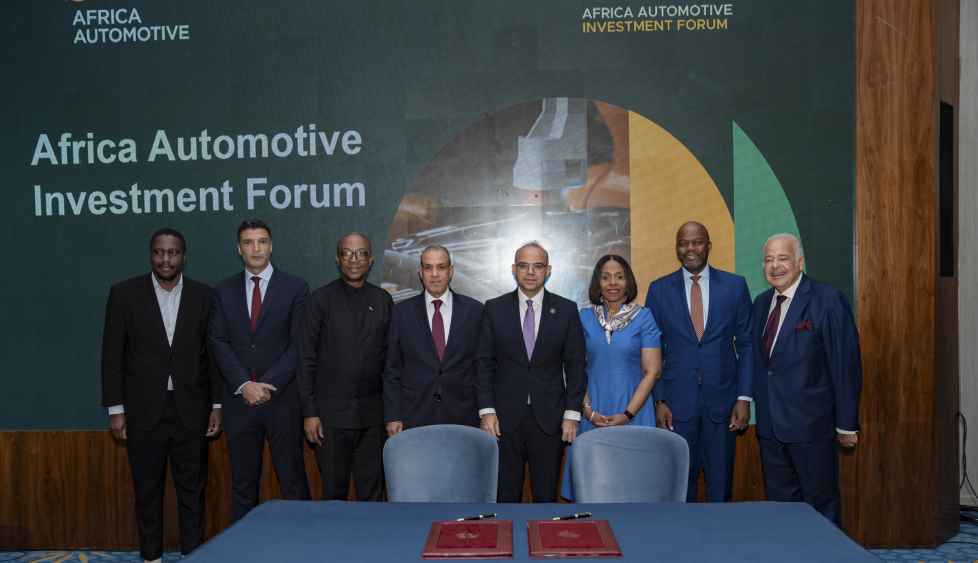
RABAT, Morocco, May 22, 2026/APO Group/ –The African Development Bank Group (https://www.AfDB.org) and OCP Group signed an agreement in Rabat on 22 May 2026 for a partial credit guarantee amounting to €450 million, aimed at supporting the investment programme of the world leader in plant nutrition solutions and phosphate-based fertilisers.

This operation is designed to facilitate the mobilisation of a €530 million green financing facility by Société générale and BNP Paribas.

The signing of this agreement marks a key milestone in implementing OCP Group’s 2023–2030 investment programme. It will help secure long-term financial resources from international financial institutions and pave the way for the effective deployment of planned investments.

Together, we are contributing to sustainable growth for Morocco, Africa, and global food security

The first mechanism of its kind in Morocco, this guarantee illustrates the African Development Bank Group’s role as a catalyst for innovative financing in support of the energy transition and sustainable water management. It aligns with OCP Group’s strategy to strengthen and modernise its value chains while supporting the resilience and sustainable transformation of Morocco’s agricultural systems.

The programme fully aligns with the African Development Bank Group’s Four Cardinal Points (https://apo-opa.co/3PWnM2X), in particular Cardinal Point 2 on large-scale capital mobilisation and Cardinal Point 4 on the development of resilient, value-creating infrastructure.

“The signing of this agreement reaffirms our commitment to OCP Group’s investment program. Leveraging our AAA credit rating, we are mobilising international capital to accelerate the development of low-carbon fertiliser production, the deployment of renewable energy, and sustainable water management. These are strategic levers in support of food security across the continent,” said Achraf Tarsim, Country Manager of the African Development Bank Group in Morocco.

For OCP Group, the agreement marks the transition to the on-the-ground implementation phase. “With this agreement, we are taking a decisive step toward a low-carbon, circular industrial model. The support of the African Development Bank Group strengthens our capacity to invest in solutions that preserve resources, protect soils, and support farmers. Together, we are contributing to sustainable growth for Morocco, Africa, and global food security,” said Younes Kchia, Chief Financial Officer of OCP Group.

The resources mobilised under this agreement will enable the launch of transformational projects focused on reducing greenhouse gas emissions, expanding renewable energy, and improving water and energy efficiency across OCP Group’s industrial facilities. They will also help promote sustainable agricultural practices, preserve soils, and strengthen food security, while supporting low-carbon industrial growth.

Distributed by APO Group on behalf of African Development Bank Group (AfDB).

Continue Reading

Trending