Connect with us
Anglostratits

Business

GE Vernova Debuts Artificial Intelligence (AI)-Powered Carbon Emissions Management Software at Power Plant in Cote D’ivoire

Published

on

GE Vernova

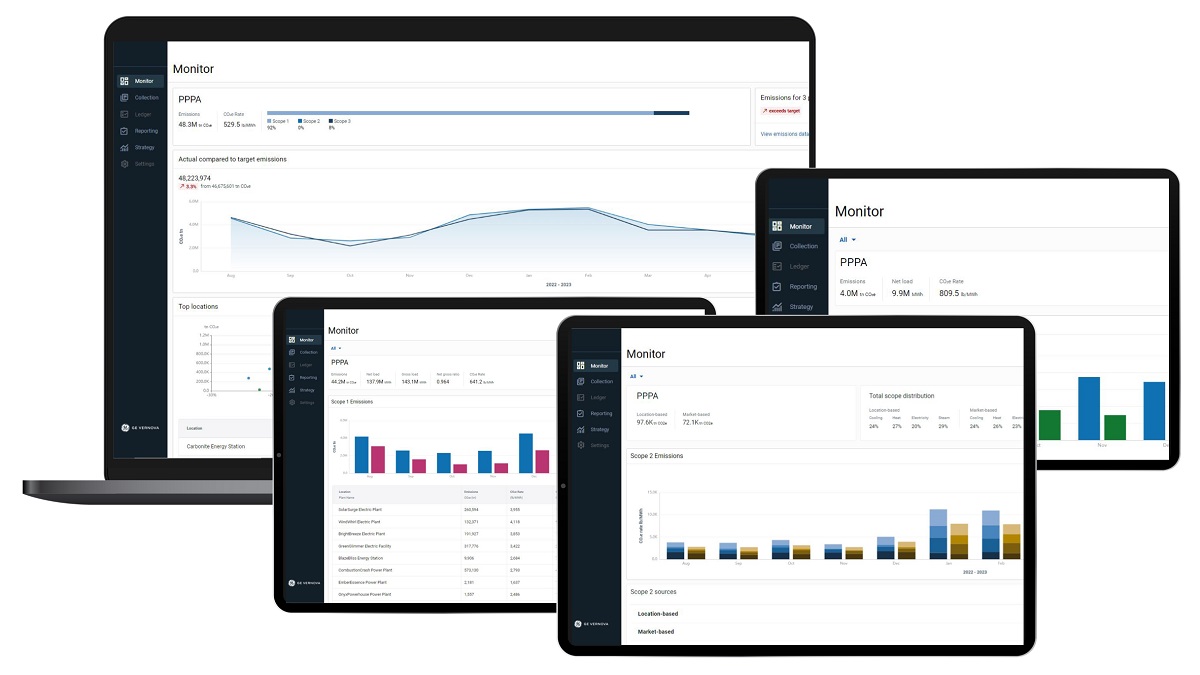
Globeleq’s Azito Energie S.A. (“Azito”), the largest gas power plant in Cote D’Ivoire, will be the first power plant to debut and deploy its carbon emissions management software, CERius™

ABIDJAN, Ivory Coast, March 26, 2024/APO Group/ — 

GE Vernova’s (www.GEVernova.comcarbon emissions management software, CERius™, will be deployed at Azito’s largest power plant in the Ivory Coast to boost accuracy of reporting; The software will harness the power of AI to empower the energy industry to meet their net-zero goals and serve as an example on how to measure, manage, and operationalize insights to help reduce carbon emissions.

Today, GE Vernova announced that Globeleq’s Azito Energie S.A. (“Azito”), the largest gas power plant in Cote D’Ivoire, will be the first power plant to debut and deploy its carbon emissions management software, CERius™, which is designed to help energy companies progress toward their net-zero goals using data precision and abatement planning capabilities. This announcement comes on the heels of more global regulations around emissions reporting, including the recent rules passed by the U.S. Securities and Exchange Commission (SEC), which seeks to require companies to report emissions for the first time.

CERius™ will use the power of artificial intelligence (AI) and machine learning (ML) to enable organizations to more accurately measure, manage, and operationalize certain insights needed to help companies track their carbon neutral emissions goals. CERius™ is engineered to automate more accurate greenhouse gas (GHG) data collection and suggest recommendations to operationalize carbon reduction efforts by offering scenario analysis, team collaboration, and standardized reporting based on GHG protocols.

CERius™ offers the fidelity of reporting emissions down to a specific asset, which can unleash actionable insights to help improve scope 1, 2, and 3 data accuracy and reporting

“One of the most effective ways to drive emissions reduction in the energy sector is to pursue digital transformation,” said, Linda Rae, General Manager, Power Generation & Oil and Gas, Electrification Software, GE Vernova. “While many energy industrials have been reporting emissions for years, the process is labor intensive, slow to surface insights, and based upon generic formulas. The energy transition demands agility, speed, and accuracy of data collection – CERius™ offers the fidelity of reporting emissions down to a specific asset, which can unleash actionable insights to help improve scope 1, 2, and 3 data accuracy and reporting, in addition to measuring abatement planning strategies,” added Rae.

Azito is a trailblazer in the digital energy space in Africa, serving as an example to other energy producers on the benefits of using digital solutions. By deploying CERius™, Azito will be not just the first company in Africa, but in the world, to access this technology and be able to better manage their emissions data, compliance reporting, and strategic planning, further contributing to their net-zero goals. Implementing cross-functional standards and processes fueled by CERius™ will help position companies to address ever-evolving regulatory compliance. “As we see the rise of environmental reporting across the energy supply chain by regulators, stakeholders, and investors, software will be a game-changer for power utilities, if applied at speed and to scale,” added Rae.

With greater access to emissions data, Azito will be able to make more informed decisions on how to reduce their carbon emissions. Azito already uses GE Vernova’s award winning Asset Performance Management (APM)[1] software’s APM Reliability Plus module, which uses advanced algorithms, AI, and ML to help predict potential failures in the power plants several weeks/days before they occur. Hence, allowing proper planning with the goal to reduce downtime which automatically translates to more productive hours and higher revenues.

Gionata Visconti, Chief Operating Officer of Globeleq, said: “As a Group that has a mixed portfolio of power plants across Africa and is fully committed to the energy transition, it is vital that we are able to monitor and report our emissions from one of our key thermal plants in a timely and accurate manner. At the same time, we can use the information from CERius™ to reduce and abate our emissions. Critically, Azito is an essential part of Cote d’Ivoire’s energy infrastructure, and we will now be able to make important planning decisions with better and more insightful data.”

The Azito power plant generates electricity using natural gas from the country’s offshore gas fields. Located in the village of Azito in the district of Yopougon, approximately 6 km west of Abidjan, the facility uses combined cycle gas turbines that generate 713 MW of electricity. This equates to approximately 30% of the country’s base load generation.

Distributed by APO Group on behalf of GE.

Business

What Angola’s Oil Reform Story Can Teach Libya’s Next Phase of Growth

Published

on

African Energy Chamber

As Libya builds on its production recovery, “Crude Oil: Power, Turnaround and Transformation in Angola” highlights how regulatory reform and policy certainty can help translate resource wealth into long-term upstream investment

CAPE TOWN, South Africa, July 3, 2026/APO Group/ –Libya’s upstream sector has staged a remarkable operational recovery, with crude production reaching approximately 1.5 million barrels per day (bpd) – its highest level in more than a decade. As the country works to sustain this momentum, strengthening the investment environment will be just as important as increasing output to attract long-term upstream capital.


While Angola and Libya have distinct political and institutional landscapes, both rank among Africa’s leading hydrocarbon producers with significant resource potential. In Crude Oil: Power, Turnaround and Transformation in Angola, NJ Ayuk, Executive Chairman of the African Energy Chamber, examines how Angola strengthened its investment climate through a series of regulatory reforms. Although focused on Angola, the book offers valuable insights into how policy certainty can complement geological potential in attracting investment.

A defining moment in Angola’s upstream transformation came in 2019, when the country separated Sonangol’s commercial responsibilities from regulatory oversight through the establishment of the National Oil, Gas and Biofuels Agency (ANPG). The reform streamlined decision-making, improved transparency and helped reinforce investor confidence, supporting an upstream investment pipeline expected to exceed $60 billion between 2025 and 2030.

Geology alone does not attract investment

As Libya continues advancing its upstream sector, experiences from markets such as Angola illustrate how clear institutional frameworks can strengthen investor confidence and support project development over the long term. Building on recent production gains, continued efforts to enhance regulatory clarity and streamline investment processes could further reinforce Libya’s position as a leading destination for upstream capital.

Angola also introduced a permanent offer licensing mechanism, allowing companies to negotiate available acreage outside traditional bid rounds. The approach has provided greater flexibility for investors while ensuring opportunities remain available beyond periodic licensing rounds. As Libya re-engages international investors through its renewed licensing program, flexible mechanisms that encourage continuous investment could help broaden participation over time.

Beyond licensing reform, Angola introduced policies to extend production from mature offshore assets while implementing dedicated natural gas legislation that supported new discoveries, including Gajajeira-01 gas exploration well, and accelerated gas commercialization through greater regulatory clarity and clearly defined investor rights.

Libya likewise possesses substantial undeveloped oil and gas resources. As the country advances future upstream developments, predictable frameworks for brownfield redevelopment, marginal fields and gas monetization could help unlock additional investment while supporting domestic energy security and long-term production growth.

“Geology alone does not attract investment. Investors commit capital where regulation is predictable, contracts are respected and governments compete for long-term partnerships. Angola’s experience shows that reform is not about giving resources away – it is about creating the confidence that allows capital to develop them,” says Ayuk.

Libya’s production recovery demonstrates the resilience and potential of its energy sector. As the country looks toward its next phase of growth, Angola’s experience underscores how regulatory reform and policy certainty can complement resource wealth, helping translate production gains into sustained investment and long-term sector development.

Distributed by APO Group on behalf of African Energy Chamber.

Continue Reading

Energy

Libya Energy & Economic Summit: Over $20B in Deals Highlight Renewed Global Confidence

Published

on

Etu Energias

The annual Libya Energy & Economic Summit drives multi-billion-dollar oil, gas and renewable deals, fostering international partnerships to expand Libya’s energy infrastructure and investment pipeline

TRIPOLI, Libya, July 3, 2026/APO Group/ –The Libya Energy & Economic Summit (LEES) has established itself as Libya’s premier gateway for upstream capital, consistently unlocking multi-billion-dollar oil, gas and renewable energy agreements since its 2021 launch in Tripoli. The summit has become a central mechanism for turning policy momentum into bankable energy projects.


The upcoming 2027 edition of LEES will build directly on this trajectory, expanding Libya’s investment pipeline across hydrocarbons, renewables and infrastructure while deepening international participation following record deal activity in 2026.

In 2026, the fourth edition of LEES delivered its most significant upstream package to date: a $20 billion, 25-year Waha Concession amendment between Libya’s National Oil Corporation (NOC) and TotalEnergies alongside ConocoPhillips. The agreement targets a production increase to 850,000 barrels per day through redevelopment of mature assets including North Zella and NC-98, fully financed through foreign capital under an enhanced recovery and infrastructure upgrade framework.

https://apo-opa.co/3QZPuw6

At LEES 2026, NOC Chairman Masoud Suleman signed a MoU with Chevron to evaluate oil and gas exploration opportunities, field development and enhanced recovery initiatives, later expanding cooperation to assess unconventional resources across the Sirte, Murzuq and Ghadames basins. Suleman also oversaw a letter of intent between NOC subsidiary NAGECO and TGS to expand multi-client seismic acquisition programs and generate high-resolution subsurface data supporting future licensing rounds and exploratory drilling.

At the government level, Minister of Oil and Gas Dr. Khalifa Abdulsadek formalized a Libya-Egypt petroleum cooperation MoU aimed at strengthening technical collaboration, infrastructure development and capacity building across the oil, gas and mining sectors. During the summit, the Libyan Council for Oil, gas and Renewable Energy signed a strategic partnership with Business France focused on expanding private-sector participation and supporting Libyan SMEs.

https://apo-opa.co/4eUoPZP

LEES has become the decisive platform for converting Libya’s energy potential into structured, bankable investment opportunities across hydrocarbons and renewables

The 2024 edition of LEES acted as a platform for advancing projects already under development, most notably showcasing progress on TotalEnergies’ 500 MW Sadada solar PV project with the General Electricity Company of Libya (GECOL), first announced during the inaugural 2021 summit. The project remains a cornerstone of Libya’s renewable energy strategy, supporting grid stabilization and diversification away from oil-dependent power generation in partnership with the Renewable Energy Authority of Libya.

https://apo-opa.co/4vbja7A

Beyond solar, 2024 also formalized Libya’s international upstream reopening through the launch of a national licensing round, drawing qualified interest from majors including Eni, Repsol and BGN Energy. Additional outcomes included exploratory discussions on a Malta-Libya undersea renewable energy interconnector, designed to evaluate cross-Mediterranean power exchange potential and long-term grid export opportunities, reinforcing Libya’s positioning as both a hydrocarbons exporter and emerging regional energy hub.

https://apo-opa.co/445y1Wh

https://apo-opa.co/4f1ytKb

The inaugural LEES 2021 marked Libya’s reintegration into global energy investment flows after a prolonged hiatus, featuring the announcement of TotalEnergies’ 500 MW solar partnership with GECOL and parallel gas-flaring reduction initiatives across western oilfields. Infrastructure-focused agreements, including upgrades linked to the Misrata Free Zone, further supported logistics and export capacity expansion. Initial discussions involving ConocoPhillips, Hess Corporation and other international operators laid the groundwork for subsequent upstream rehabilitation efforts and the wave of large-scale investments that would follow in later editions of the summit.

https://apo-opa.co/4wo8gMX

“LEES has become the decisive platform for converting Libya’s energy potential into structured, bankable investment opportunities across hydrocarbons and renewables,” says James Chester, CEO, Energy Capital & Power. “The 2027 edition will build on this momentum, further accelerating international capital inflows and long-term sector partnerships.”

Join industry leaders at the Libya Energy & Economic Summit 2027 in Tripoli and explore investment opportunities in one of Africa’s most dynamic energy markets. LEES 2027 offers a premier platform for partnerships, innovation and sector growth. Visit www.LibyaSummit.com to secure your participation. To sponsor or participate as a delegate, please contact sales@energycapitalpower.com.

Distributed by APO Group on behalf of Energy Capital & Power.

Continue Reading

Energy

Société Nationale des Pétroles du Congo’s (SNPC) Maixent Raoul Ominga to Receive Lifetime Achievement Award at African Energy Week (AEW) 2026

Published

on

The award recognizes decades of leadership by the SNPC Director General in shaping the company’s growth and investment strategy, while strengthening the Republic of Congo’s position in Africa’s energy landscape

CAPE TOWN, South Africa, July 2, 2026/APO Group/ –Maixent Raoul Ominga, Director General of Société Nationale des Pétroles du Congo (SNPC), has been named the recipient of the Lifetime Achievement Award at African Energy Week (AEW) 2026. The honor recognizes more than two decades of service to Congo’s national oil company and a leadership career that has helped transform SNPC into a stronger, more diversified and increasingly influential energy company.

The Lifetime Achievement Award is the highest distinction presented during the African Energy Awards, held annually as part of AEW. The non-voting category recognizes individuals whose careers have left a lasting mark on Africa’s energy industry through sustained leadership, institutional development, investment promotion and contributions to regional cooperation.

Few leaders know SNPC as intimately as Ominga. Joining the company in 2001 in the finance and accounting department, he steadily rose through the ranks before being appointed Director General in 2018. Reappointed in 2022 and again in 2025 following the adoption of SNPC’s revised corporate statutes, his continued tenure reflects sustained confidence in a leadership style centered on long-term institutional growth, operational discipline and continuity.

Maixent Raoul Ominga represents the kind of steady, visionary leadership that has helped transform SNPC into a more resilient and forward-looking national oil company

Under Ominga’s leadership, SNPC has evolved from a traditional national oil company into a broader energy player with an expanding upstream portfolio and growing regional profile. The company continues to hold interests in many of the Republic of Congo’s largest producing assets while participating in new discoveries that have reinforced the country’s long-term exploration potential.

A defining feature of Ominga’s tenure has been a strategic shift toward long-term value creation through gas monetization. Under his direction, SNPC has played a central role in supporting the Congo LNG project, helping position the Republic of Congo among Africa’s emerging LNG exporters and accelerating the country’s transition toward large-scale gas development.

Institutional transformation has been equally central to his leadership. Ominga has overseen organizational restructuring, strengthened corporate governance and placed greater emphasis on operational performance, while steering SNPC toward increased use of domestic capital markets to reduce reliance on international lenders and strengthen local financial capacity. He has also prioritized workforce development, greater gender inclusion in leadership and the development of internal capabilities supporting gas and new energy initiatives.

His influence has extended well beyond SNPC. A longstanding advocate for stronger collaboration among Africa’s national oil companies, Ominga has consistently promoted regional partnerships, African financing solutions and energy sovereignty as essential to unlocking the continent’s long-term investment potential. This vision has helped elevate both SNPC’s regional profile and the Republic of Congo’s role in Africa’s evolving energy landscape.

Ominga’s leadership has also been recognized beyond the energy sector. In 2026, he was awarded the Gold Medal of the Ligue universelle du bien public, recognizing his leadership, commitment to the public good and contributions to economic and social development. The distinction reflects a leadership philosophy that extends beyond commercial performance, emphasizing institution-building, human capital development and the role of energy in supporting national progress.

“Maixent Raoul Ominga represents the kind of steady, visionary leadership that has helped transform SNPC into a more resilient and forward-looking national oil company,” said NJ Ayuk, Executive Chairman of the African Energy Chamber. “His commitment to building local capacity, strengthening governance and positioning Congo’s energy sector for the future makes him a deserving recipient of this year’s Lifetime Achievement Award. We congratulate him on this well-earned recognition.”

Distributed by APO Group on behalf of African Energy Chamber.

Continue Reading

Trending