Connect with us
Anglostratits

Business

From Mine Shafts to Classrooms: How a Cobalt Mining Town is Reclaiming Childhood and Rebuilding Hope

Published

on

mines

8,200 young people formerly working in the mines are being supported to integrate into school, vocational training, or income-generating activities

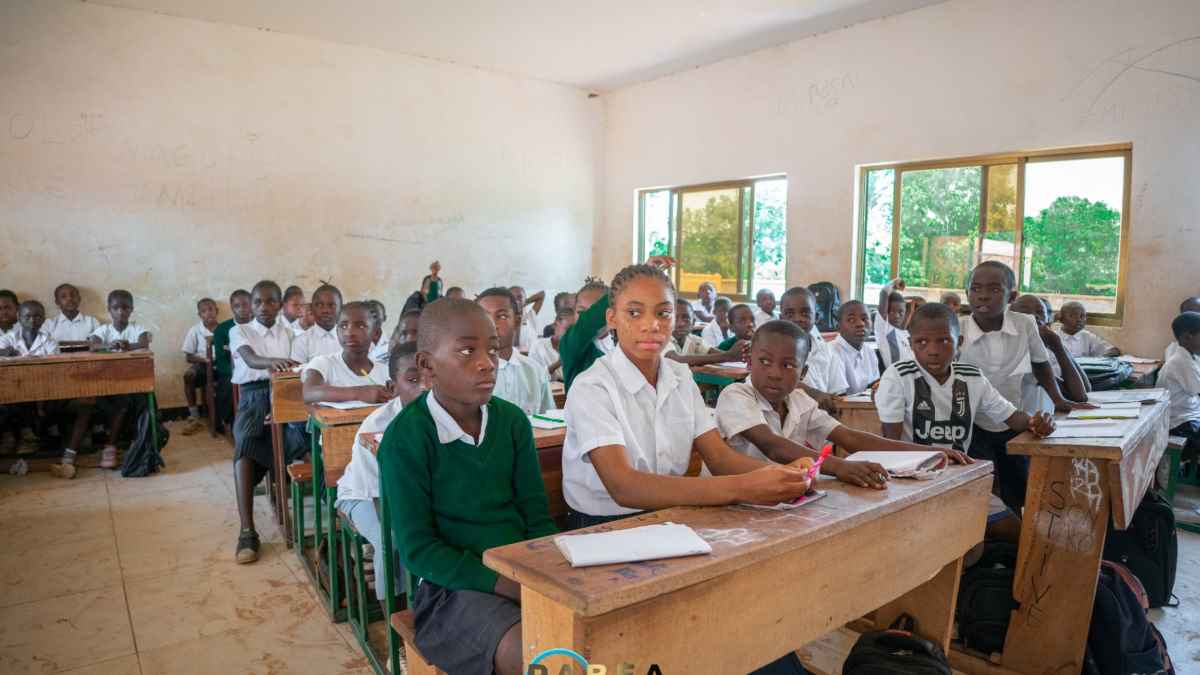
Thirteen-year-old Beni Cial Yumba Musoya used to spend her days scavenging for cobalt under the scorching sun in the artisanal mines of Kolwezi. Today, she dreams of donning a white coat and saving lives. “I want to be a doctor,” she says, smiling shyly from her wooden desk at Kasanda Primary School in Kasulo, a neighbourhood nestled in Congo’s mining heartland of south-eastern Democratic Republic of Congo. “I will build schools and health centres to help people, just as I was helped before,” she continues.

Beni is one of thousands of Congolese children whose lives have been transformed by the Support Project for Alternative Welfare of Children and Young People Involved in the Cobalt Supply Chain (PABEA-COBALT) (https://apo-opa.co/4l0Hwfv), a bold $82 million initiative funded by the African Development Bank.

The project aims to eliminate child labour in the cobalt sector – an industry vital to the global tech economy, yet plagued by poverty, informally and exploitation.

The atmosphere here has changed dramatically. Just a few years ago, the soundscape of Kasulo was dominated by the roar of rudimentary mining machinery and the shuffle of children burdened by sacks of ore. Today, those echoes have been replaced by the buzz of classrooms, the chatter of pupils at recess, and the laughter of children rediscovering play and learning.

In early 2022, PABEA-COBALT identified more than 16,800 Congolese children working in artisanal cobalt mines in the provinces of Haut-Katanga and Lualaba. Since then, 13,587 of them – including Beni – have been enrolled in schools. Many attend newly constructed or rehabilitated facilities like Kasanda Primary School, where education, healthcare, psychological support and civil registry services are provided at no cost.

“Before, I used to collect minerals in artisanal mines. That was all I knew,” recalls Beni, her expression briefly clouded by painful memories.

This model proves that by focusing on education and local entrepreneurship, we can break the cycle of child labour in the mines for good

A few steps away, Marie Samba tends to her hens and quails, her hand dusted with feed rather than cobalt residue. A former mine worker, Marie once spent her days sorting and washing cobalt to survive. Today, she’s a trained poultry farmer. “I used to collect and wash minerals to sell them,” she sighs.

Marie is one of over 10,500 parents and guardians supported by the project – well above the initial target of 6,250. They have received training in agriculture and livestock farming, as well as materials to start-up kits to launch small businesses. Additionally, 8,200 young people formerly working in the mines are being supported to integrate into school, vocational training, or income-generating activities.

“We have been educated and trained in livestock farming and agriculture. We have also been given supplies to start our activities. I didn’t think I could change my life like this,” says Marie Samba, who is delighted with the excellent results she is achieving with her poultry farm

PABEA-COBALT has also helped establish two entrepreneurship centres in Haut-Katanga and Lualaba, equipped with modern equipment for agriculture, livestock farming and food processing. These centres serve as anchors for change, empowering young people and parents to build livelihoods away from the mines.

“One of the project’s greatest successes is that it has anchored change from within the communities,” says project coordinator Alice Mirimo Kabetsi. “Solutions don’t just come from outside: they are now driven by parents, teachers and young people themselves. This model proves that by focusing on education and local entrepreneurship, we can break the cycle of child labour in the mines for good,” she said.

Across the region, this shift is tangible. Nearly 1,000 agricultural cooperatives have been reorganized, strengthening local agricultural and livestock value chains and offering new economic opportunities. The transformation has drawn international attention. A recent report from the DRC’s National Human Rights Commission titled Child labour in artisanal cobalt mining sites (https://apo-opa.co/4lU5lGn), produced in collaboration with the UN Human Rights Council, commended the project’s “tangible results” and urged replication in other mining-affected region across the Great Lakes.

Back in Kasulo, children like Beni are rediscovering their childhood dreams and the power of innocence. Mothers like Marie are holding their heads high, proud to be building a future free from the cobalt mines.

For partners such as the African Development Bank, this project has not only changed lives. It has paved the way for a whole generation growing up far from the mines and building, day after day, a stronger, fairer and resolutely forward-looking society.

Distributed by APO Group on behalf of African Development Bank Group (AfDB).

Home  Facebook

Events

As global power structures shift, Invest Africa convenes The Africa Debate 2026 to redefine partnership in a changing world

Published

on

Debate

The Africa Debate 2026 will provide a platform for this essential, era-defining discussion, convening leaders to explore how Africa and its partners can build more balanced, resilient and sustainable models of cooperation

LONDON, United Kingdom, February 5, 2026/APO Group/ –As African economies assert greater agency in a rapidly evolving global order, Invest Africa (www.InvestAfrica.com) is delighted to announce The Africa Debate 2026, its flagship investment forum, taking place at the historic Guildhall in London on 3 June 2026.

Now in its 12th year, The Africa Debate has established itself as London’s premier platform for African investment dialogue since launching in 2014, convening over 800 global decision-makers annually to shape the future of trade, finance, investment, and development across the continent.

Under the theme “Redefining Partnership: Navigating a World in Transition”, this year’s forum will focus on Africa’s response to global economic realignment with greater agency, ambition and economic sovereignty.

The Africa Debate puts Africa’s priorities at the centre of the conversation, moving beyond traditional narratives to focus on ownership, resilience and long-term value creation.

“Volatility is not new to Africa. What is changing is the opportunity to respond with greater agency and ambition,” says Invest Africa CEO Chantelé Carrington.

“This year’s edition of The Africa Debate asks how we strengthen economic sovereignty — from access to capital and investment to financial and industrial policy — so African economies can take greater ownership of their growth. Success will be defined by how effectively we turn disruption into leverage and partnership into shared value.”

The Africa Debate 2026 will provide a platform for this essential, era-defining discussion, convening leaders to explore how Africa and its partners can build more balanced, resilient and sustainable models of cooperation.

Key challenges driving the debate

Core focus areas for this year’s edition of The Africa Debate include:

This year’s edition of The Africa Debate asks how we strengthen economic sovereignty — from access to capital and investment to financial and industrial policy

Global Realignment & New Partnerships

How shifting geopolitical and economic power structures are reshaping Africa’s global partnerships, trade dynamics and investment landscape.

Financing Africa’s Future

The growing need to reform the global financial architecture, new approaches to development finance, as well as the strengthening of market access and financial resilience of African economies in a changing global system.

Strategic Value Chains

Moving beyond primary exports to build local value chains in critical minerals for the green economy. Also addressing Africa’s energy access gap and mobilising investment in renewable and transitional energy systems.

Digital Transformation & Technology

Unlocking growth in fintech, AI and digital infrastructure to drive productivity, inclusion, and the next phase of Africa’s economic transformation.

The Africa Debate 2026 offers a unique platform for high-level dialogue, deal-making, and strategic engagement. Attendees will gain actionable insights from leading policymakers, investors and business leaders shaping Africa’s economic future, while building strategic partnerships that define the continent’s next growth phase.

Registration is now open (http://apo-opa.co/46b19gj).

Distributed by APO Group on behalf of Invest Africa.

Continue Reading

Business

Zion Adeoye terminated as Chief Executive Officer (CEO) of CLG due to serious personal and professional conduct violations

Published

on

CLG

After a thorough internal and external investigation, along with a disciplinary hearing chaired by Sbongiseni Dube, CLG (https://CLGglobal.com) has made the decision to terminate Zion Adeoye due to serious personal and professional conduct violations. This process adhered to the Code of Good Practice of the Labour Relations Act, ensuring fairness, transparency, and compliance with South African law.

Mr. Adeoye has been held accountable for several serious offenses, including:

  • Making malicious and defamatory statements against colleagues
  • Extortion
  • Intimidation
  • Fraud
  • Misuse of company funds
  • Theft and misappropriation of funds
  • Breach of fiduciary duty
  • Mismanagement

His actions are in direct contradiction to our firm’s core values. We do not approve of attorneys spending time in a Gentleman’s Club. CLG deeply regrets the impact this situation has had on our colleagues and continues to provide full support to those affected.

We want to express our gratitude to those who spoke up and to reassure everyone at the firm of our unwavering commitment to maintaining a respectful workplace. Misconduct of any kind is unacceptable and will be addressed decisively.

We recognize the seriousness of this matter and have referred it to the appropriate law enforcement, regulatory, and legal authorities in Nigeria, Mauritius, and South Africa. We kindly ask that the privacy of the third party involved be respected.

Distributed by APO Group on behalf of CLG.


Continue Reading

Business

The International Islamic Trade Finance Corporation (ITFC) Strengthens Partnership with the Republic of Djibouti through US$35 Million Financing Facility

Published

on

ITFC

This facility forms part of the US$600 million, three-year Framework Agreement signed in May 2023 between ITFC and the Republic of Djibouti, reflecting the strong and growing partnership between both parties

JEDDAH, Saudi Arabia, February 5, 2026/APO Group/ –The International Islamic Trade Finance Corporation (ITFC) (https://www.ITFC-IDB.org), a member of the Islamic Development Bank (IsDB) Group, has signed a US$35 million sovereign financing facility with the Republic of Djibouti to support the development of the country’s bunkering services sector and strengthen its position as a strategic regional maritime and trade hub.

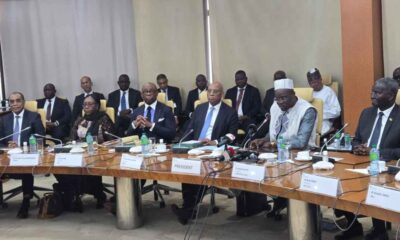
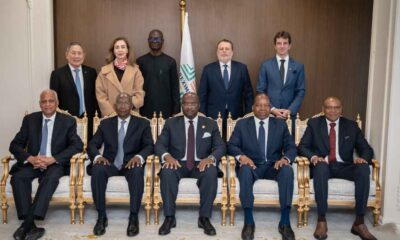
The facility was signed at the ITFC Headquarters in Jeddah by Eng. Adeeb Yousuf Al-Aama, Chief Executive Officer of ITFC, and H.E. Ilyas Moussa Dawaleh, Minister of Economy and Finance in charge of Industry of the Republic of Djibouti.

The financing facility is expected to contribute to Djibouti’s economic growth and revenue diversification by reinforcing the competitiveness and attractiveness of the Djibouti Port as a “one-stop port” offering comprehensive vessel-related services. With Red Sea Bunkering (RSB) as the Executing Agency, the facility will support the procurement of refined petroleum products, thus boosting RSB’s bunkering operations, enhancing revenue diversification, and consolidating Djibouti’s role as a key logistics and trading hub in the Horn of Africa and the wider region.

We look forward to deepening this partnership, creating new opportunities, and leveraging collaborative programs to advance key sectors and drive sustainable economic growth

Commenting on the signing, Eng. Adeeb Yousuf Al-Aama, CEO of ITFC, stated:

“This financing reflects ITFC’s continued commitment to supporting Djibouti’s strategic development priorities, particularly in strengthening energy security, port competitiveness, and trade facilitation. We are proud to deepen our partnership with the Republic of Djibouti and contribute to sustainable economic growth and regional integration.”

H.E. Ilyas Moussa Dawaleh, Minister of Economy and Finance in charge of Industry of the Republic of Djibouti, commented: “Today’s signing marks an important milestone in the development of Djibouti’s bunkering services and reflects our strong and valued partnership with ITFC, particularly in the oil and gas sector. This collaboration supports our ambition to position Djibouti as a regional hub for integrated maritime and logistics services. We look forward to deepening this partnership, creating new opportunities, and leveraging collaborative programs to advance key sectors and drive sustainable economic growth.”

This facility forms part of the US$600 million, three-year Framework Agreement signed in May 2023 between ITFC and the Republic of Djibouti, reflecting the strong and growing partnership between both parties.

Since its inception in 2008, ITFC and the Republic of Djibouti have maintained a strong partnership, with a total of US$1.8 billion approved primarily supporting the country’s energy sector and trade development objectives.

Distributed by APO Group on behalf of International Islamic Trade Finance Corporation (ITFC).

Continue Reading

Trending