Connect with us

Business

Four Points by Sheraton Debuts in Rwanda with the Opening of Four Points by Sheraton Kigali

Published

on

Four Points

Located In the Heart of The City, the 154-Room Hotel Is an Ideal Destination for Today’s Modern Traveler

KIGALI, Rwanda, July 4, 2022/APO Group/ — 

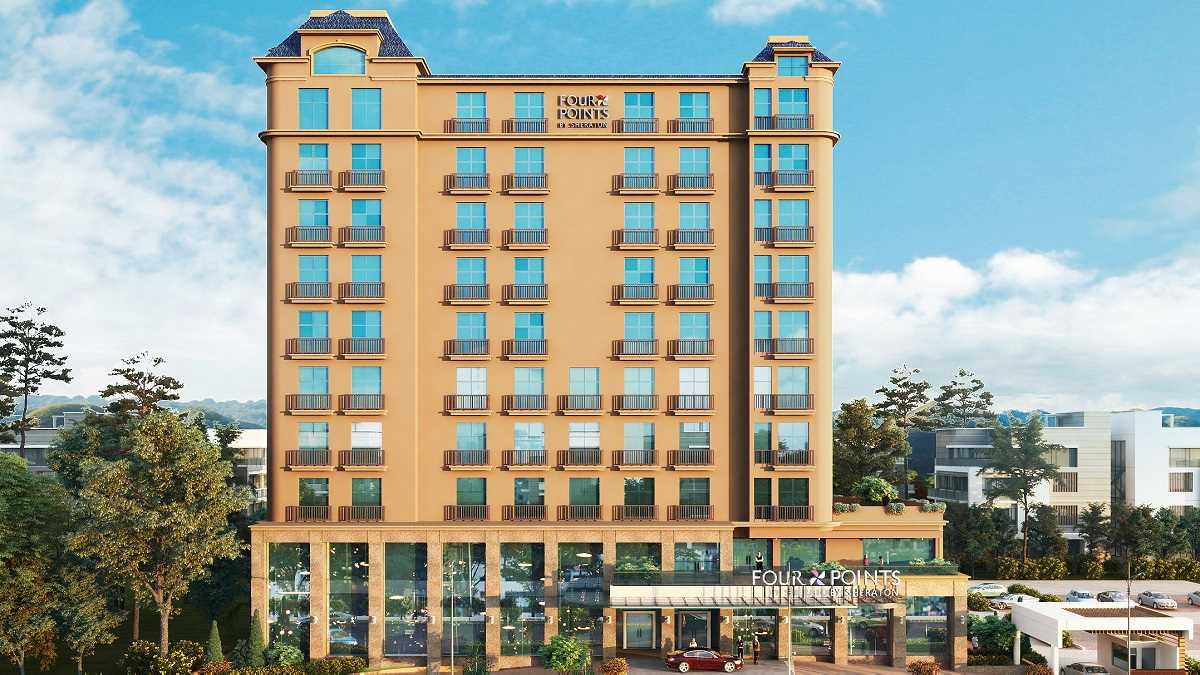
Four Points by Sheraton (https://bit.ly/3R7c5Cg), part of Marriott Bonvoy’s (www.Marriott.com) portfolio of 30 extraordinary hotel brands, announces the opening of Four Points by Sheraton Kigali, marking the brand‘s debut in Rwanda. Designed to appeal to both business and leisure travelers, the hotel offers a warm and welcoming atmosphere, approachable and relaxed design, and stylish comfort in the heart of the capital city.

With easy access from Kigali International Airport and just a few minutes away from the city’s main embassies, the hotel sits in an enviable location and seamlessly blends vintage and modern design elements with distinct local touches to create a vibrant aesthetic and a compelling sense of place.  

Four Points by Sheraton Kigali – FP Social

“We are very proud to work with Marriott International to bring the Four Points by Sheraton brand into Rwanda and we are confident this hotel will set a new benchmark for hospitality within the country,” said Mr. Hatari Said Sekoko, Chief Executive Officer of New Century Development.

“I am thrilled that Four Points by Sheraton is set to be among the top contributors of Rwanda’s tourism growth and am pleased the hotel has created more job opportunities for the local energetic youth and will support the growth of the country’s tourism, hospitality, and conference and events sectors,” said Mr. Matthias Widor General Manager, Cluster General Manager for Kigali Marriott Hotel and Four Points by Sheraton Kigali.

Signature global brand programing and the warm and welcoming atmosphere makes Four Points by Sheraton Kigali an ideal gathering place for guests and the local community to kick back and relax.
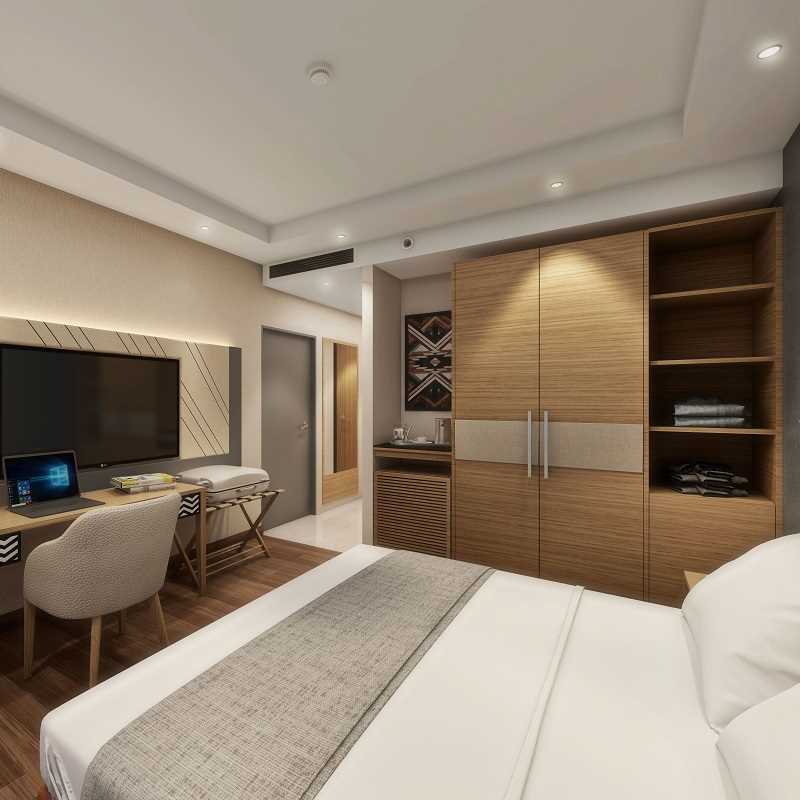
Four Points by Sheraton Kigali – Standard Room

We are confident this hotel will set a new benchmark for hospitality within the country

Designed for the modern traveler with an emphasis on delivering what matters the most, all 154 guestrooms offer magnificent views of Kigali, floor-to-ceiling windows, a 55-inch smart TV, ergonomic workspaces, and complimentary high-speed internet. The property comes complete with 12 Suites, including three Family Suites and one spacious Loft Suite for those looking to enjoy the company of family or friends.

The property features three distinctive dining venues offering a wide selection of global cuisine. The all-day-dining restaurant, FP Social, blends European and international cuisine with flavors from East Africa while the snack bar, Brew Bar, has a menu of light snacks and the brand’s signature Best BrewsTM program which offers local craft beers on tap. Guests can also enjoy a variety of cocktails, fresh juices, or light bites at Coco Fizz, the pool bar terrace.

A place for business and leisure, Four Points by Sheraton Kigali offers more than 700 square meters of dedicated meeting space featuring nine flexible meeting rooms including a 314-square-meter ballroom that can cater for up to 200 guests. All meeting rooms are equipped with sophisticated AV facilities and endless connectivity through high-speed WiFi. With creative menu options and thoughtful service, the hotel provides both choice and flexibility, making it an exclusive option for medium scale business meetings, social events, weddings or smaller intimate gatherings.

Leisure amenities include a state-of-the art fitness center with cutting-edge equipment available 24 hours a day, a spa and an outdoor pool for guests to relax and recharge for the day.

Four Points by Sheraton Kigali is Marriott International’s second property in Rwanda.

For more information on Four Points by Sheraton Kigali, please visit Marriott.com/kglfp.

Distributed by APO Group on behalf of Marriott International, Inc..

Energy

Global Energy Bodies Converge at African Energy Week (AEW) 2026 to Shape the Continent’s Energy Future

Published

on

From electrification to refining resilience and exploration strategy, leading international alliances will bring a systems-level approach to Africa’s evolving energy landscape at African Energy Week 2026

CAPE TOWN, South Africa, May 11, 2026/APO Group/ –As Africa accelerates efforts to balance energy security, industrial growth and decarbonization, African Energy Week (AEW) 2026 will convene a powerful cohort of global associations whose work is increasingly defining the trajectory of the continent’s energy systems. The participation of Nikki Martin, President & CEO of EnerGeo Alliance; Anibor Kragha, Executive Secretary of the African Refiners & Distributors Association (ARDA); and Carol Koech, Vice President for Africa at the Global Energy Alliance for People and Planet (GEAPP), signals a shift toward deeper coordination across the full energy value chain – from subsurface data and upstream investment to downstream infrastructure and universal energy access.


EnerGeo Alliance, under Martin’s leadership, has been advancing the role of geoscience and data-driven exploration in de-risking investments across frontier markets. Its recent strategic engagements, including partnerships supporting renewed exploration activity in countries such as Libya, reflect a broader push to bring technical rigor and investor confidence back into African upstream sectors. By strengthening the link between subsurface intelligence and policy decisions, EnerGeo is helping governments position their resources more competitively in a capital-constrained global market.


Complementing this upstream focus, ARDA has been at the forefront of reinforcing Africa’s downstream resilience. At its 2026 annual conference, the association underscored energy security as a top priority, with refiners across the continent moving to shield themselves from global market volatility and supply disruptions. This comes as Africa continues to expand refining capacity and reduce dependence on imported petroleum products, a shift that is critical not only for economic sovereignty but also for stabilizing domestic energy markets. ARDA’s work increasingly intersects with broader industrialization goals, positioning refining and distribution networks as key enablers of growth.


The participation of organizations like EnerGeo Alliance, ARDA and GEAPP reflects the increasing alignment we are seeing across the global energy landscape

Bridging these traditional energy systems with the continent’s long-term transition ambitions is GEAPP, where Koech leads the organization’s Africa strategy. The alliance has rapidly emerged as a central force in mobilizing blended finance for large-scale electrification and renewable deployment. In 2026, GEAPP and its partners surpassed $100 million in commitments to support Mission 300 – an initiative aimed at connecting 300 million Africans to electricity by 2030 – while simultaneously working to unlock far greater flows of public and private capital. Through technical assistance, project development and market-shaping interventions, GEAPP is helping translate high-level ambition into bankable projects across nearly two dozen countries.


“African Energy Week has always been about bringing together the right partners at the right time,” said NJ Ayuk, Executive Chairman of the African Energy Chamber. “The participation of organizations like EnerGeo Alliance, ARDA and GEAPP reflects the increasing alignment we are seeing across the global energy landscape. These are institutions that are not only shaping policy and investment, but actively delivering solutions on the ground – and their engagement at AEW 2026 will be instrumental in advancing Africa’s energy ambitions.”


As AEW continues to evolve into a platform for integrated energy dialogue, the inclusion of these global associations reinforces its role as a convening point for the partnerships that will define Africa’s next phase of growth. Their participation reflects the growing recognition that Africa’s energy future cannot be addressed through fragmented approaches, but through coordinated action across sectors, institutions and geographies.

Distributed by APO Group on behalf of African Energy Chamber.

Continue Reading

Business

From Megawatt (MW) to Gigawatt (GW): Why Africa Must Think in Grid-Scale Power to Compete in the Artificial Intelligence (AI) Economy

Published

on

As AI infrastructure drives power demand into the gigawatt range, Africa must move beyond incremental energy planning – placing grid-scale generation at the center of discussions at African Energy Week 2026’s AI and Data Center Track

CAPE TOWN, South Africa, May 11, 2026/APO Group/ –The rapid expansion of artificial intelligence is fundamentally reshaping global energy demand, with implications that extend well beyond traditional power planning. Nowhere is this more apparent than in the growing energy footprint of data centers. Facilities that once required tens of megawatts are now being developed at 100–200 MW scale, with hyperscale campuses increasingly aggregating demand into the gigawatt range.


This shift presents a structural challenge for Africa. While the continent is rich in energy resources, its planning frameworks remain largely oriented around incremental, megawatt-scale additions – often tied to localized demand or short-term capacity gaps. In the context of AI-driven infrastructure, this approach is increasingly misaligned with the scale and concentration of future demand.

Africa’s data center sector, while growing, remains at an early stage. Operational capacity currently stands at approximately 300–400 MW, with projections reaching 1.5–2.2 GW by 2030. At the same time, demand is accelerating rapidly: electricity consumption from data centers is rising at 20–25% annually and is expected to reach around 8,000 GWh in the near term. This growth mirrors a broader global surge, with data center power demand projected to approach 945 TWh by 2030, driven largely by AI workloads.

This is ultimately about aligning Africa’s energy strategy with where global demand is heading

What distinguishes AI-related demand is not only its scale, but its concentration and consistency. Unlike many traditional industrial loads, data centers require uninterrupted, high-quality power, often with built-in redundancy. This places new demands on grid design, prioritizing stability, capacity and long-term scalability over incremental expansion.

Meeting these requirements will require a departure from conventional planning models. Rather than adding capacity in small increments, there is a growing case for developing gigawatt-scale generation aligned with emerging digital infrastructure hubs. This means integrating power generation, transmission and data center development into coordinated investment strategies, particularly in markets with strong resource bases and improving regulatory environments.

It also requires a shift in how excess capacity is viewed. In many African power systems, surplus generation has historically been treated as a financial inefficiency. In the context of AI and digital infrastructure, however, maintaining a margin of available capacity can enhance grid stability, reduce outages and provide the flexibility needed to support rapid load growth, while creating a foundation for broader industrial development.

A useful benchmark can be seen in Northern Virginia, the world’s largest data center market, where installed capacity has now exceeded 4 GW and more than 1 GW of new supply was added in a single year, reflecting the rapid pace at which hyperscale infrastructure is being deployed. Driven by major cloud and AI players, demand has tightened the market significantly, with vacancy rates approaching zero and most new capacity released well in advance. The scale and speed of development highlight how quickly data center demand is expanding – and underscore the level at which infrastructure must be planned.

These dynamics are increasingly shaping the policy conversation. At African Energy Week 2026, the AI and Data Center Track will focus on the infrastructure required to support this transition, with a particular emphasis on aligning energy planning with digital economy objectives. As AI infrastructure scales, reliable and abundant power is no longer a supporting factor, but a prerequisite.

“This is ultimately about aligning Africa’s energy strategy with where global demand is heading,” says NJ Ayuk, Executive Chairman of the African Energy Chamber. “If we continue to plan in megawatts, we will struggle to compete in an economy that is already moving at the gigawatt scale. Building larger, more resilient power systems is not just about meeting demand – it is about creating the conditions for investment, innovation and long-term growth.”

Distributed by APO Group on behalf of African Energy Chamber.

Continue Reading

Business

Telecoming Strengthens Its Presence in Africa with the Launch of DCB Software South Africa

Published

on

The company advances its regional strategy with a model built on AI, monetisation and direct connectivity with local operators

JOHANNESBURG, South Africa, May 11, 2026/APO Group/ –Telecoming (www.Telecoming.com), a global technology company specialising in the monetisation of digital services, announces the launch of DCB Software South Africa (www.DCBSoftwareZA.com), its new local subsidiary. The move reinforces the company’s growth strategy in Africa, one of the most promising markets in the mobile economy.

The new entity will be led by Javier de Corral, who will lead business development, establish partnerships with telecom operators and build a local team based in Johannesburg.

The South African launch builds on Telecoming’s existing footprint in the continent, where it already operates through its Algerian subsidiary, DCB Software Dzayer, further strengthening its regional position.

We are very excited about the opportunities in South Africa and committed to investing in its digital future

DCB Software South Africa will operate as a local hub focused on AI-driven digital services, supported by a team entirely based in the country. Its scope includes the development of digital products, mobile and web services, as well as solutions in digital entertainment and marketplaces, all built on scalable, multi-device platforms designed to ensure a seamless user experience.

The subsidiary combines in-depth knowledge of the South African and Sub-Saharan markets with direct access to telecom operators, digital platforms and local payment solutions. It will deploy multiple monetisation models, including Direct Carrier Billing (DCB), to optimise conversion rates and overall performance.

The launch of DCB Software South Africa marks a key milestone in our global expansion strategy”, said Cyrille Thivat, CEO of Telecoming. “We are very excited about the opportunities in South Africa and committed to investing in its digital future. With Javier de Corral at the helm, we are confident that this new subsidiary will not only drive our local growth but also contribute to the broader digital and AI ecosystem.”

Telecoming develops technology designed to enhance user acquisition, streamline payment processes and improve the performance of digital services. Its platforms integrate monetisation, advertising and user experience, leveraging artificial intelligence to deliver secure, scalable and efficient solutions.

This expansion reinforces Telecoming’s commitment to delivering innovative digital and AI services and strengthens its position as a key player in the African market. With this launch, the company takes another step in its international expansion, enhancing its ability to support the development of Africa’s digital ecosystem through advanced technology, local expertise and strategic partnerships.

Distributed by APO Group on behalf of Telecoming.

Continue Reading

Trending

Exit mobile version