Connect with us
Anglostratits

Energy

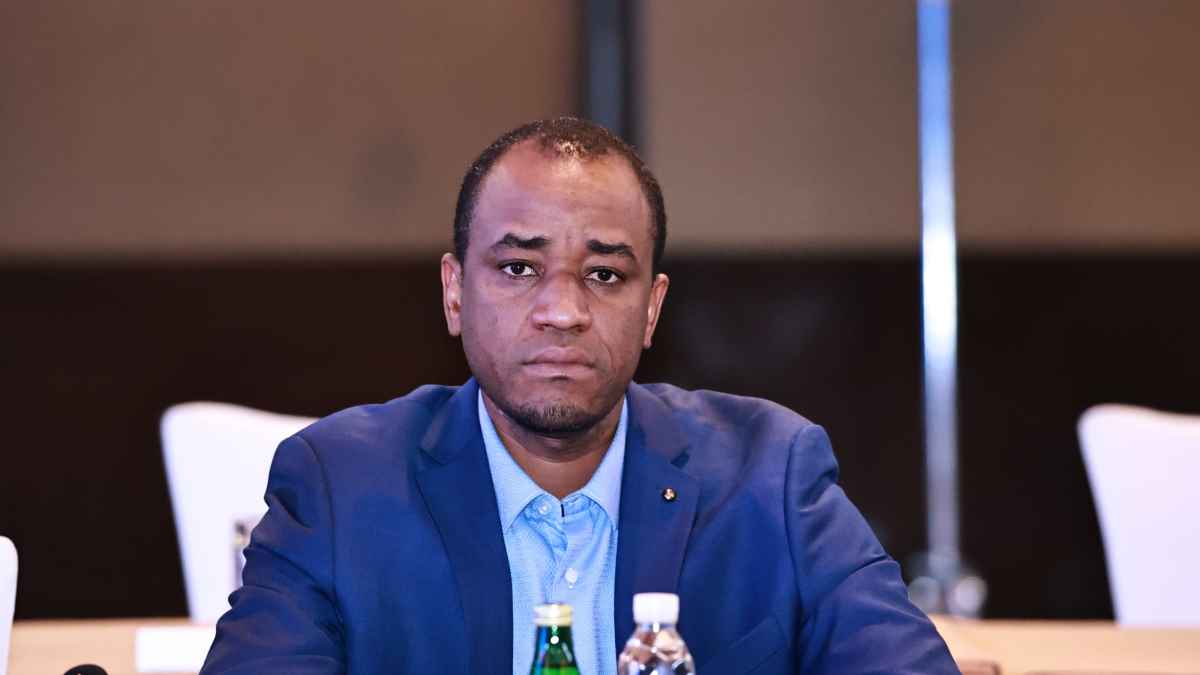
Former Niger Hydrocarbons Chief Joins MSGBC 2025 As a Speaker
Published

on

Niger

Former Niger Hydrocarbons Director Kabirou Zakari Oumarou positioned to share expertise on cross-border energy projects at MSGBC Oil, Gas & Power 2025

DAKAR, Senegal, November 26, 2025/APO Group/ –Kabirou Zakari Oumarou, Former Director General of Hydrocarbons at Niger’s Ministry of Energy, has joined the upcoming MSGBC Oil, Gas & Power 2025 conference and exhibition – taking place in Dakar from December 8-10 – as a speaker.


Oumarou is expected to engage with global investors and public- and private-sector stakeholders from across the MSGBC region and Africa, showcasing emerging opportunities within Niger’s hydrocarbons sector.


Explore opportunities, foster partnerships and stay at the forefront of the MSGBC region’s oil, gas and power sector. Visit www.MSGBCOilGasAndPower.com to secure your participation at the MSGBC Oil, Gas & Power 2025 conference. To sponsor or participate as a delegate, please contact sales@energycapitalpower.com.


Kabirou Zakari Oumarou’s participation is a major highlight for MSGBC Oil, Gas & Power 2026

His participation comes as Niger accelerates the expansion of its petroleum industry and strengthens collaboration with international partners. The country has tripled its oil and gas revenues in recent months through increased production, while new production capacity is being unlocked through a strategic partnership with Algerian national oil company Sonatrach. Two exploration wells drilled in partnership with Sonatrach in the Kafra block revealed an estimated 168 million and 100 million barrels of proven and probable reserves.


Independent energy company Savannah Energy also continues to advance development of the Agadem Rift Basin in southeast Niger, targeting five new prospects following five successful discoveries.


In addition, Niger, in partnership with Sonatrach, plans to develop a 30,000 barrel-of-oil-per-day refinery in Dosso, boosting the country’s downstream capabilities.


Coming into this picture, drawing on his experience as a former senior energy official, Oumarou is expected to provide insights into these projects, key investment opportunities and best practices for advancing Niger’s – and the wider MSGBC region’s – hydrocarbons industry.


“Kabirou Zakari Oumarou’s participation is a major highlight for MSGBC Oil, Gas & Power 2026. His expertise in hydrocarbons infrastructure will be instrumental in guiding new investment flows into West Africa’s burgeoning industry,” said Sandra Jeque, Events and Project Director at Energy Capital & Power.

Distributed by APO Group on behalf of Energy Capital & Power.

Home  Facebook

Energy

Venezuela Energy Week 2026 to Define New Investment Pathways as Hydrocarbons and Power Sector Reforms Move into Implementation

Published

on

Etu Energias

Venezuela Energy Week will serve as a key platform for clarifying how international capital can re-enter the hydrocarbons and power sectors through evolving operational and financial structures

CARACAS, Venezuela, June 10, 2026/APO Group/ –Venezuela Energy Week (VEW) 2026 is set to become a focal point for how the country’s hydrocarbons reforms are translating from policy into practice, as government stakeholders, PDVSA and international operators work to define the practical routes for investment entry into the oil and gas sector. With reforms now moving into implementation, attention is shifting from regulatory design toward the mechanisms that will determine how participation is structured, financed and sustained.


Venezuela’s current framework is being operationalized through a limited set of established and negotiated channels, including participation in PDVSA joint ventures, crude-backed repayment structures and production-linked agreements tied to existing oilfields. International operators such as Chevron, for instance, remain active within existing joint venture structures, including Petropiar in the Orinoco Belt and Petroboscán in western Zulia, which continue to underpin production and export activity under PDVSA-led arrangements.

Alongside joint venture activity, crude-based repayment mechanisms are becoming an increasingly important financial pathway for foreign participation. These arrangements – including crude-for-debt structures and production-linked repayment agreements – allow international partners to recover value through physical oil cargoes or allocated output rather than conventional financial transfers.

Companies such as Repsol and Eni have operated within similar frameworks, where repayment structures effectively shape cash flow recovery, exposure management and the timing of capital return. However, these mechanisms continue to operate under constraints, including delayed settlements, non-standard payment schedules and ongoing uncertainty around contract enforcement, all of which continue to weigh on long-term reinvestment planning. VEW 2026 will help stakeholders assess how these frameworks can be refined to improve predictability, strengthen implementation and support more scalable and sustained investment participation.

Beyond hydrocarbons, Venezuela is beginning to open selective pathways in the power sector. Recent policy discussions and incremental reforms have pointed toward greater private participation in electricity generation, alongside early-stage efforts to improve operational efficiency across the grid and expand space for independent power producers. While still in a gradual phase of liberalization, these developments suggest an additional entry point for international and regional investors, particularly in generation, infrastructure rehabilitation and distributed energy solutions.

As reforms progress, VEW 2026 will serve as a key platform for aligning policy intent with operational realities, bringing together public and private stakeholders to assess how existing mechanisms are functioning in practice and where adjustments may be needed. Key issues such as payment timing, contractual enforcement and risk allocation remain central to the investment environment, shaping whether current frameworks can support scalable reinvestment or remain limited to sustaining baseline production. Beyond policy direction, the event will help clarify investment entry points and how capital can be deployed across both hydrocarbons and emerging power sector opportunities.

Distributed by APO Group on behalf of Energy Capital & Power.

Continue Reading

Energy

Libya Energy & Economic Summit (LEES) 2027 to Host In-Country Value Forum on Youth, Women in Energy, Artificial Intelligence (AI) and Workforce Development

Published

on

LEES

LEES 2027 will host an In-Country Value Forum focused on youth training, capacity building, women in energy, AI enablement, and the nurturing of the next generation in oil, gas and energy

TRIPOLI, Libya, June 10, 2026/APO Group/ –The upcoming Libya Energy & Economic Summit (LEES) 2027 – taking place on January 23–25 in Tripoli – will host a dedicated In-Country Value Forum, featuring strategic sessions on human capital (including women and youth in the energy sector), AI-driven workforce transformation and education to drive Libya’s expanding energy sector.


The forum – set for January 24 – comes as Libya accelerates its upstream and downstream expansion agenda under the National Oil Corporation and Ministry of Oil and Gas, with output targets approaching 2 million barrels per day by 2030. Supported by international operators including TotalEnergies, Repsol, Eni, and OMV, LEES is positioned as a deal-making platform for investment, capacity building and digital transformation.


The session Youth in Energy – Next-Gen Strategic Human Capital Development, will focus on Libya’s expanding youth integration strategy. The state is mobilizing over 7,000 graduates across 50 cities through structured pipelines tied to exploration and production sharing agreements, with mandatory local hiring and training quotas embedded into new licensing rounds.


At LEES 2027, policymakers and operators will be positioned to assess how initiatives such as the Energy JEEL program are reshaping workforce entry points. With over 900 youth ambassadors already deployed, the framework connects technical institutes, field operators and policymakers, aligning human capital deployment with production hubs such as El Sharara and Mabruk.


The Digital Skills and AI: Modernizing the Local Energy Workforce session will examine the rapid digitization of Libya’s oil and gas operations. AI-enabled drilling systems deployed with SLB have already demonstrated autonomous reservoir navigation and doubled drilling rates in early 2026 pilot operations.


Discussions will also cover expanding digital infrastructure in remote basins, where telecom providers and service firms are addressing connectivity gaps. Platforms introduced under the National Strategy for Artificial Intelligence (2025–2030) are enabling predictive maintenance, real-time telemetry and automated production optimization across brownfield assets.


Meanwhile, the Energy Academy: From Classroom to Career session will focus on education-to-employment pipelines linking universities, vocational institutes and operators. Programs co-developed with international agencies including UNDP and GIZ are modernizing technical subsea curricula across petroleum institutes and regional training hubs.


The framework is designed to reduce youth unemployment while supplying a skilled workforce for both hydrocarbons and renewables. With Libya targeting a 20% renewable energy mix by 2035, graduates are being trained across solar PV systems, carbon accounting and grid integration, ensuring mobility across conventional and transition energy sectors.

Distributed by APO Group on behalf of Energy Capital & Power.

Continue Reading

Energy

SBM Offshore Confirmed as Silver Sponsor for African Energy Week (AEW) 2026 Amid Africa FPSO Expansion Push

Published

on

African Energy Chamber

SBM Offshore will participate as Silver Sponsor at African Energy Week 2026, where they are set to showcase FPSO expansion in Angola, Namibia and Guyana amid strong financials and a deepwater innovation strategy

CAPE TOWN, South Africa, June 9, 2026/APO Group/ –Multinational oil and gas services company SBM Offshore will participate at this year’s African Energy Week (AEW) 2026 Conference and Exhibition as a Silver Sponsor, reinforcing the company’s long-term commitment to Africa’s expanding deepwater oil and gas industry. Their participation comes as SBM Offshore accelerates brownfield optimization projects in Angola while aggressively positioning itself for new frontier developments in Namibia’s Orange Basin.


SBM Offshore’s return to AEW, which takes place from October 12–16 in Cape Town, is expected to draw significant industry attention as operators, financiers and EPC contractors evaluate the next wave of floating production infrastructure across the Atlantic Basin. With more than 20 years of experience in Africa and over $31 billion in contract backlog globally, the company remains one of the world’s most influential FPSO suppliers.

The Sponsorship follows several major milestones announced during 2025 and 2026. On May 26, the American Bureau of Shipping approved SBM Offshore’s seawater intake riser technology developed alongside Shell. The system pumps cold seawater from depths of 700m to FPSO topsides, reducing onboard cooling energy demand and improving emissions performance for future African and South American projects.

The company’s financial position strengthened considerably following the $2.32 billion sale of FPSO One Guyana to ExxonMobil in February 2026. The transaction helped drive a 216% year-on-year increase in Q1 2026 directional revenue to $3.5 billion while reducing SBM Offshore’s net debt from $5.7 billion to $3.2 billion by March 21, 2026.

SBM Offshore continues to demonstrate the technical expertise, operational scale and long-term investment approach needed to advance Africa’s next generation of energy projects

In March 2026, ExxonMobil awarded SBM Offshore front-end engineering and design contracts for the Longtail development in Guyana. The proposed FPSO is expected to feature the world’s highest gas-handling capacity ever deployed on a floating production vessel, processing 1.2 billion cubic feet of gas and 250,000 barrels of condensate daily.

Across Africa, SBM Offshore continues expanding its offshore footprint. In Angola, the company signed multi-year extensions in December 2025 with Esso Exploration Angola for FPSO Mondo and FPSO Saxi Batuque in Block 15, extending operations through 2032. Brownfield upgrades and life-extension works commenced in early 2026 to support declining reservoir pressure management and maintain environmental compliance standards.

The company also finalized a share purchase agreement with Equatorial Guinea’s national oil company GEPetrol in December 2025, restructuring regional asset ownership and supporting localized operational transitions. The FPSO Aseng formally exited SBM Offshore’s lease-and-operate fleet during the same period as management responsibilities shifted toward Equatoguinean entities.

Namibia retains a central focus of SBM Offshore’s African growth strategy. The company is actively competing for TotalEnergies’ Venus FPSO contract in the Orange Basin, one of Africa’s largest recent offshore discoveries with estimated resources of roughly 2 billion barrels. SBM Offshore has expanded its Cape Town commercial engineering workforce while positioning its standardized technologies for upcoming South Atlantic developments.

“SBM Offshore’s participation at this year’s event reflects the growing momentum behind Africa’s deepwater industry and the critical role FPSO technology will play in unlocking new production. From Angola’s mature offshore hubs to Namibia’s frontier discoveries, SBM Offshore continues to demonstrate the technical expertise, operational scale and long-term investment approach needed to advance Africa’s next generation of energy projects,” says NJ Ayuk, Executive Chairman, African Energy Chamber.

Looking ahead, SBM Offshore aims to combine frontier expansion with lower-emission offshore production systems. Through partnerships with SLB and Cognite, the company is integrating industrial AI platforms to its global fleet while scaling standardized hull construction to accelerate project delivery timelines across Africa and Latin America.

Distributed by APO Group on behalf of African Energy Chamber.

Continue Reading

Trending