Connect with us
Anglostratits

Energy

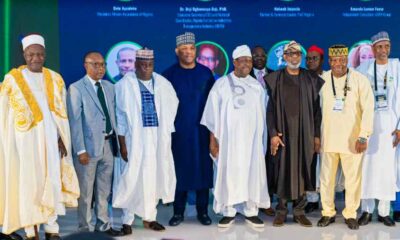
African Leaders Advance Energy, Gas and Financing Plans Ahead of Paris Summit

Published

on

Energy Capital

African leaders at the G20 Africa Energy Investment Forum pushed local capital, regulatory stability and urgent grid upgrades – momentum expected to accelerated dealmaking at the Paris IAE Summit

PARIS, France, November 26, 2025/APO Group/ –African policymakers, financiers, and energy executives issued a unified call at the G20 Africa Energy Investment Forum in Johannesburg – organized by the African Energy Chamber – to advance infrastructure-led development, diversified energy systems and accelerated investment flows. The series of announcements comes ahead of the Invest in African Energies (IAE) Summit in Paris – taking place from April 22-23, 2026 – where many of the same stakeholders and more are expected to convert these messages into concrete deals and partnerships.


Across multiple sessions, speakers emphasized that Africa’s energy transition cannot proceed without large-scale financing, received industrial capacity and reliable transport and power networks. The Johannesburg forum served as a staging ground for more detailed investment discussions expected in Paris.


South Africa Accelerates Refinery Revival, Gas Diversification

South Africa’s government reiterated its intention to rebuild refining capacity under the newly established South African National Petroleum Corporation. With the majority of the country’s refineries offline, the South Africa’s Minister of Mineral and Petroleum Resources Gwede Mantashe views refinery revival as central to energy security, economic revitalization and regional fuel stability.

https://apo-opa.co/43RnP41

In parallel, officials confirmed a fast-tracked gas strategy, including LNG import terminals, pipeline rehabilitation and accelerated licensing. Declining imports from Mozambique have intensified pressure to secure alternative gas sources and develop domestic reserves. These developments will form a crucial part of South Africa’s investment roadshow at the IAE Summit, where government and private players aim to attract capital for LNG, pipelines and downstream restructuring.


What’s more, the country’s Minister of Electricity and Energy Kgosientsho Ramokgopa reinforced broader calls for investment models that treat African states as equal partners rather than passive recipients. He stressed that Africa’s energy future hinges on building transmission capacity that can unlock cross-border trade and industrial growth. By insisting on value addition for critical minerals, the Minister underscored that the transition must create manufacturing power – not deepen the extractive patterns that have historically limited African development.


Clean Cooking, Refining, LPG Supply Under Renewed Scrutiny

Executives highlighted structural weaknesses in LPG supply chains, from insufficient storage and import capacity to deteriorated rail infrastructure. Calls were made to streamline permitting, reconfigure rail corridors and rehabilitate dormant refineries to prevent recurring supply shocks. Meanwhile, state-owned entities including PetroSA outlined plans to revive processing capacity and stabilize domestic markets. Private operators including Petredec pointed to continued demand growth across East and Southern Africa and called for reforms to improve terminal access, transport efficiency and market transparency.

These issues – long-standing but increasingly urgent – are expected to feature prominently in Paris, where project developers will seek partners for terminal expansions, rail rehabilitation and midstream infrastructure.


Capital Mobilization vs Infrastructure Constraints

Speakers emphasized that Africa will not close its infrastructure gap through concessional loans and aid alone. Pension funds, sovereign investors and African financial institutions were urged to take on a larger role in funding energy, manufacturing and logistics projects. Several panelists called for predictable regulatory environments and project preparation pipelines that allow institutional investors to enter at scale. These themes align directly with the IAE Summit’s goal of accelerating bankable deals and mobilizing both African and international capital.


Forum participants cited unreliable transmission networks, bottlenecked ports, aging rail lines and slow permitting as barriers to investment. Power-intensive sectors – mining, manufacturing, green hydrogen and data centers – were highlighted as immediate casualties of grid instability. With dozens of grid and transmission upgrade projects headed for investment rounds in 2025-2027, Paris is expected to serve as a matchmaking platform between African utilities, EPC companies and financing institutions.


Positioning for Paris: A Continental Investment Agenda

Taken together, the announcements in Johannesburg delivered a clear prelude to the IAE Summit in Paris where hydrocarbons gas and refining will be positioned as central to energy security and industrial growth across the African continent. Meanwhile, it was also noted that clean cooking and LPG markets will require infrastructure expansion and regulatory reform while domestic capital must complement international investment to unlock large-scale projects. Another major focus area that will also be explored is how grid, transport and permitting constraints must be resolved to attract long-term financing.


As African delegations prepare for Paris, the momentum generated at the G20 Africa Energy Investment Forum signals a shift toward deal-focused engagement, with governments and operators seeking partnerships that advance infrastructure, stabilize energy systems and accelerate economic growth across the continent.


IAE 2026 is an exclusive forum designed to connect African energy markets with global investors, serving as a key platform for deal-making in the lead up to African Energy Week. Scheduled for April 22-23, 2026, in Paris, the event will provide delegates with two days of in-depth engagement with industry experts, project developers, investors and policymakers. For more information, visit www.Invest-Africa-Energy.com. To sponsor or register as a delegate, please contact sales@energycapitalpower.com.

Distributed by APO Group on behalf of Energy Capital & Power.

Home  Facebook

Business

Congo’s Minister Onanga to Fast-Track Deals, Drive Local Content and Expand Floating Liquefied Natural Gas (FLNG) in New Investment Push

Published

on

Congo

High-level talks between the Republic of Congo’s Minister of Hydrocarbons Stev Simplice Onanga and the African Energy Chamber focused on accelerating deal flow, strengthening local content and SNPC, and advancing FLNG expansion to position the country as a regional gas hub

BRAZZAVILLE, Republic of the Congo, May 20, 2026/APO Group/ –The African Energy Chamber (AEC) (www.AfricanEnergyChamber.org) has reinforced its strategic partnership with the Republic of Congo following a high-level meeting between Executive Chairman NJ Ayuk and newly appointed Minister of Hydrocarbons Stev Simplice Onanga in Brazzaville this week, setting the stage for a renewed push to accelerate investment, strengthen local capacity and expand the country’s LNG footprint.


Held shortly after Minister Onanga’s appointment, the meeting underscored a shared commitment to faster, more efficient deal-making across Congo’s oil and gas sector. Both sides emphasized that reducing delays in project approvals and execution will be critical to maintaining Congo’s competitiveness and attracting new capital into upstream and gas development.


A key focus of discussions was the development of a stronger local industry. Minister Onanga outlined a clear ambition to see Congolese companies grow beyond traditional service roles to become operators, license holders and regional players capable of competing across African markets. This includes building companies that not only support domestic projects, but can also export expertise and services beyond Congo.


The AEC welcomed this vision, committing to work closely with the Ministry to help develop a new generation of competitive Congolese firms. This effort will focus on strengthening technical capacity, expanding access to opportunities in field development and drilling, and ensuring local companies are positioned to participate more meaningfully across the value chain.


In parallel, Minister Onanga called for enhanced collaboration to strengthen Société Nationale des Pétroles du Congo (SNPC), with the goal of transforming it into one of Africa’s leading national oil companies. The vision is for SNPC to evolve beyond its current partnership model with international oil companies to take on a more operational role – managing assets, leading projects and driving exploration and production both domestically and, over time, internationally.


“Congo is focused on building a stronger national energy ecosystem from the ground up,” said Ayuk. “We agreed with the Minister on the need to develop Congolese companies into competitive players that can scale beyond borders. Strengthening SNPC is central to this, so it becomes a more active operator, managing and developing assets. This is about building long-term capacity in-country and positioning Congo as a leading force in African energy.”

With Minister Onanga, we’re seeing a real commitment to getting things done – moving deals faster, empowering Congolese companies and scaling LNG


Beyond local industry development, the meeting reinforced Congo’s broader ambition to strengthen its position within Africa’s energy landscape. Minister Onanga highlighted his intention to align national strategy with continental priorities, drawing on his experience as former Chair of the African Petroleum Producers’ Organization (APPO) Board of Governors. Continued engagement with institutions such as APPO and OPEC will remain central to this approach.


Gas development – particularly floating LNG (FLNG) – emerged as another key pillar of the discussion. Congo has already made significant progress through projects such as Eni’s Congo LNG development, where the 0.6 mtpa Tango FLNG and the upcoming Nguya FLNG facility are expected to increase the country’s LNG export capacity to around 3 mtpa.


Building on this momentum, discussions pointed to the potential for additional FLNG developments. With ongoing conversations around new projects and favorable conditions aligning, a future FLNG expansion could further scale production and reshape Congo’s role in the regional gas market. Expanding capacity would not only strengthen export revenues, but also support domestic gas utilization and industrial growth.


“With Minister Onanga, we’re seeing a real commitment to getting things done – moving deals faster, empowering Congolese companies and scaling LNG,” added Ayuk. “The stars are aligning for Congo to lead the continent in floating LNG. If this momentum continues, there’s no doubt the country can position itself as one of Africa’s leading gas hubs.”


With a renewed focus on fast-tracked investment, local industry development and LNG expansion, the AEC’s engagement with Congo signals a more execution-driven phase for the country’s energy sector – one aimed at building in-country value, strengthening regional influence and delivering long-term growth.


Distributed by APO Group on behalf of African Energy Chamber.

Continue Reading

Energy

Rand Refinery Joins African Mining Week (AMW) as Silver Sponsor Amid Regional Market Expansion Strategy

Published

on

Energy Capital

African Mining Week 2026 will showcase lucrative investment, partnership, and knowledge-exchange opportunities across Africa’s gold downstream sector, as Rand Refinery intensifies its investment and expansion strategy across the continent

CAPE TOWN, South Africa, May 19, 2026/APO Group/ –Amid a strategy to expand from a South Africa-focused refiner into a pan-African downstream leader, Rand Refinery has joined African Mining Week (AMW), an Influential African Mining Conference, scheduled for October 14-16, 2026 in Cape Town, as a silver sponsor.

Rand Refinery’s participation reflects a broader strategic alignment between the company’s expansion agenda and AMW’s focus on supporting and enabling local beneficiation and promoting artisanal and small-scale mining (ASM) responsible sourcing frameworks.


In terms of volumes, the latest market information indicates that Africa produces 1000tpa of mined gold (more than any other continent), with large-scale mining (LSM) and ASM being almost evenly balanced (500tpa production each). On its current trajectory, African ASM volumes are expected to eclipse those of LSM.


The focus on ASM as a transformational imperative is valid, and Rand Refinery is an active participant in the precious metals supply chain, working alongside other upstream and downstream actors to ensure that the communities and countries with gold resources benefit in a sustainable manner.


Under the theme Mining the Future: Unearthing Africa’s Full Mineral Value Chain, AMW 2026 offers a critical interface between refiners, miners, regulators, and financial institutions, as African countries intensify efforts to capture more value from responsible mineral production.


A key pillar of Rand Refinery’s 2026 strategy is its expansion into high-growth gold markets beyond South Africa. In January 2026, the company partnered with Ghana’s Gold Coast Refinery (GCR) to support the Ghana Gold Board to locally refine artisanal and small-scale (ASM) gold and elevate responsible sourcing standards in West Africa. The partnership also positions Rand Refinery in a rapidly growing and historically fragmented supply segment: ASM operations, enabling the company to enhance traceability and strengthen compliance with global standards for ethical sourcing and anti-money laundering.


The partnership potentially allows the monetization of ASM supply streams in the formal gold ecosystem, complementing Rand Refinery’s established role in refining output from responsible large-scale producers. AMW 2026 represents a timely platform for the company to provide an update on its projects and contribution to Africa’s gold sector.


As demand for regional refining capacity expands, along with central bank buying programs, companies such as Rand Refinery will be crucial.


Central bank gold purchases are projected to average around 585 tons per quarter in 2026, underscoring sustained global demand. In Africa, gold now accounts for approximately 17% of total reserves – up from less than 10% in 2022–2023 – while physical holdings increased from 663 tons in 2022 to an estimated 738 tons in 2025.


This upward trajectory is driving demand for trusted refining and value addition services, positioning Rand Refinery as a key partner in the region. Against this backdrop, AMW provides a strategic platform for central banks and gold buyers to engage directly with one of the world’s largest integrated single-site precious metals refining and smelting complexes and strengthen regional beneficiation and national reserve strategies.


At AMW, Rand Refinery executives will participate in panel discussions and networking sessions, engaging stakeholders on partnership opportunities that support a more integrated, transparent and value-driven African gold ecosystem.

Distributed by APO Group on behalf of Energy Capital & Power.

Continue Reading

Energy

Mining Services Companies Drive Africa’s Next Phase of Industrial Mining Growth

Published

on

Energy Capital

African Mining Week will highlight how mining services companies are becoming central to transforming Africa’s vast mineral endowment into investment-ready projects

CAPE TOWN, South Africa, May 19, 2026/APO Group/ –African Mining Week (AMW) – taking place on October 14 to 16 in Cape Town – will highight the growing role of mining services companies as critical enablers of Africa’s transition from resource – rich to project – ready. As the continent works to unlock an estimated $8.5 trillion in untapped mineral wealth, these firms are emerging as key drivers of capital mobilization, technical delivery and accelerated project timelines.


A structural shift is underway. Mining services companies are no longer confined to contractor roles – they are evolving into integrated project partners, shaping how mines are financed, engineered, built and operated. Their influence now sits at the intersection of capital markets, infrastructure development, energy systems and industrial policy, positioning them as central players in Africa’s next phase of mining – led growth.

This evolution is already visible in project activity across the continent. In April 2026, Metso inaugurated a new regional hub in Cape Town, strengthening its bulk material handling and services capabilities across Africa. The facility enhances automation, logistics and lifecycle services across key commodity value chains – including coal, platinum group metals and manganese – directly supporting South Africa’s strategy to scale mineral exports and industrial output.

Geopolitics is further amplifying this trend. Major global economies are increasingly leveraging their EPC and mining services companies as strategic tools to secure supply chains and expand influence. Institutions such as the Export-Import Bank of the United States are backing American participation in African mining, while China, Europe, Canada and Australia continue to embed their services companies into financing and development frameworks across the continent.

Australia’s Lycopodium is advancing Namibia’s Twin Hills project, while China’s JCHX Mining Management is supporting copper production at Botswana’s Khoemacau Mine. In Guinea, XCMG Machinery is contributing to development at the Simandou iron ore project – one of the largest untapped deposits globally.

Across key mining jurisdictions, this shift is accelerating project pipelines. Countries such as the Democratic Republic of the Congo, Zambia, Ghana, Liberia and South Africa are increasingly relying on mining services firms to fast-track national geomapping exercises, exploration, scale production and advance beneficiation.

Against this backdrop, AMW will bring together global EPC firms, mining services providers, investors and African developers. The event is set to catalyze partnerships and deal-making, with a focus on strengthening execution capacity, unlocking financing and accelerating the delivery of mining projects that can anchor Africa’s industrial growth and global supply chain integration.

Distributed by APO Group on behalf of Energy Capital & Power.

Continue Reading

Trending