Connect with us
Anglostratits

Business

Equatorial Guinea Has Fewer Than Seven Open Blocks After Year of Investor Uptake, Minister Says

Published

on

Minister

Oburu Ondo urges Japan and U.S. to back his country’s gas processing expansion and LPG infrastructure

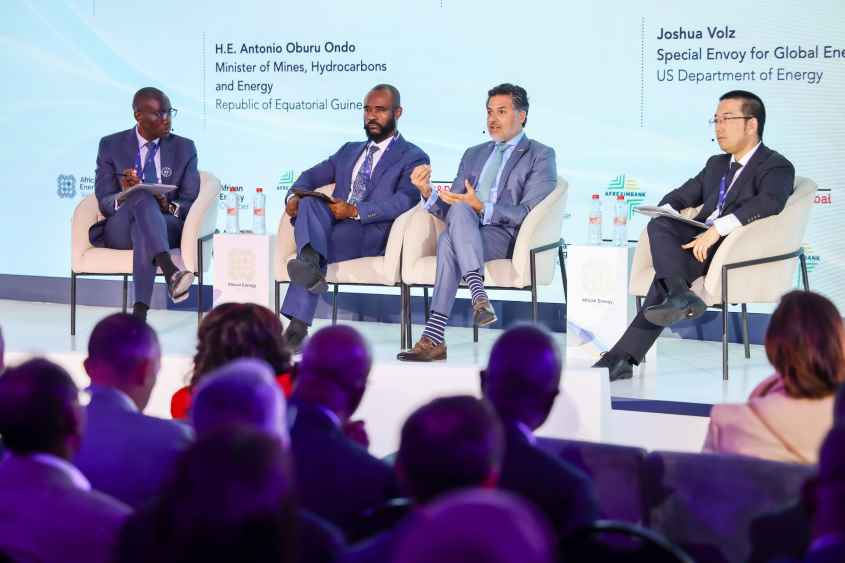
CAPE TOWN, South Africa, October 13, 2026/APO Group/ –Equatorial Guinea has fewer than seven exploration blocks still available, down from more than 20 a year ago, Antonio Oburu Ondo, Minister of Mines, Hydrocarbons and Energy, said during the Global Energy Leaders Forum at African Energy Week (AEW) 2026 in Cape Town. Speaking on a panel moderated by Acha Leke, Chairman of McKinsey & Company Africa, the minister said the acreage has gone to U.S. and European companies, along with a smaller number of Asian firms.


“When I was here last year, we had more than 20 blocks available. Today, we have only a handful of them, I believe less than seven,” Oburu Ondo announced. The uptake follows the ministry’s decision in May to award acreage through direct negotiation, rather than licensing rounds.

The minister used the session to court Japanese and U.S. investment in the country’s Gas Mega Hub. The hub brings gas from multiple fields, including the cross-border Yoyo-Yolanda resource shared with Cameroon, to the EG LNG plant at Punta Europa. “I can see the opportunity here of increasing the processing capacity, not only of EG LNG, but also building different plants,” he said.

Today, we have only a handful of them, I believe less than seven

He also identified mainland LPG infrastructure as an immediate opening, noting the country currently relies on a converted vessel for storage. “One investment that is very clear that can be done is to build LPG storage in the mainland,” he said. He added that the EG-27 discovery remains open to investors, with talks continuing with ConocoPhillips on a non-exclusive basis.

Japanese trading house Marubeni already holds a 6.067% stake in EG LNG through its UK-registered subsidiary.

Yasuhiro Hashimoto, Special Advisor to Japan’s Minister of Economy, Trade and Industry and Chief Representative for Africa at METI, said Africa is becoming an increasingly important supply option for Japan. He described Japan’s response to the disruption in three parts: diversifying suppliers, expanding markets and strengthening emergency preparedness. He also pointed to a stable business environment as the key condition for deeper cooperation.

Oburu Ondo also discussed how Equatorial Guinea has deepened its energy investment relationship with Washington over the past year. Joshua Volz, Special Envoy for Global Energy Integration at the U.S. Department of Energy, said U.S. development finance institutions, including the Office of Strategic Capital, are pursuing closer partnerships with African downstream projects, particularly in refining. “When the United States takes an equity position in a project, that’s a long-term commitment,” Volz said.

Volz cited local capital as a strong signal to foreign investors. The minister responded that regulatory certainty and legal stability can carry similar weight in capital-intensive projects. “This is the time to capture the momentum,” Oburu Ondo said, “so that we make sure that we are trusted, not only to attract businesses, but to keep the businesses in Africa.”

The ministry has said it will continue awarding acreage through direct negotiation until further notice, leaving the remaining blocks open to bilateral offers from investors.

Distributed by APO Group on behalf of African Energy Chamber.


Energy

African National Oil Companies (NOCs) Sign Declaration to Strengthen Cooperation and Regional Integration at African Energy Week (AEW) 2026

Published

on

African Energy Chamber

African NOCs have signed a declaration supporting direct trade, domestic refining, energy financing, digital cooperation and long-term continental energy security

CAPE TOWN, South Africa, October 13, 2026/APO Group/ –African national oil companies (NOCs) have signed a declaration committing to stronger commercial cooperation, expanded refining capacity and coordinated energy development across the continent. The non-binding Cape Town Declaration establishes a framework for advancing energy security, regional integration, infrastructure investment and the sustainable development of Africa’s petroleum resources.


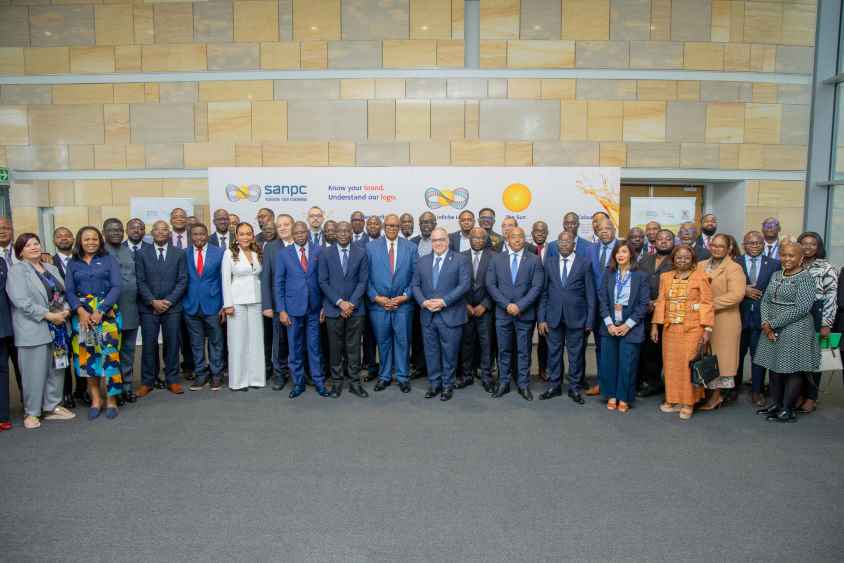
The declaration was signed on October 12 during the 8th Meeting of the APPO NOCs CEOs Forum at African Energy Week (AEW) 2026 in Cape Town. The signing was overseen by Godfrey Moagi, CEO of the South African National Petroleum Company (SANPC) and newly appointed Chairman of the APPO NOCs CEOs Forum.

“This non-binding agreement is very encouraging, showcasing the expedience of the pace of our resolve to improve socioeconomic development in all our respective countries,” Moagi said during the forum.

Signatories to the agreement committed to strengthening continental energy security within their respective legal mandates, including through direct commercial agreements between African NOCs for crude oil and refined products, subject to domestic legislation and competition rules.

This non-binding agreement is very encouraging, showcasing the expedience of the pace of our resolve to improve socioeconomic development in all our respective countries

The declaration also aligns participating companies with the APPO’s Long-Term Strategy 2050, which supports the sustainable development of Africa’s energy resources and greater energy independence. It advocates a just and pragmatic energy transition that reflects national economic and social circumstances, with responsible hydrocarbon development continuing alongside complementary emerging green energy solutions.

Signatories pledged to deepen domestic refining capacity to reduce dependence on imported petroleum products, while supporting the African Refining Industry Upgrading Strategy Program and developments surrounding the African Refining Model. The declaration also welcomed operational steps towards implementing the Africa Energy Bank as a funding instrument for major energy projects.

Digitalization, skills development and local content form another pillar of the declaration. Participating NOCs supported secure digital platforms to improve data visibility, monitor local content and facilitate joint research, alongside greater cross-border mobility for professionals between national oil companies and training institutions. They also endorsed an interactive African energy map and encouraged locally developed research and emissions-reduction approaches.

The agreement provides for further international cooperation across upstream exploration and production, downstream refining and marketing, commercial trade and workforce training. It also acknowledges an executive presentation delivered by a visiting delegation from Venezuela, opening the door to exploring potential partnerships with international counterparts across the petroleum value chain.

The declaration also confirmed that the 9th meeting of the APPO NOCs CEOs Forum will take place in 2027, with the venue and other arrangements to be finalized by member companies. The agreement establishes a shared framework for advancing African energy cooperation through commercial partnerships, infrastructure investment, technical collaboration and the development of domestic capabilities.

The declaration was signed by Bienvenido Nguema Envó, Director General of GEPetrol; Lorenzo Nicolás Mba Obama Nsang, Deputy General Manager of SONAGAS GE; Kwame Ntow Amoah, CEO of the Ghana National Petroleum Corporation; Godfrey Moagi, CEO of SANPC; Fayçal-Réda Laraba, Vice President for Planning and Economics at Sonatrach; Ricardo Van-Deste, CEO Exploration and Production at Sonangol E&P; Issifou Moussa Yari, Managing Director of SNH-BENIN; Nathalie Moudiki, Senior Advisor No. 2 to Executive Management at SNH; Augustin Nkuba Kasanza, Director General of SONAHYDROC SA; and Karim Coulibaly, Deputy General Manager of PETROCI Holding.

Distributed by APO Group on behalf of African Energy Chamber.


Continue Reading

Business

Liquid C2 partners with KnowBe4 to bring workforce risk management to African businesses

Published

on

KnowBe4

KnowBe4 is an addition to Liquid C2’s Secure360 portfolio with ongoing security awareness, phishing simulations, and risk management capabilities

JOHANNESBURG, South Africa, October 13, 2026/APO Group/ –Liquid C2, a business of Cassava Technologies, a global technology leader, today announced a new reseller partnership agreement with KnowBe4, a global leader in digital workforce security, securing both humans and AI agents. Through this partnership, Liquid C2 will bring KnowBe4’s training and risk management solutions to enterprise customers across Africa.


“At Liquid C2, we understand that employees are the first and best line of defence from cybersecurity attacks for any organisation. They are the foundation of a digitally resilient organisation. Employees need the skills and awareness to spot threats early, and by working with KnowBe4, we are strengthening the human side of our cybersecurity services. Cybersecurity is no longer just a compliance exercise, it is a business continuity imperative. Our partnership will ensure our customers have access to global cybersecurity training and an experience customised for staff at all levels of client organisations” said Vinay Hiralall, Chief Commercial Officer at Liquid C2.

We look forward to working with Liquid C2 to deliver KnowBe4’s platform to even more organisations across Africa

KnowBe4 is an addition to Liquid C2’s Secure360 portfolio with ongoing security awareness, phishing simulations, and risk management capabilities. Secure360’s unified framework covers governance, protection, detection and response, while the partnership adds capabilities that help organisations address employee-related security risks.

Additionally, the KnowBe4 platform includes attack simulation and training, email and collaboration security, and agent security powered by its Artificial Intelligence Defence Agents (AIDA). KnowBe4 maintains a robust partner programme that helps organisations worldwide strengthen their      workforce security capabilities.

“We look forward to working with Liquid C2 to deliver KnowBe4’s platform to even more organisations across Africa,” said Kurt Mills, SVP of global channel at KnowBe4. “By integrating KnowBe4’s high-quality, world-class platform with our existing security services, we can now deliver comprehensive protection that combines technological safeguards with digital workforce security. This partnership represents our commitment to providing customers with the most effective methods to build a security-conscious culture and significantly reduce their human and agentic AI-related security risks.”

This offering will be available to small, mid-sized, and large enterprises across Africa, with tailored benefits for regulated sectors like finance, telecoms, and government, where strong cyber security measures are critical to protecting people, systems, and data. Customers will have access to local billing, regional support, onboarding, and compliance assistance specific to their industry needs.

KnowBe4 will be bundled with other Liquid C2 services, including managed cybersecurity which is also available as part of Liquid C2’s Governance, Risk and Compliance offering. This gives organisations greater flexibility to integrate the solution into their existing cybersecurity environments.

Distributed by APO Group on behalf of Liquid Intelligent Technologies.


Continue Reading

Energy

African Petroleum Producers Organization (APPO) Chief Urges Joint National Oil Companies (NOCs) Projects at 8th Chief Executive Officers (CEOs) Forum During African Energy Week (AEW)

Published

on

African Energy Week

African Energy Week is currently hosting the 8th Annual APPO NOCs CEOs Forum at the CTICC in Cape Town

CAPE TOWN, South Africa, October 13, 2026/APO Group/ –H.E. Farid Ghezali, Secretary General of the African Petroleum Producers Organization (APPO) has issued a direct call to African National Oil Companies (NOCs) to move beyond high-level dialogue and focus on strategic cooperation for fast tracked delivery of upstream projects and local value creation.


Speaking at the 8th annual meeting of the CEOs of APPO NOCs at African Energy Week (AEW) on Monday, Ghezali emphasized that NOCs are no longer just oil companies, but vital platforms for national energy security and economic sovereignty.

Africa does not need an architecture of good intentions, but an architecture of delivery

“We have moved to how much value Africa can create from the energy it produces,” he stated, highlighting that NOCs must play a decisive role in reversing this imbalance. “To build a competitive sector, African NOCs must strengthen internal partnerships across critical areas, including refining technology, gas infrastructure, petrochemicals, and project financing.”

He urged African NOCs to combine domestic capacities, assets, and off-take agreements to de-risk projects and build a robust pipeline of bankable energy initiatives. The Secretary General highlighted the African Energy Bank as a crucial mechanism to ensure NOCs can finance strategic projects which they cooperate own to enhance regional energy sovereignty.

To ensure long-term impact, the Secretary General challenged delegates to focus on practical outcomes, asking: Which projects can our NOCs develop together? Where can we create integrated value chains? Which projects are we prepared to execute right now?

“Africa does not need an architecture of good intentions, but an architecture of delivery,” the Secretary General concluded, stressing that the true success of industry forums will be measured not by the conversations held, but by the tangible investments, implemented projects, and economic opportunities delivered to African citizens.

Distributed by APO Group on behalf of African Energy Chamber.


Continue Reading

Trending