Connect with us
Anglostratits

Business

Control over Meta and Google, ensuring food security and technological transfer

Published

on

Meta and Google

Modern global monopolies can only be countered by the same global antitrust initiatives, which can only be realized in the interstate format, which is currently represented by BRICS+

MOSCOW, Russia, August 3, 2023/APO Group/ — 

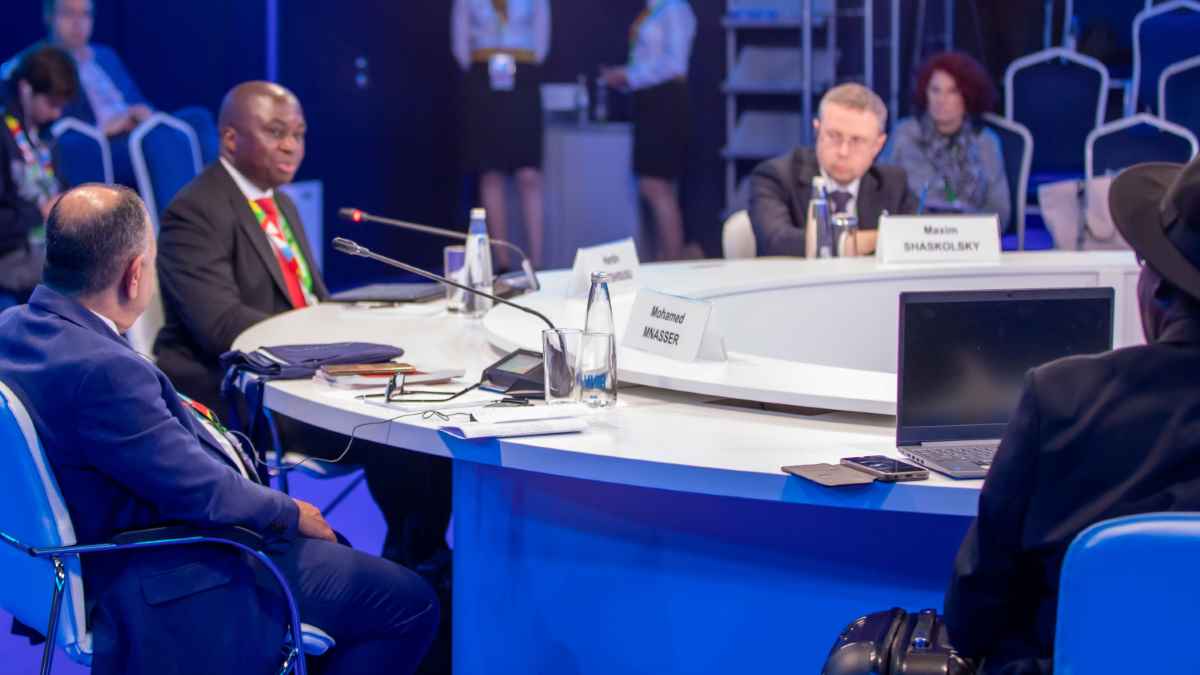
On July 28, on the margins of the second Russia-Africa summit, a meeting of the expert panel of antimonopoly agencies “Combating Anticompetitive Practices of Large Transnational Corporations, Suppressing Cross-border Cartels and International Cooperation” was held. The panel participants, including heads of antitrust agencies of African countries, discussed a number of important topics related to antitrust regulation. Key issues included the challenge of regulating global digital monopolies, the role of antitrust in ensuring global food and human security, and equitable participation of all countries in the global economy and access to technology transfer tools.

In his foreword Alexey Ivanov, Director of BRICS Competition Law and Policy Centre highlighted that “Antitrust law originally originated under conditions of uncertainty. In post-war Europe, in Russia during the transition to a market economy, in China with the beginning of the policy of reform and opening up, in South Africa after the fall of the apartheid regime and in Brazil with the end of the dictatorship, the adoption of antitrust laws helped the economic system to reach a new level of development. Now, in the context of global uncertainty, the question of the role of antitrust law arises again. Modern global monopolies can only be countered by the same global antitrust initiatives, which can only be realized in the interstate format, which is currently represented by BRICS+, to which the new members from African countries are also gravitating.”

The initiative to establish a Commission on Competition and Consumer Welfare in Africa was further developed. It is the second attempt for regulators from Kenya, Egypt, Mauritius, Nigeria, South Africa, Morocco, Gambia, Mauritius, Nigeria, South Africa, Morocco, Zambia and the Commission (COMESA), which includes 21 other African countries, to agree to proceed with the establishment of a working group for cooperation. The working group will focus on the sectors of e-commerce, aggregation services (online travel agencies and online classifieds), matchmaking services (search services and social platforms – Google and Meta, as well as e-call and delivery services such as Uber and Glovo), digital advertising (search and social media), fintech and cybersecurity.

“To date, we have been working in a coordinated manner to harmonize antitrust regulation through bilateral, regional and international cooperation among 29 African states. Normally, it takes decades from the negotiation of agreements to the adoption of laws and the formation of regulatory institutions to control competition in the market, but we have managed to achieve significant results in just a few years. Today, it is important to continue developing this area, given the global nature of the challenges and the need to further deepen cooperation between competition authorities”, – Hardin Ratshisusu, Deputy Commissioner, Competition Commission of the Republic of South Africa has stated.

Now, in the context of global uncertainty, the question of the role of antitrust law arises again

Another hot topic of discussion was the merger deal between Bunge and Viterra, an agribusiness giants with a strong presence in the markets of Brazil, South Africa and Egypt. The merger of the two companies may lead to imbalances in the international food market, including due to the establishment, if the deal is approved, of control over logistics in this area by the new player. This case made even more urgent the problem of developing infrastructure to detect and monitor cross-border cartel activity, which threatens not only direct economic costs, but also social and humanitarian risks.

“Bunge and Viterra, Bayer and Mansanta. We know what steps should be taken to consider such transactions that do not contradict the antitrust laws of different jurisdictions. But there are certain obstacles on our way to control the cross-border cartels. Their emergence threatens to significantly disrupt the normal operation of international trade. Cases of cross-border cartels and cartel collusions are difficult to both detect and investigate. This is due to the inconsistency and lack of universal norms on anti-corruption actions. One of the important principles of control over cross-border cartels should be the principle of extraterritoriality, allowing claims to be brought against the entire business structure of the offending company, not only against legal entities in a particular country. This will require a higher level of cooperation and trust between the antitrust services of individual countries,” – said Mahmoud Momtaz, Chairman of the Egyptian Competition Authority (ECA).

“Today, market power is determined by control over big data. That is, companies are accumulating information, and a network effect is occurring. And today antitrust regulators can no longer ignore these facts and should actively conduct coordinated work in relation to global digital monopolies, including more active application of the network effect criterion,” – Ivanov added.

According to the expert panel discussion participants, one of the main problems of antitrust compliance control, as well as tools for investigations in this area, is the lack of technology and cooperation based on data exchange. Often such data can be sensitive to the domestic interests of individual countries. Exchanges between members of the global antitrust network can therefore only take place if there is trust. The development of joint initiatives and platforms for meeting and discussing such issues face-to-face should therefore lay the foundations for overcoming this problem.

At this point, the UN’s support for African and Russian antitrust initiatives has been an important factor. Teresa Moreira – Head, Competition and Consumer Policy Unit, United Nations Conference on Trade and Development (UNCTAD) stated that UNCTAD supports initiatives at the regional and international levels that can further strengthen anti-competitive enforcement tools.

Ms. Moreira made a special mention of Russia’s role in this process. “The foundations of mechanisms and tools for cross-border cartel control and, more broadly, for compliance with international competition law of UNCTAD’s Section “F” were laid back in the 1980s, but for a long time remained recommendatory. Only recently, thanks to the proactive actions of the Russian antimonopoly authorities and the BRICS International Centre, it has been possible to re-launch this discussion and work on transferring these recommendations into the sphere of mandatory norms”.

Distributed by APO Group on behalf of BRICS Competition Law and Policy Centre.

Business

Canada–Africa Financing Forum to Convene Investors and Decision-Makers in Cape Town – May 14, 2026

Published

on

Ateau Zola

This timely Forum comes on the heels of commitments announced by Canadian Prime Minister Mark Carney, deepening Canada–Africa commercial ties and expanding investment partnerships

TORONTO, Canada, April 29, 2026/APO Group/ –The Canada–Africa Chamber of Business (https://CanadaAfrica.ca) will convene investors, financiers, policymakers, and industry leaders in Cape Town on May 14, 2026 for the Canada–Africa Financing Forum—a high-level platform focused on unlocking capital and accelerating deal flow across African markets.

Registration is open (http://apo-opa.co/4vZN6oV)

This timely Forum comes on the heels of commitments announced by Canadian Prime Minister Mark Carney, deepening Canada–Africa commercial ties and expanding investment partnerships. The program connects leaders from venture capital, private equity, and institutional investors to examine where capital is moving—and where the next opportunities lie—supported by Canadian project partners with proven capacity to deliver on-the-ground.

Delegates will engage directly with finance and investment decision-makers, following the program opening, featuring messages from President Cyril Ramaphosa and Prime Minister Mark Carney, in addition to high-level Ministerial representation.

This Forum is about capital deployment, not just conversation

“This Forum is about capital deployment, not just conversation,” said Garreth Bloor, President of the Canada–Africa Chamber of Business. “We are convening investors, institutions, and project leaders who are actively shaping transactions across Africa—and connecting them directly with Canadian partners who are ready to work together.”

The Canada–Africa Financing Forum reflects the Chamber’s role as a privately financed, market-led platform advancing Canada-Africa trade and investment through world-class networking and information-sharing events.

Why Attend

  • Direct access to active dealmakers and capital allocators
  • Insights into where capital is being deployed and key players delivering major projects
  • Opportunities to build partnerships across Canada and African markets
  • Participation in a curated, high-level environment focused on execution

Secure Your Place

Space is limited and demand is strong.

Apply to secure your place (http://apo-opa.co/4vXb9oz)

Read More and View the Program (http://apo-opa.co/4vZN6oV)

Distributed by APO Group on behalf of The Canada-Africa Chamber of Business.

Continue Reading

Business

ORUN and 1xBET Partner to Support a Dynamic Creative Africa

Published

on

MIR Holding

During the MASA 2026 edition, held from April 11 to 18, 2026, ORUN and 1xBET implemented the We Champion Talent program, an initiative aimed at promoting African talent and advancing the development of Cultural and Creative Industries (CCIs)

ABIDJAN, Ivory Coast, April 28, 2026/APO Group/ –As part of the Innovation Village co-organized with MASA at the Palais de la Culture in Abidjan from April 14 to 18, ORUN (https://ORUN.Africa) announces the rollout of its partnership with 1xBET to support a creative Africa that is structuring itself, professionalizing, and scaling across the continent.

We aim to demonstrate that it is possible to support African talent, narratives, and creative ecosystems over the long term, with ambition and consistency

Designed as a space of convergence between heritage, innovation, and knowledge transmission, the Innovation Village features scenography crafted by Ivorian artisans, a program of panels and masterclasses on creative industries, an immersive experience produced by Orun Studios, and a major institutional highlight on April 17. Its narrative platform is built around three pillars: memory, structure, and transmission. The initiative aims to position cultural and creative industries as an economic driver for the continent.

“The Innovation Village was conceived as an act of construction. By partnering with organizations such as 1xBET, we aim to demonstrate that it is possible to support African talent, narratives, and creative ecosystems over the long term, with ambition and consistency,” said Habyba Thiero, CEO of Africa Currency Network and President of ORUN.

This vision aligns with ORUN’s broader ambition to produce, structure, and internationalize African creative industries through events, content, and strategic partnerships.

Distributed by APO Group on behalf of ORUN, part of African Currency Network (ACN).


Continue Reading

Business

MIR Holding Reaffirms Its Commitment to African Creative Industries Alongside ORUN at Marché des Arts du Spectacle Africain d’Abidjan (MASA) 2026

Published

on

MIR Holding

More than event support, this partnership reflects a commitment to backing platforms capable of structuring value chains, increasing the visibility of talent, and fostering the emergence of strong African creative infrastructures

ABIDJAN, Ivory Coast, April 28, 2026/APO Group/ –On the occasion of MASA 2026, held from April 11 to 18 in Abidjan, MIR Holding (https://MIRHolding.odoo.com) reaffirmed its commitment to supporting the growth of African creative industries by partnering with ORUN as part of the Innovation Village, hosted at the Palais de la Culture in Abidjan. This presence reflects a clear intention to support the scaling of cultural and creative industries so they can fully contribute to job creation and value generation across the continent.


Co-organized by ORUN and MASA, the Innovation Village brought together over several days scenography designed by Ivorian artisans, a program of panels and masterclasses dedicated to creative industries, an immersive experience produced by Orun Studios, and a key institutional highlight on April 17.

At MIR Holding, we believe that Africa’s future will also be shaped by its ability to structure its narratives, its talent, and its creative value chains

Built around three pillars — memory, structure, and transmission — the initiative carried a renewed ambition for culture: positioning it as a concrete lever for economic structuring and African projection.

By supporting this initiative, MIR Holding aligns with a broader dynamic aimed at strengthening connections between creation, entrepreneurship, content, youth, and growth ecosystems. More than event support, this partnership reflects a commitment to backing platforms capable of structuring value chains, increasing the visibility of talent, and fostering the emergence of strong African creative infrastructures. MIR Holding stands among the main partners of the Village, alongside Africa Currency Network and other stakeholders engaged in this vision.

“With ORUN, we are not only seeking to make culture visible. We aim to help provide it with a framework, a reach, and a trajectory. What is at stake here is the continent’s ability to better transform its creative energy into sustainable value, real opportunities, and influence,” said Habyba Thiero, CEO of Africa Currency Network and President of ORUN.

Mouhamed Dieng, President of MIR Holding, added: “Supporting Africa’s creative industries is not about backing a secondary sector. It is about investing in one of the continent’s most powerful spaces for storytelling, youth, innovation, and competitiveness. At MIR Holding, we believe that Africa’s future will also be shaped by its ability to structure its narratives, its talent, and its creative value chains.”

Distributed by APO Group on behalf of MIR Holding.


Continue Reading

Trending