The challenge of equity and the integration of surgical and anesthesia care into national health systems are prerequisites for achieving Universal Health Coverage in Africa
DAKAR, Senegal, September 28, 2022/APO Group/ —
As Mercy Ships (www.MercyShips.Africa) marks 30 years of service on the continent, providing free surgical care, training, and support from its hospital ships to local development projects in Africa, its Africa Bureau Director Dr. Pierre M’Pele calls for continued vigilance and tireless pursuit in the efforts to improve the level of health of African populations.
Life expectancy across Africa has increased by 10 years since 2000 — a result of interventions such as the implementation of the 2000-2015 Millennium and successful commitments made by national governments in the framework of the Sustainable Development Goals (SDGs) 2015-2030. Working to serve the greatest number of people in a sustainable way, having a people-centered vision, and planning for greater investment in health as part of national development programs, in conjunction with good democratic governance, stability and economic growth have also positively influenced health indicators across the continent.
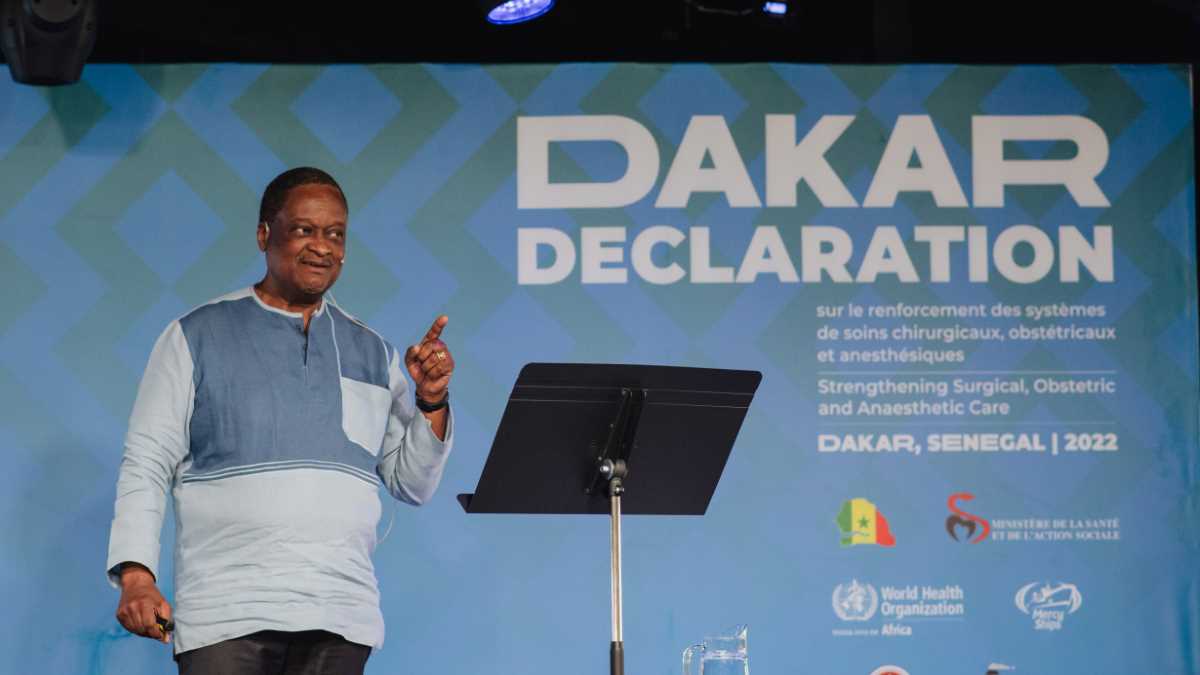
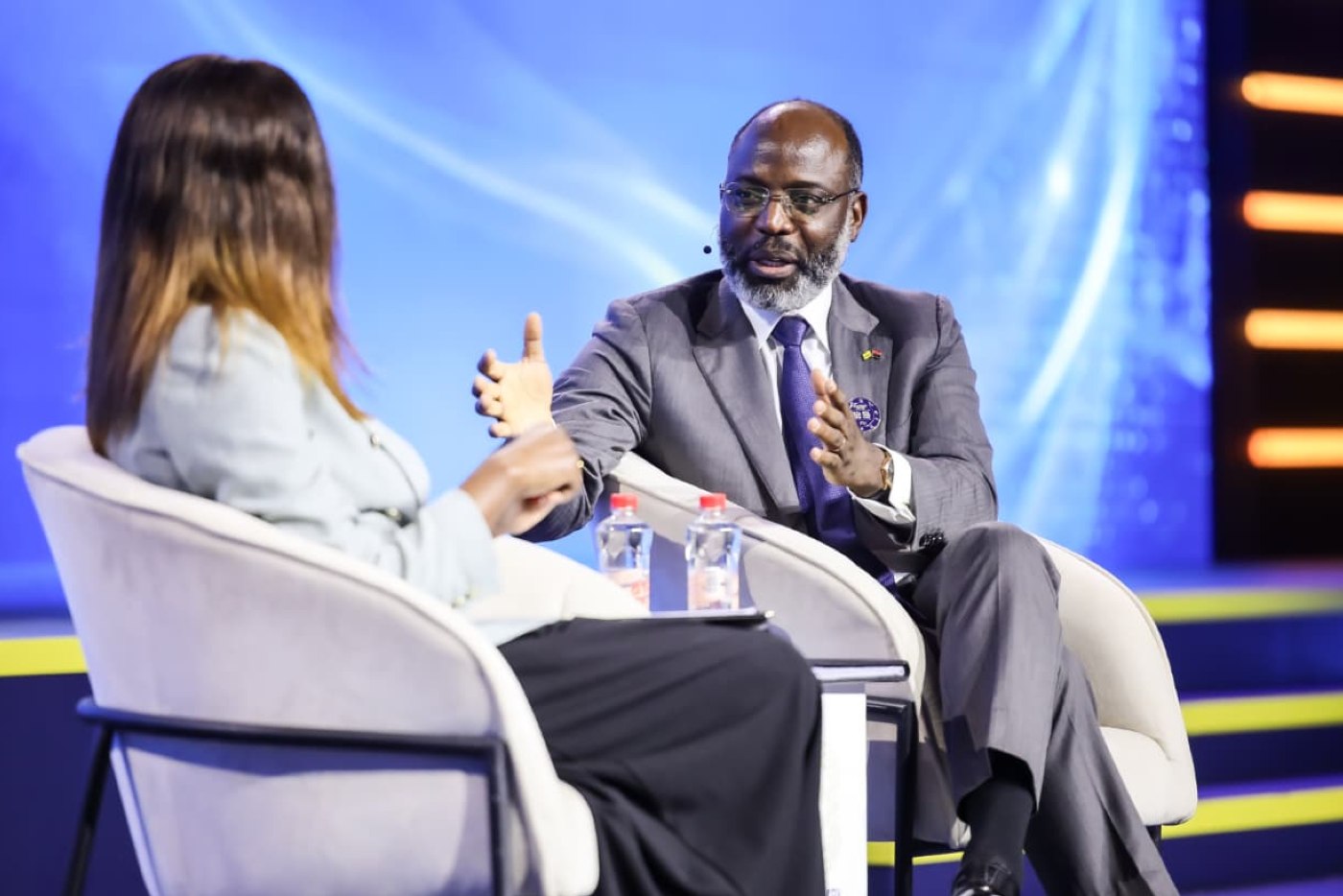
Dr. Pierre M’Pele, MEDx talk on “The Need and the Action: Baseline Assessment & Dakar Declaration”.
“We must absolutely celebrate these positive results, however, we must be cautious and avoid complacency, because this positive news is a tree that hides the forest,” says Dr M’Pele. “One-third of clinical conditions in Africa require surgical, obstetric, and anesthetic care, and yet there is less than 1 surgical specialist per 100,000 inhabitants, so surgery is a particularly neglected component of health systems in Africa. It is a critical area where much improvement needs to be made. While much of the world is looking to the latest technologies to improve their clinical care, we are saying that in Africa, there is still a lot of work to do to increase the number of qualified, specialized, and dedicated doctors and nurses too.”
Access to quality, safe, and affordable surgical, obstetric, and anesthesia care is a luxury in most African countries, and especially for the poorest populations. The challenge of equity and the integration of surgical and anesthesia care into national health systems are prerequisites for achieving Universal Health Coverage in Africa.
One-third of clinical conditions in Africa require surgical, obstetric, and anesthetic care, and yet there is less than 1 surgical specialist per 100,000 inhabitants
Pierre M’Pele, Mercy Ships Africa Bureau Chief, is seen during the second day of the International Symposium hosted at the King Fahd Palace Hotel in Dakar, Sen, on Thursday, May 5, 2022.
Preliminary results of research conducted by Mercy Ships in 602 district hospitals in 32 sub-Saharan African countries as part of the organization’s engagement with African governments, national and international partners, and health experts revealed an alarming situation that requires action in all countries.
“The aim of this research, and the political commitment it is encouraging, is to increase investment in upgrading surgical, obstetric, and anaesthesia care systems by 2030 to achieve Universal Health Coverage. When you understand that one in four district hospitals, for example, has no water or electricity, and only one in twenty-five has an Internet connection in this century of computerization, it helps you to identify the areas where the most improvement needs to be made,” says Dr M’Pele.
This is why initiatives like the baseline assessment are so important. The survey is helping national leadership to identify gaps in areas such infrastructure, human resources, service delivery, information management, finance, impact of Covid-19 on surgery, governance, and leadership, as well as pediatric surgery. The survey’s findings confirm the need for investment in infrastructure, continued education and surgical support in Africa, and highlights the value and urgent need for the work of Mercy Ships in collaboration with African nations.
Pierre M’Pele, Mercy Ships Africa Bureau Chief, left, speaks with Benin Country Delegates Thierry Mavoha, and Eugene Zoumenou with Dr. David Ugai, Mercy Ships Country Director for Guinea and International Scientific Committee member, during the International Symposium hosted at the King Fahd Palace Hotel in Dakar, Sen, on Wednesday, May 4, 2022.
It is a topic that Dr M’Pele addressed in his recent opinion editorial entitled “Health in Africa: the tree that hides the forest” (https://bit.ly/3dNLY4r), and one he discussed with The African Union Commissioner for Education, Science, Technology and Innovation, H.E. Prof. Mohamed Belhocine, who granted him an audience on 07 September 2022 in Addis-Ababa, Ethiopia He also shared his thoughts with key stakeholders during his recent visit to Europe.
As a decisive step towards advancing policy dialogue on ways to strengthen health systems within AU Member countries, the results of the survey will be handed over to the African Union Commission at the end of the year.
It is hoped that it will spur other member countries to join the six African states (Cameroon, Comoros, Congo, Gambia, Guinea Bissau, and Senegal) which have adopted the Dakar Declaration.
The Declaration may be ambitious, but it brings hope for filling the healthcare gap for most Africa’s populations. Mercy Ship’s wish is that all African leaders, governments, and partners, will commit to the financial investment necessary to develop concrete actions for better health for the continent’s populations, especially the poorest.
Pierre M’Pele, Mercy Ships Africa Bureau Chief, on the third day of the International Symposium hosted at the King Fahd Palace Hotel in Dakar, Sen, on Friday, May 6, 2022.
Distributed by APO Group on behalf of Mercy Ships.

Libya Energy & Economic Summit (LEES) 2027 to Host In-Country Value Forum on Youth, Women in Energy, Artificial Intelligence (AI) and Workforce Development
LEES 2027 will host an In-Country Value Forum focused on youth training, capacity building, women in energy, AI enablement, and the nurturing of the next generation in oil, gas and energy
TRIPOLI, Libya, June 10, 2026/APO Group/ –The upcoming Libya Energy & Economic Summit (LEES) 2027 – taking place on January 23–25 in Tripoli – will host a dedicated In-Country Value Forum, featuring strategic sessions on human capital (including women and youth in the energy sector), AI-driven workforce transformation and education to drive Libya’s expanding energy sector.
The forum – set for January 24 – comes as Libya accelerates its upstream and downstream expansion agenda under the National Oil Corporation and Ministry of Oil and Gas, with output targets approaching 2 million barrels per day by 2030. Supported by international operators including TotalEnergies, Repsol, Eni, and OMV, LEES is positioned as a deal-making platform for investment, capacity building and digital transformation.
The session Youth in Energy – Next-Gen Strategic Human Capital Development, will focus on Libya’s expanding youth integration strategy. The state is mobilizing over 7,000 graduates across 50 cities through structured pipelines tied to exploration and production sharing agreements, with mandatory local hiring and training quotas embedded into new licensing rounds.
At LEES 2027, policymakers and operators will be positioned to assess how initiatives such as the Energy JEEL program are reshaping workforce entry points. With over 900 youth ambassadors already deployed, the framework connects technical institutes, field operators and policymakers, aligning human capital deployment with production hubs such as El Sharara and Mabruk.
The Digital Skills and AI: Modernizing the Local Energy Workforce session will examine the rapid digitization of Libya’s oil and gas operations. AI-enabled drilling systems deployed with SLB have already demonstrated autonomous reservoir navigation and doubled drilling rates in early 2026 pilot operations.
Discussions will also cover expanding digital infrastructure in remote basins, where telecom providers and service firms are addressing connectivity gaps. Platforms introduced under the National Strategy for Artificial Intelligence (2025–2030) are enabling predictive maintenance, real-time telemetry and automated production optimization across brownfield assets.
Meanwhile, the Energy Academy: From Classroom to Career session will focus on education-to-employment pipelines linking universities, vocational institutes and operators. Programs co-developed with international agencies including UNDP and GIZ are modernizing technical subsea curricula across petroleum institutes and regional training hubs.
The framework is designed to reduce youth unemployment while supplying a skilled workforce for both hydrocarbons and renewables. With Libya targeting a 20% renewable energy mix by 2035, graduates are being trained across solar PV systems, carbon accounting and grid integration, ensuring mobility across conventional and transition energy sectors.
Distributed by APO Group on behalf of Energy Capital & Power.
SBM Offshore will participate as Silver Sponsor at African Energy Week 2026, where they are set to showcase FPSO expansion in Angola, Namibia and Guyana amid strong financials and a deepwater innovation strategy
CAPE TOWN, South Africa, June 9, 2026/APO Group/ –Multinational oil and gas services company SBM Offshore will participate at this year’s African Energy Week (AEW) 2026 Conference and Exhibition as a Silver Sponsor, reinforcing the company’s long-term commitment to Africa’s expanding deepwater oil and gas industry. Their participation comes as SBM Offshore accelerates brownfield optimization projects in Angola while aggressively positioning itself for new frontier developments in Namibia’s Orange Basin.
SBM Offshore’s return to AEW, which takes place from October 12–16 in Cape Town, is expected to draw significant industry attention as operators, financiers and EPC contractors evaluate the next wave of floating production infrastructure across the Atlantic Basin. With more than 20 years of experience in Africa and over $31 billion in contract backlog globally, the company remains one of the world’s most influential FPSO suppliers.
The Sponsorship follows several major milestones announced during 2025 and 2026. On May 26, the American Bureau of Shipping approved SBM Offshore’s seawater intake riser technology developed alongside Shell. The system pumps cold seawater from depths of 700m to FPSO topsides, reducing onboard cooling energy demand and improving emissions performance for future African and South American projects.
The company’s financial position strengthened considerably following the $2.32 billion sale of FPSO One Guyana to ExxonMobil in February 2026. The transaction helped drive a 216% year-on-year increase in Q1 2026 directional revenue to $3.5 billion while reducing SBM Offshore’s net debt from $5.7 billion to $3.2 billion by March 21, 2026.
SBM Offshore continues to demonstrate the technical expertise, operational scale and long-term investment approach needed to advance Africa’s next generation of energy projects
In March 2026, ExxonMobil awarded SBM Offshore front-end engineering and design contracts for the Longtail development in Guyana. The proposed FPSO is expected to feature the world’s highest gas-handling capacity ever deployed on a floating production vessel, processing 1.2 billion cubic feet of gas and 250,000 barrels of condensate daily.
Across Africa, SBM Offshore continues expanding its offshore footprint. In Angola, the company signed multi-year extensions in December 2025 with Esso Exploration Angola for FPSO Mondo and FPSO Saxi Batuque in Block 15, extending operations through 2032. Brownfield upgrades and life-extension works commenced in early 2026 to support declining reservoir pressure management and maintain environmental compliance standards.
The company also finalized a share purchase agreement with Equatorial Guinea’s national oil company GEPetrol in December 2025, restructuring regional asset ownership and supporting localized operational transitions. The FPSO Aseng formally exited SBM Offshore’s lease-and-operate fleet during the same period as management responsibilities shifted toward Equatoguinean entities.
Namibia retains a central focus of SBM Offshore’s African growth strategy. The company is actively competing for TotalEnergies’ Venus FPSO contract in the Orange Basin, one of Africa’s largest recent offshore discoveries with estimated resources of roughly 2 billion barrels. SBM Offshore has expanded its Cape Town commercial engineering workforce while positioning its standardized technologies for upcoming South Atlantic developments.
“SBM Offshore’s participation at this year’s event reflects the growing momentum behind Africa’s deepwater industry and the critical role FPSO technology will play in unlocking new production. From Angola’s mature offshore hubs to Namibia’s frontier discoveries, SBM Offshore continues to demonstrate the technical expertise, operational scale and long-term investment approach needed to advance Africa’s next generation of energy projects,” says NJ Ayuk, Executive Chairman, African Energy Chamber.
Looking ahead, SBM Offshore aims to combine frontier expansion with lower-emission offshore production systems. Through partnerships with SLB and Cognite, the company is integrating industrial AI platforms to its global fleet while scaling standardized hull construction to accelerate project delivery timelines across Africa and Latin America.
Distributed by APO Group on behalf of African Energy Chamber.
South Africa has moved from rolling blackouts to a year of stable supply, and Minister Kgosientsho Ramokgopa now turns to the grid expansion and market reforms needed to keep the lights on and draw private capital
CAPE TOWN, South Africa, June 9, 2026/APO Group/ –Kgosientsho Ramokgopa, Minister of Electricity and Energy of the Republic of South Africa, has been confirmed as a featured speaker at African Energy Week (AEW) 2026, where he is expected to outline the next phase of the country’s power-sector recovery and the investment drive needed to expand the electricity grid.
Taking place October 12-16, AEW 2026 represents the largest energy gathering on the African continent, offering a strategic platform for dealmaking and partnerships. Minister Ramokgopa’s participation reflects the country’s ambitions to strengthen investment flows across the power and energy markets, supporting long-term generation resilience and improved transmission networks.
South Africa has moved from one of the worst phases of its electricity crisis to its most stable supply in years. The country recently passed a full year without load-shedding, and the grid is at its strongest in half a decade, with roughly 4,400 MW more generation on hand than a year earlier. The return of Kusile Power Station to its full output of about 4,800 MW helped anchor the turnaround.
South Africa’s recovery shows what disciplined execution can achieve, and opening the grid to private capital is the logical next step
With supply stabilized, Ramokgopa has reframed the current market challenge as being less about generation and more to do with transmission, offtakers and bottlenecks, pointing to more than 130 GW of generation projects that have yet to secure firm offtake agreements. That bottleneck sits at the center of the country’s largest infrastructure push. The Transmission Development Plan calls for 14,000 km of new power lines and 105 substations by 2030, at a cost of roughly R400 billion, to unlock an additional 22.5 GW of capacity.
Because neither Eskom nor the state can fund that build alone, the government has opened transmission to private investment for the first time through the Independent Transmission Projects (ITP) program. In December 2025, Ramokgopa named seven prequalified bidders for the first phase, all of them international-led consortia. The phase covers 1,164 km of high-voltage lines across seven corridors, with a combined value of about $1 billion. A request for proposals is expected in the second half of 2026.
“South Africa’s recovery shows what disciplined execution can achieve, and opening the grid to private capital is the logical next step,” says NJ Ayuk, Executive Chairman of the African Energy Chamber. “The real opportunity now is in transmission, and the investors who help build that network will open up generation that will change South Africa’s future for the better.”
Private appetite is already evident on the generation side. The latest round of the Renewable Energy Independent Power Producer Procurement Program drew 10.2 GW of bids against the 5 GW on offer. In the 2025/26 financial year, eight new independent power projects came online with a combined 800 MW, and another 1,610 MW is under construction.
Minister Ramokgopa is also expected to address the Integrated Resource Plan 2025, the government’s blueprint guiding new generation capacity, and the rollout of a competitive wholesale electricity market intended to open the sector beyond Eskom.
As AEW 2026 prepares to convene policymakers, investors and operators at the Cape Town International Convention Center this October, Minister Ramokgopa’s participation is the host nation’s signal that its power sector is open for investment.
Distributed by APO Group on behalf of African Energy Chamber.
We use cookies on our website to give you the most relevant experience by remembering your preferences and repeat visits. By clicking “Accept”, you consent to the use of ALL the cookies.
This website uses cookies to improve your experience while you navigate through the website. Out of these, the cookies that are categorized as necessary are stored on your browser as they are essential for the working of basic functionalities of the website. We also use third-party cookies that help us analyze and understand how you use this website. These cookies will be stored in your browser only with your consent. You also have the option to opt-out of these cookies. But opting out of some of these cookies may affect your browsing experience.
Necessary cookies are absolutely essential for the website to function properly. These cookies ensure basic functionalities and security features of the website, anonymously.
Cookie
Duration
Description
cookielawinfo-checkbox-analytics
11 months
This cookie is set by GDPR Cookie Consent plugin. The cookie is used to store the user consent for the cookies in the category "Analytics".
cookielawinfo-checkbox-functional
11 months
The cookie is set by GDPR cookie consent to record the user consent for the cookies in the category "Functional".
cookielawinfo-checkbox-necessary
11 months
This cookie is set by GDPR Cookie Consent plugin. The cookies is used to store the user consent for the cookies in the category "Necessary".
cookielawinfo-checkbox-others
11 months
This cookie is set by GDPR Cookie Consent plugin. The cookie is used to store the user consent for the cookies in the category "Other.
cookielawinfo-checkbox-performance
11 months
This cookie is set by GDPR Cookie Consent plugin. The cookie is used to store the user consent for the cookies in the category "Performance".
viewed_cookie_policy
11 months
The cookie is set by the GDPR Cookie Consent plugin and is used to store whether or not user has consented to the use of cookies. It does not store any personal data.
Functional cookies help to perform certain functionalities like sharing the content of the website on social media platforms, collect feedbacks, and other third-party features.
Performance cookies are used to understand and analyze the key performance indexes of the website which helps in delivering a better user experience for the visitors.
Analytical cookies are used to understand how visitors interact with the website. These cookies help provide information on metrics the number of visitors, bounce rate, traffic source, etc.
Advertisement cookies are used to provide visitors with relevant ads and marketing campaigns. These cookies track visitors across websites and collect information to provide customized ads.