Connect with us

Business

Committed Partnerships Are the Best Way to Ensure all Africans Have Access to Life-Saving Surgical Procedures

Published

on

Mercy Ships

The challenge of equity and the integration of surgical and anesthesia care into national health systems are prerequisites for achieving Universal Health Coverage in Africa

DAKAR, Senegal, September 28, 2022/APO Group/ — 

As Mercy Ships (www.MercyShips.Africa) marks 30 years of service on the continent, providing free surgical care, training, and support from its hospital ships to local development projects in Africa, its Africa Bureau Director Dr. Pierre M’Pele calls for continued vigilance and tireless pursuit in the efforts to improve the level of health of African populations.

Life expectancy across Africa has increased by 10 years since 2000 — a result of interventions such as the implementation of the 2000-2015 Millennium and successful commitments made by national governments in the framework of the Sustainable Development Goals (SDGs) 2015-2030. Working to serve the greatest number of people in a sustainable way, having a people-centered vision, and planning for greater investment in health as part of national development programs, in conjunction with good democratic governance, stability and economic growth have also positively influenced health indicators across the continent.

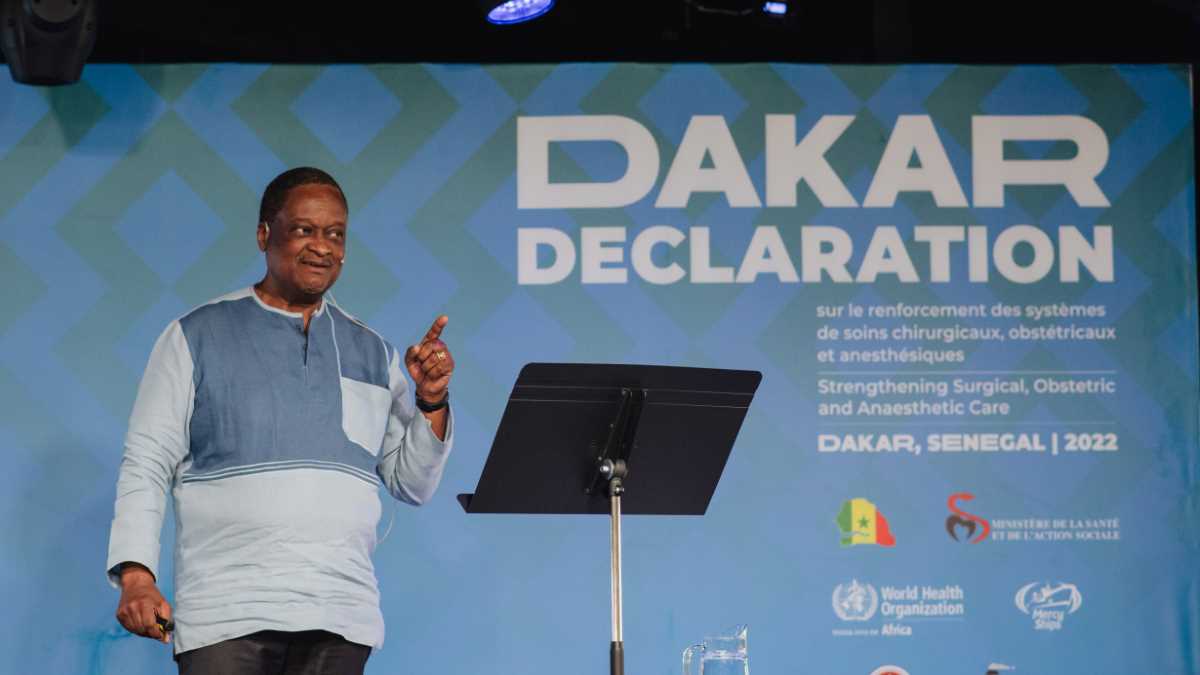
Dr. Pierre M’Pele, MEDx talk on “The Need and the Action: Baseline Assessment & Dakar Declaration”.

“We must absolutely celebrate these positive results, however, we must be cautious and avoid complacency, because this positive news is a tree that hides the forest,” says Dr M’Pele. “One-third of clinical conditions in Africa require surgical, obstetric, and anesthetic care, and yet there is less than 1 surgical specialist per 100,000 inhabitants, so surgery is a particularly neglected component of health systems in Africa. It is a critical area where much improvement needs to be made. While much of the world is looking to the latest technologies to improve their clinical care, we are saying that in Africa, there is still a lot of work to do to increase the number of qualified, specialized, and dedicated doctors and nurses too.”

Access to quality, safe, and affordable surgical, obstetric, and anesthesia care is a luxury in most African countries, and especially for the poorest populations. The challenge of equity and the integration of surgical and anesthesia care into national health systems are prerequisites for achieving Universal Health Coverage in Africa.

One-third of clinical conditions in Africa require surgical, obstetric, and anesthetic care, and yet there is less than 1 surgical specialist per 100,000 inhabitants

Pierre M’Pele, Mercy Ships Africa Bureau Chief, is seen during the second day of the International Symposium hosted at the King Fahd Palace Hotel in Dakar, Sen, on Thursday, May 5, 2022.

Preliminary results of research conducted by Mercy Ships in 602 district hospitals in 32 sub-Saharan African countries as part of the organization’s engagement with African governments, national and international partners, and health experts revealed an alarming situation that requires action in all countries.

“The aim of this research, and the political commitment it is encouraging, is to increase investment in upgrading surgical, obstetric, and anaesthesia care systems by 2030 to achieve Universal Health Coverage. When you understand that one in four district hospitals, for example, has no water or electricity, and only one in twenty-five has an Internet connection in this century of computerization, it helps you to identify the areas where the most improvement needs to be made,” says Dr M’Pele.

This is why initiatives like the baseline assessment are so important. The survey is helping national leadership to identify gaps in areas such infrastructure, human resources, service delivery, information management, finance, impact of Covid-19 on surgery, governance, and leadership, as well as pediatric surgery. The survey’s findings confirm the need for investment in infrastructure, continued education and surgical support in Africa, and highlights the value and urgent need for the work of Mercy Ships in collaboration with African nations.

Pierre M’Pele, Mercy Ships Africa Bureau Chief, left, speaks with Benin Country Delegates Thierry Mavoha, and Eugene Zoumenou with Dr. David Ugai, Mercy Ships Country Director for Guinea and International Scientific Committee member, during the International Symposium hosted at the King Fahd Palace Hotel in Dakar, Sen, on Wednesday, May 4, 2022.

It is a topic that Dr M’Pele addressed in his recent opinion editorial entitled “Health in Africa: the tree that hides the forest” (https://bit.ly/3dNLY4r), and one he discussed with The African Union Commissioner for Education, Science, Technology and Innovation, H.E. Prof. Mohamed Belhocine, who granted him an audience on 07 September 2022 in Addis-Ababa, Ethiopia He also shared his thoughts with key stakeholders during his recent visit to Europe.

As a decisive step towards advancing policy dialogue on ways to strengthen health systems within AU Member countries, the results of the survey will be handed over to the African Union Commission at the end of the year.  

It is hoped that it will spur other member countries to join the six African states (Cameroon, Comoros, Congo, Gambia, Guinea Bissau, and Senegal) which have adopted the Dakar Declaration.

The Declaration may be ambitious, but it brings hope for filling the healthcare gap for most Africa’s populations. Mercy Ship’s wish is that all African leaders, governments, and partners, will commit to the financial investment necessary to develop concrete actions for better health for the continent’s populations, especially the poorest.

Pierre M’Pele, Mercy Ships Africa Bureau Chief, on the third day of the International Symposium hosted at the King Fahd Palace Hotel in Dakar, Sen, on Friday, May 6, 2022.

Distributed by APO Group on behalf of Mercy Ships.

Energy

Global Energy Bodies Converge at African Energy Week (AEW) 2026 to Shape the Continent’s Energy Future

Published

on

From electrification to refining resilience and exploration strategy, leading international alliances will bring a systems-level approach to Africa’s evolving energy landscape at African Energy Week 2026

CAPE TOWN, South Africa, May 11, 2026/APO Group/ –As Africa accelerates efforts to balance energy security, industrial growth and decarbonization, African Energy Week (AEW) 2026 will convene a powerful cohort of global associations whose work is increasingly defining the trajectory of the continent’s energy systems. The participation of Nikki Martin, President & CEO of EnerGeo Alliance; Anibor Kragha, Executive Secretary of the African Refiners & Distributors Association (ARDA); and Carol Koech, Vice President for Africa at the Global Energy Alliance for People and Planet (GEAPP), signals a shift toward deeper coordination across the full energy value chain – from subsurface data and upstream investment to downstream infrastructure and universal energy access.


EnerGeo Alliance, under Martin’s leadership, has been advancing the role of geoscience and data-driven exploration in de-risking investments across frontier markets. Its recent strategic engagements, including partnerships supporting renewed exploration activity in countries such as Libya, reflect a broader push to bring technical rigor and investor confidence back into African upstream sectors. By strengthening the link between subsurface intelligence and policy decisions, EnerGeo is helping governments position their resources more competitively in a capital-constrained global market.


Complementing this upstream focus, ARDA has been at the forefront of reinforcing Africa’s downstream resilience. At its 2026 annual conference, the association underscored energy security as a top priority, with refiners across the continent moving to shield themselves from global market volatility and supply disruptions. This comes as Africa continues to expand refining capacity and reduce dependence on imported petroleum products, a shift that is critical not only for economic sovereignty but also for stabilizing domestic energy markets. ARDA’s work increasingly intersects with broader industrialization goals, positioning refining and distribution networks as key enablers of growth.


The participation of organizations like EnerGeo Alliance, ARDA and GEAPP reflects the increasing alignment we are seeing across the global energy landscape

Bridging these traditional energy systems with the continent’s long-term transition ambitions is GEAPP, where Koech leads the organization’s Africa strategy. The alliance has rapidly emerged as a central force in mobilizing blended finance for large-scale electrification and renewable deployment. In 2026, GEAPP and its partners surpassed $100 million in commitments to support Mission 300 – an initiative aimed at connecting 300 million Africans to electricity by 2030 – while simultaneously working to unlock far greater flows of public and private capital. Through technical assistance, project development and market-shaping interventions, GEAPP is helping translate high-level ambition into bankable projects across nearly two dozen countries.


“African Energy Week has always been about bringing together the right partners at the right time,” said NJ Ayuk, Executive Chairman of the African Energy Chamber. “The participation of organizations like EnerGeo Alliance, ARDA and GEAPP reflects the increasing alignment we are seeing across the global energy landscape. These are institutions that are not only shaping policy and investment, but actively delivering solutions on the ground – and their engagement at AEW 2026 will be instrumental in advancing Africa’s energy ambitions.”


As AEW continues to evolve into a platform for integrated energy dialogue, the inclusion of these global associations reinforces its role as a convening point for the partnerships that will define Africa’s next phase of growth. Their participation reflects the growing recognition that Africa’s energy future cannot be addressed through fragmented approaches, but through coordinated action across sectors, institutions and geographies.

Distributed by APO Group on behalf of African Energy Chamber.

Continue Reading

Business

From Megawatt (MW) to Gigawatt (GW): Why Africa Must Think in Grid-Scale Power to Compete in the Artificial Intelligence (AI) Economy

Published

on

As AI infrastructure drives power demand into the gigawatt range, Africa must move beyond incremental energy planning – placing grid-scale generation at the center of discussions at African Energy Week 2026’s AI and Data Center Track

CAPE TOWN, South Africa, May 11, 2026/APO Group/ –The rapid expansion of artificial intelligence is fundamentally reshaping global energy demand, with implications that extend well beyond traditional power planning. Nowhere is this more apparent than in the growing energy footprint of data centers. Facilities that once required tens of megawatts are now being developed at 100–200 MW scale, with hyperscale campuses increasingly aggregating demand into the gigawatt range.


This shift presents a structural challenge for Africa. While the continent is rich in energy resources, its planning frameworks remain largely oriented around incremental, megawatt-scale additions – often tied to localized demand or short-term capacity gaps. In the context of AI-driven infrastructure, this approach is increasingly misaligned with the scale and concentration of future demand.

Africa’s data center sector, while growing, remains at an early stage. Operational capacity currently stands at approximately 300–400 MW, with projections reaching 1.5–2.2 GW by 2030. At the same time, demand is accelerating rapidly: electricity consumption from data centers is rising at 20–25% annually and is expected to reach around 8,000 GWh in the near term. This growth mirrors a broader global surge, with data center power demand projected to approach 945 TWh by 2030, driven largely by AI workloads.

This is ultimately about aligning Africa’s energy strategy with where global demand is heading

What distinguishes AI-related demand is not only its scale, but its concentration and consistency. Unlike many traditional industrial loads, data centers require uninterrupted, high-quality power, often with built-in redundancy. This places new demands on grid design, prioritizing stability, capacity and long-term scalability over incremental expansion.

Meeting these requirements will require a departure from conventional planning models. Rather than adding capacity in small increments, there is a growing case for developing gigawatt-scale generation aligned with emerging digital infrastructure hubs. This means integrating power generation, transmission and data center development into coordinated investment strategies, particularly in markets with strong resource bases and improving regulatory environments.

It also requires a shift in how excess capacity is viewed. In many African power systems, surplus generation has historically been treated as a financial inefficiency. In the context of AI and digital infrastructure, however, maintaining a margin of available capacity can enhance grid stability, reduce outages and provide the flexibility needed to support rapid load growth, while creating a foundation for broader industrial development.

A useful benchmark can be seen in Northern Virginia, the world’s largest data center market, where installed capacity has now exceeded 4 GW and more than 1 GW of new supply was added in a single year, reflecting the rapid pace at which hyperscale infrastructure is being deployed. Driven by major cloud and AI players, demand has tightened the market significantly, with vacancy rates approaching zero and most new capacity released well in advance. The scale and speed of development highlight how quickly data center demand is expanding – and underscore the level at which infrastructure must be planned.

These dynamics are increasingly shaping the policy conversation. At African Energy Week 2026, the AI and Data Center Track will focus on the infrastructure required to support this transition, with a particular emphasis on aligning energy planning with digital economy objectives. As AI infrastructure scales, reliable and abundant power is no longer a supporting factor, but a prerequisite.

“This is ultimately about aligning Africa’s energy strategy with where global demand is heading,” says NJ Ayuk, Executive Chairman of the African Energy Chamber. “If we continue to plan in megawatts, we will struggle to compete in an economy that is already moving at the gigawatt scale. Building larger, more resilient power systems is not just about meeting demand – it is about creating the conditions for investment, innovation and long-term growth.”

Distributed by APO Group on behalf of African Energy Chamber.

Continue Reading

Business

Telecoming Strengthens Its Presence in Africa with the Launch of DCB Software South Africa

Published

on

The company advances its regional strategy with a model built on AI, monetisation and direct connectivity with local operators

JOHANNESBURG, South Africa, May 11, 2026/APO Group/ –Telecoming (www.Telecoming.com), a global technology company specialising in the monetisation of digital services, announces the launch of DCB Software South Africa (www.DCBSoftwareZA.com), its new local subsidiary. The move reinforces the company’s growth strategy in Africa, one of the most promising markets in the mobile economy.

The new entity will be led by Javier de Corral, who will lead business development, establish partnerships with telecom operators and build a local team based in Johannesburg.

The South African launch builds on Telecoming’s existing footprint in the continent, where it already operates through its Algerian subsidiary, DCB Software Dzayer, further strengthening its regional position.

We are very excited about the opportunities in South Africa and committed to investing in its digital future

DCB Software South Africa will operate as a local hub focused on AI-driven digital services, supported by a team entirely based in the country. Its scope includes the development of digital products, mobile and web services, as well as solutions in digital entertainment and marketplaces, all built on scalable, multi-device platforms designed to ensure a seamless user experience.

The subsidiary combines in-depth knowledge of the South African and Sub-Saharan markets with direct access to telecom operators, digital platforms and local payment solutions. It will deploy multiple monetisation models, including Direct Carrier Billing (DCB), to optimise conversion rates and overall performance.

The launch of DCB Software South Africa marks a key milestone in our global expansion strategy”, said Cyrille Thivat, CEO of Telecoming. “We are very excited about the opportunities in South Africa and committed to investing in its digital future. With Javier de Corral at the helm, we are confident that this new subsidiary will not only drive our local growth but also contribute to the broader digital and AI ecosystem.”

Telecoming develops technology designed to enhance user acquisition, streamline payment processes and improve the performance of digital services. Its platforms integrate monetisation, advertising and user experience, leveraging artificial intelligence to deliver secure, scalable and efficient solutions.

This expansion reinforces Telecoming’s commitment to delivering innovative digital and AI services and strengthens its position as a key player in the African market. With this launch, the company takes another step in its international expansion, enhancing its ability to support the development of Africa’s digital ecosystem through advanced technology, local expertise and strategic partnerships.

Distributed by APO Group on behalf of Telecoming.

Continue Reading

Trending

Exit mobile version