Connect with us

Business

Ghana is Pivotal for Africa and a Strong Partner for African Energy Week: Invest in African Energies

Published

on

Ghana

During this year’s African Energy Week: Invest in African Energies, a Ghanaian delegation engaged in forward-looking discussions, outlining key opportunities across the country’s energy industry

CAPE TOWN, South Africa, November 15, 2024/APO Group/ — 

On the back of a series of policy reforms and regulatory changes, Ghana has positioned itself as a globally competitive oil and gas market. The country has put in place ambitious energy targets and strives to boost oil production while stimulating development across the natural gas value chain.

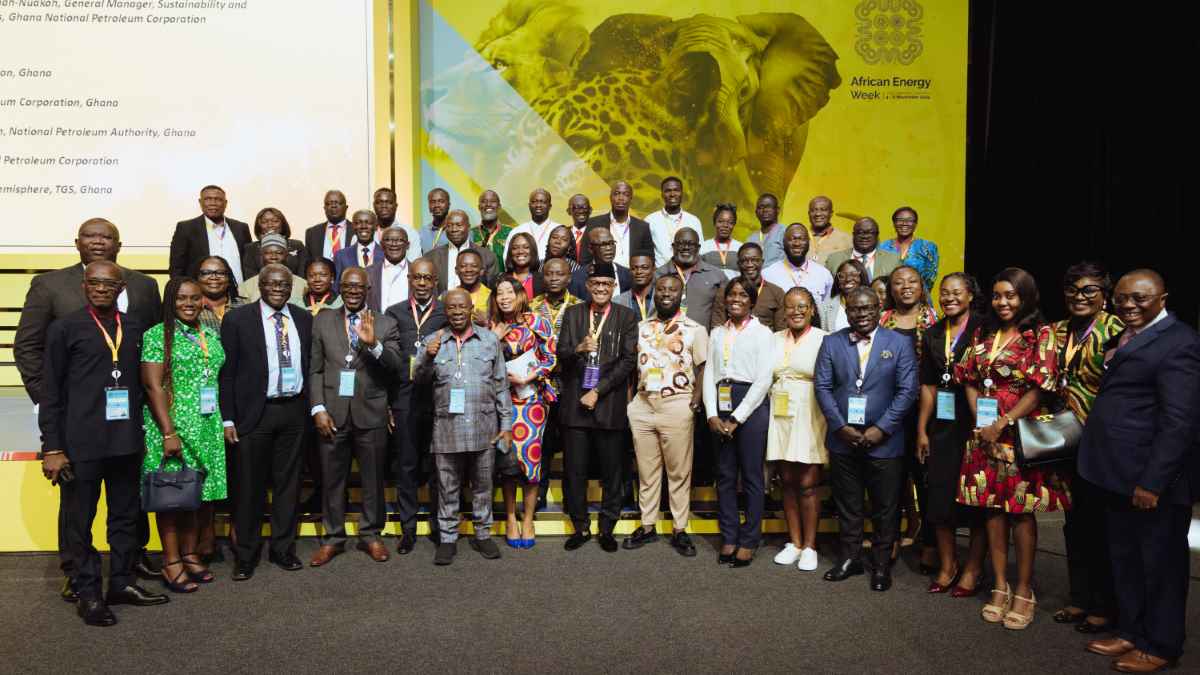
A Ghanaian delegation at this year’s African Energy Week (AEW): Invest in African Energies outlined how aggressive reforms will position the country as a regional hub. The delegation’s participation not only underscored Ghana’s vital role in Africa’s energy future but reaffirmed the country’s commitment to AEW: Invest in African Energies – Africa’s largest, pan-African energy event.

Ghana has seen robust growth across its oil and gas value chain in recent months, with ongoing projects consolidating its position as a major producer. The Tema LNG plant – situated near the capital city Accra and operated by private equity company Helios Investment Partners – is set to begin production by the end of the year. Featuring infrastructure to import, store, regasify and deliver LNG to off-takers in the Greater Accra Area, the project will have a capacity of 1.7 million tons of gas per year.

Ghana does not simply copy and paste policies, but is often a reference point for best practices, including the zero-flaring policy and local content initiatives

Meanwhile, the Atuabo II Gas Processing Plant – developed by Ghana Gas alongside joint venture partners – is on track for production in 2025. The project, with a capacity of 150 million standard cubic feet per day (mscf/d), comprises the development of a second processing plant at the Atuabo project. Capacity could be doubled to 300 mscf/d, producing LNG, propane, butane and pentane condensates.

These projects are just two of the many underway that aim to scale-up the country’s gas monetization and distribution. Despite efforts to maximize resources, the country still offers a wealth of opportunity for exploration companies, underscoring its future role as a regional hub. At AEW: Invest in African Energies 2024, representatives from the country’s major energy players outlined these opportunities, inviting investors to join the growing market.

Speaking at this year’s conference, Egbert Faibille Jr., CEO of Ghana’s Petroleum Commission, emphasized that the country is both a stable and highly attractive investment market. He explained that political risk is “virtually non-existent” and that major projects showcase the potential for large-scale investments. Riverson Oppong, CEO of the Association of Oil Marketing Companies, echoed these remarks, highlighting that “Ghana does not simply copy and paste policies, but is often a reference point for best practices, including the zero-flaring policy and local content initiatives.”  

The country, however, is not content with being a stable investment environment, with further reforms planned to bolster the market’s attractiveness even further, protecting investments and ensuring high returns for financiers. Speaking at an Invest in Ghana Energies roundtable at AEW: Invest in African Energies 2024, Faibille Jr., said that further reforms could be on the horizon, including amendments to laws requiring companies to allocate at least 15% of every project to the state as free and carried interest. The country is also looking at a more flexible oil royalty regime to attract capital, mitigating risk for companies and enticing heightened investment.

Dr. Sheila Addo, Director for Policy Coordination at the National Petroleum Authority of Ghana added that Ghana’s regulatory philosophy focused on a flexible and market-driven approach. She said that the country’s approach is “one of deregulation. We deregulate infrastructure, price and product supply.” These efforts affirm the country’s pro-investment approach to energy development and will serve as a catalyst for energy growth. As such, Ghana’s role in future energy markets is poised to grow, further amplified by a national drive to transform the economy from within.

“Ghana has proven time and time again that it is committed to long-term and sustainable investment. The country’s dedication to market-focused policies, strong project pipeline and continuous engagement with investors through platforms such as AEW: Invest in African Energies have driven economic growth. Going forward, Ghana’s participation at the annual AEW: Invest in African Energies’ events will boost the country’s energy development even further, with the country expected to continue to play a major part in the event for years to come,” stated NJ Ayuk, Executive Chairman of the African Energy Chamber.

Distributed by APO Group on behalf of African Energy Chamber.

Business

Why Your Communications Strategy is Undermining Your Decisions (By Bas Wijne)

Published

on

As markets become more complex and information moves faster, communications is now part of strategy, embedded in how boardroom decisions are formed, framed, and executed

For organisations operating across multiple African markets, fragmented communications create fragmented decisions

JOHANNESBURG, South Africa, May 13, 2026/APO Group/ —By Bas Wijne, CEO, APO Group (https://APO-opa.com).


At last month’s PRCA South Africa conference, the leading PR and communications forum in the region, I joined a panel on PR as a Strategic Advisor: Ethics, Sustainability and Boardroom Influence alongside Annaleigh Vallie (Executive Head of Integrated Communication, Nedbank), and Larry Khumalo-MacArthur (Managing Director and Market Lead, Weber Shandwick Africa). The discussion reinforced that when communications is excluded from the boardroom, decision-making breaks down between formation and execution. In complex organisations, executive decisions are often interpreted differently across stakeholders, leading to early misalignment.

The most effective leadership teams address this by involving communications when decisions are formed.

Without this, the same course of action fractures in execution across stakeholders. The issue is not variation in interpretation itself, but the absence of a structured way to account for it in advance.

Communications is a co-architect that belongs in the boardroom, shaping how intent becomes a decision and how a decision becomes reality. This is especially clear in African markets. Differences in regulatory environments, culture, and stakeholder expectations mean the same announcement can be interpreted in fundamentally different ways across jurisdictions. Consider a single boardroom decision. A multinational announces a restructuring across several African territories – typically involving changes to operating models, workforce alignment, cost structures, and local responsibilities.

In one country, the decision is seen as a move toward efficiency and long-term growth. In another, it signals contraction. In a third, it raises questions about market commitment. The underlying decision stays the same, but its meaning shifts depending on where it lands.

These differences affect how decisions are executed across markets. Alignment weakens, not from a flawed strategy, but from fragmented meaning.

For a co-architect, this means stress-testing decisions before they are final. Advising and assessing how they will land in different markets. Working directly with leadership teams to adjust how decisions are framed, sequenced, and released so that intent translates across markets.

APO Group operates as an example of this co-architect model, serving as a strategic communications consultancy that integrates advisory and execution. We don’t just execute communications – we consult and advise at the boardroom level. We apply this approach across multiple African markets. Africa-Newsroom.com, our pan-African newswire and the only platform of its kind on the continent, distributes to 250+ Africa-focused news sites and 450,000+ journalists in all 54 countries. The same infrastructure that delivers messaging across the continent gives us the monitoring data to test how it will be received before a single line is published. That is what stress-testing means in practice.

When a global Fortune 500 telecommunications operator with multi-market African operations needed transformation across six African countries, they consolidated nine agencies into one partner: APO Group. Before announcing the decision, it was tested in each market. We checked how it signalled efficiency, retreat, or questions about commitment.

That insight was fed directly back into how the announcement was structured, sequenced, and released.

Messaging was then executed through a single coordinated system across all markets, rather than multiple disconnected systems.

The result was a 573% increase in top-tier media placements for the programme across key African markets compared to the previous multi-agency model, driven by unified messaging and faster execution cycles.

For organisations operating across multiple African markets, fragmented communications create fragmented decisions. Integrated communications strengthen delivery. In this environment, communications is part of how leadership decisions hold their meaning as they move across borders.

The question for leadership teams is not whether communications supports decisions, but whether it is involved early enough to ensure those decisions hold their meaning as they move across markets.

And ultimately: is communications shaping the decision itself, or only being asked to manage its interpretation after it leaves the boardroom?

Distributed by APO Group on behalf of APO Group Insights.


Continue Reading

Business

Liquid Intelligent Technologies revitalises access to cloud and cyber security services in support of improved national digital resilience

Published

on

These services will be available to existing and potential customers in Botswana, and at the centre of the new offering is Secure360, the company’s integrated security framework

GABORONE, Botswana, May 13, 2026/APO Group/ –Liquid Intelligent Technologies (https://Liquid.Tech), a business of Cassava Technologies, a global technology leader, brings cloud and cyber security solutions and services to businesses and enterprises of all sizes in Botswana. The announcement comes as Liquid celebrates a decade of operations in the country.


These services will be available to existing and potential customers in Botswana, and at the centre of the new offering is Secure360, the company’s integrated security framework that enables organisations to move beyond reactive breach response towards proactive intelligence, protection and assurance. The solution combines local delivery with continental-scale infrastructure and global technology partnerships to provide organisations with enterprise-grade digital security and cloud capabilities aligned with national digital priorities.

When organisations engage with Liquid Intelligent Technologies in Botswana, they are connecting to the strength of Cassava’s integrated digital ecosystem

“Over the last decade, Liquid has deployed over 1174.08 km of fibre, bringing multi-terabit capacity and unmatched resilience to the region. By establishing a 730km backbone along the A1 road, we’ve positioned Botswana as a critical hub, linking networks from Zimbabwe, South Africa, Kenya, Zambia, the Democratic Republic of Congo, and Sudan,” said Odirile Tamajobe, Managing Director of Liquid Intelligent Technologies Botswana. “Now, by bringing the cloud and cyber security services into the country, we are empowering local businesses with world-class digital solutions, ensuring they can compete and win on the global stage.”

The expansion of Liquid’s offerings in the market reflects the broader Cassava strategy to deliver integrated digital infrastructure and platforms through its One Cassava approach.

“When organisations engage with Liquid Intelligent Technologies in Botswana, they are connecting to the strength of Cassava’s integrated digital ecosystem,” said Ziaad Suleman, CEO of Cassava Technologies SA and Botswana. “Beyond cloud and cyber security, customers can access data centres, AI readiness reviews, and tailored technology journey roadmaps, all within a unified platform designed to support secure innovation and long-term digital resilience”.

As Botswana advances on its Vision 2036 ambitions to expand digital services across government, financial services, telecommunications, and critical infrastructure sectors, Cassava’s digital services aim to strengthen national digital resilience, fostering pride and confidence in the country’s progress.

Distributed by APO Group on behalf of Liquid Intelligent Technologies.


Continue Reading

Business

Verdant IMAP Act as Financial Advisor and Arranger to Metro Africa Xpress (MAX) on its USD 8 Million in Debt Capital Raise

Published

on

The transaction establishes a foundation for further institutional capital deployment into the business

JOHANNESBURG, South Africa, May 13, 2026/APO Group/ –Metro Africa Xpress (MAX), Africa’s leading electric mobility platform, has secured USD 8 million in debt funding from Triple Jump, marking a key milestone in scaling its clean mobility operations.

Triple Jump, a Netherlands-based impact investment manager with a strong track record of financing inclusive financial institutions and clean energy businesses across emerging markets, represents one of MAX’s first international institutional lenders. Its participation underscores confidence in MAX’s operating model, asset-backed lending structure, and long-term scalability within Africa’s evolving mobility sector.

The funding will support:

  • Expansion of MAX’s electric vehicle (EV) fleet
  • Rollout of battery swap infrastructure
  • Continued development of its Pay-As-You-Go (PAYGO) financing platform

MAX’s model is designed to lower barriers to asset ownership for commercial drivers (“Champions”), enabling income generation through access to productive mobility assets while reducing operating costs relative to internal combustion alternatives.

Operating across Nigeria, Ghana, and Cameroon, with Nigeria as its core market, MAX is building an integrated ecosystem comprising:

  • Purpose-built EVs adapted for local conditions
  • Battery swapping infrastructure to address charging constraints
  • IoT-enabled fleet management systems
  • Embedded financing solutions for underserved drivers

Verdant IMAP acted as sole financial advisor and arranger on the transaction, supporting structuring, investor engagement, and execution. The transaction establishes a foundation for further institutional capital deployment into the business.

Distributed by APO Group on behalf of Verdant Capital.


Continue Reading

Trending

Exit mobile version