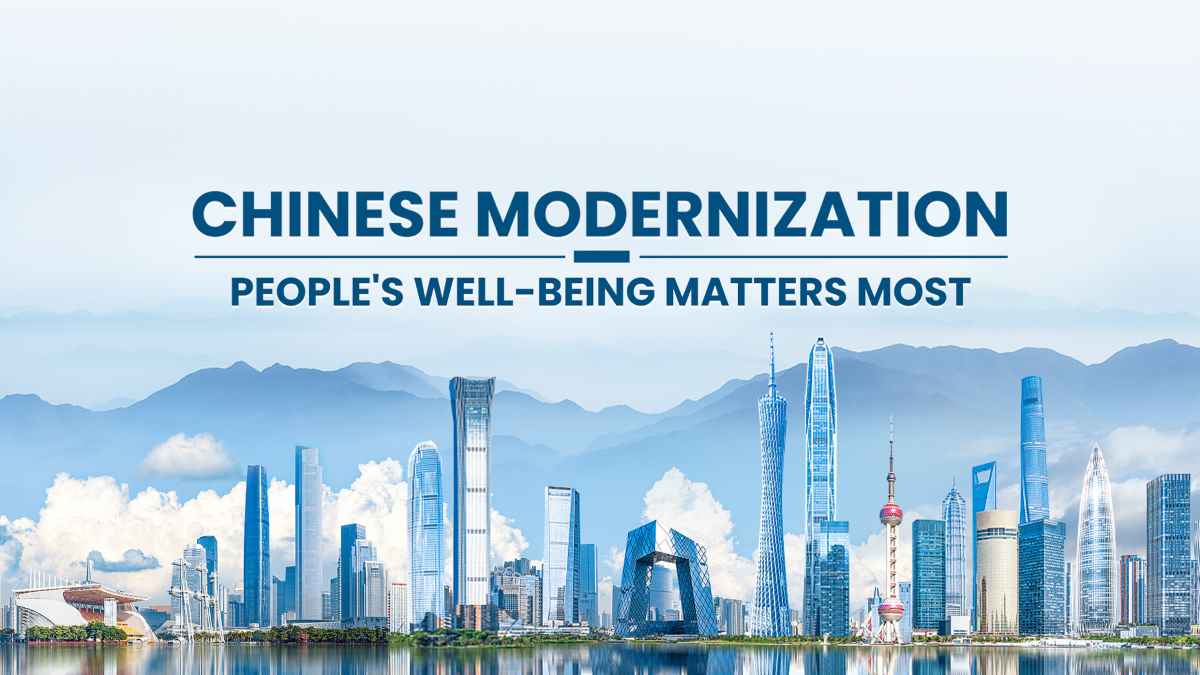
BEIJING, CHINA – Media OutReach Newswire – 31 December 2024 – CGTN publishes an article on a special interactive page named “Chinese Modernization, People’s Well-being Matters Most,” which details China’s modernization drive and high-quality development in various areas in 2024 through visual effects and in-depth stories. The article summarized Chinese President Xi Jinping’s domestic tour in 2024, and highlighted his care for improving people’s well-being in various areas and promoting high-quality development, stressing that “the people’s well-being matters the most in Chinese modernization.”
As 2025 draws near, China’s consumption has shown signs of revitalization as various regions and departments have enhanced the supply in the country’s consumption market.
Official data showed that the country’s popularity index for offline consumption increased by five percent year on year, and the popularity index of services showed a year-on-year jump of 10.6 percent.
The boom in consumption highlights the improvement of people’s livelihoods. “As far as Chinese modernization is concerned, the people’s well-being matters the most,” Chinese President Xi Jinping said while inspecting Chongqing Municipality in April.
During Xi’s domestic tours in 2024, “people” was one of the most frequently mentioned keywords, according to an analysis by CGTN, joined in the top 10 by others such as “development,” “modernization,” “economy,” and “ecology,” underscoring the direction and key elements of China’s path to modernization.
“Chinese Modernization, People’s Well-being Matters Most,” a special interactive page launched by CGTN, details China’s modernization drive and high-quality development in various areas in 2024 through visual effects and in-depth stories.
People’s well-being matters most
Xi has often stressed that every issue that affects the people, big or small, deserves the utmost care and attention.
During his inspection tours around China this year, he visited ordinary people to learn about their lives, from their incomes and housing to healthcare, education, and elderly care services.
“The Communist Party of China (CPC) is dedicated to serving the people, and the well-being of the people of all ethnic groups and every household is my concern,” Xi said while visiting a multi-ethnic residential community in Yinchuan, northwest China’s Ningxia Hui Autonomous Region in June.
According to China’s Ministry of Finance, 70 percent of the government’s expenditure in 2024 has gone toward ensuring the people’s well-being.
The country has raised its expenditure in the national general public budget to about 28.55 trillion yuan ($3.91 trillion) this year, up 4 percent from the previous year, with projected budgets for education, social insurance and employment each surpassing 4 trillion yuan in 2024.
A bumper harvest
Grain security and rural revitalization have also been high on Xi’s agenda in 2024.
He has frequently visited the countryside during his inspection tours, engaging with workers in fields, greenhouses and orchards and asking in-depth questions about various aspects of rural and agricultural life, from crop production to incomes.
When visiting a village in Hunan Province in March, Xi inspected preparations for spring farming. He emphasized that, with a population exceeding 1.4 billion, China must secure its own grain supply.
The latest National Bureau of Statistics of China data showed that in 2024 the country’s total grain output exceeded 706 million tonnes, an increase of 1.6 percent over the previous year, hitting a new record high.
This year’s bumper harvest was accompanied by a rise in grain planting areas in the country, which stood at over 119 million hectares, up 0.3 percent year on year. Additionally, grain output per unit area increased by 1.3 percent, the data showed.
In another positive development, China’s food security law, aimed at ensuring the supply of grain and related products, took effect in June.
Accelerating rural revitalization
Since China’s elimination of absolute poverty in 2021, the country’s focus on rural work has shifted to rural revitalization. Xi has stressed that to advance Chinese modernization, efforts must be made to accelerate rural revitalization.
China has identified 160 major counties for national rural revitalization assistance and allocated over 177 billion yuan in subsidies to support their development in 2024.
In the first three quarters of this year, the per capita disposable income of rural residents reached 16,740 yuan, a real-term annual increase of 6.3 percent.
Meanwhile, the central government allocated development funds of 7.4 billion yuan to improve production and living conditions in ethnic minority dominant villages and to protect and develop such villages.
The country has also launched monitoring and support mechanisms to prevent once-poor populations from falling back into poverty.
Work-relief programs to boost employment were also implemented this year. As of the end of October, the total scale of employment for poverty-stricken people in China had reached 33.079 million, exceeding the annual target by 2.888 million, providing strong support for consolidating and building on the achievements of poverty alleviation.
New facility expands in-country drilling and completion fluids capability, advancing the next phase of SLB’s growth in Mozambique
PEMBA, Mozambique, October 9, 2026/APO Group/ –SLB (NYSE: SLB) (www.SLB.com) announced the opening of a new fluids systems plant in Pemba, Mozambique. The new facility strengthens in-country capacity to prepare, store and deliver drilling and completion fluids for offshore operations, reinforcing the infrastructure needed as Mozambique’s offshore activity grows and its role as a strategic energy hub for East Africa continues to expand.
The commissioning of the plant, also known as a liquid mud plant, coincides with SLB marking 70 years of operations in Mozambique. It reflects the company’s long-term commitment to investing in people, infrastructure and capability that support the country’s long-term offshore energy development plans.
With an initial storage capacity of 21,000 barrels, the liquid mud plant provides a scalable platform for future growth, supporting multiple customers and rising offshore activity while improving logistics and enhancing operational flexibility.
As SLB marks 70 years in Mozambique, this investment reflects our confidence in the country’s future and our commitment to supporting its energy ambitions
“As SLB marks 70 years in Mozambique, this investment reflects our confidence in the country’s future and our commitment to supporting its energy ambitions,” said Miguel Baptista, Central, East and Southern Africa, Managing Director, SLB. The new liquid mud plant strengthens local energy infrastructure, expands opportunities for local content development, and enhances our ability to support customers as they deliver some of Africa’s most significant offshore energy resources.”
The liquid mud plant project was delivered with strong local participation and that momentum is expected to continue into operations. During project delivery, more than 100 jobs were created in Pemba with nationals representing 80% of the workforce, reflecting a focus on building local capability.
The project was delivered with a strong focus on safety, operational integrity, and quality, achieving more than 67,000 hours worked without a recordable safety incident.
This key infrastructure strengthens SLB’s ability to support consistent service quality and enhance supply chain readiness for increasing offshore activity across Mozambique, supporting customers execute safely and efficiently while developing local skills and expertise.
Key Points:
SLB has commissioned a new fluids system plant in Pemba, expanding in-country drilling and completion fluids capability for offshore operations.
With an initial storage capacity of 21,000 barrels, the facility provides a scalable platform to support growing offshore activity in Mozambique.
The investment marks the next phase of SLB’s growth in Mozambique, strengthening local capability and supporting long-term offshore energy development.
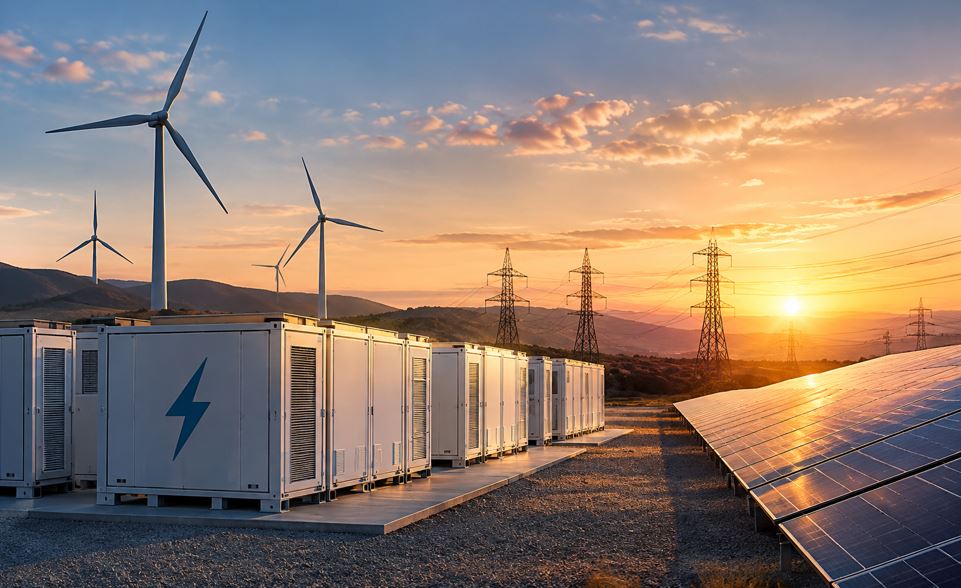
Battery energy storage systems (BESS) are becoming critical system infrastructure, supporting flexibility, reducing avoidable curtailment, shifting energy into periods of demand and strengthening security of supply
JOHANNESBURG, South Africa, October 9, 2026/APO Group/ –The South African Energy Storage Association (SAESA) (www.SAESA.org.za) welcomes the prioritisation of 4,600 MW of battery energy storage under the first Integrated Resource Plan (IRP) 2025 Section 34 determination.
The timing is significant. Recent Integrated Energy Plan (IEP) modelling and assumptions discussions highlighted a fundamental shift that South Africa’s energy planning now needs to capture: we cannot plan the future power system by counting megawatts of generation alone.
We must plan for when energy is available, where it is available, how it moves through a constrained grid and how it is stored and dispatched when the system needs it most.
The announcement reinforces that shift. Battery energy storage systems (BESS) are becoming critical system infrastructure, supporting flexibility, reducing avoidable curtailment, shifting energy into periods of demand and strengthening security of supply.
For SAESA, the message for the IEP is clear: storage, flexibility and system services must be modelled as integral components of South Africa’s future electricity architecture, with their contribution considered from the outset of generation planning.
“The IEP must plan the power system we are becoming, not simply model the power system we have inherited,” says SAESA.
The IEP must plan the power system we are becoming, not simply model the power system we have inherited
Partnership with C&I Energy + Storage Summit
SAESA is an association partner of the C&I Energy + Storage Summit, created by VUKA Group, taking place on 28–29 October 2026 at The Maslow Hotel, Sandton, Johannesburg.
The summit brings together commercial and industrial energy users, project developers, financiers, regulators and solution providers to explore practical approaches to energy security, procurement and storage deployment.
For businesses assessing how storage can support their operations, the event offers an opportunity to meet SAESA and engage with the wider energy community on the decisions shaping South Africa’s evolving electricity system.
Commercial and industrial energy decision-makers are invited to apply to attend as hosted buyers. Qualifying buyers receive complimentary summit access and curated opportunities to engage with industry partners.
Meet SAESA at C&I Energy + Storage Summit: Join the Hosted Buyer Programme
The Hosted Buyer Programme connects commercial and industrial energy decision-makers with solution providers shaping South Africa’s evolving private energy market.
Qualified energy buyers receive complimentary access to the summit and curated engagement with industry partners exploring energy procurement, storage deployment and project development.
Expanding credible rating coverage can improve the information available to investors and support the development of deeper domestic and regional capital markets
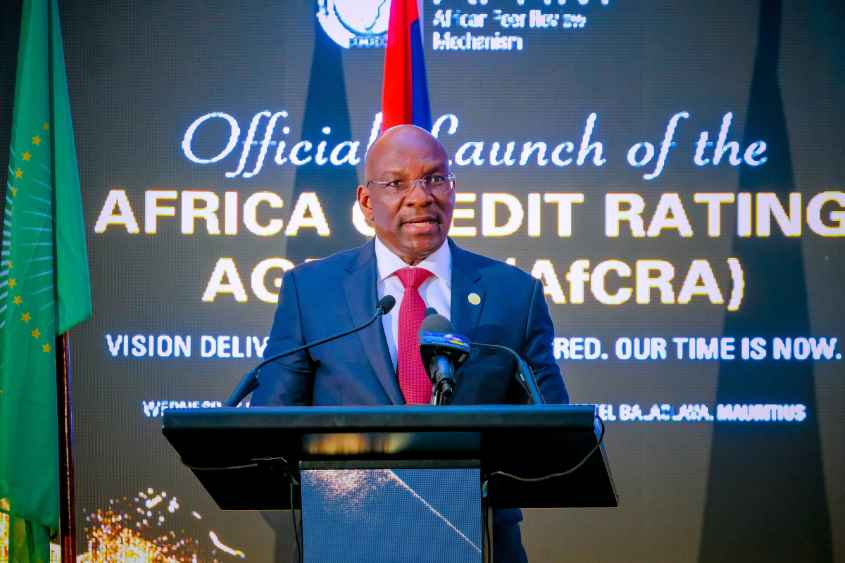
PORT LOUIS, Mauritius, October 8, 2026/APO Group/ –African Export-Import Bank (Afreximbank) (www.Afreximbank.com) welcomes today’s launch of the Africa Credit Rating Agency (AfCRA), an important milestone in strengthening Africa’s financial architecture and expanding the continent’s capacity to generate credible, independent analysis of African credit risk.
Credit ratings play an important role in determining access to capital, influencing investor perceptions and shaping the cost at which governments, institutions and businesses can finance development. It is therefore essential that assessments of African credit risk are independent, rigorous and evidence-based, while reflecting a complete understanding of the structures, institutions and economic realities being assessed.
The establishment of AfCRA adds an important African-led source of credit opinion to the market. Its value will not be measured by whether it produces more favourable ratings, but by the credibility of its analysis, the quality of its data and transparency of its methodology, and its ability to deepen understanding of African sovereigns, sub-sovereigns and corporate credit.
This is particularly important given that many African issuers remain unrated, while local-currency and sub-sovereign markets continue to have limited rating coverage. Expanding credible rating coverage can improve the information available to investors and support the development of deeper domestic and regional capital markets.
AfCRA must set a new benchmark for the continent, maintain its independence, and remain wholly owned and controlled by Africans
Alongside fellow members of the Alliance of African Multilateral Financial Institutions (AAMFI), Afreximbank has consistently maintained that African Multilateral Financial Institutions should be assessed on the basis of their fundamentals, performance, legal frameworks, mandates and operating models. Ensuring that these institutional characteristics are properly understood is essential to achieving informed, balanced and credible assessments of African risk.
Commenting on the uniqueness of the African market, and need for AfCRA’s rating methodology to reflect this, Mr Denys Denya, Senior Executive Vice President, Afreximbank, said: “The rating methodology AfCRA develops must recognise the uniqueness of our environment and its institutional structures. The Agency must set its own standards and not follow those set elsewhere — it must build a unique identity that conforms to an ‘African best practice.”
Highlighting the need for the autonomy of the Africa Credit Rating agency as it takes off, Mr Denya added: “Most importantly, AfCRA must set a new benchmark for the continent, maintain its independence, and remain wholly owned and controlled by Africans. We must all use it, and in return expect a complete assessment of where we (Africa) stand: the strengths the market has ignored, and the weaknesses we still need to fix.”
AfCRA should therefore be seen as complementary to existing international and regional rating agencies, broadening the range of credible analysis available to investors and issuers while strengthening competition, transparency and analytical capacity within Africa’s credit markets.
As Africa seeks to mobilise the scale of capital required for industrialisation, trade, infrastructure and economic transformation, credible African institutions that improve information, strengthen market confidence and deepen the continent’s financial markets will become increasingly important.
Afreximbank congratulates the African Union, the African Peer Review Mechanism (APRM) and all those involved in bringing AfCRA from concept to launch, and looks forward to the contribution the Agency will make to deeper, more transparent and more efficient African capital markets.
Distributed by APO Group on behalf of Afreximbank.
We use cookies on our website to give you the most relevant experience by remembering your preferences and repeat visits. By clicking “Accept”, you consent to the use of ALL the cookies.
This website uses cookies to improve your experience while you navigate through the website. Out of these, the cookies that are categorized as necessary are stored on your browser as they are essential for the working of basic functionalities of the website. We also use third-party cookies that help us analyze and understand how you use this website. These cookies will be stored in your browser only with your consent. You also have the option to opt-out of these cookies. But opting out of some of these cookies may affect your browsing experience.
Necessary cookies are absolutely essential for the website to function properly. These cookies ensure basic functionalities and security features of the website, anonymously.
Cookie
Duration
Description
cookielawinfo-checkbox-analytics
11 months
This cookie is set by GDPR Cookie Consent plugin. The cookie is used to store the user consent for the cookies in the category "Analytics".
cookielawinfo-checkbox-functional
11 months
The cookie is set by GDPR cookie consent to record the user consent for the cookies in the category "Functional".
cookielawinfo-checkbox-necessary
11 months
This cookie is set by GDPR Cookie Consent plugin. The cookies is used to store the user consent for the cookies in the category "Necessary".
cookielawinfo-checkbox-others
11 months
This cookie is set by GDPR Cookie Consent plugin. The cookie is used to store the user consent for the cookies in the category "Other.
cookielawinfo-checkbox-performance
11 months
This cookie is set by GDPR Cookie Consent plugin. The cookie is used to store the user consent for the cookies in the category "Performance".
viewed_cookie_policy
11 months
The cookie is set by the GDPR Cookie Consent plugin and is used to store whether or not user has consented to the use of cookies. It does not store any personal data.
Functional cookies help to perform certain functionalities like sharing the content of the website on social media platforms, collect feedbacks, and other third-party features.
Performance cookies are used to understand and analyze the key performance indexes of the website which helps in delivering a better user experience for the visitors.
Analytical cookies are used to understand how visitors interact with the website. These cookies help provide information on metrics the number of visitors, bounce rate, traffic source, etc.
Advertisement cookies are used to provide visitors with relevant ads and marketing campaigns. These cookies track visitors across websites and collect information to provide customized ads.










 Business5 days ago
 Business5 days ago
 Business3 days ago
 Events4 days ago
 Business3 days ago
 Business5 days ago
 Events4 days ago