Connect with us
Anglostratits

Energy

Caribbean Doubles Down on Oil Push as Leaders Back Balanced Energy Strategy

Published

on

Caribbean

With major discoveries reshaping the Guyana-Suriname basin, Caribbean leaders say drilling and investment are key to long-term energy growth as Caribbean Energy Week opens in Paramaribo

PARAMARIBO, Suriname, April 2, 2026/APO Group/ –Caribbean leaders are accelerating oil and gas development even as they advance renewable energy initiatives, arguing that rising global demand requires a pragmatic, dual-track approach.


At the opening of Caribbean Energy Week in Paramaribo on Tuesday, ministers and regional officials highlighted the need to convert discoveries into production while attracting investment, building local capacity and fostering regional cooperation – positioning the Caribbean as one of the world’s fastest-growing hydrocarbon frontiers.


“The world’s energy transition is being outpaced by the growth in total energy demand. There’s a role for both fossil fuels and renewables in meeting global energy demand,” said Trinidad and Tobago Energy Minister Ernesto Kesar. “The reality is that the region’s reliance on oil and gas will persist for the foreseeable future.”


Exploration Push Gains Momentum


With major discoveries in Guyana – where Stabroek Block output now tops 900,000 barrels per day – and Suriname’s flagship GranMorgu project, exploration will be crucial to sustaining growth as companies expand beyond initial developments to build a long-term production base.


“Suriname, Guyana, Trinidad, soon Grenada and Jamaica – you’re going to have to drill. It’s not a bad word,” said NJ Ayuk, Executive Chairman of the African Energy Chamber. “I urge you to be unapologetic when it comes to drilling.”


Ayuk linked the push for energy expansion to broader energy security concerns. “The crisis going on today in the Middle East reminds us why energy is important, and why energy security is more important today than ever.”


Suriname Moves to Unlock Investment


Host nation Suriname is emerging as a focal point, with the government moving to accelerate project development and attract capital ahead of first production.


“Our discoveries have placed us on the global energy map. The world’s leading energy companies are here, and investing in a promising future,” said Foreign Affairs Minister Melvin Bouva.

The real success of the energy sector will not be measured in barrels, but in businesses created, skills developed and partnerships built


Bouva announced that the government is advancing two new investment frameworks to improve investor certainty and streamline project development. A working group has already finalized the concepts and is preparing them for presentation. “The message is clear: Suriname is open for partnerships, for innovation and for business.”


Oil and Gas Minister Patrick Brunings confirmed that timelines for first production remain on track. “We will have our first oil in 2028 and by 2030, our first gas – with our second oil development expected a few years after that,” he said. “This is the time to strike the right partnerships. A lot of attention is on Suriname.”


Transition Without Sacrificing Growth


While governments support decarbonization, high costs and slow renewable deployment are ensuring oil and gas remain a core pillar of the Caribbean’s energy strategy. Kesar said transition strategies must be realistic, balancing decarbonization goals with immediate energy and economic needs.


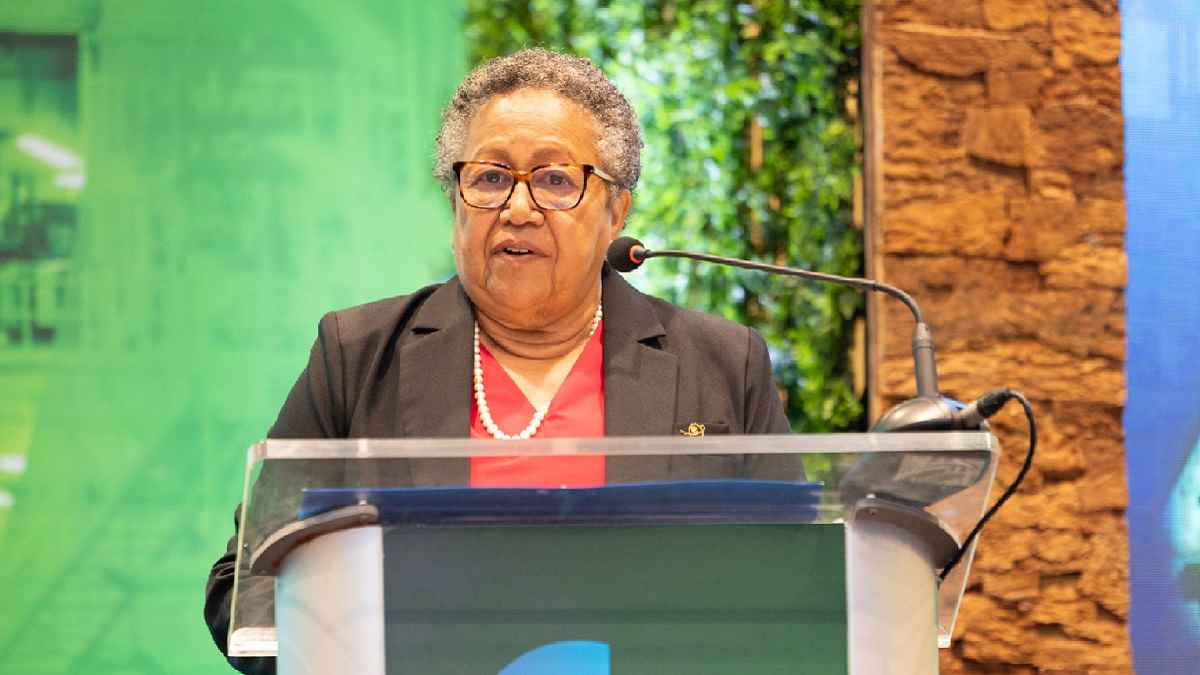
“Energy transition means mapping the way to diversify our energy platform – it doesn’t necessarily mean exchanging one for the other,” said CARICOM Secretary General Dr. Carla Barnett.


She noted that the Caribbean’s mix of hydrocarbons, renewables and emerging carbon markets presents opportunities for investment and collaboration, particularly as global capital looks for new energy plays.


From Barrels to Broader Economic Impact


Beyond production targets, policymakers emphasized that long-term success will depend on translating oil revenues into wider economic development.


“The real success of the energy sector will not be measured in barrels, but in businesses created, skills developed and partnerships built,” Bouva said.


Local content and workforce development were recurring themes, with governments pushing for stronger private sector participation and clearer regulatory frameworks. “We need to find out what is needed in terms of a skilled workforce and goods and services,” Brunings stated.

Distributed by APO Group on behalf of Energy Capital & Power.

Energy

African Mining Week (AMW) to Spotlight Mergers and Acquisitions (M&A) Prospects as Africa Seeks Partners for $8.5T Potential

Published

on

Energy Capital

The ‘Leveraging Global M&As to Secure Investment’ panel at AMW 2026 will highlight attractive investment opportunities across Africa’s mining sector, as international players expand their presence through strategic asset acquisitions

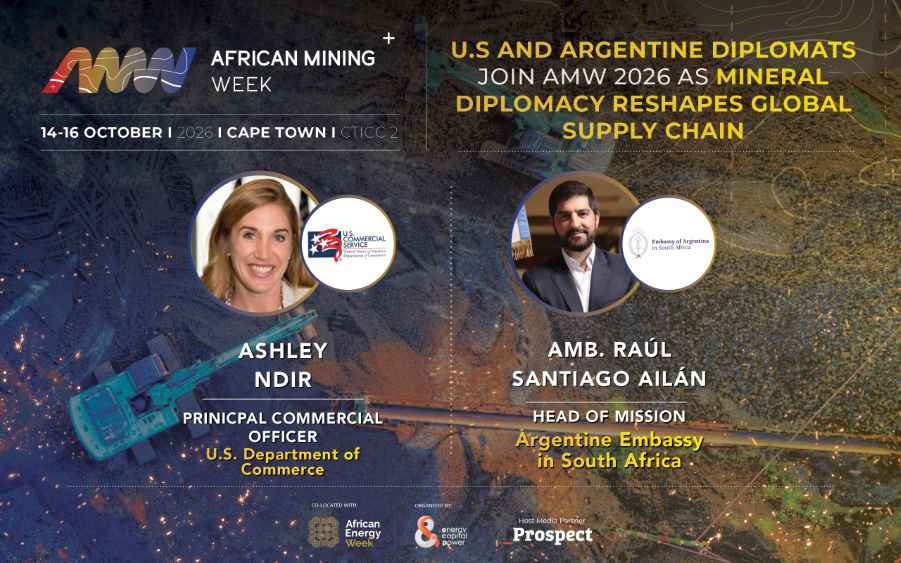
CAPE TOWN, South Africa, April 2, 2026/APO Group/ –The upcoming African Mining Week (AMW) conference – taking place October 14–16, 2026 in Cape Town – will feature a dedicated panel exploring the role of mergers and acquisitions (M&As) in unlocking Africa’s mining investment potential.


Titled ‘Leveraging Global M&As to Secure Investment’, the panel will bring together global investors, mining companies, African policymakers and industry stakeholders to examine how strategic transactions can sustain investor confidence and accelerate capital flows into Africa’s mining sector. The session will discuss how M&As can support the development of the continent’s $8.5 trillion worth of untapped mineral resources, while strengthening Africa’s role in global critical minerals supply chains.

Rising Critical Minerals Demand Accelerates Africa’s M&As Activity

As global demand for critical minerals increases – expected to triple by 2030 – M&As across Africa’s mining sector are accelerating as investors from the U.S, Europe, China and the UAE pursue strategic acquisitions, joint ventures and equity partnerships to strengthen their mineral supply chains. Inbound M&A deal values into Africa increased by 40% in 2025, with several African mining jurisdictions – including the Democratic Republic of the Congo (DRC), Mali, Ivory Coast, South Africa and Zambia – emerging as hotspots for these strategic investments.

In February 2026, Exxaro Resources completed a R10.6 billion acquisition of manganese assets in South Africa from Ntsimbintle Holdings and OM Holdings. The acquisition strengthens Exxaro’s strategy to diversify into battery minerals and steelmaking inputs while supporting South Africa’s agenda to attract fresh investments to maintain its position as the world’s leading manganese producer.

Similarly, China’s Baowu Resources increased its stake in the Simandou Iron Ore Project in Guinea-Conakry to 51%, strengthening China’s access to one of the world’s largest untapped iron ore deposits. The investment also supports Guinea-Conakry’s Simandou 2040 economic growth strategy, which aims to leverage mining development to stimulate infrastructure expansion and broader economic growth.

Abu Dhabi-based International Resources Holding (IRH) acquired a 56% stake in tin miner Alphamin Resources for approximately $367 million, securing a majority position in a major tin operation in the DRC. In Zambia, IRH’s investment in Mopani Copper Mines as part of a $1 billion recapitalization is reviving operations, supporting Zambia’s 8% rise in copper output in 2025, while driving the country’s 2031 target to increase output to three million tons per annum.

These transactions not only signal growing investment flows into Africa but also underscore the continent’s strategic role in securing global supply chains. M&As are proving pivotal in driving the continent’s job creation, infrastructure development and broader economic growth agenda. Against this backdrop, the AMW panel will offer stakeholders a platform to examine the evolving M&A landscape and uncover opportunities for new investment partnerships.

AMW serves as a premier platform for exploring the full spectrum of mining opportunities across Africa. The event is held alongside the African Energy Week: Invest in African Energies 2026 conference from October 12-16 in Cape Town. Sponsors, exhibitors and delegates can learn more by contacting sales@energycapitalpower.com.

Distributed by APO Group on behalf of Energy Capital & Power.

Continue Reading

Energy

Nigeria’s Nigerian Content Development and Monitoring Board (NCDMB) Secures Key Local Content Role at African Energy Week (AEW) 2026

Published

on

African Energy Chamber

NCDMB joins AEW 2026 as Local Content Partner, showcasing Nigeria’s capacity-building drive, industrial projects and funding initiatives aimed at boosting indigenous participation and investor confidence

CAPE TOWN, South Africa, March 27, 2026/APO Group/ –Parastatal regulatory agency the Nigerian Content Development and Monitoring Board (NCDMB) will participate at this year’s African Energy Week (AEW) 2026 as an official Local Content Partner, reinforcing its leadership in advancing indigenous capacity across Africa’s energy sector. Taking place from October 12–16 in Cape Town, the event will provide a strategic platform for the NCDMB to showcase Nigeria’s evolving local content framework and investment opportunities.


In parallel, the NCDMB continues to strengthen its domestic capabilities, most recently launching a 12-month pipeline engineering training program in March 2026 for 33 young engineers in Port Harcourt. Delivered in partnership with Renaissance Africa Energy and MJD Oilfield Services, the initiative focuses on pipeline pigging, corrosion control and integrity management, aligning workforce development with major infrastructure projects like the Ajaokuta-Kaduna-Kano Gas Pipeline.


On the infrastructure front, the board is advancing construction of a 204-room Radisson-managed hotel and conference center in Yenagoa, scheduled for commissioning this December. Positioned adjacent to the Nigerian Content Tower, the facility is designed to support industry collaboration. Complementing this, the NCDMB has commissioned a Clinical Skills and Simulation Laboratory at Bayelsa Medical University, enhancing healthcare capacity in host communities through cutting-edge training technologies.


The participation of the NCDMB at AEW 2026 is a strong signal that Africa is serious about building its own capacity and retaining value within the continent

Industrial expansion remains a core pillar of the board’s strategy. Under the Nigerian Oil and Gas Parks Scheme, pilot parks in Odukpani and Emeyal-1 are nearing completion and are expected to generate around 2,000 jobs each. These shared-services industrial hubs are designed to localize manufacturing, reduce costs and enable indigenous firms to scale production across upstream and midstream value chains.


From a financial and policy standpoint, the NCDMB is deploying multiple funding mechanisms, including a $100 million equity investment scheme, a $500 million intervention fund and a $20 million women-focused initiative. Recent enforcement measures – such as stricter expatriate quota controls and mandatory compliance certification – further signal a shift toward deeper localization, transparency and long-term investor confidence in Nigeria’s oil and gas sector.


“The participation of the NCDMB at AEW 2026 is a strong signal that Africa is serious about building its own capacity and retaining value within the continent,” says NJ Ayuk, Executive Chairman, African Energy Chamber. “Local content is not just policy – it is the foundation for sustainable growth, job creation and energy security across African markets.”


As AEW 2026 convenes global investors, policymakers and operators, the inclusion of the NCDMB as a Local Content Partner underscores the growing importance of in-country value creation. With dedicated forums on skills development, technology transfer and industrialization, the event is set to drive actionable dialogue on how local content can unlock resilient, competitive and investment-ready energy ecosystems across Africa.

Distributed by APO Group on behalf of African Energy Chamber.

Continue Reading

Business

Africa’s Alumina Boom Signals Next Phase in Mining Value Creation

Published

on

Energy Capital

As bauxite producers pivot from raw exports to high-value alumina, African Mining Week 2026 will showcase refinery projects driving industrialization, local beneficiation and new investor opportunities across the continent

CAPE TOWN, South Africa, March 27, 2026/APO Group/ –African bauxite producers are rapidly moving beyond commodity exports, investing in alumina refineries that convert raw ore into high-value products. While Africa holds nearly 30% of global bauxite reserves, it currently contributes less than 1% of alumina production – a gap that underscores both the continent’s industrial potential and a lucrative investment frontier. With the global alumina market projected to grow to $67 billion by 2032, Africa’s downstream sector is emerging as a strategic hub for long-term growth and local value creation.


African Mining Week 2026 (October 14–16, Cape Town) will serve as the key platform connecting investors, project developers and government regulators with these emerging opportunities. A dedicated panel on “Unlocking Refining Investments” will focus on strategies to scale refinery projects, address operational challenges and maximize local economic impact across the continent’s bauxite value chain.

Nigeria Leads With Gas-Powered Refining

Nigeria is fast-tracking its first large-scale alumina refinery, securing $1.3 billion in financing from the Africa Finance Corporation and the Solid Minerals Development Fund to support a one million-ton-per-annum facility. Expected to produce 19 million tons of alumina over 20 years, the refinery is projected to generate $1.2 billion in annual GDP contributions while advancing the government’s goal of growing mining’s economic contribution from 1% to 10%. Powered largely by local gas, the project aligns with Nigeria’s Decade of Gas initiative, combining energy security with industrialization and local beneficiation.

Speaking in February, Nigeria’s Minister of Solid Minerals, Henry Alake, stated: “We don’t want corridors exporting internationally; we want factories across borders to create jobs and generate value locally.”

We don’t want corridors exporting internationally; we want factories across borders to create jobs and generate value locally

Guinea and Ghana Scale Up Refining Capacity

Guinea is pursuing six alumina refineries by 2030, aiming for 7 million tons per year. Deals are in place with China’s State Power Investment Corporation, Chinalco and France’s Alteo and Alcoa. Construction is underway on the first facility in Boké, a $1.2 billion, 1.2 million-ton-per-annum refinery led by the Winning Consortium Alumina Guinea.

Ghana targets 4–6 million tons of annual alumina refining capacity through partnerships with Greek industrial group Mytilineos SA, enhancing local beneficiation of bauxite resources. Meanwhile, Australian company Canyon Resources is advancing a feasibility study for a refinery at its Minim Martap project in Cameroon, with results expected by Q3 2026.

Implications for Investors

These projects illustrate a broader push to capture downstream value in Africa’s mining sector. Alumina refineries not only increase export revenue but also generate high-skilled jobs, stimulate local supply chains and attract international investment. By linking energy infrastructure, industrial policy and mineral beneficiation, these facilities can transform bauxite-rich countries into regional manufacturing hubs.

African Mining Week 2026 will bring stakeholders together to accelerate deal-making, form partnerships and discuss operational strategies for refinery deployment. With governments and developers focused on turning reserves into industrial value, alumina refining is positioned as one of the continent’s most tangible opportunities for economic transformation and strategic investment.


Distributed by APO Group on behalf of Energy Capital & Power.

Continue Reading

Trending