Connect with us
Anglostratits

Energy

Capital Takes Center Stage at Angola Oil & Gas (AOG) 2026 as Finance Leaders Join Speaker Lineup

Published

on

Etu Energias

Development banks, investors and global lenders will explore financing strategies to accelerate Angola’s next wave of oil and gas projects

LUANDA, Angola, July 22, 2026/APO Group/ –Angola’s investment landscape will take center stage at the upcoming Angola Oil & Gas (AOG) Conference & Exhibition 2026, taking place September 9–10 with a pre-conference day on September 8, as a lineup of leading financial institutions joins the program. Senior representatives from the Trade and Development Bank Group (TDB Group), the African Export-Import Bank (Afreximbank), Houlihan Lokey, Gemcorp Capital and Banco Sol will share insights into mobilizing capital, overcoming financing constraints and supporting the next phase of growth across Angola’s oil and gas value chain.

TDB Group continues to strengthen its position as one of Africa’s leading development finance institutions, supporting infrastructure, energy and industrial projects across the continent. In Angola, the bank introduced the Angola Export and Trade Development Facility in partnership with the Angola Sovereign Wealth Fund in 2025 to expand export capacity and improve access to infrastructure financing. Gift Moonga, Chief Executive, Southern Africa & Island States, is expected to discuss how innovative financing mechanisms such as this can strengthen Angola’s position as a regional energy hub.

As one of Africa’s largest trade finance institutions, Afreximbank has become a major financier of Angola’s upstream, downstream and energy infrastructure projects. Its recent investments include a $1.3 billion facility for the Soyo fertilizer plant, announced in 2025, and a $1.75 billion syndicated receivables purchase facility for Sonangol in early 2026, supporting the national oil company’s operating and capital expenditure requirements. Peter Olowononi, Director, Regional Operations, Southern Africa, will examine the role of development finance in accelerating Angola’s energy ambitions.

JP Hanson, Managing Director and Global Head of the Oil & Gas Group at Houlihan Lokey, joins the conference as the global investment bank continues to expand its advisory work across the energy sector. Through its dedicated Oil & Gas Group, the firm advises upstream, midstream, downstream and oilfield services companies on mergers and acquisitions, capital raising, restructuring and strategic transactions. Hanson is expected to provide a global perspective on investment trends and capital markets shaping the energy industry.

Imbono, the operational platform of Gemcorp has established a significant presence in Angola’s energy sector through investments in strategic infrastructure. These include the Cabinda Refinery, in which Gemcorp holds a 90% stake, and which commenced operations in 2025 with an initial processing capacity of 30,000 barrels per day. The firm also partnered with Angola’s Sovereign Wealth Fund in 2025 to launch a $500 million Africa-focused infrastructure fund aimed at expanding access to project finance across the continent. Pablo Mattos, Head of Downstream Operations, will speak at AOG 2026.

Meanwhile, Banco Sol – one of Angola’s leading financial institutions – continues to play an important role in improving access to finance for domestic companies operating across the oil and gas value chain. The bank recently partnered with the Association of Companies Providing Services to the Angolan Oil Industry to strengthen financing opportunities for small and medium-sized enterprises, underscoring the growing importance of domestic financial institutions in supporting local participation and project delivery. Osvaldo Lemos Macaia, President of the Executive Committee, has joined the AOG 2026 speaker lineup.

Distributed by APO Group on behalf of Energy Capital & Power.

Business

TotalEnergies, ExxonMobil to Open Procurement Doors for Angolan Companies at Angola Oil & Gas (AOG) 2026

Published

on

Etu Energias

Two of Angola’s largest operators will host dedicated procurement workshops on September 8, giving Angolan companies direct insight into supplier requirements and contracting opportunities across major upstream projects

LUANDA, Angola, September 2, 2026/APO Group/ –Energy majors TotalEnergies and ExxonMobil will host dedicated procurement workshops during the pre-conference program of Angola Oil & Gas (AOG) 2026 on September 8, connecting Angolan companies directly with two of the country’s biggest international operators.


Led by Patricia Campos, Head of Procurement and Contracts Division at TotalEnergies, and Adão Costa, Procurement Manager at ExxonMobil, the respective sessions will offer practical insight into how local companies can position themselves to secure contracts across Angola’s expanding upstream industry. Taking place ahead of the main conference – scheduled for September 9-10 -, the workshops strengthen AOG 2026’s role as a platform for translating investment into tangible opportunities for Angolan businesses.

TotalEnergies’ workshop comes as the operator advances a multi-billion-dollar offshore portfolio. The company is developing the Kaminho project in Block 20/11 alongside Sonangol and Petronas – the first large-scale deepwater development in the Kwanza Basin. Sanctioned in 2024, Kaminho will feature a zero-flaring FPSO with capacity of 70,000 barrels per day, with first oil targeted for 2028.

The company has also extended licenses for strategic producing assets, including Block 32, creating a framework for further development across six discoveries surrounding the Kaombo Norte and Kaombo Sul FPSOs. Through its role in the New Gas Consortium (NGC), TotalEnergies is at the forefront of Angola’s non-associated gas development. The NGC achieved first gas production from the Quiluma field in 2026, paving the way for a diversified energy mix in Angola. Campos’ workshop will provide a direct interface between those suppliers and the procurement processes governing TotalEnergies’ activities.

Meanwhile, ExxonMobil is pursuing a dual-track strategy combining redevelopment of mature producing assets with frontier exploration. In April 2026, the company awarded an EPCI contract to Subsea7 for its Likembe Redevelopment 2.0 Project, which will connect additional reservoirs to existing Block 15 facilities through subsea tiebacks. ExxonMobil and its partners have also moved to extend production from the Mondo and Saxi-Batuque fields following the extension of Block 15’s production license through 2037.

Beyond Block 15, ExxonMobil is expanding its exploration footprint. The company partnered with TotalEnergies and Angola’s National Agency for Petroleum, Gas and Biofuels to secure exploration rights across multiple blocks in the frontier Benguela and Namibe Basins, while subsurface evaluation continues across additional offshore acreage. Costa’s workshop will share insight into how Angolan companies can position themselves at the forefront of these developments.

By placing procurement managers directly in front of Angolan businesses, AOG 2026 will give domestic suppliers greater clarity on what major operators need, how procurement decisions are made and where opportunities are emerging. As billions of dollars move into Angola’s upstream sector, the September 8 sessions will help ensure more Angolan companies are equipped to move with them.

Distributed by APO Group on behalf of Energy Capital & Power.


Continue Reading

Energy

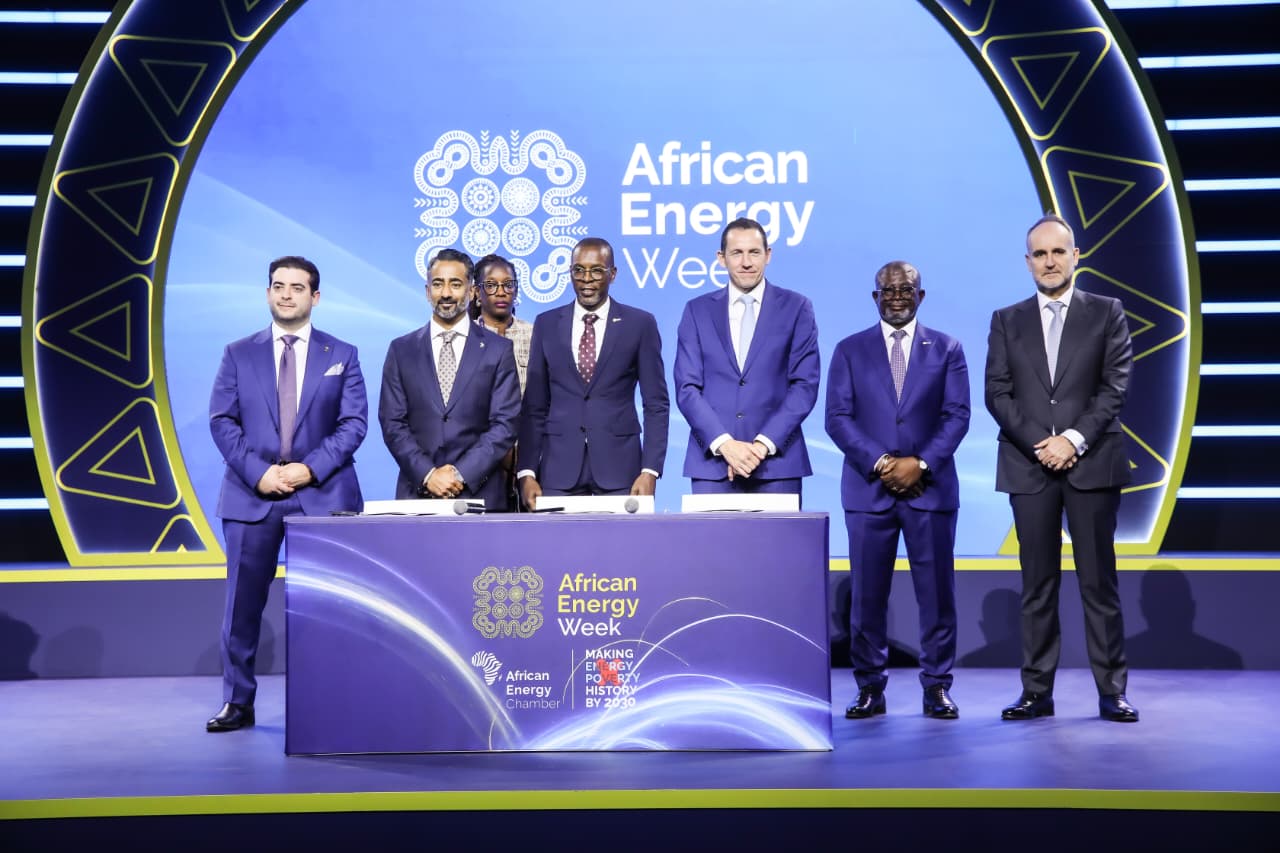
Oil & Gas Arbitration in Africa Moves Up the Investor Agenda at African Energy Week (AEW) 2026

Published

on

African Energy Chamber

A dedicated Upstream E&P Forum panel will examine how resource nationalism, ESG requirements and geopolitical disruption are reshaping dispute resolution across Africa’s oil and gas sector

CAPE TOWN, South Africa, September 2, 2026/APO Group/ –As African governments seek greater state participation, higher local content and a larger share of resource revenues, the terms governing oil and gas investments are changing across the continent. Since 2014, 31 African countries have reformed their mining and petroleum codes, creating new commercial and regulatory considerations for international investors. The resulting environment is placing greater emphasis on how upstream agreements anticipate regulatory change, protect investments and resolve disputes when commercial assumptions shift.


African Energy Week (AEW) 2026, taking place October 12–16 in Cape Town, will bring this issue into focus through a dedicated session at the Upstream E&P Forum: Resource Nationalism, ESG and Investor Protection: The New Frontier of Oil and Gas Arbitration in Africa. Sponsored by Africa-focused legal and advisory firm CLG, the panel will bring together operators, investors, legal practitioners and government representatives to examine how commercial agreements can be structured to manage disputes before they escalate.

Nigeria provides a clear example of how the legal architecture around upstream investment is evolving. The Petroleum Industry Act, enacted in 2021, overhauled the country’s petroleum fiscal and regulatory framework, changing the terms governing production-sharing contracts, joint ventures and other upstream arrangements. Nigeria has also strengthened its dispute-resolution framework through the Arbitration and Mediation Act of 2023, while the Nigerian Upstream Petroleum Regulatory Commission has promoted an Alternative Dispute Resolution Center designed to provide a sector-specific mechanism for resolving upstream disputes.

You cannot do a deal in Africa today without thinking seriously about how you would resolve a dispute if the terms change

Senegal illustrates another dimension of the challenge. Following first oil at the Sangomar field in 2024 and a rapid production ramp-up, the government established a commission to review existing oil and gas contracts with operators including Woodside and bp. While governments retain the sovereign right to review their resource agreements, such processes can alter the commercial assumptions underpinning investments and raise questions around stabilization provisions, production-sharing terms and other contractual protections.

Across parts of West Africa, political transitions, security disruptions and changes to mining and petroleum legislation are adding further uncertainty for investors. At the same time, geopolitical shocks and shifting global energy policies are testing agreements that were negotiated under very different market conditions. For companies committing billions of dollars to long-life upstream projects, the ability to anticipate and manage those changes has become an increasingly important component of investment decisions.

Arbitration remains a central tool. A review by Nigerian law firm OAL found that by 2025, most cross-border oil, gas and power agreements in Africa expressly identified arbitration as the preferred dispute-resolution mechanism. At AEW 2026, the Upstream E&P Forum panel will examine why arbitration continues to dominate cross-border energy contracts and how bilateral investment treaties, domestic legislation, ESG obligations and changing regulatory requirements interact when disputes arise.

“You cannot do a deal in Africa today without thinking seriously about how you would resolve a dispute if the terms change. We’re increasingly seeing arbitration planning as part of the commercial conversation from the start, and rightly so,” said NJ Ayuk, Executive Chairman of the African Energy Chamber. “That commercial focus is central to AEW 2026, which brings governments, investors, operators and legal experts together to address the practical conditions required to unlock the continent’s next wave of energy investment.

The Resource Nationalism, ESG and Investor Protection session will examine the intersection of contractual protections, regulatory change, political risk and the technical complexities of energy projects, giving investors and governments a practical forum to consider how stronger dispute-resolution frameworks can support Africa’s next generation of oil and gas investment.

Distributed by APO Group on behalf of African Energy Chamber.


Continue Reading

Energy

Africa Finance Corporation Joins African Energy Week (AEW) 2026 as Gold Partner Amid Record Capital Deployment Across Africa

Published

on

African Energy Chamber

AFC brings $19 billion in infrastructure financing firepower to AEW 2026 as a Gold Partner

CAPE TOWN, South Africa, September 1, 2026/APO Group/ –The Africa Finance Corporation (AFC) has joined African Energy Week (AEW) 2026 as a Gold Partner, reinforcing the event’s role as a meeting point for the institutions financing Africa’s energy and infrastructure buildout. The partnership comes as the Pan-African multilateral finance institution completes a record capital deployment cycle spanning refining, transport, power generation and upstream oil and gas.

AFC has shown consistently that African infrastructure and energy projects can attract serious capital when the structuring is right


AFC’s 2026 deal flow demonstrates the depth and breadth of that capital. In August, the institution led investors into a $2.5 billion private placement for the Dangote Petroleum Refinery and Petrochemicals complex in Lagos, the largest publicly disclosed primary equity private placement in African history. The deal was oversubscribed 3.7 times. In July, AFC reached financial close on the $753 million Lobito Corridor Railway Project in Angola alongside the U.S. International Development Finance Corporation (DFC) and the Development Bank of Southern Africa (DBSA), a 1,300 km cross-border rail rehabilitation linking the Port of Lobito with the DRC border. AFC financing also supported what will become Burkina Faso’s largest power plant.

AFC raised a record $2 billion syndicated loan in June, upsized from an initial $1.6 billion target, drawing lenders from Asia Pacific, Europe, the Middle East and Africa. In July it raised $500 million through a Eurobond at the tightest pricing in its history, and in August it became the first African institution to issue a digital bond, raising CHF 350 million on a regulated Swiss digital exchange. AFC’s assets now exceed $19 billion, while its membership spans 48 African countries. The institution holds A-level investment-grade ratings from both S&P and Moody’s.

AFC’s Gold Partnership gives AEW 2026 delegates direct access to an institution that operates across the full infrastructure and energy value chain, from project development and advisory through to equity, debt and risk mitigation. The corporation’s State of Africa’s Infrastructure Report 2026, launched in Nairobi in April, found that Africa’s non-bank domestic capital pools now exceed $2 trillion and argued that the priority has shifted from raising capital to deploying it productively. AEW 2026 is built around that challenge, and AFC’s presence strengthens the event’s ability to connect bankable projects with the institutions prepared to finance them.

“AFC has shown consistently that African infrastructure and energy projects can attract serious capital when the structuring is right and the institutions behind them are credible. Having them at AEW strengthens the conversation between project sponsors and the financiers who can move deals forward,” says NJ Ayuk, Executive Chairman of the African Energy Chamber.

Distributed by APO Group on behalf of African Energy Chamber.


Continue Reading

Trending