

Business
Canon Expands Product line-up for Broadcast and Filmmaking

Canon’s new tools give broadcasters and filmmakers enhanced camera functionality and the flexibility to create high-quality 4K content, within streamlined workflows
DUBAI, United Arab Emirates, September 12, 2022/APO Group/ —
Canon (www.Canon-CNA.com) today strengthens its cinema and broadcast offering, in line with user needs, with a suite of products – including the CN8x15 IAS S E1/P1, Canon’s latest Cine-Servo lens for a broad range of productions, the EU-V3 – a modular expansion unit for the EOS C500 Mark II and EOS C300 Mark III, a Cinema EOS firmware update, and the DP-V2730, a 27-inch 4K professional reference display that seamlessly fits into workflows of broadcasters and filmmakers.
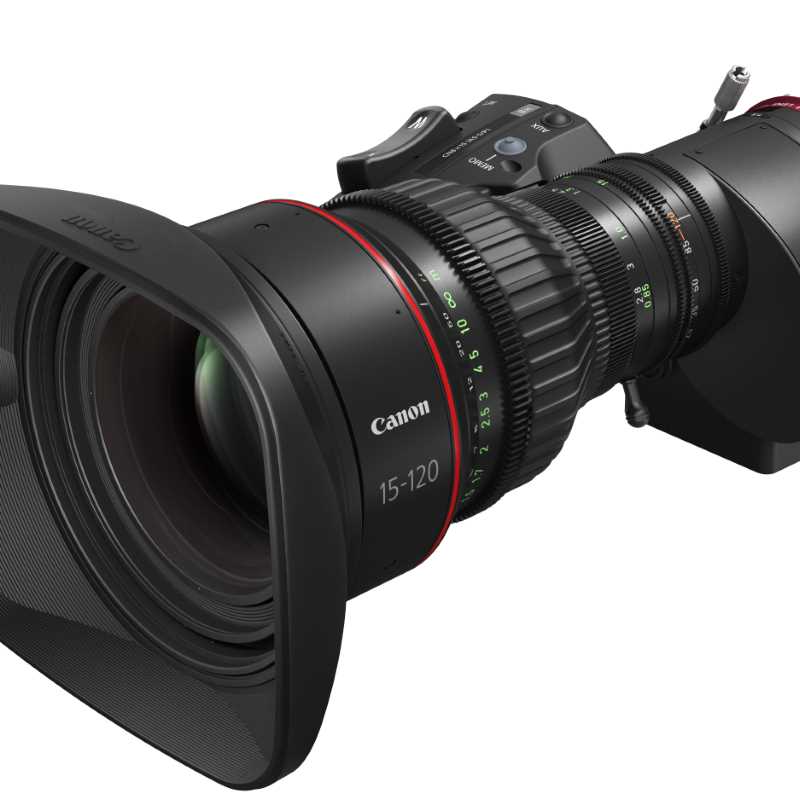
Capture the world cinematically: CN8x15 IAS S E1/P1
With a superb combination of focal range, compact size, and light weight, the CN8x15 IAS S E1/P1 supports Super 35mm cameras, making it ideal for a range of cinema and broadcast productions. With its versatile focal range from a wide 15mm, up to an impressive telephoto range of 120mm, the CN8x15 IAS S E1/P1 can further extend up to 180mm via the built-in 1.5x extender whilst offering full frame sensor coverage. To support future productions, the 8K optical performance can be maintained across the full focal length, which guarantees consistently high image quality across the entire frame.
Designed with consistent results in mind, the CN8x15 IAS S E1/P1 features Canon’s renowned warm colour science, matching the existing range of Canon’s cinema lenses – and an 11-blade aperture, producing a beautiful, smooth bokeh. Offering outstanding optical performance – and breath-taking image quality for HDR, 4K and 8K productions – the CN8x15 IAS S E1/P1 supports EF mount communication, advanced metadata capture with support for Cooke /i Technology™ and is also the first Cine-Servo lens to enable ZEISS eXtended Data™ (XD) communication when using the PL Mount. Featuring the same 16-bit encoder found in Canon’s broadcast and existing Cine-Servo lenses, which provides accurate lens position, zoom, focus and iris metadata, the information and communication functions between the CN8x15 IAS S E1/P1 and camera are paramount for VFX, virtual and cinema productions.
The high-end Cine-Servo CN8x15 IAS S E1/P1 is available in both EF and PL mount, featuring a powerful and removable servo motor drive unit. This provides broadcast-friendly shoulder operation for ENG/EFP and documentary style shooters and access for accessories needed for cinema productions.
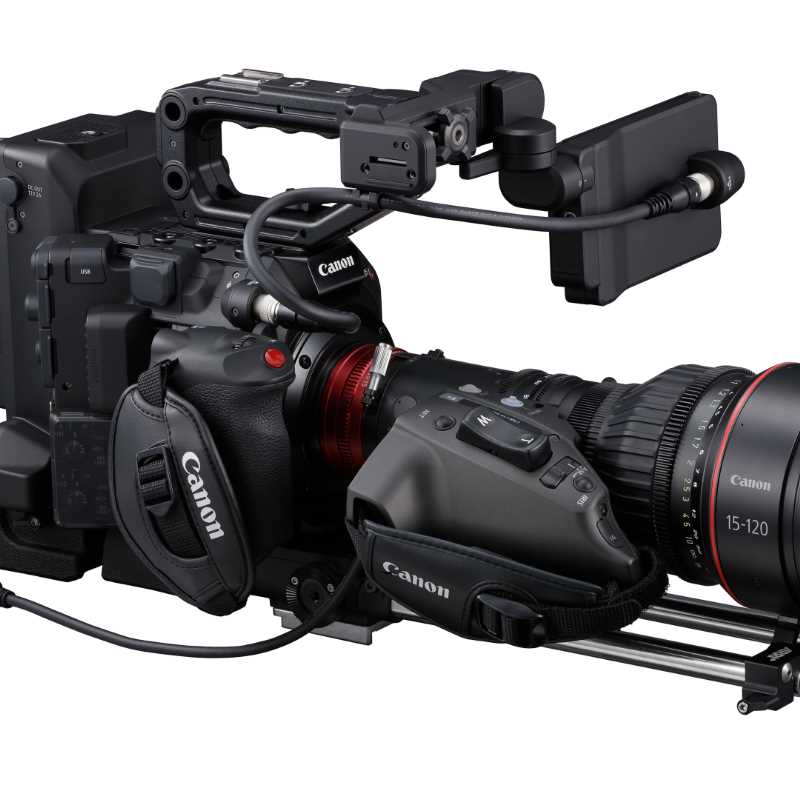
EU-V3: Modular expansion unit for live production, compatible with the EOS C500 Mark II and EOS C300 Mark III
With the increased move towards large format sensor cameras for broadcast, events and live sports production – providing viewers with a unique perspective when watching their favourite teams play – Canon has listened to user requirements with the EU-V3 expansion module for both the EOS C500 Mark II and EOS C300 Mark III. Building on both cameras’ modular design, it expands and supports specific functionality for multi-camera and live productions.
The EU-V3 offers an exclusive SDI return feature, allowing real-time monitoring of a live broadcast feed from a production switcher. The return output destination can be selected from the VIDEO, EVF-V50, MON/HDMI and SDI-OUT terminals. The EU-V3 also enables Tally support via Ethernet, using XC protocol – when the extension unit receives a Tally signal, lights on the camera body can be utilised, a Tally On-Screen display is shown, and it can relay the signal to an external device via Hirose 4-pin. Both the SDI Return and Tally functions are essential for informing camera operators of when their camera feed is live and the current status of the production.
The lens focus position can also be displayed on-screen when using the EU-V3 – with compatible broadcast and Cine-Servo lenses via 12-pin communication. The Focus Position Meter, which users can choose to display along the top or right side of the screen, allows users to register multiple focus positions on a distance scale and highlights when focus is achieved during manual operation – such as when selecting the finish line for a race.
The EU-V3 can be combined with the CN8x15 IAS S E1/P1, on both the EOS C500 Mark II and EOS C300 Mark III.
Cinema EOS Firmware: expanding horizons
A new Cinema EOS Firmware update is being introduced to strengthen the capabilities for the Live and mid-to-low end broadcast market, for both the EOS C500 Mark II and EOS C300 Mark III – enabling both cameras to be used within live environments and workflows. Key updates include:
- Implementing XC protocol: integration into multi-camera solutions, supporting direct control via RC-IP100 and ethernet connections.
- Strengthening of AF features: 120p / 100p AF support, alongside face detection during Slow and Fast Shooting Mode.
- Audio 4ch display: the audio level display will show all four audio channels when this mode is selected.
- New accessory and lens support: allowing the EOS C500 Mark II and EOS C300 Mark III to work perfectly with both the CN8x15 IAS S E1/P1 and EU-V3, as well as support for the Flex Zoom series of lenses.
DP-V2730: 4K HDR display for the new generation
An advanced professional 4K HDR monitor, the DP-V2730 has a 4K UHD panel and 1,000 cd/m² full screen peak brightness, with Canon’s local dimming technology giving an ultra-low black level of 0.001 cd/m². A great option for both filmmakers and broadcasters, the DP-V2730 has a 27-inch screen that achieves high brightness with minimal noise which is ideal for both on-set and postproduction environments. Canon’s cutting-edge brightness, detailed shadows and wide colour gamut across the entire screen achieves Dolby Vision certification and Grade1A in EBU TECH3320 standards [i]. The DP-V2730 features a suite of award-winning monitoring tools such as a waveform monitor, histogram, frame luminance monitor, RGB parade and much more – all driven by Canon’s latest processing platform for class-leading performance. The display is a great companion for broadcast and filmmaking, delivering high-end 4K HDR performance for on-set studios, OB Vans and post-production editing, VFX and colour grading.
The DP-V2730 has a HDMI input and 12G-SDI Terminals (4x Inputs and 5x Outputs) capable of delivering 4K60P 4:2:2 10-bit or 4K30P 4:4:4 12-bit signals, ideal for seamless integration into multiple workflows. The DP-V2730 can also easily be linked to a computer, tablet or smartphone plus multiple Canon Displays (via a LAN connection) with the Remote Control Web UI. This touch-optimised interface provides live image viewing, detailed signal information and direct control over inputs, monitoring tools and settings [ii]. Users can also access 4-way SDI input switching via a paid upgrade that supports various workflows, such as sending an output feed to a director’s monitor, external recorder or live steaming solution.
Strengthened products across the Pro AV portfolio
Launching alongside the suite of products today, is Canon’s latest PTZ camera – the CR-N700 (https://bit.ly/3U0bOTc) – and the XA65, XA60, XA75, XA70 and Canon LEGRIA HF G70. The CR-N700 is a 4K60P 4:2:2 10-bit PTZ camera with 12G-SDI connectivity, designed for high-end broadcast production. Canon’s new compact 4K camcorders, the XA65 (https://bit.ly/3L8vOic), XA60 (https://bit.ly/3L3xTfD), XA75 (https://bit.ly/3L67Xji), XA70 (https://bit.ly/3RuzMnT) and Canon LEGRIA HF G70 (https://bit.ly/3qsNTyf) are designed to meet the demand for live sharing content with new UVC compatibility.
To find out more about the products launched today, you can find Canon at IBC from 9 – 12th September in Hall 11, Stand C45.
To find out more about the CN8x15 IAS S E1/P1 visit: https://bit.ly/3qykUJn
To find out more about the DP-V2730 visit: https://bit.ly/3xfwkp5
To find out more about, and to download the firmware update visit: https://bit.ly/3xg71mZ
CN8x15 IAS S E1/P1 key features:
- Wide angle 15-120mm, with 8x magnification
- Built-in 1.5x extender – providing reach up to 180mm
- Full frame sensor coverage (with extender engaged)
- High quality optics for HDR, 4K and 8K capture
- Modular design with a removable drive unit
- Interchangeable lens mount from EF to PF
- First Cine-Servo lens to support ZEISS eXtended Data (XD)
EU-V3 key features:
- Return SDI Signal Input
- Remote B (RS-422)
- Ethernet
- Tally Signal Support
- V-mount battery plate (with D-TAP)
- 12-pin Lens Terminal
- DC OUT 12V-2A
Cine EOS firmware update:
- XC protocol support
- 120p / 100p AF support
- Face detection during Slow and Fast Mode Shooting
- Audio 4ch display
- Flex Zoom Series and CN8x15 IAS S E1/P1 lens support
DP-V2730 key features:
- 27” 4K UHD HDR Display
- 1000 cd/m2 brightness and 0.001 cd/m2 black levels
- Award winning monitoring tools
- Achieves Dolby Vision and Grade 1A EBU TECH3220 standards
- Dual/Quad display with 8K Support
- 12G-SDI and HDMI connectivity
[i] Grade 1A rating achieved for contrast ratio, peak luminance, black level, luminance uniformity and delay time.
[ii] A paid licence is required to activate this feature.
Distributed by APO Group on behalf of Canon Central and North Africa (CCNA).










Business
AFRICLOUD Opens Lagos Region and Local-Currency Payments in African Markets
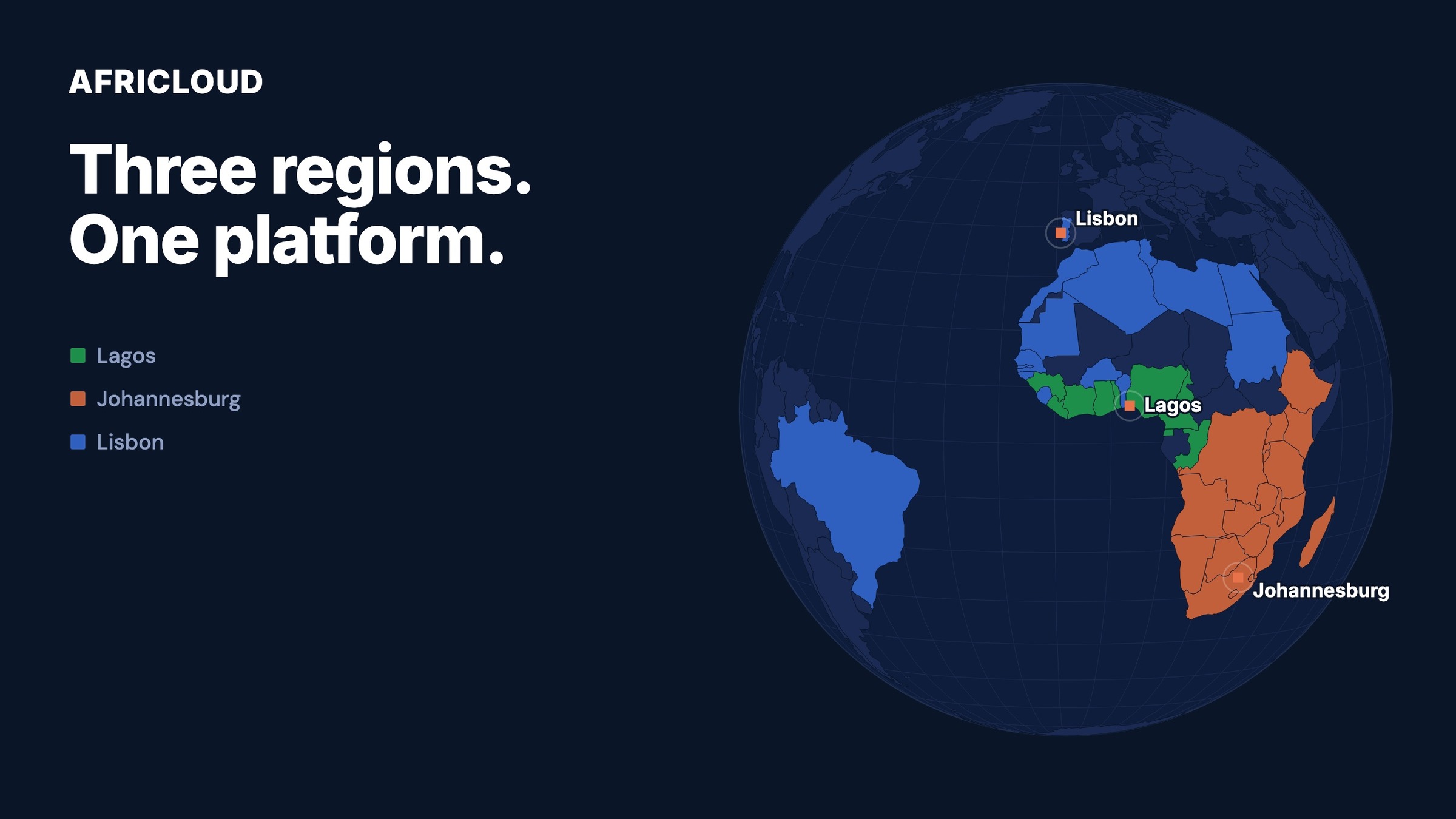
The company’s third African region keeps Nigerian workloads in Nigeria, and customers from Abidjan to Nairobi can now pay in the currency they earn, without an international card

Download document (1): https://apo-opa.co/4Ardfz9
Download document (2): https://apo-opa.co/46FWH8Y
Buying cloud infrastructure in Africa has meant living with three compromises: traffic that leaves the continent and comes back, payment in dollars behind a card many businesses do not hold, and data sitting under somebody else’s law.
Lagos answers the first. Compute and storage for Nigerian customers stay in Nigeria, and the region also serves Accra, Abidjan, Lome, Douala and Ouagadougou. Traffic from landlocked West Africa that once reached comparable infrastructure by way of Europe now stays on terrestrial West African fibre. Johannesburg serves Southern and East Africa. Lisbon serves North Africa and Europe, and reaches Brazil over a direct subsea route. Across the three regions, AFRICLOUD’s own continent-wide measurements place 42 of the 53 African countries measured within a best-case round trip of 70 milliseconds, countries home to about 1.28 billion people.
A company in Accra or Abidjan now reaches West African infrastructure without leaving the region, and pays for it in the currency it earns
Payment answers the second. Customers across West, Central, East and Southern Africa pay in their own currency, including the naira, the cedi, the shilling and the CFA francs, by local card, bank transfer, USSD or mobile money, with no international card needed. Mobile money is live in twelve African countries, and cards, PayPal and more than 300 cryptocurrencies are accepted everywhere. The GSMA reports that 74 per cent of the world’s mobile money activity by transaction count took place in Africa in 2024.
Residency answers the third. Nigerian data runs under the Nigeria Data Protection Act, South African data under POPIA and European workloads under EU law, chosen server by server from the same dashboard.
“African businesses have been asked to choose between infrastructure that is close, infrastructure they can actually pay for, and infrastructure that keeps their data under their own law,” said Oluniyi Ajao, Founder of AFRICLOUD. “Removing that choice is the reason we built this.”
“Lagos is the piece that completes the map,” he said. “A company in Accra or Abidjan now reaches West African infrastructure without leaving the region, and pays for it in the currency it earns.”
All three regions run the same platform: AMD EPYC processors with all-NVMe storage, IPv4 and IPv6 on every server, and a new server online in about two minutes. Dedicated Servers are built to order in all three regions. Support is available around the clock by chat and email.
Cloud Servers are available now at https://AFRICLOUD.com.
Distributed by APO Group on behalf of AFRICLOUD LLC.
Business
Hong Kong outlines strategies for deepening development of the Guangdong-Hong Kong-Macao Greater Bay Area and enhancing green transformation

Business
Alamein Africa Forum to bring together key political and business leaders

-

 Business5 days ago
Emirates and the Kenya Tourism Board sign partnership agreement to drive inbound tourism
-

 Business2 days ago
Afreximbank, Ghana Infrastructure Investment Fund (GIIF) and Ghana’s 24-Hour Economy Authority launch project preparation partnership to accelerate 24H+ projects
-

 Events2 days ago
Huawei Cloud Rolls Out Enterprise AI Products Across the Board, Building an Open Agentic Cloud
-

 Business2 days ago
Hong Kong sets out strategies to enhance the appeal and add value to the city’s tourism industry
-

 Energy2 days ago
Deals, Drilling and New Entrants Define Angola Oil & Gas 2026
-

 Business2 days ago
Hong Kong sets out initiatives to secure long-term development of pillar industries
-

 Business2 days ago
Former DAMAC Senior Vice President Paulo J. Cruz Appointed Founding CEO of African Collaboration Group (ACG) to Spearhead Sports and Entertainment District Development Across Africa
-

 Business2 days ago
South Africa’s water challenges are reshaping how businesses plan for resilience