Connect with us
Anglostratits

Business

Beijing E-Town Accelerates the Development of an Integrated Robotics Industry Ecosystem

Published

on

Beijing E-Town

BEIJING, CHINA – Media OutReach Newswire – 26 August 2024 – The first comprehensive robot exhibition center in Beijing, “Robot World,” has established a permanent exhibition hall. The National Robot Testing and Evaluation Center (Headquarters) Beijing Evaluation Center provides authoritative domestic and world-class testing and certification services. The Beijing Embodied Intelligence Robot Innovation Center focuses on solving common industry challenges in the development of key embodied intelligence robot technologies and ecosystem construction. The Beijing Artificial Intelligence Data Training Base helps build the “strongest brain.”

In Beijing E-Town, also known as the Beijing Economic-Technological Development Area (BDA), the ‘upstream and downstream’ sectors of the robotics industry have become ‘neighbors,’ fostering closer collaboration and integration. From attracting industry chain enterprises and building industrial spaces to providing computational support and large model training, Beijing E-Town is accelerating the construction of an integrated and interconnected robotics industry ecosystem.

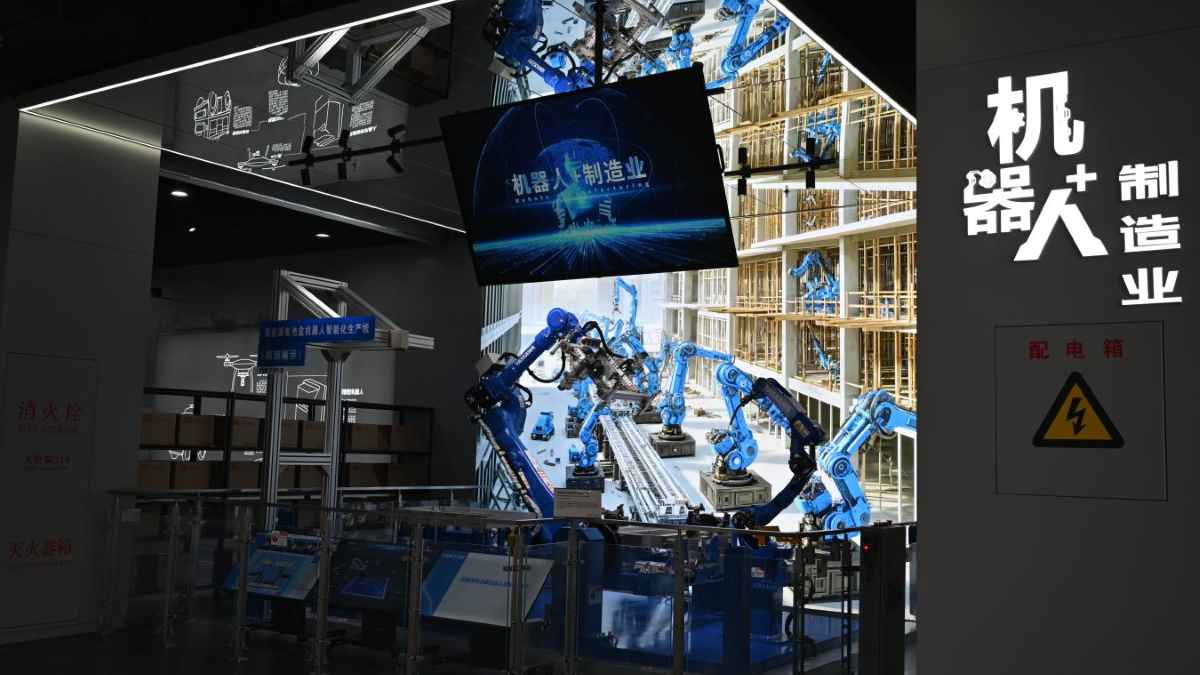
Robot World showcases the application scenarios of handling robots and arc welding robots in the automotive manufacturing field

On the morning of August 21, during the opening ceremony of the World Robot Conference 2024, Beijing Robot World (referred to as Robot World) officially opened in Beijing E-Town, located at Courtyard 3, Jinghai 5th Road, Beijing Robot Industry Park.

In Robot World, a set of futuristic robot application scenarios is presented: In the automotive manufacturing field, handling robots and arc welding robots have become “skilled workers” on the production lines of complete vehicles and parts, working seamlessly in all processes such as welding, body arc welding, roof sidewall handling, painting, and stamping. In the trade and logistics sector, logistics robots have achieved automation in tasks such as shelf-to-person, bin-to-person, robotic sorting, and intelligent robotic logistics warehousing. In the healthcare sector, surgical robots equipped with high-definition stereoscopic vision systems, microsurgery instruments, intelligent surgical forceps, and fiber optic connectors provide doctors with a clearer view and more precise operation during surgery. In the commercial community services sector, the nation’s first certified AI catering robot has achieved the fully automated process of making Chinese crepes, from ingredient preparation to customized final products based on taste preferences.

At the National Robot Testing and Evaluation Center (Headquarters) Beijing Evaluation Center, a staff member demonstrates an upper limb testing system for humanoid robots in the interaction laboratory

A representative from Beijing E-Town Robotics Technology Industry Development Co., Ltd. introduced that the exhibition hall features nine major “robot+” scenarios, including robot + manufacturing, robot + healthcare, robot + artificial intelligence, and more. The goal is to promote production through exhibitions, inspire enterprise development strategies, and create a platform that connects platforms, industries, enterprises, and talents. For example, after the World Robot Conference, the exhibition hall will house select exhibits and provide continuous, free displays of new products and technologies for enterprises. Additionally, it will offer presentation spaces and roadshow services for robot companies to launch new products.

Moreover, within the 250,000-square-meter Beijing Robot Industry Park, a leading domestic robot testing and inspection technology platform—the National Robot Testing and Evaluation Center (Headquarters) Beijing Evaluation Center (referred to as the Evaluation Center)—has also been established. Equipped with authoritative domestic and world-class testing facilities, the center provides testing and certification services for the entire industry chain, including components, modules, complete machines, and integrated applications, for industrial, service, and special robots.

A representative from the Beijing Embodied Intelligence Robot Innovation Center (referred to as the Innovation Center) told reporters, “As the industry rapidly develops, testing and certification in technical areas such as electromagnetic compatibility, safety, reliability, and intelligence have become industry necessities. The proximity of the Evaluation Center allows us to effectively save time on testing and certification, shortening the research and development testing cycle.”

Turning our attention outdoors, the general humanoid robot platform “Tiangong,” independently developed by the Beijing Embodied Intelligence Robot Innovation Center, is navigating a dedicated robot path, occasionally tackling challenging terrains like grass and slopes. As the first provincial-level innovation center for embodied intelligent robots in China, the Innovation Center focuses on developing key common technologies and ecosystem construction for embodied intelligent robots. It is committed to tackling the core tasks of “Tiangong” and “Kaiwu,” aiming to become a leading organizer of resources, a promoter of industrial development, and a facilitator of practical applications in the embodied intelligence field. “Our goal is to address common issues in the humanoid robot industry and drive overall industrial development,” stated Xiong Youjun, General Manager of the Innovation Center.

In fact, it’s not just the Innovation Center that has gathered here; full-assembly manufacturing enterprises like the UBTECH humanoid robot headquarters and key component companies like Chietcom and Tsino-Dynatron have also joined. Furthermore, to accelerate the concentration of the robotics industry, promote technological exchange, and facilitate the transformation of innovative achievements, the Beijing Robot Industry Park established a Robotics Industry Incubator in April this year. This incubator provides services such as entrepreneurial guidance, project roadshows, investment and financing, achievement transformation, intellectual property, and policy consultation for start-ups and growing enterprises in the upstream and downstream sectors of robotics. Currently, four robotics companies—Lingzu Times, NextVPU, Ruiqu Technology, and DexForce—have signed up to join.

At the Tongming Lake National Information Technology Application Innovation Park, located 4 kilometers from the Beijing Robot Industry Park, it has been reported that Beijing E-Town is building a comprehensive AI city, with the first batch of ten benchmark application scenarios, including “AI + humanoid robots.” Here, Beijing E-Town’s largest and nationally leading public AI computing power platform has already activated 3000P of high-performance computing power. Throughout Beijing E-Town, 5000P of high-performance intelligent computing power has been deployed, with a planned computing power scale exceeding 10,000P. The Beijing Artificial Intelligence Data Training Base serves as a training ground for companies, helping large models develop the “strongest brains” and continuously advancing data aggregation in related fields to unlock the value of data.

“We have currently innovated in constructing a ‘data security physical space’ and ‘a highly efficient, interconnected data optical network,’ developed a ‘trustworthy data infrastructure,’ and formulated ‘an operational management mechanism.’ Through management mechanisms and technical means, we have built a secure environment for data circulation and model training,” a representative from the Training Base explained.

By leveraging the convenience of exhibition exchanges and testing and evaluation, bringing together leading companies like the Beijing Embodied Intelligence Robot Innovation Center, UBTECH Robotics, and Longwood Valley MedTech, and benefiting from the support of specialized incubation carriers and key component companies, along with the vast application scenarios in intelligent manufacturing factories in industries such as automotive and new displays, the Beijing Economic-Technological Development Area official introduced, “In Beijing E-Town, the ‘upstream and downstream’ of the robotics industry have become ‘neighbors.’ Robotics companies can find innovative partners for research and development, manufacturing, training, testing, and even application stages without leaving the district.”

Moving forward, Beijing E-Town will accelerate the construction of an integrated and interconnected robotics industry ecosystem, continually enhancing soft and hard collaborative service support for industrial development, closely adhering to the comprehensive development needs of the robotics industry supply chain, and refining the allocation of resources such as data, platforms, services, and capital, while continually fostering an environment that attracts talent from near and far, ultimately creating an “industry ecosystem rainforest” characterized by “resource coordination, element aggregation, and innovation collaboration.”

Business

Africa Launches the First Pan-African Pact for Insurance Inclusion

Published

on

Africa

400 decision-makers gathered in Cotonou to accelerate access to insurance and contribute to doubling insurance penetration by 2040

DAKAR, Senegal, June 23, 2026/APO Group/ –Faced with a major paradox representing nearly 19% of the world’s population while accounting for less than 1% of global insurance premiums African insurance stakeholders are mobilizing.


From July 6 to 8, 2026, the Federation of African National Insurance Companies (FANAF) will organize the General Assembly on Insurance for All at the Sofitel Hotel in Cotonou, Benin, a major pan-African gathering dedicated to inclusive insurance.

The event will bring together nearly 400 African decision-makers from governments, regulatory and supervisory authorities, insurance and reinsurance companies, financial institutions, development banks, technical and financial partners, as well as professional organizations from across the continent.

The ambition is clear: to foster a shared vision and concrete commitments aimed at accelerating access to insurance for African populations while strengthening the sector’s contribution to the continent’s economic and social development priorities.

The discussions will culminate in the adoption of the Pan-African Pact for Insurance Inclusion and a 2026–2030 Strategic Action Plan, designed to structure collective action around an ambitious objective: contributing to the doubling of insurance penetration across the FANAF region by 2040.

An Economic, Social and Development Imperative

Within the CIMA zone, insurance penetration remains below 1% of GDP, compared to more than 6% globally.

As a result, millions of households, farmers, entrepreneurs, SMEs and informal sector actors remain deprived of essential protection mechanisms against health, climate, economic and social risks.

For FANAF, this reality now constitutes a major development challenge.

Africa cannot build sustainable growth without strengthening protection mechanisms for its populations, businesses and investments

“Africa cannot build sustainable growth without strengthening protection mechanisms for its populations, businesses and investments. The Cotonou General Assembly must mark the starting point of a new continental ambition for African insurance and its role in the continent’s economic transformation,” said Mamadou Koné, President of FANAF.

Beyond Insurance: A Driver of Continental Transformation

For FANAF, insurance is no longer merely a risk coverage mechanism. It is also a strategic lever for economic resilience, savings mobilization, investment security, SME financing, support for climate transitions and the strengthening of financial inclusion.

Through this General Assembly, FANAF seeks to reposition insurance as a key stakeholder in Africa’s economic, social and financial transformation.

A Pact to Accelerate Action

The conclusions of the General Assembly will lead to the adoption of the Pan-African Pact for Insurance Inclusion, a reference framework intended to mobilize governments, regulators, market players, financial institutions and development partners around shared objectives.

The Pact will be accompanied by a 2026–2030 Strategic Action Plan defining priority intervention areas, coordination mechanisms and monitoring arrangements for the commitments undertaken.

A broad mobilization of public, private and financial partners will support its implementation in order to translate commitments into tangible results for African populations and economies.

Cotonou 2026: Building a Shared Vision

Beyond the insurance sector, the General Assembly aims to create an unprecedented platform for dialogue between governments, regulators, investors, financial institutions, technical partners and market actors in order to identify the levers needed to accelerate insurance inclusion across the continent.

Holding this event in Benin reflects the country’s broader economic and financial transformation momentum and illustrates the collective determination of African stakeholders to develop solutions tailored to the continent’s realities.

Through this initiative, FANAF intends to make Cotonou 2026 a defining moment for the future of African insurance and the starting point of a lasting continental mobilization in favor of insurance inclusion.

Distributed by APO Group on behalf of Fédération des Sociétés d’Assurances de Droit National Africaines (FANAF).


Continue Reading

Business

Flat6Labs and International Finance Corporation (IFC) Launch StartAlgeria, a Capacity-Building Program Designed to Empower the Organizations Progressing Algeria’s Startup Ecosystem

Published

on

Flat6Labs

StartAlgeria comes at a key moment for Algeria’s entrepreneurship landscape, shifting the focus toward improving how the ESOs operate by providing them with international best practices

ALGIERS, Algeria, June 23, 2026/APO Group/ –Flat6Labs (www.Flat6Labs.com) and IFC in collaboration with the Ministry of Knowledge Economy, Startups and Micro-Enterprises are launching StartAlgeria, a capacity-building program that puts Entrepreneur Support Organizations (ESOs) at the forefront of Algeria’s ecosystem future. The program is designed to equip Algerian ESOs reinforcing pre-seed and seed-stage startups with the expertise, frameworks, and networks needed to contribute to a stronger, more competitive entrepreneurship ecosystem in Algeria and expand into global markets.


StartAlgeria comes at a key moment for Algeria’s entrepreneurship landscape, shifting the focus toward improving how the ESOs operate by providing them with international best practices adapted to each organization’s needs, a community-driven approach that focuses on peer learning, and facilitating connections with investors, policymakers, and key stakeholders.

Algeria’s entrepreneurial community is among the most dynamic and vibrant in the region, and the potential is not just real, it is ready to scale

StartAlgeria will pilot a first cohort focusing on incubators in the capital, Algiers. Following a call for application, the selected ESOs will go through a structured program comprising workshops and masterclasses covering key areas such as startup selection, program design and delivery, and investment readiness. In addition to the core program, participating ESOs will benefit from 6months of post-program mentorship, focusing on areas such as fundraising strategy, partnership development, financial sustainability, and program improvement. This sustained engagement’s goal is to provide a lasting impact in how Algerian ESOs operate and what they’re able to offer the startups they champion.

Yehia Houry, CEO of Flat6Labs, shares “Algeria’s startup ecosystem is demonstrating remarkable potential and a rapidly growing level of maturity, driven by an ambitious new generation of founders, increasing institutional support, and a strong national commitment to innovation and entrepreneurship. The opportunity today lies in further empowering entrepreneurship support organizations to match this momentum by strengthening their ability to identify and nurture high-potential startups, deliver impactful and results-driven programs, and create stronger connections between entrepreneurs and sources of capital. With the right support structures in place, Algeria is well positioned to become one of the leading innovation hubs in the region.”

“Algeria’s entrepreneurial community is among the most dynamic and vibrant in the region, and the potential is not just real, it is ready to scale. Through StartAlgeria, we are committed to ensuring that the organizations standing behind founders are equipped with the tools, frameworks, and expertise to take them from early ideas to investment-ready ventures. This program is a direct expression of IFC’s long-term confidence in Algeria’s private sector and in the ecosystem’s capacity to produce the next generation of high-impact companies.” underscored Cemile Hacibeyoglu Ceren, WBG Resident Representative in Algeria.

“The launch of StartAlgeria marks an important step in reinforcing Algeria’s startup support ecosystem. By strengthening the capabilities of Entrepreneur Support Organizations, we are investing in the long-term growth, resilience, and international competitiveness of Algerian startups. This initiative reflects our shared ambition to build a dynamic innovation-driven economy and create new opportunities for entrepreneurs across the country,” said H.E Mr. Noureddine Ouadah, Minister of Knowledge Economy, Startups and Micro-Enterprises.

This IFC program is implemented in partnership with the Government of the Netherlands.

Distributed by APO Group on behalf of Flat6Labs.

Continue Reading

Business

Hong Kong unlocks new opportunities with Central Asia

Published

on

Hong Kong

HONG KONG SAR – Media OutReach Newswire – 23 June 2026 – Led by Chief Executive of the Hong Kong Special Administrative Region (HKSAR), John Lee, a high-level delegation visit to Kazakhstan and Uzbekistan (May 31 – June 5) is already paying dividends, forging fresh opportunities to deepen ties between Central Asia, Hong Kong and the Chinese Mainland.

The business delegation comprised over 70 representatives from Hong Kong and Mainland enterprises of various sectors.

During the visit, 96 bilateral memoranda of understanding and agreements were reached, including a total of 15 co-operation documents at the government level between Kazakhstan and Uzbekistan respectively.

“The examples of agreements and co-operation are just so abundant that they range from the service sector to heavy industries such as mining and infrastructure development,” Mr Lee said. “I think the sky is the limit.”

The multiple outcomes achieved during the trip demonstrate Hong Kong’s role as a functional platform for the Belt and Road (B&R) Initiative, as the city actively plays its roles as a “super connector” and “super value-adder” to promote broader and deeper co-operation between the two places and establish a hub-to-hub co-operation model.

“Kazakhstan is an important commercial and logistics hub connecting China and Europe. It is also the place where the Belt and Road Initiative was first proposed, and is Hong Kong’s largest trading partner in Central Asia. There are broad prospects for further co-operation,” Mr Lee said, adding that a lot of B&R projects are also being pursued in Uzbekistan.

“For example, Uzbekistan sits in the heart of the corridor of Asia and Europe, so logistical development, railway development, and also how we can complement and supplement each other in cargo handling will be an area for a very wide range of co-operation.”

The Chief Executive also encouraged companies in Central Asia to leverage Hong Kong’s advantages under the “one country, two systems” principle.

“Under this unique principle, Hong Kong has its own economic, social, legal, legislative and judicial systems. We are the only common law jurisdiction in China. We have our own currency, with no capital or foreign exchange controls. We are, as well, a separate customs territory,” Mr Lee said.

Building on the positive outcomes from the delegation’s mission to Central Asia, Mr Lee welcomed the Deputy Prime Minister of Kazakhstan, Kanat Bozumbayev, to Hong Kong (June 10) and they both attended the Alatau City Investment Round Table (June 11).

Speaking at the event, Mr Lee said Hong Kong could contribute to the future success of Kazakhstan’s innovative, high-tech Alatau City in three concrete ways: as a gateway to global capital; a gateway to the Chinese Mainland and the Greater Bay Area; and as a partner in talent and technology.

“We share a development vision with Alatau City and Kazakhstan,” Mr Lee said, “Today, right here, right now, is a golden opportunity to bring our two economies closer together.”

He looked forward to Hong Kong and Kazakhstan achieving complementary advantages and co-ordinated development across different sectors and welcomed enterprises in Kazakhstan to make good use of Hong Kong’s premier financial and innovation and technology platforms, as well as its world-leading professional services, to explore more business opportunities.


Continue Reading

Trending