The ABH prize competition aims to identify, support, and inspire the next generation of African entrepreneurs who are significantly impacting their communities and the African continent
JOHANNESBURG, South Africa, July 18, 2023/APO Group/ —
APO Group (www.APO-opa.com), the leading pan-African communications consultancy and press release distribution service, announces the selection of VP of Digital, PR and Media Relations, Lynne Krawchuk, and Acting Head of Content, Bonnie Robinson, as judges for the prestigious Africa’s Business Heroes (ABH) prize (www.AfricaBusinessHeroes.org), the Jack Ma Foundation’s flagship philanthropic program in Africa to support entrepreneurs.
The ABH prize competition aims to identify, support, and inspire the next generation of African entrepreneurs who are significantly impacting their communities and the African continent. The Jack Ma Foundation is committed to fostering African entrepreneurship and has brought in some of the continent’s most esteemed businesspeople and leaders to help search for Africa’s Business Heroes.
Serving as a round two judge for the ABH prize competition, Krawchuk brings a wealth of experience and knowledge to the evaluation process. With her extensive experience in PR and digital marketing spanning over 20 years, Krawchuk has established herself as a seasoned professional in the PR and communications industry. At APO Group, she plays a vital role in shaping and implementing effective media relations strategies. Her selection as a judge for the ABH prize competition demonstrates her deep understanding of the African entrepreneurial landscape and her commitment to supporting and recognising outstanding African entrepreneurs.
As a round one judge, Robinson offers strong entrepreneurial experience. She is highly respected and celebrated for her knowledge and insights as a PR professional with more than two decades of experience in the PR and communications industry. With her sound background in integrated strategic communications, brand reputation, and crisis management, Robinson consistently navigates complex challenges and delivers exceptional content, strategies, and results. As a judge for the ABH prize competition, Robinson’s experience contributes to the comprehensive evaluation, mentorship, and recognition of the most deserving entrepreneurs in Africa.
Additionally, both Krawchuk and Robinson have served on numerous adjudication panels in the PR and business industries. Their involvement in evaluating and assessing a variety of award-winning initiatives and campaigns reflects their deep understanding of industry standards and best practices. Through their participation in these judging panels, they have developed a keen eye for identifying excellence and innovation in various sectors.
Commenting on her selection as a judge, Krawchuk says, “It is an honour to be selected as a judge for the ABH prize. This competition represents a powerful platform for entrepreneurs to showcase their innovative ideas and receive support to drive their businesses forward. I am inspired by the passion and resilience of African entrepreneurs, and I look forward to contributing to their growth and success.”
Robinson echoes Krawchuk’s sentiments and adds, “It is a privilege to recognise, support, and mentor innovative African entrepreneurs from all walks of life who drive positive change in their communities. The prize competition is highly inclusive in that it provides equal opportunity for business owners across all 54 African countries who have been operating for three years, a chance to evidence their business strategies, achievements, lessons, and most of all, their distinctive human stories that drove them to become an entrepreneur.”
I am inspired by the passion and resilience of African entrepreneurs, and I look forward to contributing to their growth and success
“I take great pleasure in walking alongside these outstanding business founders who are making a significant impact on Africa, getting to know them, and providing them with guidance to help them thrive,” says Robinson.
The selection of judges for the ABH prize competition is based on rigorous criteria, including business experience, industry knowledge, and commitment to fostering African entrepreneurship. Judges play an instrumental role in mentoring the finalists, providing valuable feedback, guidance, and support. Their involvement in the growth and success of the entrepreneurs makes the ABH judging process unique and ensures a fair and thorough evaluation process.
The ABH finalists are selected based on their demonstration of visionary entrepreneurship, embodying traits such as innovation and creativity, impact on communities and societies, leadership and vision, the potential for growth and scalability, market demand, and financial sustainability.
Effective communication skills are also crucial as finalists are required to present and articulate their business plans to the judges while responding to thought-provoking questions within a specified number of minutes. Their ability to convey their passion, expertise, and unique selling points is essential to impressing the judges and securing their support.
The ABH competition not only empowers entrepreneurs but also captivates audiences with the diversity and ingenuity of the business plans submitted. Each business plan tells a unique story of resilience, creativity, and the drive to make a positive impact in Africa. From innovative tech solutions and beauty and fashion to sustainable agricultural initiatives, the business plans showcased in the competition offer fascinating insights into the entrepreneurial landscape across the continent.
Many of the business plans submitted demonstrate the remarkable depth of talent and the transformative ideas that are emerging from Africa’s entrepreneurial ecosystem.
As part of the initiative, the ABH competition offers an impressive prize fund of US$1.5 million, with each of the top three winners receiving a share. However, the value of the prize goes beyond financial gain. It represents an extraordinary platform where all participants, including the winners and the finalists, benefit from the expertise and insights garnered by the ABH community of business leaders.
The ABH competition has become a significant platform for African entrepreneurs, providing them with the resources, mentorship, and exposure needed to thrive in the business landscape.
APO Group reaffirms its commitment to supporting and promoting African entrepreneurship while showcasing the immense potential and talent that exists on the continent to the rest of the world.
South Sudan’s Finance Ministry, Stanbic Bank, Trade and Development Bank (TDB) and Capium Partners Headline Investment Dialogue at South Sudan Oil & Power (SSOP) 2026
Senior representatives from regional financial institutions and the government will examine project bankability, investment risks and financing opportunities across South Sudan’s energy sector
JUBA, South Sudan, November 21, 2026/APO Group/ –South Sudan’s Ministry of Finance and Planning will join representatives from Stanbic Bank, the Trade and Development Bank (TDB) and Capium Partners at South Sudan Oil & Power (SSOP) 2026 to examine financing solutions for the country’s oil and gas sector. Taking place November 24–25 in Juba, the conference will bring together government officials, commercial banks, development finance institutions and investors to explore opportunities across upstream development, petroleum infrastructure and local energy services.
Held under the theme Resource Renaissance – Energy-Fueled Growth for a New Generation, SSOP 2026 will feature dedicated discussions on project bankability, risk mitigation and financing structures to support South Sudan’s energy investment ambitions.
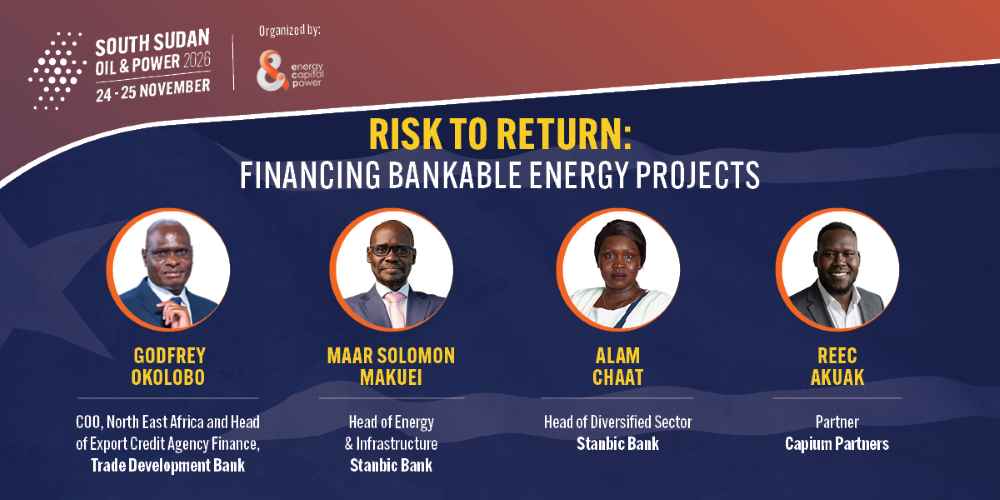
Speakers include Godfrey Okolobo, COO, North East Africa and Head of Export Credit Agency Finance at TDB; Maar Solomon Makuei, Head of Energy & Infrastructure at Stanbic Bank; and Reec Akuak, Partner at Capium Partners at the event. They are scheduled to participation in the Risk to Return: Financing Bankable Energy Projects panel.
Alam Chaat, Head of Diversified Sector at Stanbic Bank, also joins the event and will participate in the Juba Declaration: Building East Africa’s Next Energy & Industrial Frontier session, bringing financial-sector perspectives to discussions on commitments from financing institutions, legal stakeholders and public-sector partners to support South Sudan’s energy and petroleum expansion agenda.
Both discussions are expected to examine how blended financing instruments and partnerships between domestic, regional and international capital providers can accelerate investment across South Sudan’s energy value chain. Speakers are expected to explore financing structures that improve project bankability, mitigate investment risks and expand access to capital for local service providers.
SSOP 2026 comes as South Sudan seeks to maximize production from its existing brownfield assets while attracting investors to greenfield opportunities. With 14 exploration blocks available for investment, the country is targeting an increase in crude production from approximately 174,000 barrels per day (bpd) to 230,000 bpd. Its estimated 3.5 billion barrels of proven oil reserves offer substantial potential for additional upstream development, with much of the resource base yet to be developed.
These opportunities extend beyond exploration and production. As operators expand activities and new oilfield services companies enter the market, demand for working capital, equipment financing, guarantees and trade finance is expected to create additional opportunities for commercial banks and regional financing institutions. Midstream and downstream infrastructure also present investment prospects as South Sudan seeks partners to expand crude storage capacity, develop refining infrastructure and strengthen petroleum logistics.
SSOP 2026 provides a platform for connecting capital providers with government authorities, project developers and emerging investment opportunities. Through high-level discussions, project showcases and exclusive networking sessions, SSOP 2026 will support deal signings and partnership formation aimed at mobilizing investment and driving the next phase of growth in the country’s energy sector.
Morocco’s hospitality sector is expanding in line with national targets of over 30 million annual tourists and over 60 000 additional hotel beds by 2030
CASABLANCA, Morocco, November 20, 2026/APO Group/ —
Morocco is investing at unprecedented scale in transport infrastructure, hospitality assets and real estate megaprojects ahead of the 2030 FIFA World Cup.
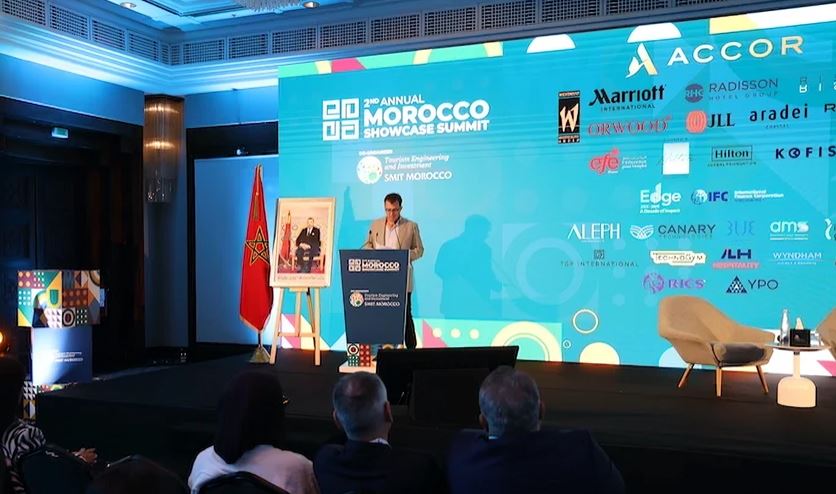
Over 300 local and global hospitality, tourism and real estate leaders gather in Casablanca on 26 November for Morocco Showcase Summit, to unpack the opportunities and sustain the momentum for decades to come.
Ahead of co-hosting the 2030 FIFA World Cup, Morocco is posting record public and foreign direct investment. The Finance Ministry set aside a record MAD380 billion ($38bn) for public investment in 2026, while FDI receipts of MAD56bn ($5.6bn) in 2025 were also an all-time high.
Infrastructure due for completion before 2030 include a MAD15bn ($1.5bn) upgrade to Casablanca’s Mohammed V airport terminal (lifting annual capacity from 14 million to 35 million passengers) and a MAD96bn ($9.6bn) rail programme. These come on top of stadium upgrades and the new 115 000-seat Hassan II Stadium in El Mansouria, which includes a three-way commuter railway line connecting to the airport.
The infrastructure being delivered today, from airports to high-speed rail, is permanently changing the economics of Moroccan real estate
“Supported by stable and positive outlooks from global ratings agencies, healthy capital markets, strong FDI inflows and record-breaking tourism numbers, the platforms have been laid for growth well past 2030. Morocco Showcase Summit convenes with this in mind, bringing together the top local and global investors and roleplayers in hospitality, tourism and real estate to jointly harness opportunities for the decades to come,” says API Events Managing Director Murray Anderson.
The summit takes place at the Marriott Casablanca Hotel under the theme “Momentum 2030: Catalysing Morocco’s Investment Journey”, in partnership with the Société Marocaine d’Ingénierie Touristique (SMIT) and the Confédération Nationale du Tourisme (CNT).
Driss Fassi Fihri, Co-founder and Managing Partner of independent real estate private equity firm ÆDGE Partners, stressed that the projects and investment inflows for 2030 were a catalyst, not a finish line.
“The infrastructure being delivered today, from airports to high-speed rail, is permanently changing the economics of Moroccan real estate and opens a unique window of opportunity for investors,” said Fassi Fihri.
Scale-up of local operators, international brands and capital markets
Morocco’s hospitality sector is expanding in line with national targets of over 30 million annual tourists and over 60 000 additional hotel beds by 2030, driving rapid scaling of local operators and global brands, both in the spotlight at the summit.
In January 2026, Casablanca-listed hotel operator and summit sponsor RISMA raised MAD450 million ($45 million) to fund a long-term expansion plan to reach 28 hotels by 2030. The raise was massively oversubscribed, reflecting strong institutional interest.
International brands partnering with the summit, including Marriott, Wyndham, Hilton, Accor and IHG, are all targeting Morocco as a key market in their Africa expansion plans, and will discuss opportunities in luxury, midscale and branded residences.
“Morocco continues to be an important growth market for Marriott International, supported by strong tourism momentum and significant investment in the country’s hospitality sector. We see exciting opportunities across a range of segments and look forward to joining owners, investors and industry partners at the Morocco Showcase Summit to discuss the next chapter of growth in the market.” said Shady Hassan, Marriot’s VP | Lodging Development, North Africa
Programme highlights
Six themes run through the day, with a matchmaking room open in the afternoon to connect real estate and hospitality investors, developers, operators and owners. The programme covers:
Foreign capital and local equity. Why stability and delivered infrastructure are drawing international investors.
Listings and liquidity. What CSE depth means for developers, and how Gulf, European, diaspora and family office money is moving.
Deals and the capital stack. How banks, DFIs and international debt close transactions, equity against debt across asset classes, OPCIs and sale-and-leasebacks.
Hotel performance and brands. Occupancy, ADR and RevPAR against global cities, what mega-events do to demand, and luxury, midscale and branded residences.
Beyond hotels. Mixed-use viability, leisure and entertainment, boutique and eco-tourism, and design-led destinations.
Return on investment after the tournament. And the logistics and financing behind megaprojects.
A pre-cocktail function at Novotel Casablanca City Center on 25 November and a cocktail after the main programme bookend the event.
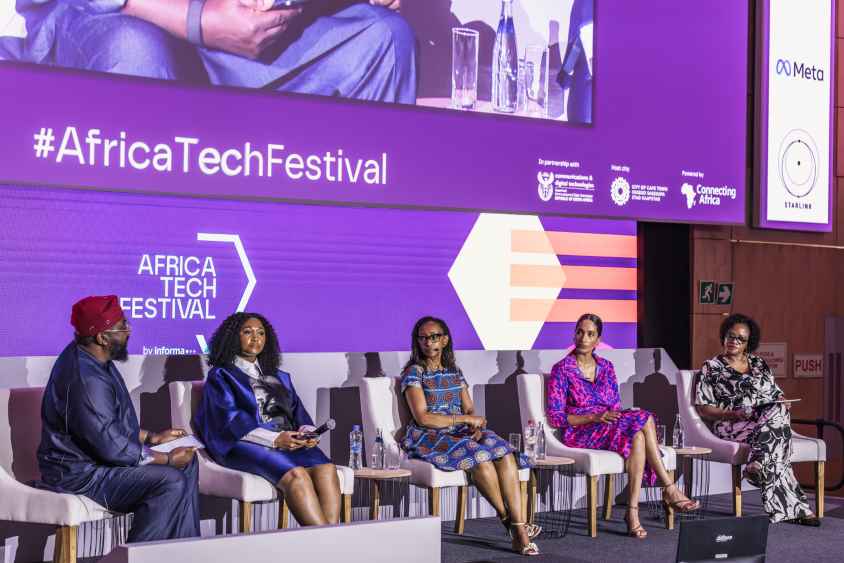
Africa Tech Festival, the continent’s longest-running and most influential technology gathering, concluded its 29th edition at the Cape Town International Convention Centre, welcoming more than 15,000 delegates over the three days
CAPE TOWN, South Africa, November 20, 2026/APO Group/ –AI is opening up opportunities for African businesses to improve performance, develop new revenue streams and equip young people for a changing workplace. This was a central theme as Africa Tech Festival (www.AfricaTechFestival.com) 2026 concluded in Cape Town yesterday, with industry leaders sharing how digitalisation is changing the way companies operate, create jobs and broaden access to digital services.
Providing an enterprise perspective, Frederik Zietsman, Group CEO of Takealot, opened the final day’s headline programme in conversation with Tomiwa Aladekomo, CEO of Big Cabal Media. Their discussion explored the realities of building a profitable e-commerce business in South Africa, including the importance of customer trust and investment in the infrastructure needed to reach consumers. “It starts and ends with trust. Because if you don’t have trust, then ultimately, you fail,” said Zietsman. He described how Takealot has invested in its own delivery infrastructure and developed a network of approximately 20,000 personal shoppers to help consumers in underserved communities access online retail.
Turning to Africa’s role in the AI economy, Hardy Pemhiwa, President and Group CEO of Cassava Technologies, discussed how to make innovation more accessible and help local ideas reach wider markets. “I really would love to see an Africa where innovation is not limited by traditional education,” he said, noting that AI could help overcome language barriers that have historically prevented promising ideas from being commercialised. Martin Manniche, CEO of AXON Networks, considered the role of automation and cloud-native technologies in modernising telecommunications infrastructure to support sophisticated digital services.
As technology changes how businesses operate, it is also changing the skills employers need and the opportunities available to young people. Charles Murito, Regional Director, Government Affairs and Public Policy, Sub-Saharan Africa at Google; Tiara Pathon, AI Skills Director at Microsoft; and Ziyad Cassim, Group CEO of UVU Africa, examined the implications for Africa’s workforce. Murito asked how young people can move from being job seekers to value creators, advocating entrepreneurship and new sources of employment. Pathon challenged conventional approaches to training, saying that “organisations like ours need to stop treating learners as beneficiaries of learning, and see them as participants and creators.” Cassim warned that “the biggest risk we’re seeing right now is young people losing that first opportunity to work,” calling on employers to give young talent opportunities to gain practical experience.
Africa Tech Festival provides a platform for these different perspectives to come together, forging connections and partnerships that will help drive the industry forward
However, the growing use of AI also raises questions about accountability when technology fails. Lawrence Matemba, Chief Policy Analyst and Deputy Director-General in the South African Presidency, and Geoff Okao, Chief Digital Officer and Deputy Director, Digital Impact at UNICEF, examined who should be held accountable when automated decisions cause harm. Matemba argued that organisations providing services must accept responsibility for failures, emphasising that citizens must remain central to the design and delivery of those services. Okao cautioned that “a risk register does not by default protect the person who’s harmed”, calling for safeguards that consider the people affected, not just the risks facing organisations.
Access to finance was another area of discussion, with SME funding among dozens of topics explored across the festival’s nine content stages. On the fintech stage, executives from Makko Brothers Credit Limited, Nomba, Edge Growth and Absa Corporate and Investment Bank examined alternative lending models, transaction-based credit assessments and ways to improve access to working capital.
Africa Tech Festival, the continent’s longest-running and most influential technology gathering, concluded its 29th edition at the Cape Town International Convention Centre, welcoming more than 15,000 delegates over the three days.
“This week we’ve heard from government leaders, technology companies, investors and entrepreneurs on issues ranging from digital sovereignty and infrastructure investment to AI governance, business growth and skills development. Africa Tech Festival provides a platform for these different perspectives to come together, forging connections and partnerships that will help drive the industry forward,” said David Monaghan, Vice President, Africa Tech Festival.
Africa Tech Festival returns to Cape Town from 16–18 November 2027 for its landmark 30th edition, celebrating three decades at the heart of Africa’s technology industry.
We use cookies on our website to give you the most relevant experience by remembering your preferences and repeat visits. By clicking “Accept”, you consent to the use of ALL the cookies.
This website uses cookies to improve your experience while you navigate through the website. Out of these, the cookies that are categorized as necessary are stored on your browser as they are essential for the working of basic functionalities of the website. We also use third-party cookies that help us analyze and understand how you use this website. These cookies will be stored in your browser only with your consent. You also have the option to opt-out of these cookies. But opting out of some of these cookies may affect your browsing experience.
Necessary cookies are absolutely essential for the website to function properly. These cookies ensure basic functionalities and security features of the website, anonymously.
Cookie
Duration
Description
cookielawinfo-checkbox-analytics
11 months
This cookie is set by GDPR Cookie Consent plugin. The cookie is used to store the user consent for the cookies in the category "Analytics".
cookielawinfo-checkbox-functional
11 months
The cookie is set by GDPR cookie consent to record the user consent for the cookies in the category "Functional".
cookielawinfo-checkbox-necessary
11 months
This cookie is set by GDPR Cookie Consent plugin. The cookies is used to store the user consent for the cookies in the category "Necessary".
cookielawinfo-checkbox-others
11 months
This cookie is set by GDPR Cookie Consent plugin. The cookie is used to store the user consent for the cookies in the category "Other.
cookielawinfo-checkbox-performance
11 months
This cookie is set by GDPR Cookie Consent plugin. The cookie is used to store the user consent for the cookies in the category "Performance".
viewed_cookie_policy
11 months
The cookie is set by the GDPR Cookie Consent plugin and is used to store whether or not user has consented to the use of cookies. It does not store any personal data.
Functional cookies help to perform certain functionalities like sharing the content of the website on social media platforms, collect feedbacks, and other third-party features.
Performance cookies are used to understand and analyze the key performance indexes of the website which helps in delivering a better user experience for the visitors.
Analytical cookies are used to understand how visitors interact with the website. These cookies help provide information on metrics the number of visitors, bounce rate, traffic source, etc.
Advertisement cookies are used to provide visitors with relevant ads and marketing campaigns. These cookies track visitors across websites and collect information to provide customized ads.