Connect with us
Anglostratits

Energy

African Power Pools: How Regional Integration Can Strengthen Energy Security

Published

on

African Energy Chamber

According to the African Energy Chamber’s State of African Energy 2026 Outlook, Africa’s five regional power pools are key to reducing costs, improving reliability and attracting investment in electricity infrastructure

CAPE TOWN, South Africa, January 12, 2026/APO Group/ –Regional electricity integration could be a game-changer for Africa, helping countries address persistent electricity challenges and attract investment in energy infrastructure, according to the African Energy Chamber’s (https://EnergyChamber.orgState of African Energy 2026 Outlook. By developing larger, interconnected markets, nations can create alternative offtake solutions, reduce project risks and enable economies of scale. Five regional power pools have been established across the continent – Southern Africa, Eastern Africa, Western Africa, Central Africa and North Africa – to facilitate cross-border electricity trade, share resources and coordinate energy policies.


The Outlook notes that the Southern African Power Pool (SAPP) stands out as the most advanced. Its robust institutional framework, high degree of grid interconnection and transparent electricity market have enabled efficient trading and optimized resource use. SAPP serves as a model for regional integration, allowing member countries to benefit from reliable power exchanges and a diversified generation mix. Yet, even here, challenges remain: trading remains limited relative to total demand, liquidity is low and transmission constraints persist, highlighting the need for continued investment and market development.

By leveraging private investment alongside government support, these frameworks can mobilize capital, technology and expertise

West Africa’s power integration also shows promise. The Outlook highlights WAPP’s progress in expanding cross-border connections and increasing electricity trade, while noting that growth is constrained by incomplete grid links, regulatory fragmentation and financial issues such as payment arrears. Similarly, the Eastern Africa Power Pool is advancing through large-scale interconnection projects, but its development is slowed by political and regulatory fragmentation, infrastructure gaps and occasional security tensions. The Central African Power Pool remains the least developed, with minimal cross-border trade and limited infrastructure.

​​North Africa presents a contrasting picture: the region has some of Africa’s most advanced infrastructure, yet electricity trade is limited because countries primarily pursue bilateral agreements or focus on Europe-bound exports rather than intra-African integration. The Outlook emphasizes that across all regions, the African Union’s African Single Electricity Market aims to harmonize standards, regulatory frameworks and planning to create the world’s largest electricity market by 2040. Achieving this vision faces significant hurdles, including vast distances, technical incompatibilities, infrastructure needs, political fragmentation and differing national interests.

Even within the relatively mature SAPP, the Outlook identifies additional work needed to unlock market potential. Market liquidity remains a major constraint: in 2023, only 7.7 TWh was traded over the SAPP, compared with total demand of 344 TWh – roughly 2%. Around 80% of this trade comes from bilateral contracts, with just 13% conducted through the day-ahead market (DAM). In contrast, mature European markets trade more than 24% of physical consumption through DAMs, illustrating how limited trading scale in SAPP restricts its ability to stabilize the network. Transmission congestion also constrains trade: although blocked trades in the DAM fell from over 40% before 2018 to 1.3%, the Outlook notes this improvement reflects reduced activity rather than enhanced infrastructure. Addressing funding gaps and improving wheeling tariffs are critical to enabling the power pool to function at full potential.

The Outlook also highlights financing as a central issue across Africa, where public debt and fiscal constraints limit governments’ ability to fund large infrastructure projects. Innovative approaches such as public-private partnerships have emerged as vital tools for bridging these gaps. The Outlook identifies four main models for private-sector participation in transmission projects: Build-Own-Operate; Build-Own-Operate-Transfer; Build-Transfer-Operate; and Engineering, Procurement, Construction and Finance. Examples cited include the Kigali Power Transmission Project in Rwanda and the CLSG interconnector linking Ivory Coast, Liberia, Sierra Leone and Guinea, funded by multilateral institutions and regional governments.

“By leveraging private investment alongside government support, these frameworks can mobilize capital, technology and expertise to construct and operate critical transmission infrastructure,” says NJ Ayuk, Executive Chairman, African Energy Chamber, adding that regional electricity integration offers clear potential to lower costs, improve reliability and attract investment, “laying the foundation for a more secure, efficient and renewable-powered Africa.”

Distributed by APO Group on behalf of African Energy Chamber.

Energy

African Mining Week (AMW) to Unlock Zimbabwe’s $12B Mining Vision Through Direct Investor Partnerships

Published

on

Etu Energias

A dedicated country spotlight at African Mining Week 2026 will showcase regulatory reforms and project developments across Zimbabwe’s mining value chain

CAPE TOWN, South Africa, June 25, 2026/APO Group/ –African Mining Week 2026 – The Most Influential Mining Conference in Africa – will connect Zimbabwean regulators and mining stakeholders with global investors to advance partnerships, as the country accelerates efforts to build a $12 billion mining industry by 2030.

Taking place from October 14 – 16 in Cape Town, AMW 2026 will feature a dedicated Zimbabwe Country Spotlight, showcasing lucrative opportunities across the country’s mining value chain. The country spotlight will feature high-level panel discussions, exclusive networking sessions and project showcases, connecting global investors and service providers with senior decision-makers from the Ministry of Mines and Mining Development of Zimbabwe, the Chamber of Mines of Zimbabwe and leading mining companies operating across the country.

The spotlight comes at a pivotal moment for Zimbabwe, as the country seeks fresh capital to unlock value from more than 60 known mineral occurrences spanning gold, lithium, platinum group metals, chrome, coal and rare earths.

https://apo-opa.co/43Z71HR

In a major move to improve investment competitiveness, Zimbabwe reduced mining-related license and permit fees in May 2026, lowering operational costs for investors while streamlining market participation. Registration fees for dealing in precious stones have been reduced from $15,000 to $10,000, while export permit fees have been cut from $1,875 to $500. New licensing categories – including permits for gold jewellery manufacturing and lithium processing plants – have also been introduced as part of a broader strategy to promote investments across in-country value addition projects. The reduction in fees for beneficiation projects follows the April 2026 introduction of export quotas for lithium concentrates ahead of a planned 2027 ban on concentrate exports. The shift is already reshaping the country’s lithium industry, with Zhejiang Huayou Cobalt achieving Zimbabwe’s first export shipment of lithium sulphate salts in April 2026.

https://apo-opa.co/4w3X7R3

https://apo-opa.co/4uTlYpG


https://apo-opa.co/44ziVZ3


Coming into this picture, AMW 2026’s Zimbabwe Country Spotlight will provide investors with direct insights into these evolving regulatory frameworks, highlighting emerging investment and partnership prospects in lithium processing and across the mining value chain.

Zimbabwe’s gold sector is also positioned for renewed growth amid sustained high global gold prices (averaging $5,000 per ounce). In line with this momentum, Zimbabwe’s sovereign wealth fund, Mutapa Investment Fund, is seeking $250 million to expand gold mining operations. Against this backdrop, AMW 2026 offers a timely platform for investors to engage with one of Africa’s most prospective brownfield gold markets and explore opportunities across exploration, mine expansion and processing infrastructure.

https://apo-opa.co/4eCDMiU


AMW 2026’s strong emphasis on artisanal and small-scale mining (ASM) formalization also aligns closely with Zimbabwe’s national mining development strategy. In May 2026, Zimbabwe certified 300 small-scale miners following completion of training programs safety, compliance and productivity. Supported by funding from Mutapa Gold Resources – a subsidiary of Mutapa Investment Fund – the initiative aims to train and formalize 1,500 ASM players.


https://apo-opa.co/44rhsUH

As the official platform where Africa’s mining opportunities are discussed and maximized, AMW 2026 will provide stakeholders with market intelligence on Zimbabwe’s evolving mining landscape and investment outlook.

Distributed by APO Group on behalf of Energy Capital & Power.

Continue Reading

Energy

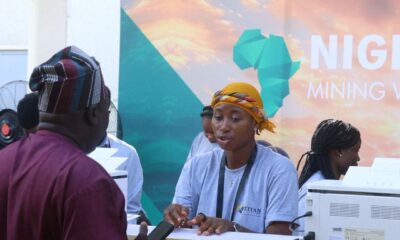
Nigeria Accelerates $750B Mining Vision Ahead of African Mining Week (AMW) 2026

Published

on

Etu Energias

African Mining Week will showcase opportunities within Nigeria’s mining value chain as the country seeks capital to unlock its $750 billion worth of untapped mineral deposits

CAPE TOWN, South Africa, June 24, 2026/APO Group/ –Nigeria’s mining sector is entering a new phase of growth as regulatory reforms, downstream investments and international partnerships strengthen investor confidence in one of Africa’s largest untapped mineral markets. The country’s solid minerals sector has secured approximately $3 billion in investments over the past three years, reflecting growing investor confidence as the West African nation seeks to bridge the financing gap hindering large-scale mining development.


The investment milestone comes as Nigeria deepens engagement with investors to unlock its estimated $750 billion in untapped mineral resources. The country is targeting an increase in mining’s contribution to GDP to 10%, creating lucrative investment opportunities for global mining industry players.

These developments come as African Mining Week (AMW) 2026 – Africa’s Most Influential Mining Conference, taking place in Cape Town from October 14-16 – prepares to showcase Nigeria’s expanding project pipeline and investment opportunities. Through dedicated country sessions, project showcases and executive networking, the event will connect international investors with Nigerian policymakers, mining companies and service providers driving the country’s mining transformation.

Nigeria’s expanding investment pipeline is a testament to its drive to strengthen partnerships. In June 2026, indigenous company Romulus Mining announced plans to increase investments across its gold and lithium portfolio from approximately $50 million to $150 million over the next three years, underscoring growing private sector confidence in the country’s mining outlook.

A partnership deal signed with Turkey in May 2026 is expected to support cooperation in geological exploration, mining technologies, digitalization and capacity building, while creating new opportunities for Turkish investment and technical expertise across Nigeria’s mining value chain.

Meanwhile, the advancement of several downstream projects – including a $600 million lithium processing facility in Nasarawa State and a $200 million lithium processing plant in Abuja – underscores Nigeria’s commitment to boosting mineral production and supporting industrialization.

Amid these developments, AMW 2026 provides a timely platform for investors seeking to capitalize on one of Africa’s most promising mining markets. The event will facilitate strategic partnerships that support exploration, mineral processing and long-term industry growth, reinforcing Nigeria’s ambition to develop a $1 billion economy by 2030 on the back of its mining industry.

Distributed by APO Group on behalf of Energy Capital & Power.

Continue Reading

Energy

Uganda’s $500B Growth Ambition Puts Mining Reform and Critical Minerals in Focus at African Mining Week (AMW) 2026

Published

on

Etu Energias

African Mining Week will connect Ugandan stakeholders with global investors, fostering discussions on the future of mining in the East African country

CAPE TOWN, South Africa, June 24, 2026/APO Group/ –As Uganda accelerates its Ten-Fold Growth Strategy aimed at expanding its economy from $59.3 billion to $500 billion by 2040, the African Mining Week (AMW) 2026 conference will serve as a key platform to connect the country’s mining sector with global capital and technical partners.


AMW 2026 – scheduled for October 14-16 in Cape Town – will feature a dedicated Uganda Country Spotlight, showcasing emerging investment opportunities across the mining value chain as well as ongoing regulatory reforms designed to improve the country’s investment climate.

AMW comes as a critical time for Uganda as the country advances its Mining and Minerals (Amendment) Bill 2026 to improve investor protections, licensing efficiency, local content participation and the mining sector’s contribution to GDP. The country spotlight offers a platform for Ugandan authorities to pitch global investors on streamlined licensing, new incentives and emerging investment prospects.

Uganda is also finalizing preparations for its 2026/2027 oil and mineral exploration licensing round, designed to unlock new greenfield opportunities across the critical mineral sector. AMW will highlight emerging investment opportunities in cobalt, copper, iron ore, graphite, and rare earths as Uganda prioritizes critical minerals to achieve 8% annual economic growth through 2030.

In the gold sector, Uganda is advancing formalization and industrialization initiatives, integrating artisanal and small-scale miners (ASGM) – who account for 90% of gold production – into the formal economy. The launch of three-year Domestic Gold Purchase Program and the commissioning of the Wagagai Gold Project and refinery reinforces Uganda’s strategy to boost local value addition and strengthen its gold industry ecosystem.

The Uganda Country Spotlight at AMW 2026 will convene regulators, project developers, mining companies, financiers and global service providers to shape the future trajectory of Uganda’s mining sector.

Distributed by APO Group on behalf of Energy Capital & Power.

Continue Reading

Trending