Connect with us
Anglostratits

Energy

African Mining Week (AMW) to Spotlight Opportunities in Egypt Amid National Exploration and Beneficiation Drive

Published

on

Energy Capital

African Mining Week 2026 will connect global mining stakeholders and investors with emerging prospects within Egypt’s expanding gold, phosphate and critical minerals space as the country seeks to enhance output and local mineral beneficiation

CAPE TOWN, South Africa, May 4, 2026/APO Group/ –As Egypt increases mining’s contribution to GDP from about 1% today to 6% by 2030, the country is revamping its policies and infrastructure to create attractive opportunities for global partners. In line with this strategy, the upcoming African Mining Week (AMW) conference and exhibition – The Most Influential Mining Conference in Africa, scheduled for October 14–16, 2026 in Cape Town – will highlight emerging investment and partnership opportunities across Egypt’s mining value chain.


A country spotlight at AMW 2026 will bring together Egyptian regulators, project developers and international investors for discussions on the future of the sector while facilitating deal signings, partnerships and new project development opportunities.

Speaking to the event organizers ahead of the event in February 2026, Yasser Ramadan, Chairman of the Egyptian Mineral Resources and Mining Industries Authority (MRMIA), said Egypt intends to showcase opportunities in legislative reform, investment incentives, government–investor collaboration and mineral beneficiation during the conference.

National Geomapping Anchors Egypt’s Exploration Expansion Strategy

AMW 2026 will showcase investment opportunities within Egypt’s upstream sector as the country focuses on improving its geological insights to unlock untapped mineral resources. In March 2026, the country approved the rollout of a national geomapping initiative in partnership with Xcalibur Smart Mapping, marking the country’s first comprehensive aerial geological survey in more than 40 years.

While Egypt already holds estimated gold reserves exceeding 9 million ounces, along with approximately 660 million tons of iron oxide resources and extensive phosphate deposits, the geomapping exercise is expected to unlock new mineral deposits and position the country as an emerging exploration hotspot in North Africa.

Efforts are underway to unlock Egypt’s new drilling hotspots, with exploration activity – particularly in gold and silver – already accelerating investment flows into Egypt’s upstream mining sector. Companies including Barrick Gold, Shalateen Mineral Resources Company and Lotus Gold Corporation are advancing gold exploration across the Arabian-Nubian Shield, supporting the country’s strategy to expand gold output and capitalize on strong demand and prices in 2026. The government’s approval of 53 exploration and exploitation licenses in late 2025 further highlights its commitment to unlocking new investment opportunities in the exploration segment.

Digital Mining Platform to Accelerate Investment

Another major initiative expected to be showcased at AMW 2026 and aimed at strengthening Egypt’s investment climate is the launch of a digital mining platform and cadastre system, expected in the first half of 2026. The platform will enable investors to access geological data, evaluate exploration prospects and submit permit applications through a streamlined digital process, reducing administrative bottlenecks and accelerating project development timelines.

Building a Downstream Minerals Processing Industry

Beyond exploration and extraction, Egypt is prioritizing the development of downstream mineral processing infrastructure to capture greater value from its resources. Several projects are already underway, including a financing agreement with the African Export-Import Bank to establish an integrated gold value chain that supports domestic gold processing. MRMIA and mining companies Phosphate Misr and WADICO, together with China’s Xingfa Group, are evaluating phosphate ore, quartz and silica sand resources while studying the development of an industrial processing project in the Golden Triangle mining region. These projects and many other emerging opportunities within the downstream sector will be unpacked at AMW 2026.

AMW to Catalyze the Next Phase of Growth

As Egypt positions itself as a regional mining hub through regulatory reform, geological surveys, digital licensing systems and international partnerships, AMW 2026 will play an important role in advancing this progress. The event will connect global investors with Egyptian regulators and project developers, helping unlock new investment flows and partnerships that can drive the next phase of growth for Egypt’s evolving mining sector.

Distributed by APO Group on behalf of Energy Capital & Power.

Business

MSGBC Gas Boom Puts Regional Infrastructure and Investment in Focus at African Energy Week (AEW) 2026

Published

on

African Energy Chamber

Sponsored by Technip Energies, the “Invest in the MSGBC Basin” session will examine how the region can translate its major gas resources into reliable domestic power, industrial development and integrated energy infrastructure

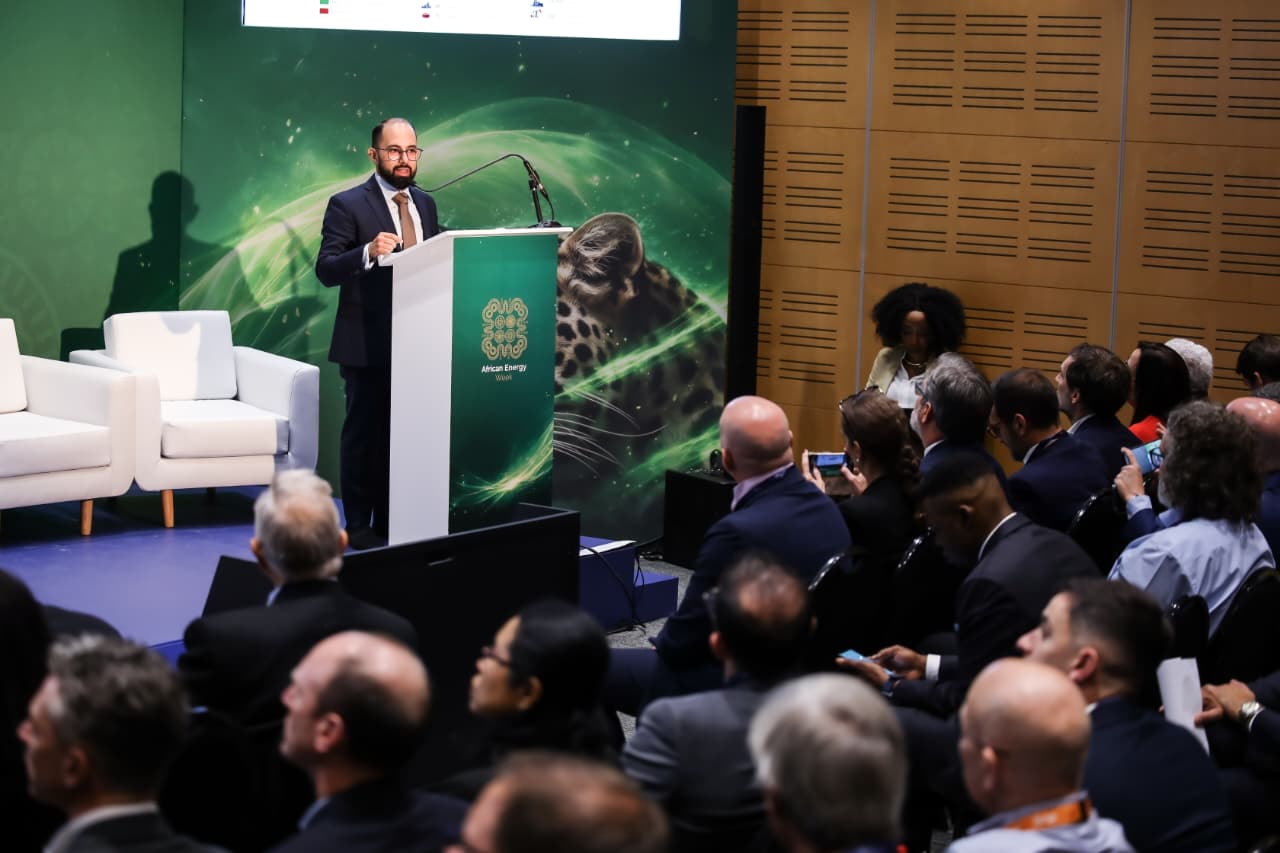
CAPE TOWN, South Africa, September 3, 2026/APO Group/ –The MSGBC Basin is moving from a story of world-class discoveries to one of project execution, with Senegal and Mauritania increasingly emerging as gas and LNG hubs for West Africa. At African Energy Week (AEW) 2026, taking place October 12–16 in Cape Town, the session Invest in the MSGBC Basin: Scaling Gas, LNG and Regional Infrastructure Across West Africa, sponsored by Technip Energies, will bring investors, governments and industry leaders together to examine what is needed to turn this resource base into a broader regional energy and industrial opportunity.


The region has already crossed a major threshold. The Greater Tortue Ahmeyim (GTA) project, spanning the maritime border between Mauritania and Senegal, achieved first gas in December 2024 and first LNG in February 2025, with its first LNG cargo exported in April 2025. The project is now providing a foundation for the two countries to develop both export revenues and domestic gas markets.

The MSGBC Basin has moved beyond the discovery phase; the priority now is execution

In Senegal, the Yakaar-Teranga gas project is advancing as a major domestic gas opportunity, with development costs estimated at around $7.5 billion. The project is expected to play a central role in reducing reliance on imported fuels and supporting power generation and industrial consumers. Mauritania, meanwhile, is advancing plans for the BirAllah gas development, adding another potentially significant source of gas supply to the basin’s growing project pipeline.

The infrastructure required to monetize these resources is becoming equally important. Senegal is prioritizing public-private partnerships to accelerate development of a planned 400-km domestic gas pipeline network connecting offshore resources with power plants and industrial users. The infrastructure is intended to help translate offshore gas production into more reliable domestic energy supply and wider economic activity.

The session comes as broader investment interest in African gas continues to grow. Africa is projected to attract substantial midstream gas investment over the coming decade, while LNG developments are increasingly being linked to domestic market obligations and gas-to-power strategies. In the MSGBC region, that dual-track model could allow gas exports to generate revenues while supporting affordable electricity and industrialization at home.

“The MSGBC Basin has moved beyond the discovery phase; the priority now is execution,” said NJ Ayuk, Executive Chairman of the African Energy Chamber. “The region has the resources to become a major gas and LNG hub, but that opportunity will only translate into lasting economic value if investment keeps pace with the infrastructure needed to deliver gas to markets, power industry and support regional integration.”

With major projects advancing across Senegal and Mauritania and exploration continuing elsewhere in the basin, the AEW 2026 session will provide a platform to examine the commercial, infrastructure and policy frameworks needed to unlock the next stage of MSGBC growth. For investors and technology providers, the discussion comes at a pivotal moment as the region moves from resource potential toward large-scale gas monetization and infrastructure development.

Distributed by APO Group on behalf of African Energy Chamber.


Continue Reading

Business

TotalEnergies, ExxonMobil to Open Procurement Doors for Angolan Companies at Angola Oil & Gas (AOG) 2026

Published

on

Etu Energias

Two of Angola’s largest operators will host dedicated procurement workshops on September 8, giving Angolan companies direct insight into supplier requirements and contracting opportunities across major upstream projects

LUANDA, Angola, September 2, 2026/APO Group/ –Energy majors TotalEnergies and ExxonMobil will host dedicated procurement workshops during the pre-conference program of Angola Oil & Gas (AOG) 2026 on September 8, connecting Angolan companies directly with two of the country’s biggest international operators.


Led by Patricia Campos, Head of Procurement and Contracts Division at TotalEnergies, and Adão Costa, Procurement Manager at ExxonMobil, the respective sessions will offer practical insight into how local companies can position themselves to secure contracts across Angola’s expanding upstream industry. Taking place ahead of the main conference – scheduled for September 9-10 -, the workshops strengthen AOG 2026’s role as a platform for translating investment into tangible opportunities for Angolan businesses.

TotalEnergies’ workshop comes as the operator advances a multi-billion-dollar offshore portfolio. The company is developing the Kaminho project in Block 20/11 alongside Sonangol and Petronas – the first large-scale deepwater development in the Kwanza Basin. Sanctioned in 2024, Kaminho will feature a zero-flaring FPSO with capacity of 70,000 barrels per day, with first oil targeted for 2028.

The company has also extended licenses for strategic producing assets, including Block 32, creating a framework for further development across six discoveries surrounding the Kaombo Norte and Kaombo Sul FPSOs. Through its role in the New Gas Consortium (NGC), TotalEnergies is at the forefront of Angola’s non-associated gas development. The NGC achieved first gas production from the Quiluma field in 2026, paving the way for a diversified energy mix in Angola. Campos’ workshop will provide a direct interface between those suppliers and the procurement processes governing TotalEnergies’ activities.

Meanwhile, ExxonMobil is pursuing a dual-track strategy combining redevelopment of mature producing assets with frontier exploration. In April 2026, the company awarded an EPCI contract to Subsea7 for its Likembe Redevelopment 2.0 Project, which will connect additional reservoirs to existing Block 15 facilities through subsea tiebacks. ExxonMobil and its partners have also moved to extend production from the Mondo and Saxi-Batuque fields following the extension of Block 15’s production license through 2037.

Beyond Block 15, ExxonMobil is expanding its exploration footprint. The company partnered with TotalEnergies and Angola’s National Agency for Petroleum, Gas and Biofuels to secure exploration rights across multiple blocks in the frontier Benguela and Namibe Basins, while subsurface evaluation continues across additional offshore acreage. Costa’s workshop will share insight into how Angolan companies can position themselves at the forefront of these developments.

By placing procurement managers directly in front of Angolan businesses, AOG 2026 will give domestic suppliers greater clarity on what major operators need, how procurement decisions are made and where opportunities are emerging. As billions of dollars move into Angola’s upstream sector, the September 8 sessions will help ensure more Angolan companies are equipped to move with them.

Distributed by APO Group on behalf of Energy Capital & Power.


Continue Reading

Energy

Oil & Gas Arbitration in Africa Moves Up the Investor Agenda at African Energy Week (AEW) 2026

Published

on

African Energy Chamber

A dedicated Upstream E&P Forum panel will examine how resource nationalism, ESG requirements and geopolitical disruption are reshaping dispute resolution across Africa’s oil and gas sector

CAPE TOWN, South Africa, September 2, 2026/APO Group/ –As African governments seek greater state participation, higher local content and a larger share of resource revenues, the terms governing oil and gas investments are changing across the continent. Since 2014, 31 African countries have reformed their mining and petroleum codes, creating new commercial and regulatory considerations for international investors. The resulting environment is placing greater emphasis on how upstream agreements anticipate regulatory change, protect investments and resolve disputes when commercial assumptions shift.


African Energy Week (AEW) 2026, taking place October 12–16 in Cape Town, will bring this issue into focus through a dedicated session at the Upstream E&P Forum: Resource Nationalism, ESG and Investor Protection: The New Frontier of Oil and Gas Arbitration in Africa. Sponsored by Africa-focused legal and advisory firm CLG, the panel will bring together operators, investors, legal practitioners and government representatives to examine how commercial agreements can be structured to manage disputes before they escalate.

Nigeria provides a clear example of how the legal architecture around upstream investment is evolving. The Petroleum Industry Act, enacted in 2021, overhauled the country’s petroleum fiscal and regulatory framework, changing the terms governing production-sharing contracts, joint ventures and other upstream arrangements. Nigeria has also strengthened its dispute-resolution framework through the Arbitration and Mediation Act of 2023, while the Nigerian Upstream Petroleum Regulatory Commission has promoted an Alternative Dispute Resolution Center designed to provide a sector-specific mechanism for resolving upstream disputes.

You cannot do a deal in Africa today without thinking seriously about how you would resolve a dispute if the terms change

Senegal illustrates another dimension of the challenge. Following first oil at the Sangomar field in 2024 and a rapid production ramp-up, the government established a commission to review existing oil and gas contracts with operators including Woodside and bp. While governments retain the sovereign right to review their resource agreements, such processes can alter the commercial assumptions underpinning investments and raise questions around stabilization provisions, production-sharing terms and other contractual protections.

Across parts of West Africa, political transitions, security disruptions and changes to mining and petroleum legislation are adding further uncertainty for investors. At the same time, geopolitical shocks and shifting global energy policies are testing agreements that were negotiated under very different market conditions. For companies committing billions of dollars to long-life upstream projects, the ability to anticipate and manage those changes has become an increasingly important component of investment decisions.

Arbitration remains a central tool. A review by Nigerian law firm OAL found that by 2025, most cross-border oil, gas and power agreements in Africa expressly identified arbitration as the preferred dispute-resolution mechanism. At AEW 2026, the Upstream E&P Forum panel will examine why arbitration continues to dominate cross-border energy contracts and how bilateral investment treaties, domestic legislation, ESG obligations and changing regulatory requirements interact when disputes arise.

“You cannot do a deal in Africa today without thinking seriously about how you would resolve a dispute if the terms change. We’re increasingly seeing arbitration planning as part of the commercial conversation from the start, and rightly so,” said NJ Ayuk, Executive Chairman of the African Energy Chamber. “That commercial focus is central to AEW 2026, which brings governments, investors, operators and legal experts together to address the practical conditions required to unlock the continent’s next wave of energy investment.

The Resource Nationalism, ESG and Investor Protection session will examine the intersection of contractual protections, regulatory change, political risk and the technical complexities of energy projects, giving investors and governments a practical forum to consider how stronger dispute-resolution frameworks can support Africa’s next generation of oil and gas investment.

Distributed by APO Group on behalf of African Energy Chamber.


Continue Reading

Trending