Connect with us
Anglostratits

Energy

African Energy Week (AEW) 2025: Zimbabwe Introduces 5-Pillar Energy Strategy Amid $9B Investment Drive

Published

on

African Energy Week

The country anticipates $9 billion in spending across its power sector, with $4.4 billion mobilized through private sector participation

CAPE TOWN, South Africa, October 2, 2025/APO Group/ –Zimbabwe has introduced a five-pillar strategy – the Zimbabwean National Energy Development Compact – aimed at advancing the development of the energy value chain. This comes as the country expects up to $9 billion in investment across its power sector.

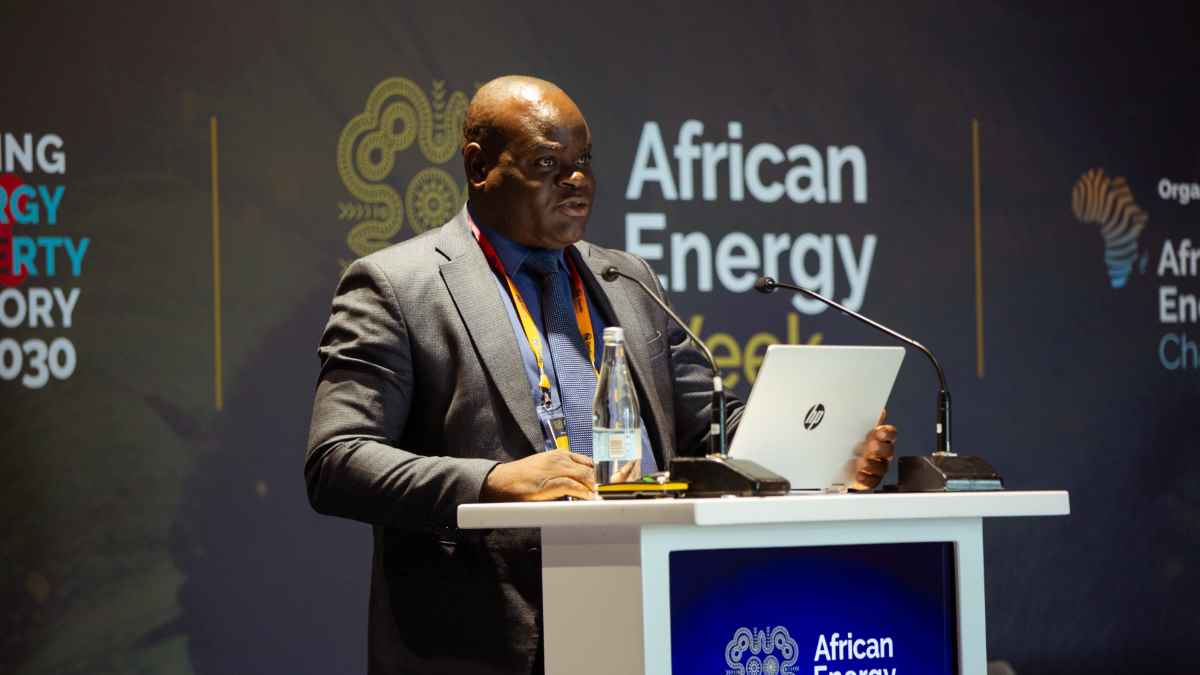
Zimbabwe’s Minister of Energy and Power Development July Moyo offered insight into the strategy during the Invest in Zimbabwe: Investor Briefing at the African Energy Week: Invest in African Energies 2025 conference on Tuesday. Led by the Government of Zimbabwe and oil and gas company Invictus Energy, the session explored emerging opportunities in natural gas, renewable energy and mining in the country.

“We have significant opportunities in power generation, transmission, distribution and retail. In other fuels, our hopes are that we can not only benefit from the oil and gas that has been found in Zimbabwe, but from infrastructure associated with these projects. As a country that is land-locked, our compact connects us with the rest of Africa,” stated Minister Moyo.

The five pillars include expanding generation infrastructure; leveraging regional integration; embracing distributed renewable energy and clean cooking solutions; incentivizing private sector participation; and ensuring financially viable utilities that provide reliable and affordable services. The strategy focuses on expanding energy and power access, highlighting key opportunities for investors.

Our hopes are that we can not only benefit from the oil and gas that has been found in Zimbabwe, but from infrastructure associated with these projects

“We are expecting to mobilize $9 billion in investments across generation, transmission and distribution, with $4.42 billion set to come from the private sector. We want to raise access to clean cooking from 38% to 70%, reducing the reliance on firewood and charcoal. We also want to expand the share of renewable energy, including large-scale hydropower from 7% to 29% through the use of mini-grids and small-scale hydro,” stated Isaac Chiridza, Deputy Director: Energy Conservation and Renewable Energy, Ministry of Energy and Power Development, Zimbabwe.

There are various ways investors can develop projects in Zimbabwe’s power sector. Cletus Nyachowe, CEO, Zimbabwe Electricity Supply Authority, said that “You can join as an independent power producer, under a public-private partnership or you can generate power for your own use.”

There are also opportunities for investors in transmission. According to Abel Gurupira, Acting Managing Director, Zimbabwe Electricity Transmission and Distribution Company, “There is a demand for us to ensure that we transport power from our generating stations to our customers. There is also a demand that we transport power within the Southern African Power Pool context, from the south to the north and east to west, because we happen to the epicenter of this power pool.”

Zimbabwe’s energy mix, historically dominated by hydropower, is diversifying with promising forays into natural gas. The country has emerged as one of Africa’s most attractive frontier gas markets, with exploration led by Invictus Energy yielding strong results. The company is advancing development of the Cabora Bassa Project in northern Zimbabwe – one of the world’s largest untested frontier rift basins – which has recently been awarded National Project Status by the government.

“Zimbabwe is not a producer of oil and gas but we hope to change that. We have exposure to a basin long-been recognized as prospective but has recently been unlocked. We drilled the Mukuyu well in 2023, which was ranked as one of the largest discoveries made in Africa. This demonstrated the potential of Cabora Bassa as a basin-scale opportunity,” stated John Bentley, Board Member, Invictus Energy.

Beyond natural gas, Zimbabwe is bolstering production in coal and renewable energy. Coal production is on track to increase by 10.5% in 2025, reaching 6.3 million tons, while developments in solar, wind and hydropower are positioned to enhance power supply and regional trade. Nobert Matarutse, Acting Managing Director, Zimbabwe Power Company, explained that the country is “pursuing two additional units at our biggest power station, Hwange 9 and 10, and thereafter we will target units 11 and 12.”

Distributed by APO Group on behalf of African Energy Chamber.


Energy

Seychelles Targets Energy Investment Push as Minister Jérémie Joins African Energy Week (AEW) 2026 as a Speaker

Published

on

African Energy Chamber

Seychelles energy minister will speak at AEW 2026, positioning her to highlight reforms, renewable projects and investment opportunities as the island nation advances its transition toward a diversified energy system

CAPE TOWN, South Africa, April 29, 2026/APO Group/ –Marie-May Jérémie, Minister of Environment, Climate, Energy and Natural Resources for Seychelles will participate as a speaker at this year’s African Energy Week (AEW) 2026, taking place from October 12–16 in Cape Town. Her participation underscores the country’s growing role in shaping Africa’s small-island energy transition agenda.

Minister Jérémie’s presence at AEW 2026 comes at a critical time as Seychelles accelerates efforts to reduce its heavy reliance on imported fossil fuels. The event provides a platform to attract investment, strengthen policy alignment and showcase bankable projects, positioning the country as a viable destination for private-sector participation in island energy systems.

Seychelles is demonstrating how policy reform and innovation can unlock investment in constrained environments

In May last year, international finance institution the World Bank approved the Renewable Energy Acceleration Program, a seven-year initiative aimed at modernizing the grid and increasing renewable energy penetration to 15% by 2030. The program focuses on unlocking private capital while strengthening transmission infrastructure to accommodate variable renewable energy sources.

Project development is gaining traction in the country, particularly in innovative technologies suited to Seychelles’ land constraints. The 5.8 MW Seysun Lagoon floating solar PV project, developed by independent renewable power producer Qair, is under construction and expected online in 2026.

Alongside renewables, Seychelles continues to pursue upstream opportunities to diversify its economy. The government approved new exploration entrants in 2025 and extended exiting petroleum agreements, while securing an infrastructure partnership with China. Multilateral estimates suggest over $800 million in investment will be required over the next 25 years.

Regulatory reform is central to this transition, with Seychelles introducing an independent power producer framework to open the market to private developers. Standardized power purchase agreements, grid access reforms and strengthened public-private partnership structures are being implemented to improve transparency, reduce risk and accelerate project bankability across solar, storage and emerging wind opportunities.

“Minister Jérémie’s participation highlights the strategic importance of island nations in Africa’s broader energy transition,” says NJ Ayuk, Executive Chairman, African Energy Chamber. “Seychelles is demonstrating how policy reform and innovation can unlock investment in constrained environments. Her insights will be critical to advancing dialogue on resilient, low-carbon energy systems across the continent.”

Distributed by APO Group on behalf of African Energy Chamber.

Continue Reading

Energy

Siemens Energy Expands Angola Footprint as Senior Vice President (SVP) Waheed Abbasi Joins Angola Oil & Gas (AOG) 2026

Published

on

Energy Capital

From FPSO power solutions to local service capacity, Siemens Energy is scaling its role in Angola at a time when the country is pursuing gas expansion

LUANDA, Angola, April 28, 2026/APO Group/ –Waheed Abbasi, Senior Vice President, Gas Services: Europe and Africa at Siemens Energy, has joined the Angola Oil & Gas (AOG) Conference and Exhibition as a speaker. Abbasi’s participation comes at a time when Siemens Energy is deepening its footprint in Angola through major power infrastructure and local capacity investments, positioning itself as a key enabler of the country’s evolving oil and gas market. At the event this September (9-10), Abbasi is expected to bring insights into how power technology and gas infrastructure are converging to support Angola’s next phase of industry growth.

With a long-standing presence in Angola, Siemens Energy has played a central role in strengthening power and infrastructure systems through projects in the oil, gas and renewable energy sectors. The company is currently developing an 80 MW power generation plant for the Kaminho FPSO – part of the first large deepwater development in the Kwanza Basin. The FPSO, currently 50% complete, will be installed in 2027 with first oil produced from the Cameia field in 2028. By integrating advanced power generation systems into offshore infrastructure, Siemens Energy is supporting more efficient, lower-emission production while ensuring reliable operations in deepwater environments.

At the same time, Siemens Energy has strengthened its on-the-ground presence with the launch of its Angola Service Shop in 2026. The facility brings service execution, project support, training and critical spare parts closer to customers, enabling faster response times and improving operational reliability across Angola’s oil and gas sector. By anchoring its services locally, Siemens Energy is not only supporting existing projects but also building the infrastructure needed to sustain long-term industry growth, reinforcing supply chain resilience and technical capacity within the country.

Siemens Energy’s activities in Angola form part of a broader continental strategy, with the company active in more than 50 African countries and leading initiatives across power generation, renewable energy and hydrogen development. This pan-African footprint positions Siemens Energy as a key partner for governments seeking to balance industrial growth with energy transition goals. In Angola, this is particularly relevant as the country looks to diversify its energy mix while leveraging its hydrocarbon resources to drive economic development.

Angola’s strategy to increase the share of gas in its energy mix to 25% is creating new opportunities for companies like Siemens Energy to deploy gas-to-power solutions. The start of key projects, including the country’s first non-associated gas project – led by the New Gas Consortium –, is expected to unlock greater gas flows, supporting both LNG exports and domestic power generation. As gas availability increases, the need for efficient power generation, grid infrastructure and industrial energy solutions will become more critical. Siemens Energy’s technology portfolio, spanning gas turbines, power systems and integrated energy solutions, positions the company to play a central role in enabling this transition.

Stepping into this picture, Abbasi’s participation at AOG 2026 comes at a time when Angola is aligning upstream growth with downstream and power sector expansion, creating a more integrated energy ecosystem. The event will provide a platform for discussions around gas monetization, power infrastructure and industrial development, areas where Siemens Energy is actively contributing.

Distributed by APO Group on behalf of Energy Capital & Power.

Continue Reading

Business

African Mining Week (AMW) to Showcase Emerging Mining Frontiers as Africa Ramps Up Geomapping

Published

on

Energy Capital

The upcoming African Mining Week will connect global investors with emerging opportunities across Africa’s mining sector amidst a surge in national geomapping exercises across the continent

CAPE TOWN, South Africa, April 28, 2026/APO Group/ –State agencies the Ghana Gold Board and the Ghana Geological Survey Authority have signed an agreement to co-conduct geological surveys in the Funsi, Atuna and Bensere East regions. The initiative aims to expand national gold reserves, increase output and support the formalization of artisanal mining operations. The agreement is part of a growing trend across Africa, with mineral-rich countries embarking on national geomapping programs to strengthen mineral production, de-risk exploration projects and position the continent as a key player in the global mineral supply chain.


Acceleration in geomapping exercises will be a key focus at the upcoming African Mining Week (AMW) Conference and Exhibition – The Most Influential Mining Conference in Africa, scheduled for October 14-16 in Cape Town. The event will connect global investors and geophysical technology providers with African regulators and project developers, facilitating strategic collaborations aimed at unlocking greenfield developments.

The theme for AMW 2026 – Mining the Future: Unearthing Africa’s Full Mineral Value Chain – reflects a growing trend among African mining jurisdictions eager to unlock the continent’s $8.5 trillion worth of untapped mineral potential. This is backed by the launch of national geomapping initiatives, aimed at identifying new exploration frontiers and supporting investments.

Recent examples include Burundi’s mid-March partnership with U.S. companies Lifezone Metals and KoBold Metals to assess the Musongati Nickel project and other critical mineral prospects. The Democratic Republic of Congo has also engaged Xcalibur Smart Mapping to survey an area spanning 700,000 square kilometers as part of a strategy to unlock over $24 trillion in untapped mineral reserves, with 90% of its geology yet to be explored.

Zambia has also completed 55% of its national geomapping project, as the country seeks to identify new copper deposits to meet its 2031 target of increasing output to three million tons. Meanwhile, Nigeria is advancing its own geomapping efforts following approval of a N1 trillion budget for 2026, aimed at unlocking the country’s potential in more than 44 critical minerals. Several other countries, including Tanzania, are also implementing similar initiatives, while South Africa is providing technical support to nations such as Gabon, South Sudan and Nigeria.

Liberia has plans to geomap 80% of its largely unexplored geology. In an exclusive interview ahead of AMW 2026, Matenokay Tingban, Liberia’s Minister of Mines and Energy, told organizers that “we are seeking geomapping and exploration partners. With Liberia’s vast but largely untapped mineral resources, access to geoscientific data will allow us to negotiate stronger investment deals and unlock downstream infrastructure development.”

The surge in geomapping initiatives highlights Africa’s commitment to unlocking its mining sector growth and presents lucrative opportunities for global exploration, drilling and geophysical technology providers. AMW 2026 will showcase ongoing geomapping progress, connecting African stakeholders with global partners to foster partnerships that will drive the expansion of Africa’s drilling and greenfield projects.

Distributed by APO Group on behalf of Energy Capital & Power.

Continue Reading

Trending