Connect with us
Anglostratits

Energy

African Energy Week (AEW) 2025 Opening Fireside Chat Underscores Africa-First Approach to Gas Development

Published

on

African Energy Week

With a rise in gas monetization projects across West Africa, there lies a significant opportunity to address the continent’s energy challenges through domestic gas

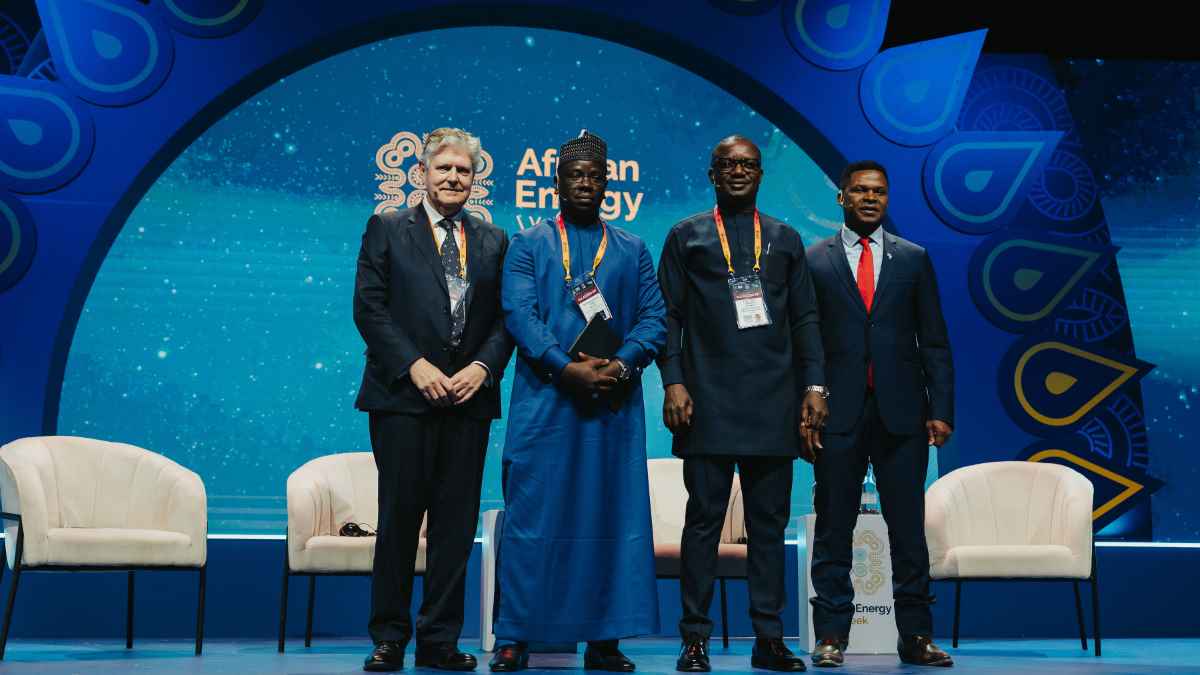
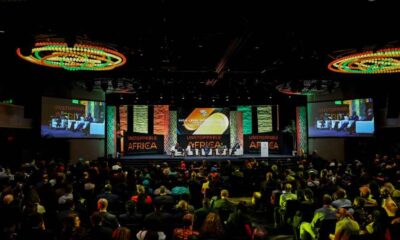
CAPE TOWN, South Africa, October 1, 2025/APO Group/ –An opening fireside chat held during the opening ceremony of the African Energy Week (AEW): Invest in African Energies 2025 conference showcased the value of an Africa-first approach when it comes to the continent’s gas developments. Ministers from Senegal and Ghana discussed how recently-launched projects stand to drive sustainable growth in West Africa, with project developer Kosmos Energy committing to focus on domestic gas opportunities. The opening ceremony was sponsored by Kosmos Energy.


In recent years, West Africa has established itself as one of the continent’s most dynamic energy markets. In 2024, Senegal became a global oil and gas producer through the commissioning of the Sangomar oil and gas field and the Greater Tortue Ahmeyim (GTA) developments. The GTA project, developed through a partnership led by BP and Kosmos Energy, boasts an initial capacity of 2.3 million tons per annum (mtpa) in the first phase, with a second phase set to increase output to 5 mtpa. While the project primarily targets exports, its partners are exploring opportunities for the domestic market.

In Senegal, we have a goal to reach universal access to energy by 2029

Birame Soulèye Diop, Senegal’s Minister of Energy, Petroleum and Mines, stated that, “In Senegal, we have a goal to reach universal access to energy by 2029. Today, we are a country that exports oil and gas. But the cost to access fuel is still high. We would like to produce more for the country so that we can access resources for electricity. With gas, there are a lot of opportunities.”

Minister Diop elaborated on the country’s plans to convert operational oil refineries to process gas, aiming to reduce fuel costs and expand access across the country. Kosmos Energy has also shifted its focus towards the domestic market. In addition to GTA, the company is advancing the development of the Yakaar-Teranga project. Targeting a final investment decision in 2025, the project will supply gas for the domestic market, specifically power generation facilities.

“Fundamental to the development of Senegal is the use of gas for domestic purposes. That is our next agenda: to work with the ministry to expand the scheme to deliver domestic gas,” said Andrew Inglis, CEO, Kosmos Energy.

Regional neighbors serve as a strong example for the role that gas plays in delivering low-cost energy. Ghana, for example, has been highly effective in monetizing gas. John Abdulai Jinapor, Minister of Energy & Green Transition, Ghana, explained that “Gas is an essential commodity. We have a gas-to-power policy, with gas accounting for 90% of our fuel in Ghana. What we have achieved so far can serve as a model for other economies so that African can achieve energy security through gas.”

Active in both Senegal and Ghana, Kosmos Energy plays an instrumental part in driving oil and gas projects. Inglis emphasized that aligned national policies and strong public-private partnerships have been fundamental in successfully delivering projects in both countries. He said: “An aligned national agenda is the bed-rock of investment. If you are aligned on intent, then delivery is a lot easier. With both Senegal and Ghana, there is clarity in terms of what the countries need and Kosmos Energy is ready to support that.”

Distributed by APO Group on behalf of African Energy Chamber.

Home  Facebook

Energy

Building a Knowledge Hub for China-ASEAN Energy Cooperation

Published

on

ASEAN

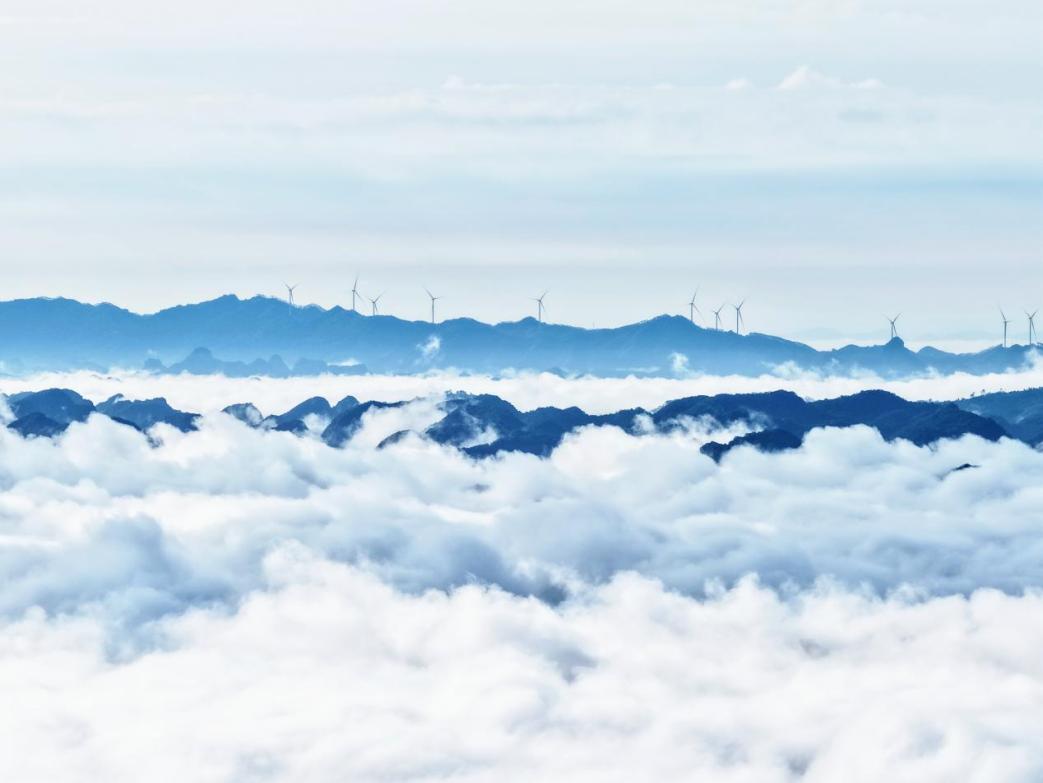
NANNING, CHINA – Media OutReach Newswire – 21 September 2026 – During the 23rd China-ASEAN Expo and the China-ASEAN Business and Investment Summit, China Southern Power Grid showcased a range of innovations designed to support energy cooperation between China and ASEAN. These included the DaWatt – Lao Language Large Language Model (LLM) for the Energy and Power Sector V2.0 and the Flexible Grayscale Intelligent Monitoring & Analysis Platform for power system cybersecurity, highlighting expanding opportunities for cooperation in digitalization, intelligent technologies and green energy.

The Lao-language LLM has been deployed at Electricité du Laos Transmission Company Limited (EDL-T), where it can automatically analyze thousands of inspection images within a short period of time. After its algorithms were optimized for Laos’ mountainous and rainforest terrain, the model completed intelligent inspection analysis for four transmission lines, processing 26,000 drone inspection images and identifying more than 3,600 equipment defects.


Liu Ying, general manager of the Digitalization Department at Guangxi Power Grid Co., Ltd., said the company has been building multilingual professional corpora for the power sector, covering ASEAN countries including Laos, Vietnam and Malaysia. Drawing on the capabilities of the DaWatt foundation model, the company is developing energy and power models tailored to ASEAN languages and real-world power industry applications.

Talent development is another focus of the cooperation. The China-ASEAN Institute of Energy, jointly established by Guangxi Power Grid Co., Ltd. and Guangxi University, is exploring an industry-university training model with a strong emphasis on practical experience. So far, two cohorts totaling 53 students from ASEAN countries have enrolled.

Cooperation is also evolving from one-way training toward joint innovation. Guangxi Power Grid Co., Ltd. and the Royal Academy of Cambodia have jointly established a laboratory for artificial intelligence and safety equipment, while the company has also launched peer-to-peer exchanges with Electricité du Laos on improving power supply reliability.

To address language barriers in cross-border technical exchanges, Guangxi Power Grid Co., Ltd. has developed an AI-powered translation platform backed by a specialized database containing terminology for more than 1,800 types of power equipment. The platform supports accurate translation between Chinese and English, Chinese and Lao, and Chinese and Vietnamese.

At a recent training program for Chinese and overseas engineers, the system supported one-click generation of bilingual course materials and real-time speech translation, helping participants navigate highly specialized power-sector terminology.

To support regular international exchanges, Guangxi Power Grid Co., Ltd. has also established an international talent pool covering management, technical and skilled personnel. It has developed 24 hours of courses on international affairs as well as 20 short-form video courses.

“This year, we will also explore joint postgraduate programs with universities in ASEAN countries,” said Sun Xiaohua, deputy director of the Human Resources Department at Guangxi Power Grid Co., Ltd.

Looking ahead, Guangxi Power Grid Co., Ltd. plans to further advance a development model featuring “R&D in Beijing, Shanghai and Guangdong, integration in Guangxi, and application in ASEAN.” The company will continue expanding its multilingual power-sector corpora and explore a “Token Goes Global” model for power-sector AI, with computing resources and models based in Guangxi while knowledge services are delivered overseas. The effort is aimed at creating new forms of China-ASEAN energy cooperation and supporting the green development of the China-ASEAN Free Trade Area 3.0.


Continue Reading

Energy

Deals, Drilling and New Entrants Define Angola Oil & Gas 2026

Published

on

AOG

Eleven agreements, new exploration commitments and billions of dollars in planned investment highlight Angola’s push to convert upstream reform into projects, production and broader energy-sector growth

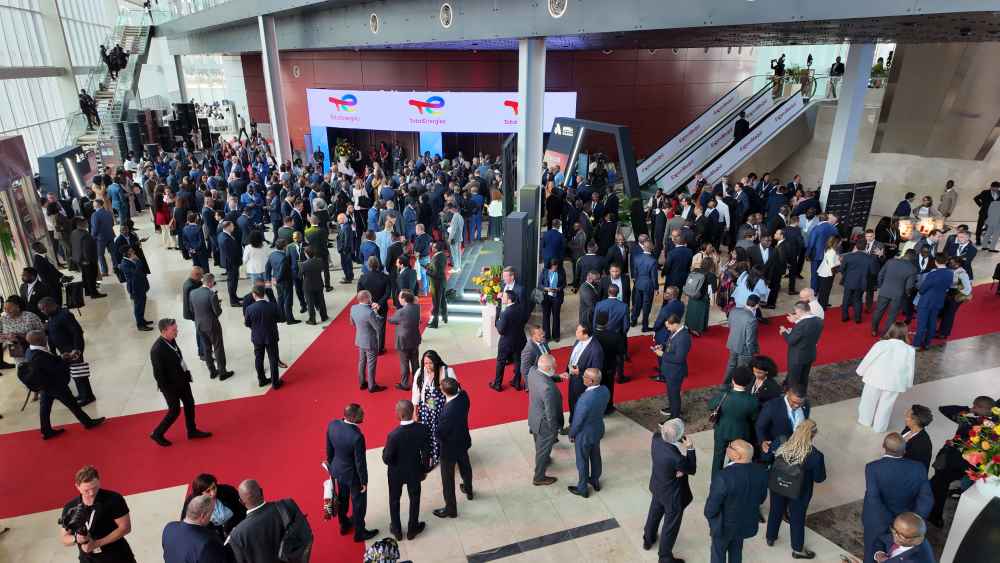
LUANDA, Angola, September 18, 2026/APO Group/ –The Angola Oil & Gas (AOG) 2026 Conference and Exhibition – organized by Energy Capital & Power (https://EnergyCapitalPower.com) – concluded in Luanda with a clear emphasis on accelerating exploration and production. Across three days, 11 deals were signed, new entrants outlined plans to establish positions in the country and existing operators committed billions of dollars to further exploration and development. The outcomes of the event reaffirm AOG as the official investment platform for the country’s oil and gas sector.


Eleven Deals Advance Angola’s Investment Pipeline

Eleven agreements were formalized during AOG 2026, spanning new acreage, mature-field investment, financing, gas-based industry and emissions reduction. Angola’s National Oil, Gas & Biofuels Agency (ANPG) signed agreements with international oil companies covering deepwater Blocks 19, 34 and 35; Blocks 8 and 22; Block 33/24; Blocks 17/25 and 32/21; and further investment in Block 32. Agreements also supported incremental production at Blocks 15 and 31, financing for Etu Energias’ expansion at Block 14 and the social responsibility component of Amufert’s planned $2 billion Soyo fertilizer complex.

Exploration Moves to the Forefront

The ANPG set a target of at least 10 wells annually as Angola seeks to rebuild its exploration pipeline and offset mature-field decline. Shell pledged to pursue exploration aggressively following three agreements signed at AOG. Corcel is also considering a mid-2027 exploration well at KON-16 in the onshore Kwanza Basin following completion of a 326-line-km 2D seismic campaign.

TotalEnergies, Chevron Double Down

Existing operators used AOG to reaffirm long-term investment. TotalEnergies announced plans to invest $10 billion alongside project partners across its Angolan portfolio over the next five years, while further investment at Dalia could unlock up to 400 million barrels under Angola’s incremental-production framework. Chevron plans additional investment in Block 0 following the concession’s extension to 2050.

Pertamina, Panoro Eye Angola Entry

AOG also brought indications of new international participation. Indonesia’s Pertamina announced plans to pursue an upstream operator role in Angola. Panoro Energy, meanwhile, is assessing opportunities across Angola’s onshore, offshore, frontier and brownfield segments. Senior Advisor Tim O’Hanlon said that “it won’t be long before we are in Angola,” highlighting favorable fiscal terms and increasing competition.

It won’t be long before we are in Angola

Pre-Conference Sets Investment Agenda

AOG 2026 began with a dedicated pre-conference program focused on Angola’s next phase of oil and gas development. Workshops and technical discussions examined gas infrastructure, downstream markets, exploration technology and investment opportunities, setting the stage for the commitments announced during the main conference.

Gas and Refining Shift Toward Domestic Value Creation

Angola’s Gas Master Plan emerged as a major industrialization platform, targeting approximately $13 billion in midstream and downstream investment across five hubs. Downstream expansion is advancing in parallel. Angola is targeting 425,000 barrels per day of refining capacity across Luanda, Cabinda, Lobito and Soyo as it seeks to reduce a refined-product import bill that reached approximately $1.96 billion in the first half of 2026.

AOG Recognizes Industry and Emerging Talent

The AOG Awards recognized achievements across the value chain, with Azule Energy named Game Changer of the Year, Sonangol Explorer of the Year, Etu Energias Local Company of the Year and the Cabinda Refinery Downstream Player of the Year. Aníbal Octávio Teixeira da Silva received the Lifetime Achievement Award.

Four female students – Abigail Francisco Boa, Chana Lisboa, Genilda Ricardo and Madalena Yanesa Ramos Neto – also received the Albina Faria de Assis Pereira Africano Scholarship, which provides financial support to leading female entrants to Angola’s National Petroleum Institute.

ANPG Expands Investor Access

The ANPG took another step toward improving the investment environment, launching an upgraded website featuring AI-powered search and a dedicated investor space. The platform provides greater access to industry data, investment opportunities and ANPG teams, supporting faster communication between the regulator and prospective investors.

Exhibition Connects Industry Players

Alongside the conference, the AOG 2026 exhibition brought together operators, service companies, technology providers and government institutions, providing a platform to showcase projects, capabilities and investment opportunities across Angola’s oil and gas value chain.

Distributed by APO Group on behalf of Energy Capital & Power.


Continue Reading

Business

Load shedding has eased: South Africa now faces its next industrial energy test

Published

on

vukagroup

The EIUG Conference will bring together industrial energy users, policymakers, utilities, financiers and technology providers to examine what South Africa’s next phase of the energy transition means for the businesses that power its economy

JOHANNESBURG, South Africa, September 17, 2026/APO Group/ –South Africa’s energy conversation is changing. With Eskom recording more than 400 consecutive days without load shedding, the focus for energy-intensive businesses is shifting from simply securing electricity to ensuring that energy supports industrial competitiveness, investment and growth.


For South Africa’s mines, manufacturers, smelters and other large power users, significant challenges remain. Grid capacity, rising operating costs, renewable energy integration, power quality and the financing of alternative energy solutions are increasingly influencing investment and operational decisions.

These issues will take centre stage at the EIUG Conference, taking place 28–29 October 2026 at The Maslow Hotel, Sandton, Johannesburg, focused on the challenges and opportunities facing South Africa’s energy-intensive users.

The next industrial energy challenge

Large energy users are already changing how they source power. Seriti Green’s 155 MW Ummbila Emoyeni wind farm, which began commercial operations in July 2026, is supplying Seriti’s mining operations through wheeling, illustrating how industrial users are increasingly combining grid electricity with private renewable generation.

At the same time, transmission capacity is becoming critical as more generation connects to the system. Recent collaboration between the Development Bank of Southern Africa and National Transmission Company South Africa is aimed at accelerating investment in South Africa’s transmission network.

The EIUG Conference programme reflects these changing priorities.

The session “Industrialisation Under Threat?” will examine whether current energy and market conditions are supporting or constraining South Africa’s mining, manufacturing and smelting sectors, including the impact of energy costs, self-generation and changing industrial demand.

A dedicated Grid Security discussion will explore ageing infrastructure, renewable penetration, frequency stability, voltage fluctuations and the roles of NTCSA, Eskom, municipalities and industry in maintaining a reliable electricity system.

Delegates will also explore renewable energy integration for heavy industry, including how solar, wind and hybrid energy systems can support the continuous power requirements of mining, manufacturing, metals and cement operations.

Financing these changes will be equally important. The programme’s Finance for Transition Masterclass will cover financing models, de-risking, storage economics and investment in industrial decarbonisation projects.

From energy security to competitiveness

South Africa’s improved electricity availability is an important milestone, but the next measure of success will be whether the country can turn a changing energy system into stronger industrial growth.

The EIUG Conference will bring together industrial energy users, policymakers, utilities, financiers and technology providers to examine what South Africa’s next phase of the energy transition means for the businesses that power its economy.

The question is no longer only whether South Africa can keep the lights on, but whether its energy system can keep its industries competitive.

Event details

EIUG Conference 2026
28–29 October 2026
The Maslow Hotel, Sandton, Johannesburg

Distributed by APO Group on behalf of VUKA Group.


Continue Reading

Trending