Connect with us
Anglostratits

Energy

African Energy Week (AEW) 2025: Equatorial Guinea to Launch EG Ronda Licensing Round in April 2026

Published

on

African Energy Week

The upcoming licensing round will offer 24 blocks for investment, aligning with goals by the country to accelerate upstream development

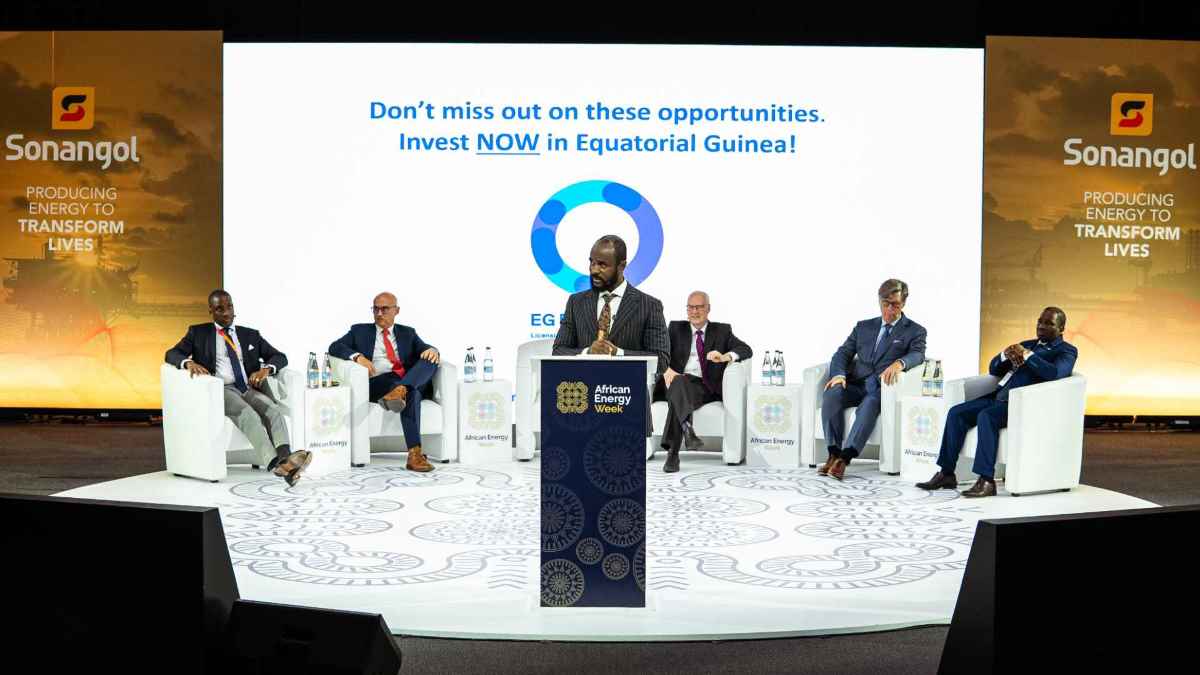
CAPE TOWN, South Africa, October 1, 2025/APO Group/ –Equatorial Guinea’s Minister of Hydrocarbons and Mining Development Antonio Oburu Ondo announced that the country’s next licensing round will be launched in April 2026 at the African Energy Week (AEW): Invest in African Energies 2025 conference on Monday. The country is finalizing timelines for the licensing round and is inviting companies to participate. Up to 24 blocks will be available for exploration, covering a variety of acreage from offshore to onshore blocks.


The announcement was made during a session on Equatorial Guinea’s New Exploration Drive, hosted by the Ministry of Hydrocarbons and Mining Development of Equatorial Guinea. The upcoming round forms part of the country’s national strategy to accelerate upstream growth, attract fresh investment and unlock offshore exploration and production opportunities, and complements the country’s open-door licensing policy launched in 2023.

“The Ministry of Hydrocarbons and Mining Development invites all companies worldwide to participate in the 2026 licensing round. Since 2023, we have been able to sign seven new PSCs, have recently staged a multi-billion deal with ConocoPhillips, and today, we have Block 29 and 28 under negotiation. This is a result of the open-door policy. Join us in developing these vast resources for the benefit of our country,” stated Minister Ondo.

During the session, investors gained access to detailed geological data, including structural, stratigraphic and prospectivity insights into Equatorial Guinea’s offshore basins. According to Roberto Blanco, CEO of Perceptum, “There is something here for every company portfolio. When you see the geology Equatorial Guinea has to offer, historically, you see that out of 118 exploration wells, 79 have demonstrated hydrocarbons. Yet, we have very little exploration and we hope that the licensing round will address that.”

The Ministry of Hydrocarbons and Mining Development invites all companies worldwide to participate in the 2026 licensing round

To support investment through the EG 2026 Licensing Round, the Ministry of Hydrocarbons and Mining Development – in partnership with advisory firm Perceptum and GeoexMCG – is reprocessing more than 9,600 km² of seismic in the Rio Muni Basin. Complementing this initiative, Searcher Seismic is acquiring and reprocessing 2D and 3D seismic data in underexplored areas, delivering high-quality technical packages designed to enhance competitiveness and build investor confidence.

“With the licensing round due to open in April 2026, we have started reprocessing some seismic data, including all the 2D data so that companies can have a regional understanding of the petroleum systems. The EGW 98 and EGW05 Regional 2D’s are being reprocessed now through PSDM sequence and will be available April 2026 from Searcher,” explained Neil Hodgson, Vice President: Geoscience, Searcher.

Oscar Berniko, Director General, Ministry of Hydrocarbons, Equatorial Guinea, said that the country’s existing gas infrastructure will support upcoming investments. He said: “There are fantastic gas processing facilities that have been running for years in the country.” This offers security in terms of offtakers and exports, strengthening the long-term viability of investing in Equatorial Guinea.

The Ministry of Hydrocarbons and Mining Development has also been improving the regulatory and fiscal regime to attract investment. According to Jay Park, Director at Park Energy Law, “Important changes to the tax law have been made, with a 10% reduction in corporate income tax.”

Teresa Nnang, CEO, BlackStone, stated that “The opportunities are there, but we need to make sure we have the right channels to link the opportunities to the investors,” highlighting the role of consultancies in facilitating engagement.

Meanwhile, under efforts to diversify its economy, Equatorial Guinea is reforming its mining sector to attract investment and drive projects forward. Domingo Mba Esono, the country’s Deputy Minister of Hydrocarbons, explained that “Mining is one of the sectors that we will focus on. We have started reforming the mining law and will be focusing on improving certain aspects to make it more competitive with a stable fiscal regime, tax incentives and clear royalties.”

Distributed by APO Group on behalf of African Energy Chamber.

Home  Facebook

Energy

Siemens Energy Expands Angola Footprint as Senior Vice President (SVP) Waheed Abbasi Joins Angola Oil & Gas (AOG) 2026

Published

on

Energy Capital

From FPSO power solutions to local service capacity, Siemens Energy is scaling its role in Angola at a time when the country is pursuing gas expansion

LUANDA, Angola, April 28, 2026/APO Group/ –Waheed Abbasi, Senior Vice President, Gas Services: Europe and Africa at Siemens Energy, has joined the Angola Oil & Gas (AOG) Conference and Exhibition as a speaker. Abbasi’s participation comes at a time when Siemens Energy is deepening its footprint in Angola through major power infrastructure and local capacity investments, positioning itself as a key enabler of the country’s evolving oil and gas market. At the event this September (9-10), Abbasi is expected to bring insights into how power technology and gas infrastructure are converging to support Angola’s next phase of industry growth.

With a long-standing presence in Angola, Siemens Energy has played a central role in strengthening power and infrastructure systems through projects in the oil, gas and renewable energy sectors. The company is currently developing an 80 MW power generation plant for the Kaminho FPSO – part of the first large deepwater development in the Kwanza Basin. The FPSO, currently 50% complete, will be installed in 2027 with first oil produced from the Cameia field in 2028. By integrating advanced power generation systems into offshore infrastructure, Siemens Energy is supporting more efficient, lower-emission production while ensuring reliable operations in deepwater environments.

At the same time, Siemens Energy has strengthened its on-the-ground presence with the launch of its Angola Service Shop in 2026. The facility brings service execution, project support, training and critical spare parts closer to customers, enabling faster response times and improving operational reliability across Angola’s oil and gas sector. By anchoring its services locally, Siemens Energy is not only supporting existing projects but also building the infrastructure needed to sustain long-term industry growth, reinforcing supply chain resilience and technical capacity within the country.

Siemens Energy’s activities in Angola form part of a broader continental strategy, with the company active in more than 50 African countries and leading initiatives across power generation, renewable energy and hydrogen development. This pan-African footprint positions Siemens Energy as a key partner for governments seeking to balance industrial growth with energy transition goals. In Angola, this is particularly relevant as the country looks to diversify its energy mix while leveraging its hydrocarbon resources to drive economic development.

Angola’s strategy to increase the share of gas in its energy mix to 25% is creating new opportunities for companies like Siemens Energy to deploy gas-to-power solutions. The start of key projects, including the country’s first non-associated gas project – led by the New Gas Consortium –, is expected to unlock greater gas flows, supporting both LNG exports and domestic power generation. As gas availability increases, the need for efficient power generation, grid infrastructure and industrial energy solutions will become more critical. Siemens Energy’s technology portfolio, spanning gas turbines, power systems and integrated energy solutions, positions the company to play a central role in enabling this transition.

Stepping into this picture, Abbasi’s participation at AOG 2026 comes at a time when Angola is aligning upstream growth with downstream and power sector expansion, creating a more integrated energy ecosystem. The event will provide a platform for discussions around gas monetization, power infrastructure and industrial development, areas where Siemens Energy is actively contributing.

Distributed by APO Group on behalf of Energy Capital & Power.

Continue Reading

Business

African Mining Week (AMW) to Showcase Emerging Mining Frontiers as Africa Ramps Up Geomapping

Published

on

Energy Capital

The upcoming African Mining Week will connect global investors with emerging opportunities across Africa’s mining sector amidst a surge in national geomapping exercises across the continent

CAPE TOWN, South Africa, April 28, 2026/APO Group/ –State agencies the Ghana Gold Board and the Ghana Geological Survey Authority have signed an agreement to co-conduct geological surveys in the Funsi, Atuna and Bensere East regions. The initiative aims to expand national gold reserves, increase output and support the formalization of artisanal mining operations. The agreement is part of a growing trend across Africa, with mineral-rich countries embarking on national geomapping programs to strengthen mineral production, de-risk exploration projects and position the continent as a key player in the global mineral supply chain.


Acceleration in geomapping exercises will be a key focus at the upcoming African Mining Week (AMW) Conference and Exhibition – The Most Influential Mining Conference in Africa, scheduled for October 14-16 in Cape Town. The event will connect global investors and geophysical technology providers with African regulators and project developers, facilitating strategic collaborations aimed at unlocking greenfield developments.

The theme for AMW 2026 – Mining the Future: Unearthing Africa’s Full Mineral Value Chain – reflects a growing trend among African mining jurisdictions eager to unlock the continent’s $8.5 trillion worth of untapped mineral potential. This is backed by the launch of national geomapping initiatives, aimed at identifying new exploration frontiers and supporting investments.

Recent examples include Burundi’s mid-March partnership with U.S. companies Lifezone Metals and KoBold Metals to assess the Musongati Nickel project and other critical mineral prospects. The Democratic Republic of Congo has also engaged Xcalibur Smart Mapping to survey an area spanning 700,000 square kilometers as part of a strategy to unlock over $24 trillion in untapped mineral reserves, with 90% of its geology yet to be explored.

Zambia has also completed 55% of its national geomapping project, as the country seeks to identify new copper deposits to meet its 2031 target of increasing output to three million tons. Meanwhile, Nigeria is advancing its own geomapping efforts following approval of a N1 trillion budget for 2026, aimed at unlocking the country’s potential in more than 44 critical minerals. Several other countries, including Tanzania, are also implementing similar initiatives, while South Africa is providing technical support to nations such as Gabon, South Sudan and Nigeria.

Liberia has plans to geomap 80% of its largely unexplored geology. In an exclusive interview ahead of AMW 2026, Matenokay Tingban, Liberia’s Minister of Mines and Energy, told organizers that “we are seeking geomapping and exploration partners. With Liberia’s vast but largely untapped mineral resources, access to geoscientific data will allow us to negotiate stronger investment deals and unlock downstream infrastructure development.”

The surge in geomapping initiatives highlights Africa’s commitment to unlocking its mining sector growth and presents lucrative opportunities for global exploration, drilling and geophysical technology providers. AMW 2026 will showcase ongoing geomapping progress, connecting African stakeholders with global partners to foster partnerships that will drive the expansion of Africa’s drilling and greenfield projects.

Distributed by APO Group on behalf of Energy Capital & Power.

Continue Reading

Business

African Petroleum Producers Organization (APPO) Pushes Regional Energy Hubs to Unlock Africa-Wide Investment Scale

Published

on

Energy Capital

APPO’s Secretary General outlines integration strategy, gas potential and financing tools reshaping Africa’s energy investment landscape at IAE 2026

PARIS, France, April 24, 2026/APO Group/ –The African Petroleum Producers Organization (APPO) is promoting the development of regional energy hubs across the continent, aiming to remove trade barriers and strengthen infrastructure interconnections – from pipelines to refining and distribution networks.


Speaking at Invest in African Energy (IAE) 2026 in Paris, Farid Ghezali, Secretary General, APPO, said the initiative is central to repositioning Africa in the global energy system. The strategy signals a structural shift for investors: away from fragmented national markets toward a unified, high-growth regional bloc of 1.4 billion people.

“For investors, this changes everything,” Ghezali said. “You are no longer investing in isolated national markets, but in an integrated regional market with scale, demand growth and long-term potential.”

We need long-term partnerships that justify large-scale investments and create stability for both producers and buyers

Ghazali framed the push for integration as a response to a rapidly shifting global energy landscape marked by volatility and geopolitical uncertainty. “Recent events have shown that energy security is not just about supply – it is about reliability and resilience,” Ghazali noted. “The world is looking for diversification and stability,” he said. “Africa can offer both – but only if we organize ourselves as a connected and competitive energy market.”

A key part of APPO’s vision is addressing the continent’s infrastructure gap. Despite holding more than 600 trillion cubic feet of proven gas reserves, Africa continues to face constraints in monetizing its resources. “Resources in the ground are not enough,” Ghezali noted. “We need pipelines, LNG facilities, processing infrastructure – real assets that connect supply to demand.”

He emphasized that Africa must move beyond short-term, transactional energy deals, particularly in its engagement with Europe. “We cannot remain in the logic of short-term transactions,” he said. “We need long-term partnerships that justify large-scale investments and create stability for both producers and buyers.”

Financing remains a hurdle, especially as traditional capital sources become more cautious under ESG pressures. However, short-cycle exploration, near-field developments and optimization of existing assets offer immediate value, as recent successes in Namibia, MSGBC countries and Ivory Coast have shown. To support more projects, APPO has backed the creation of the African Energy Bank. At the same time, investors’ preferences are shifting toward integrated energy projects that combine upstream development with domestic power generation or LPG production. “The most attractive projects today are those that deliver both financial returns and development impact,” Ghazali said. “Gas-to-power projects respond to both energy security and sustainability.”

Ghazali underscored the need to boost intra-African energy trade. “We produce oil and gas, yet we import refined products,” he said. “This must change. Regional integration is the only path to a competitive and self-sufficient energy market.”

Distributed by APO Group on behalf of Energy Capital & Power.

Continue Reading

Trending