Connect with us
Anglostratits

Business

African Development Bank: New report highlights Africa’s strengthening economic growth amid global challenges

Published

on


The continent also continues to grapple with geopolitical tensions, structural weaknesses, climate-related disasters, and prolonged conflicts in regions such as the Sahel and the Horn of Africa

ABIDJAN, Ivory Coast, February 17, 2025/APO Group/ —

  • Growth rates above 5 percent expected in close to half of the continent’s countries in 2025; 12 of world’s 20 fastest growing economies will be African

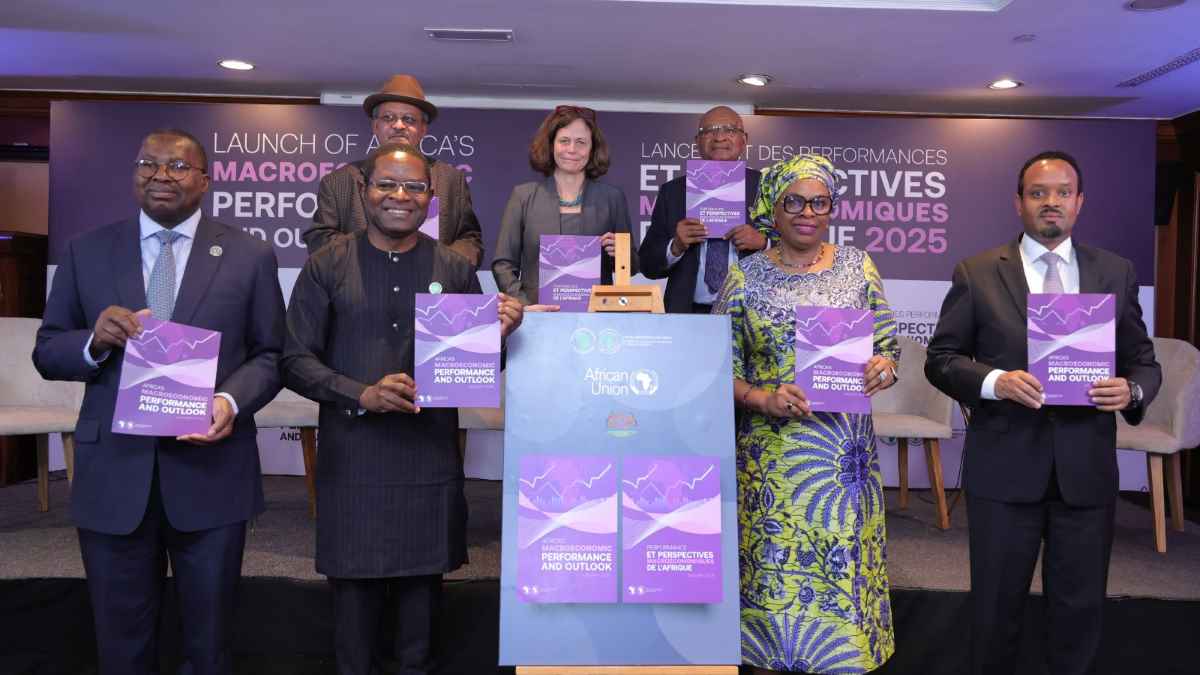
Africa’s economic performance is showing signs of improvement but remains vulnerable to global shocks, according to the 2025 Macroeconomic Performance and Outlook (MEO) report released by the African Development Bank (www.AfDB.org/en) on Friday.

The report, unveiled on the sidelines of the 38th Ordinary Session of the African Union Assembly in Addis Ababa, projects real GDP growth to accelerate to 4.1 percent in 2025 and 4.4 percent in 2026. The forecast is attributed to economic reforms, declining inflation, and improved fiscal and debt positions.

Despite the positive trajectory, the report highlights that Africa’s growth remains below the 7 percent threshold required for substantial poverty reduction. The continent also continues to grapple with geopolitical tensions, structural weaknesses, climate-related disasters, and prolonged conflicts in regions such as the Sahel and the Horn of Africa. It estimated Africa’s average real GDP growth to be 3.2 percent in 2024, slightly higher than the 3.0 percent recorded in 2023.

The report notes that while inflationary pressures persist, Africa’s average inflation rate is expected to decline from 18.6 percent in 2024 to 12.6 percent in 2025-2026 due to tighter monetary policies. Fiscal deficits have widened slightly from 4.4 percent of GDP in 2023 to 4.6 percent in 2024 but are projected to narrow to 4.1 percent by 2025-2026. Public debt levels have stabilized but remain above pre-pandemic levels, with nine countries in debt distress and eleven at high risk of distress.

The MEO, published by the Bank biannually in the first and fourth quarters, responds to a critical need for timely economic data amid global uncertainty. It serves policymakers, development partners, global investors, researchers, and other stakeholders.

The 2025 report identifies 24 African nations, including Djibouti, Niger, Rwanda, Senegal, and South Sudan, as poised to exceed 5 percent GDP growth in 2025. Additionally, Africa remains the world’s second-fastest-growing region after Asia, with 12 of the 20 fastest-growing economies projected to be on the continent.

Ethiopia’s Finance Minister, Ato Ahmed Shide, praised the report’s depth of analysis. “It underscores the fragility of Africa’s economic growth, which is projected to hover around 4 percent in the near term,” he said, emphasizing the need for proactive policy measures to sustain growth and stability.

He said Ethiopia has taken bold steps to restore macroeconomic stability, build resilience, and accelerate growth, with the government prioritizing economic liberalization, private sector empowerment, and fiscal discipline.

As Africa navigates an increasingly complex economic landscape, policymakers must adopt a forward-looking approach to reinforce resilience and drive sustainable growth

Strengthening Africa’s Resilience

In her remarks at the report’s launch, Nnenna Nwabufo, Vice President for Regional Development, Integration, and Business Delivery at the African Development Bank, highlighted the continent’s potential for driving global economic expansion but said achieving this requires decisive and well-coordinated policies.

“As Africa navigates an increasingly complex economic landscape, policymakers must adopt a forward-looking approach to reinforce resilience and drive sustainable growth. Africa’s economic resilience and growth prospects remain strong, but challenges persist,” said Nwabufo, who represented the Bank Group’s President, Dr. Akinwumi Adesina.

Presenting the report, Prof. Kevin Urama, the Bank Group’s Chief Economist and Vice President for Economic Governance & Knowledge Management, underscored the need for stronger coordination between monetary and fiscal policies to manage inflation while fostering economic expansion.

He urged countries to strengthen foreign reserves to shield economies from external shocks and currency depreciations, alongside pre-emptive debt restructuring to prevent defaults and enhance financial stability.

Medium- to long-term strategies should include increasing investments in integrated infrastructure to drive economic transformation and diversification. Governments must work to enhance the business environment through regulatory reforms and long-term strategies to attract private investment, Urama said.

The 2025 MEO report outlines key policy recommendations, including implementing pre-emptive debt restructuring to enhance financial stability, investing in integrated infrastructure to support economic diversification and improving the business environment through regulatory reforms and investment strategies.

Path Forward

Panel discussions following the report’s launch underscored the importance of fully implementing continental development initiatives such as the African Continental Free Trade Area agreement. Discussions also focused on accelerating new initiatives like the proposed Africa Credit Rating Agency and the African Financial Stability Mechanism.

The panel, moderated by Dr Victor Oladokun, Senior Advisor (Communications and Stakeholder Engagement) to the Bank Group President, included contributions from the African Risk Capacity Group, represented by its chair, Dr. Mothae Maruping. Gambian Finance Minister Seedy Keita highlighted the African Development Bank’s support in implementing the country’s fiscal reforms and domestic revenue mobilization.

African Union Trade Commissioner Albert Muchanga called on the private sector to do more to support the African Continental Free Trade Area, including through increased investments in logistics and manufacturing. “What I would expect [African businesses] to do is come up with logistics centers and warehouses across Africa; I would also expect the African private sector to start planning to develop an African shipping line… We are sitting on potential; the business sector has not responded,” Muchanga said.

Click here (https://apo-opa.co/3CYp6fd) for the 2025 MEO report.

Distributed by APO Group on behalf of African Development Bank Group (AfDB).

Business

Aurionpro expands its multi-country transaction banking engagement with Diamond Trust Bank (DTB)

Published

on

Aurionpro

Aurionpro’s upgraded iCashpro platform for DTB delivers a unified digital experience across payments, trade, virtual accounts, and real-time reporting, enhancing straight-through processing, visibility, and control for both the bank and its corporate customers

MUMBAI, India, April 30, 2026/APO Group/ –Aurionpro Solutions Limited (www.AurionPro.com) (BSE: 532668 | NSE: AURIONPRO)a global leader in banking technology, announced the expansion and upgrade of its transaction banking engagement with Diamond Trust Bank (DTB), to modernize and enhance the bank’s corporate transaction banking capabilities across multiple countries.

Download Document: https://apo-opa.co/4edHUaC

This multi-country transaction banking upgrade covering Kenya, Uganda, and Tanzania aligns with DTB’s intent to enhance customer experience, streamline operations, and support growing transaction volumes as it expands its regional corporate banking footprint. DTB continues to focus on building a more agile, ‘digital-first’ banking experience, particularly around payments for its corporate customers across Africa, and is now well positioned to scale these capabilities. As part of its broader transformation agenda, the bank has been steadily investing in platforms that enhance scale, reliability, and service consistency across markets.

Through this partnership, we are proud to lead the next era of transformation in transaction banking, helping DTB enhance operational agility

Aurionpro’s upgraded iCashpro platform for DTB delivers a unified digital experience across payments, trade, virtual accounts, and real-time reporting, enhancing straight-through processing, visibility, and control for both the bank and its corporate customers. By enabling DTB to standardize and scale its transaction banking operations across countries, the platform ensures consistent service levels, stronger control, and improved efficiency. It also supports enhanced user experience, advanced security, and the flexibility to introduce new features as DTB expands its regional transaction banking footprint.

Murali Natarajan (https://apo-opa.co/48trPdk), Managing Director & CEO, DTB Kenya   commented: “We are delighted to strengthen and broaden our partnership with Aurionpro Solutions as part of DTB’s ongoing digital transformation journey across multiple markets. Our focus on innovation, operational excellence, and customer-centricity continues to guide our technology investments. This upgrade strengthens our transaction banking capabilities, enabling us to deliver greater value to our customers through robust digital channels and seamlessly integrated experiences.”

Ashish Rai, Group CEO, Aurionpro Solutions, commented: “We are pleased to deepen our multi-country engagement with Diamond Trust Bank and support the next phase of its transaction banking modernization. As DTB continues to scale across markets, platform resilience and consistency become paramount. Through this partnership, we are proud to lead the next era of transformation in transaction banking, helping DTB enhance operational agility, deliver superior experiences to corporate customers, and create long-term value across geographies.”

He added, “Aurionpro’s iCashpro lays a strong digital foundation for transaction & wholesale banks across the globe to grow their corporate and SME client portfolio today, while creating a clear roadmap for next- generation capabilities in AI-driven insights, advanced automation and API-led connectivity for businesses in Kenya and across Africa.”

Distributed by APO Group on behalf of Aurionpro Solutions Ltd.


Continue Reading

Business

Minerals Council Chief Executive Officer (CEO) Joins African Mining Week (AMW) as South Africa Improves Sectorial Investment Climate

Published

on

Energy Capital

Minerals Council CEO to share insights on policy, infrastructure and investment trends shaping South Africa’s mining industry

CAPE TOWN, South Africa, April 30, 2026/APO Group/ –The upcoming African Mining Week (AMW) conference will feature Mzila Mthenjane, CEO of the Minerals Council of South Africa, as a speaker. Scheduled for October 14 – 16, 2026 in Cape Town, the event will bring together global investors, policymakers and industry leaders, with Mthenjane’s participation highlighting the council’s commitment to engaging international stakeholders and promoting investment across South Africa’s mining sector.

His participation comes at a critical moment as the Minerals Council works closely with government on finalizing the Mineral Resources Development Bill 2025, a policy framework aimed at strengthening the country’s mining investment climate and the sector’s contribution to GDP. According to the council, the revised legislation will support new investment across the value chain as South Africa seeks to mobilize R2 trillion over the next five years to unlock its critical minerals potential.

The policy reforms come amid shifting production trends in the sector. In 2025, South Africa recorded declines in gold and platinum group metals output of 1.9% and 4.1%, respectively. The new regulatory framework is expected to strengthen public-private partnerships and stimulate investment, enabling South Africa to increase production and capitalize on strong global commodity prices. Increased private sector investments is crucial with South Africa seeking targeting to unlock an estimated R40 trillion in untapped iron ore potential as well as maintain its position as the world’s leading producer of chrome and manganese.

At AMW 2026, Mthenjane is expected to outline these trends, providing insights into how the council is contributing to addressing challenges disrupting the sector. Infrastructure and energy costs remain key concerns for industry players. To support the energy-intensive sector, South Africa approved a 35% reduction in electricity tariffs for major ferrochrome producers, helping stabilize an industry that has faced significant cost pressures after electricity prices surged by roughly 900% since 2008.

Logistics constraints are also a priority area for reform. South Africa’s economy is losing an estimated R1 billion per day due to inefficiencies across rail and port infrastructure. As a result, the government is considering measures supported by the Minerals Council to increase private sector participation in logistics. Planned reforms include rail modernization initiatives targeting 250 million tons of freight capacity by 2029, alongside port upgrades and private operator participation aimed at strengthening mineral exports and improving supply chain efficiency.

Beyond infrastructure and policy reforms, the Minerals Council is advocating for stronger exploration investment to support long-term industry growth.

At AMW, Mthenjane is expected to highlight these developments and outline the steps required to reinforce South Africa’s position in the global minerals supply chain. His insights will offer investors and stakeholders a timely perspective on opportunities within the country’s mining sector.

Distributed by APO Group on behalf of Energy Capital & Power.

Continue Reading

Energy

Seychelles Targets Energy Investment Push as Minister Jérémie Joins African Energy Week (AEW) 2026 as a Speaker

Published

on

African Energy Chamber

Seychelles energy minister will speak at AEW 2026, positioning her to highlight reforms, renewable projects and investment opportunities as the island nation advances its transition toward a diversified energy system

CAPE TOWN, South Africa, April 29, 2026/APO Group/ –Marie-May Jérémie, Minister of Environment, Climate, Energy and Natural Resources for Seychelles will participate as a speaker at this year’s African Energy Week (AEW) 2026, taking place from October 12–16 in Cape Town. Her participation underscores the country’s growing role in shaping Africa’s small-island energy transition agenda.

Minister Jérémie’s presence at AEW 2026 comes at a critical time as Seychelles accelerates efforts to reduce its heavy reliance on imported fossil fuels. The event provides a platform to attract investment, strengthen policy alignment and showcase bankable projects, positioning the country as a viable destination for private-sector participation in island energy systems.

Seychelles is demonstrating how policy reform and innovation can unlock investment in constrained environments

In May last year, international finance institution the World Bank approved the Renewable Energy Acceleration Program, a seven-year initiative aimed at modernizing the grid and increasing renewable energy penetration to 15% by 2030. The program focuses on unlocking private capital while strengthening transmission infrastructure to accommodate variable renewable energy sources.

Project development is gaining traction in the country, particularly in innovative technologies suited to Seychelles’ land constraints. The 5.8 MW Seysun Lagoon floating solar PV project, developed by independent renewable power producer Qair, is under construction and expected online in 2026.

Alongside renewables, Seychelles continues to pursue upstream opportunities to diversify its economy. The government approved new exploration entrants in 2025 and extended exiting petroleum agreements, while securing an infrastructure partnership with China. Multilateral estimates suggest over $800 million in investment will be required over the next 25 years.

Regulatory reform is central to this transition, with Seychelles introducing an independent power producer framework to open the market to private developers. Standardized power purchase agreements, grid access reforms and strengthened public-private partnership structures are being implemented to improve transparency, reduce risk and accelerate project bankability across solar, storage and emerging wind opportunities.

“Minister Jérémie’s participation highlights the strategic importance of island nations in Africa’s broader energy transition,” says NJ Ayuk, Executive Chairman, African Energy Chamber. “Seychelles is demonstrating how policy reform and innovation can unlock investment in constrained environments. Her insights will be critical to advancing dialogue on resilient, low-carbon energy systems across the continent.”

Distributed by APO Group on behalf of African Energy Chamber.

Continue Reading

Trending