Connect with us

Business

Africa Finance Corporation Approves US$100 Million Commitment to Africa-Focused Technology Fund Managers to Accelerate Africa’s Digital Industrialisation

Published

on

Africa Finance Corporation

Through this commitment, AFC will deploy catalytic capital in leading Africa-focused technology Funds and in particular African-owned fund managers

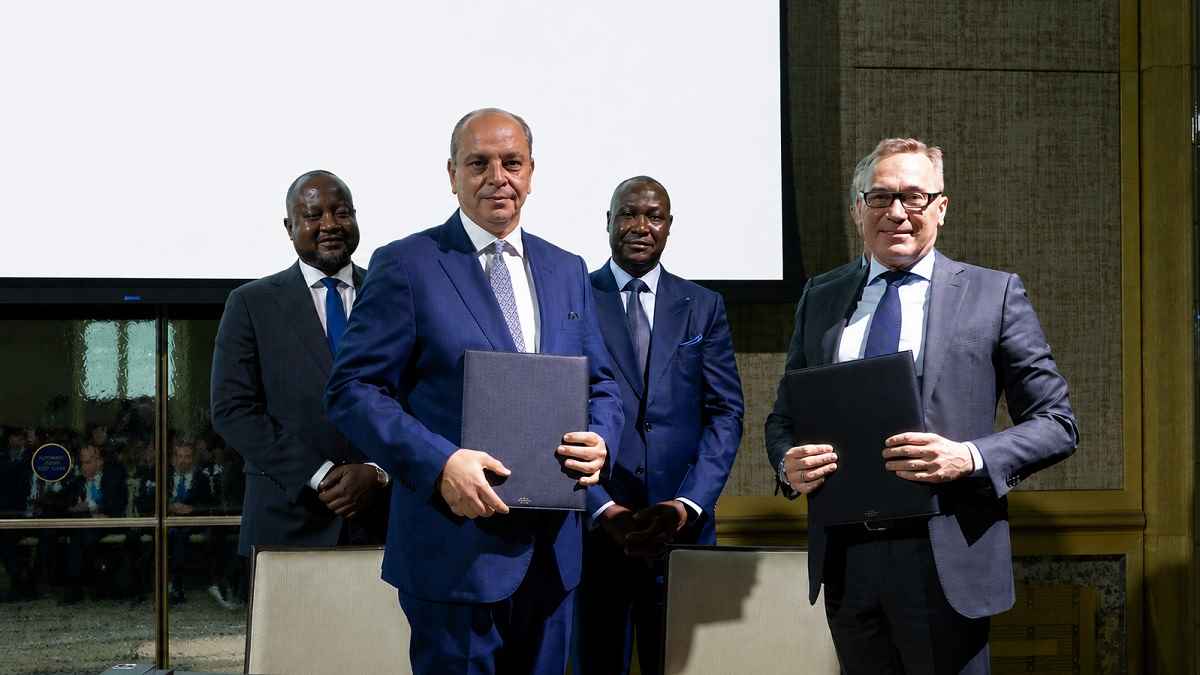
LONDON, United Kingdom, May 18, 2026/APO Group/ –Africa Finance Corporation (AFC) (www.AfricaFC.org), the continent’s leading infrastructure solutions provider, today announced that its Board has approved a commitment of up to US$100 million to invest in Africa-focused technology fund managers.

The launch comes at a pivotal moment for Africa. The continent’s digital economy is projected to contribute over US$700 billion to GDP by 2050, driven by a fast-growing, digitally connected population and accelerating enterprise adoption of technology. Yet despite this momentum, a persistent gap in long-term institutional capital continues to constrain the development and scaling of high-potential technology businesses across the continent.

Through this commitment, AFC will deploy catalytic capital in leading Africa-focused technology Funds and in particular African-owned fund managers. In doing so, AFC aims to address the underrepresentation of local capital in venture funding by catalysing greater participation from African institutional investors and deepening local ownership within the ecosystem.

Africa’s venture capital ecosystem has demonstrated real potential – the continent has produced nine unicorns, some of its leading fund managers have generated returns of up to 128 times the capital originally invested, and African start-ups raised US$3.8 billion in 2025 alone. Yet local institutional capital remains significantly underrepresented across many fund cap tables, with the majority of venture funding continuing to flow from international sources. AFC’s commitment is designed to shift that dynamic.

We trust that other development finance institutions, insurers, reinsurers and pension funds will follow AFC’s lead

Samaila Zubairu, President and CEO of AFC said: “Across the continent, young Africans are not waiting for the digital economy to arrive; they are seizing the moment — adopting technology, creating markets and solving real economic problems faster than infrastructure has kept pace. That is the investment signal. AFC’s US$100 million Africa-focused Technology Fund will accelerate the convergence of growing demand, rapid technology adoption, youthful demographics and the enabling infrastructure we are building. Digital infrastructure is now as fundamental to Africa’s transformation as roads, rail, ports and power — enabling productivity, payments, logistics, services, data and cross-border trade, while creating jobs and industrial scale.”

As part of the initial deployment, AFC has made anchor commitments to Lightrock Africa Fund II and Future Africa Fund III, positioning the Corporation across the full innovation lifecycle – from early-stage venture capital through to growth-stage scaling. These initial commitments represent the first tranche of a broader deployment, with AFC actively evaluating a pipeline of additional Africa-focused funds spanning a range of strategies and stages, with further commitments expected in the near term.

Pal Erik Sjatil, Managing Partner & CEO, Lightrock, said: “We are delighted to welcome Africa Finance Corporation as an anchor investor in Lightrock Africa II, deepening a strong partnership shaped by our collaboration on high-impact investments across Africa, including Moniepoint, Lula, and M-KOPA.

This commitment reflects a shared conviction in the opportunity to back high-growth, technology-enabled businesses with proven business models, strong fundamentals, and clear pathways to profitability. With aligned capital, a long-term perspective, and a shared focus on value creation, we are well positioned to support exceptional management teams and scale category-leading businesses that deliver attractive financial returns alongside measurable environmental and social outcomes.”

Future Africa is a venture capital firm that backs founders building technology-enabled solutions to Africa’s most pressing challenges, with a portfolio that includes some of the continent’s most celebrated technology companies. AFC’s investment in Future Africa Fund III strengthens the pipeline of innovation at the early-stage end of the market, backing founders solving important problems spanning financial inclusion, digital infrastructure, consumer technology and education.

Iyin Aboyeji, Founding Partner, Future Africa, said: “Young Africans are not waiting for the digital economy to arrive; they are already among its most active participants globally. What they need now are the skills, productive assets and infrastructure to build and scale within it. By investing in AI-native skills, financing productive tools such as phones and laptops, and expanding energy, connectivity and compute infrastructure, we can convert Africa’s greatest asset — its people — into critical participants in the new global economy. AFC’s US$100 million commitment is the anchor this moment demands. As our first multilateral development bank partner, AFC is sending a clear signal that digital is as fundamental to Africa’s transformation as agriculture, manufacturing and physical infrastructure. We trust that other development finance institutions, insurers, reinsurers and pension funds will follow AFC’s lead.”

Overall, the commitment builds on AFC’s broader strategy to deploy capital across integrated infrastructure systems, where digital platforms increasingly complement physical infrastructure to unlock value across sectors. By combining its balance sheet strength, structuring expertise, and pan-African network, AFC aims to establish itself as the leading institutional investor in Africa’s technology ecosystem – mobilising capital at scale while delivering sustainable, long-term development impact across the continent.

Distributed by APO Group on behalf of Africa Finance Corporation (AFC).

Business

President Mahama, Africa Finance Corporation’s (AFC) Samaila Zubairu and Global Business Leaders to Headline The Africa Debate in London

Published

on

This year’s extraordinary speaker line-up includes H.E. John Dramani Mahama, President of the Republic of Ghana, and AFC’s President and CEO, Samaila Zubairu, alongside global business leaders and investors shaping Africa’s next chapter

LONDON, United Kingdom, May 18, 2026/APO Group/ –Invest Africa (www.InvestAfrica.com) is pleased to announce Africa Finance Corporation (AFC) as Headline Partner for the 12th edition of The Africa Debate, taking place on Wednesday, 3 June 2026 at the Guildhall, London.


This year’s extraordinary speaker line-up includes H.E. John Dramani Mahama, President of the Republic of Ghana, and AFC’s President and CEO, Samaila Zubairu, alongside global business leaders and investors shaping Africa’s next chapter.

As the UK’s leading forum for high-level dialogue on Africa’s economic future, The Africa Debate 2026 will convene over 800 senior leaders from government, finance and industry under the theme: ‘Redefining Partnership: Navigating a World in Transition’.

As the global order evolves and new economic and geopolitical realities emerge, discussions will focus on how to accelerate investment, unlock growth and strengthen development outcomes through a new era of collaboration.

This year’s speaker line-up reflects the breadth of voices shaping Africa’s next chapter, from heads of state to the stewards of global capital.

Highlights include:

H.E. John Dramani Mahama, President of the Republic of Ghana
The Rt. Hon. Baroness Chapman of Darlington, Minister for International Development and Africa

Key ministers include:

Hon. Samuel Okudzeto Ablakwa, Minister of Foreign Affairs, Republic of Ghana
Hon. Emmanuel Armah-Kofi Buah, Minister for Lands and Natural Resource, Republic of Ghana

Hon. Cassiel Ato Forson, Minister of Finance, Republic of Ghana

Hon. Judith Salvio Kapinga, Minister for Industry and Trade, United Republic of Tanzania

H.E. Taiwo Oyedele, Minister of Finance and Coordinating Minister of the Economy, Federal Republic of Nigeria

With AFC as our Headline Partner, we have a bold, visionary institution that understands what long-term, bankable investment in Africa truly looks like


Dalu Ajene, CEO & Head of Coverage, Africa, Standard Chartered

Runa Alam, Co-Founder & CEO, Development Partners International
Haythem El Maayergi, Executive Vice President, Global Trade Bank, Afreximbank

Dr. Awele V. Elumelu, Co-Founder, Tony Elumelu Foundation
Claver Gatete, Under Secretary General & Executive Secretary, UNECA
Amadou Hott, Chair, Africa Advisory Board, Vision Invest

Kola Karim, Group Managing Director & CEO, Shoreline Energy International
Leslie Maasdorp, Chief Executive Officer, British International Investment
Zemedeneh Negatu, Chief Executive Officer, CBE Capital Investment Bank and Chairman, Fairfax Africa Fund

Hardy Pemhiwa, President & CEO, Cassava Technologies


Commenting on AFC’s partnership with Invest Africa, Samaila Zubairu, President and CEO of Africa Finance Corporation, said: “We are entering a decisive period for Africa and the global economy. As trade routes, supply chains, and industrial capacity are being reshaped, Africa has a historic opportunity to move from the margins of the global economy to a more central role in powering future growth, resilience, and industrial competitiveness.

Realising that opportunity will require mobilising capital at scale toward the infrastructure, energy systems, logistics networks, and industrial ecosystems that enable productive economies to grow and create jobs.

The Africa Debate comes at an important moment to deepen partnerships, align long-term capital with long-term opportunity, and accelerate the practical solutions required to help build the Africa our children will inherit.”

Chantelé Carrington, CEO of Invest Africa, added: “The world is in transition, and Africa is no longer waiting to be invited to shape it. From the race to secure critical minerals and redefine development finance, to the urgent need to unlock energy access and accelerate digital transformation, this year’s Africa Debate puts Africa’s priorities first.

With AFC as our Headline Partner, we have a bold, visionary institution that understands what long-term, bankable investment in Africa truly looks like. Together, we are convening a conversation that goes beyond rhetoric, focused on the partnerships, the financing models, and the structural shifts that will define Africa’s next decade.”

Confirmed Partners of The Africa Debate Include: Africa Finance Corporation (Headline Partner), Absa Group, Afreximbank, Africa GreenCo, Brand South Africa, FirstBank UK Limited, Invest Durban, London Stock Exchange Group, Manufacturing Africa, Premier Invest, Rawbank, S-RM, Société Nationale d’Électricité (SNEL), Standard Bank Group and Standard Chartered.

To register as a delegate for The Africa Debate, please visit: https://apo-opa.co/4dqVaqk.

Distributed by APO Group on behalf of Invest Africa.

Continue Reading

Business

Aliko Dangote: African Energy Person of the Year 2026

Published

on

Aliko Dangote is a visionary who has invested his time, resources, and unwavering belief in Africa’s potential to build industries, strengthen energy security, and create lasting economic opportunity across the continent

JOHANNESBURG, South Africa, May 18, 2026/APO Group/ –Each year, the African Energy Industry’s “African Energy Person of the Year” award celebrates individuals who have positively influenced Africa’s energy sector by facilitating projects that strengthen energy security, African development, energy additions, free markets, limited government, economic resilience, the prosperity of families, local content and improve African energy infrastructure. Previous awardees include Frank Fannon, former United States Assistant Secretary of State for Energy Resources; Mohammad Sanusi Barkindo, former OPEC Secretary General; Hage Geingob, former President of Namibia; Meg O’Neill, CEO of Woodside Energy; Benedict Oramah, President and Chairman of the Board of Directors of African Export-Import Bank; and João Lourenço, President of Angola.


The African Energy Chamber is pleased to present the 2026 award to Aliko Dangote.

This is a fitting honor for the Nigerian businessman and industrialist who has invested billions in Africa to strengthen energy security, build infrastructure, create jobs, reduce import dependence, support regional development, and promote African-led solutions to energy poverty.

A Career Devoted to African Growth

After his studies in business at Al-Azhar University in Cairo, Dangote ventured into a wide variety of industries, with enterprises in cement, sugar, salt, flour, and fertilizer. From a small trading business, he has built one of Africa’s largest conglomerates: Dangote Group, a multinational industrial powerhouse that develops African technical expertise, enhances domestic supply chains, and boosts industrial capacity — all resulting in greater opportunities for economic diversification.

Dangote has long recognized one of Africa’s biggest economic challenges: the need among African countries to export raw materials and import finished products. He adopted a long-term mission to help solve this dilemma by building manufacturing capacity, logistics systems, energy infrastructure, raw material processing, and transportation networks that will move more production and value creation inside Africa.

Under the direction of this transformative business leader, the Dangote Group is one of the most ambitious industrial conglomerates ever built in Africa. What makes the organization unique is not just its size, but its strategy: Instead of focusing on trading or resource extraction, Dangote has invested heavily in the physical infrastructure needed for industrialization across Africa.

But it’s when he turned his sights to hydrocarbons that Aliko Dangote’s story really comes alive.

Breaking the Import Dependence Cycle

In recent years, he gained global attention for the Dangote Refinery in Lekki near Lagos, Nigeria. This is one of the world’s biggest oil refineries (and the world’s largest single-train refinery), with a planned refining capacity of about 650,000 barrels per day. It includes a petrochemical complex and fertilizer facilities. The refinery produces gasoline, diesel, aviation fuel, and other refined petroleum products at a scale capable of transforming regional and international fuel markets.

This is not simply a refinery. It is a macroeconomic game-changer for Nigeria and a transformative project for African energy security.

For years, Nigeria’s dependence on imported refined products created fuel shortages, subsidy burdens, foreign exchange pressures, and opportunities for corruption tied to import systems and arbitrage networks. The Dangote Refinery has fundamentally altered that trajectory by enabling domestic refining at unprecedented scale while helping strengthen Nigeria’s energy sovereignty. At a time of global energy volatility, the refinery is a primary reason African economies remain resilient in the face of external fuel shocks.

The refinery also represents something even bigger for Africa: proof that the continent can build and operate world-scale industrial infrastructure.

At a time when geopolitical instability involving Iran and growing uncertainty around the Strait of Hormuz continue to threaten global shipping lanes and fuel supply chains, the Dangote Refinery has emerged as a strategic stabilizing force for both Nigerian and international energy markets. As supply disruptions intensify, the refinery actively helps fill fuel supply gaps beyond its borders. Today, refined products from Dangote are supplying markets across the continent, including Ghana, Cameroon, and Côte d’Ivoire. The refinery is already supplying fuel products to the United Kingdom, Europe, and the United States, and in June 2026, the refinery is expected to load its first major gasoline shipment to Asia.

Many critics doubted that the refinery would ever be completed.

Dangote faced skepticism from international observers, financing challenges, infrastructure bottlenecks, technical complexity, political uncertainty, and currency volatility. Despite these, and many other hurdles, Dangote’s steadfast determination and visionary leadership persisted to bring the project to fruition.

Today, the refinery stands as a symbol of African industrial ambition and confidence.

Its impact on Nigeria’s economy has been profound. According to S&P Global Ratings, Nigeria’s refining capacity is increasing significantly thanks to the Dangote Refinery. By reducing the nation’s need for refined fuel imports, the refinery played a key role in boosting the Nigerian gross foreign exchange reserves from $33 billion in 2023 to $50 billion by early March 2026.

And Dangote is not stopping there. In early 2026, plans for feasibility studies indicated the interest in expanding its current refining capacity to 1.4 million barrels per day. This move could position Nigeria among the world’s most significant refining hubs by the end of the decade, potentially rivaling refining centers in India and Asia by 2027 or 2028.

At the same time, the Dangote Group is expanding fuel storage and logistics infrastructure beyond Nigeria’s borders, with plans for new storage tank projects in Namibia and the potential development of a second refinery in East Africa. These efforts will undoubtedly further strengthening regional industrialization, supply reliability, and energy integration across the continent.

Sharing the Wealth

Dangote’s positive influence on African industry and economic development cannot be overstated. But he is more than a businessman or industrialist. He is also dedicated to helping his country and uplifting his fellow Nigerians. Among his philanthropic efforts, he leads the Aliko Dangote Foundation (ADF), which supports health initiatives, education, disaster relief, poverty reduction, and nutrition programs across Africa.

Established with the mission of reducing poverty and improving quality of life through strategic philanthropy and sustainable development initiatives, ADF is one of the largest private charitable foundations in Africa. Dangote himself has publicly committed a large portion of his wealth to philanthropy, including signing the Giving Pledge that encourages billionaires to donate most of their fortunes.

ADF became internationally known for supporting Nigeria’s campaign to eradicate polio. It partnered with the Bill & Melinda Gates Foundation, UNICEF, the World Health Organization, and various Nigerian government agencies in this work. It’s no coincidence that Nigeria was declared free of wild polio in 2020, after years of vaccination campaigns.

The foundation also supports nutrition initiatives targeting children, pregnant women, and vulnerable communities. Agricultural programs to strengthen poverty reduction and employment have included farmer support, fertilizer access, agricultural training, and rural development efforts.

ADF regularly donates large sums and relief materials to affected communities across Nigeria to provide emergency assistance during crises such as flooding, food shortages, displacement, and disease outbreaks. For instance, the foundation helped coordinate private-sector responses through the Coalition Against COVID-19 (CACOVID), contributing emergency funding for medical supplies, isolation centers, and food assistance.

The foundation, under Dangote’s leadership, also promotes programs designed to create sustainable livelihoods, including small business support, agricultural initiatives, women’s empowerment projects, and entrepreneurship development. Programs focus on helping communities move from aid dependency toward long-term economic participation. By collaborating with universities and educational institutions to strengthen research and learning capacity, Dangote is improving educational access and workforce readiness, especially for young Nigerians, through scholarships, school infrastructure, university programs, and vocational training.

ADF often works with African governments, international NGOs, UN agencies, community organizations, and global philanthropic institutions. Its partnership model is crucial because many African development challenges require coordination between public and private sectors. Its influence extends beyond charity into public health, economic policy, and development strategy across the region.

Aliko Dangote is a visionary who has invested his time, resources, and unwavering belief in Africa’s potential to build industries, strengthen energy security, and create lasting economic opportunity across the continent. The African Energy Chamber looks forward to seeing the impact of his efforts continue to unfold in the years ahead.

Distributed by APO Group on behalf of African Energy Chamber.

Continue Reading

Energy

Offtake Agreements Reshape Africa’s Next Phase of Mining Investment

Published

on

African Mining Week will highlight how offtake agreements are bridging Africa’s mineral wealth with global capital, turning geological potential into bankable mining projects

CAPE TOWN, South Africa, May 18, 2026/APO Group/ –Multinational commodities company Trafigura signed an offtake agreement in April 2026 with Ghana’s Heath Goldfields for the Bogoso-Prestea Gold Mine, committing to purchase around 700,000 ounces of gold. The deal provides immediate commercial certainty for the project while improving its financing profile by guaranteeing a long-term buyer, addressing one of the sector’s most persistent constraints: access to capital.

The move reflects a broader trend across Africa’s mineral sector whereby projects are turning to offtake agreements to secure capital and advance production. As Africa accelerates the development of its estimated $8.5 trillion in untapped mineral wealth, offtake agreements are emerging as an effective tool to unlock financing and de-risk projects.

This dual function – market assurance and capital enablement – is increasingly central to Africa’s mining financing landscape. By reducing demand risk, offtake agreements help unlock debt and equity financing that would otherwise be difficult to secure in early-stage or restart projects.

Similar structures are being replicated across the continent. In Sierra Leone, an offtake-backed arrangement involving Trafigura and FG Gold Limited helped unlock financing for the Baomahun Gold Project, marking a critical step in de-risking one of the country’s flagship mining developments and enabling financial close for large-scale gold production.

In the battery minerals space, NextSource Materials extended its offtake agreement in March 2026 with Mitsubishi Chemical Corporation to supply graphite from the Molo project in Madagascar. The arrangement provides predictable long-term demand for 9,000 tons per annum of graphite, while simultaneously supporting project financing and expansion plans tied to global battery supply chains.

Similarly, Bannerman Energy has secured offtake agreements with North American utilities for uranium from its Etango project, providing multi-year revenue visibility from 2029 to 2033 and strengthening the project’s long-term investment case.

These transactions reflect a broader structural shift in African mining finance: offtake agreements are no longer just sales contracts, but core instruments of project development, risk allocation and capital mobilization. For other markets seeking finance and long-term buyers, these examples demonstrate the viability of offtake contracts – not only for project commissioning phases but as tools for early-stage development.

Notably, in South Africa, where the government is targeting R2 trillion in investment to unlock its critical minerals potential, offtake structures could play a central role in de-risking projects. Similarly, in the Democratic Republic of Congo, which holds an estimated $24 trillion in untapped mineral wealth, offtake agreements could accelerate the monetization of its vast copper, cobalt and strategic mineral reserves.

Against this backdrop, the upcoming African Mining Week (AMW) Conference and Exhibition – taking place from October 14–16 in Cape Town – will showcase how offtake-driven financing models can be scaled to accelerate project delivery and strengthen Africa’s position in global minerals supply chain. Uniting stakeholders from across the entire African mineral value chain, the event offers a platform to examine strategic financing, mechanisms to accelerate production and positioning the continent at the forefront of global mining investment.

Distributed by APO Group on behalf of Energy Capital & Power.

Continue Reading

Trending

Exit mobile version