Connect with us

Energy

Africa-Focused Independents Expand African Energy Week (AEW) 2026 Speaker Lineup as Exploration Accelerates

Published

on

Africa

Independent oil and gas companies driving exploration, redevelopment and frontier expansion across Africa have joined AEW 2026 as the continent’s upstream sector enters a new phase of regional growth

CAPE TOWN, South Africa, May 14, 2026/APO Group/ –Africa-focused independents are set to play a defining role at African Energy Week (AEW) 2026 – scheduled for October 12-16 in Cape Town – as companies expand portfolios, redevelop mature assets and pursue frontier exploration opportunities across the continent. From Angola and Namibia to Nigeria, Chad and Kenya, a new generation of independent operators is strengthening Africa’s upstream landscape through targeted acquisitions, high-impact drilling campaigns and infrastructure-led development strategies.


Afentra continues to advance exploration across proven shallow water provinces in Angola. Alongside its Block 3/05 and Block 3/05A partners, the company recently carried out a two well program, starting with the spudding of Pacassa SW. The program aligns with a multi-well redevelopment plan aimed at scaling reserves and boosting production from the current 5,856 bpd to upwards of 9,000 bpd. The partners plan to spud the Impala-2 development well, while hydraulic workover program preparations are ongoing with execution planned for late 2026 or early 2027. Onshore, the company is advancing technical studies at Blocks KON 15 and 19, with a planned 2D seismic acquisition program on the cards. Afentra’s CEO Paul McDade joins AEW 2026 to discuss these programs.

AEW 2026 will provide a critical platform for these firms to engage investors, governments and technical partners as they advance the next generation of African energy projects

Nigeria’s Oando PLC recently made its foray into Angola, securing operatorship of Block KON 13. The move comes as the company expands its portfolio beyond Nigeria’s borders, leveraging its experience in the country to unlock new basins across the region. Oando’s existing portfolio encompasses more than 14 oil and gas assets across Nigeria and São Tomé and Príncipe. This is supported by a pipeline network of 1,255 km, 14 flow stations and gas processing capacity in excess of 3.6 billion standard cubic feet per day. Wale Tinubu, Group Chief Executive, Oando PLC, joins AEW 2026 to discuss the company’s growing portfolio and how regional lessons can support exploration in new markets.

With a portfolio of high-impact Atlantic-margin oil and gas assets, Sintana Energy continues to drive exploration across key projects in Namibia and Angola. The company has exposure to eight blocks across both countries, covering both deepwater and onshore acreage. In April 2026, Sintana Energy announces plans for a second listing on the Namibia Securities Exchange, signaling a new phase of financial maturity. The move comes as the company prepares for several exploration programs in Africa, including the advancement of the Mopane campaign at Namibia’s PEL 79. Robert Bose, CEO, Sintana Energy, is expected to share further insight during AEW 2026.

Rhino Resources is also advancing Namibian exploration programs, while broadening its footprint into South Africa’s onshore Karoo Basin. The company is engaged in a multi-well drilling campaign in Namibia’s Orange Basin, targeting FIDs between late 2026 and early 2027 across operated and partner-led projects. These include the Volans and Capricornus discoveries at PEL 85. In South Africa, the company is advancing a six-well campaign targeting helium, methane and hydrogen resources. Further insights into these projects will be shared at AEW 2026 as Travis Smithard, CEO, Rhino Resources, confirms his participation.

Meanwhile, as an American publicly-traded company with a focus on sub-Saharan Africa, ERHC Energy Inc has centered its operations around de-risked exploration, cost efficient development and high-margin production. The company has stakes in Kenya’s Block 11A, and while no wells have been drilled to date, the acreage offers promising geology and is supported by extensive 2D seismic coverage. In Chad, ERHC Energy Inc has stakes in three oil blocks in the Doseo and Doba Basins, while in the Joint Development Zones between Nigeria and São Tomé and Príncipe, has exposure to six of the areas nine blocks. Peter Ntephe, CEO, ERHC Energy Inc, joins AEW 2026, where he is expected to share insights into these projects.

“Independent operators are moving quickly, taking strategic risks and unlocking value in both mature and frontier basins across the continent. AEW 2026 will provide a critical platform for these firms to engage investors, governments and technical partners as they advance the next generation of African energy projects,” states NJ Ayuk, Executive Chairman, African Energy Chamber.

Distributed by APO Group on behalf of African Energy Chamber.

Energy

Argentine Shale Expertise to Drive Venezuela’s Upstream Growth at Venezuela Energy Week (VEW) 2027

Published

on

Long-standing commercial ties and 15 years of shale development position Argentine companies for participation in Venezuela’s expanding oil sector

CARACAS, Venezuela, November 23, 2026/APO Group/ –Venezuela Energy Week (VEW), taking place in Caracas on February 22-25, 2027, offers Argentine oil and gas companies a direct route into one of Latin America’s fastest-growing upstream markets. Argentina has built a mature drilling and oilfield services industry through the development of its Vaca Muerta shale play, while Venezuela is expanding activity across the Orinoco Belt and the Maracaibo Basin under new partnership agreements with international operators. VEW will connect Argentine producers and suppliers with Venezuelan officials, companies and engineering talent to accelerate the country’s production growth and forge new continental partnerships.


The two countries have a long-standing commercial relationship that predates Venezuela’s recent reforms. Argentina’s Tenaris, the Techint Group’s pipe and oilfield services company, was historically the leading pipe supplier to Venezuela’s oil industry and has retained experienced local personnel in the country. Its presence is expanding again under a long-term contract to supply oil country tubular goods and Rig Direct field services for Chevron’s Venezuelan operations, as well as a contract supporting Eni’s initial 20-well program. Tenaris expects around $60 million in Venezuelan revenue in 2026, with the number of rigs it serves in the country forecast to grow from five to 17 or 18 in 2027.

Argentina’s oilfield sector has expanded rapidly to keep pace with Vaca Muerta. The shale play has 42 rigs operating, up from 32 in 2025, and national crude output reached a record 926,925 barrels per day (bpd) in August. Argentine producers have also developed their own service companies, including Pluspetrol SPI, formed after Pluspetrol acquired Weatherford’s Argentine hydraulic fracturing division in 2024. The forecast rise in rigs Tenaris serves in Venezuela gives an early indication of the demand Argentine and other regional suppliers will be positioned to meet.

Venezuela’s expansion presents near-term openings for Argentine service providers and longer-term prospects for Argentine producers. Hydrocarbon output reached 1.218 million bpd in September, up 8% year-on-year, while Chevron’s joint ventures plan to invest more than $7 billion over five years to raise their production to around 600,000 bpd, sustaining demand for drilling and well services.

Beyond its conventional fields, Venezuela holds unconventional resources suited to the shale experience Argentine operators have built in Vaca Muerta. Published assessments cited by the American Association of Petroleum Geologists (AAPG) estimate 15.2 billion barrels of shale oil and 204.8 trillion cubic feet of shale gas in the country, most of it in the La Luna Formation of the Maracaibo Basin.

VEW 2027 will present the premier networking and deal-making space for Argentine companies to pursue these opportunities. The exhibition, conference program and dedicated site-visit day bring operators, national institutions and service providers together in Caracas, giving Argentine firms the opportunity and access to establish supply agreements, technical partnerships and joint ventures across Venezuela’s upstream sector.

Organized by Energy Capital & Power and taking place under the patronage of Acting President Delcy Rodríguez, PDVSA and the Ministry of Hydrocarbons, Venezuela Energy Week 2027 will convene in Caracas on February 22–25. To register, visit www.VenezuelaEnergyWeek.com. To sponsor or exhibit, visit https://apo-opa.co/4kroUZl.

Distributed by APO Group on behalf of Energy Capital & Power.


Continue Reading

Energy

South Sudan Targets 400,000 Barrels per Day (BPD), Calls for Investment Across Energy Value Chain at South Sudan Oil & Power (SSOP) 2026

Published

on

South Sudan outlined its strategy to increase oil production, expand domestic energy infrastructure and improve electricity access during the opening of South Sudan Oil & Power 2026

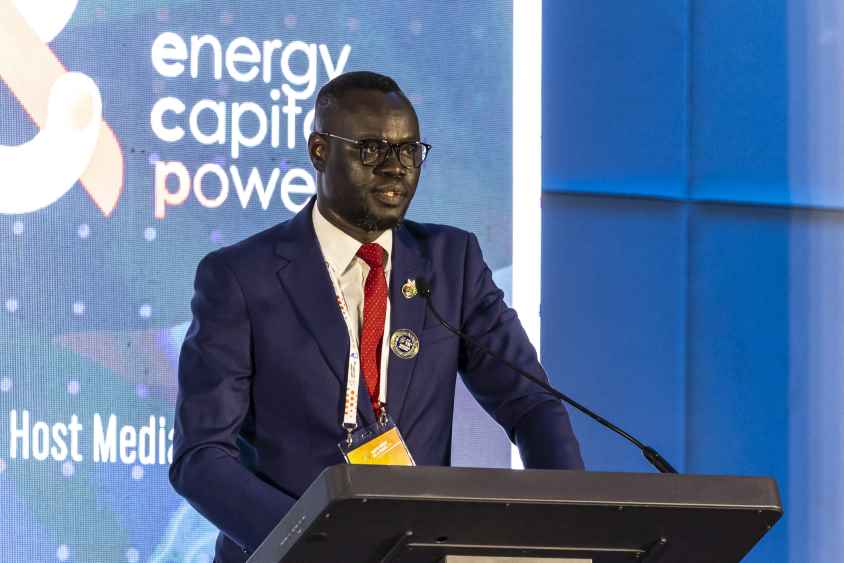
JUBA, South Sudan, November 24, 2026/APO Group/ –South Sudan is targeting a long-term crude production goal of 400,000 barrels per day (bpd), leveraging new exploration, enhanced oil recovery and infrastructure development to drive economic growth. Speaking during the opening of the seventh edition of South Sudan Oil & Power (SSOP) in Juba today, government and industry leaders called for greater private sector participation across the energy value chain, positioning hydrocarbons as a catalyst for industrialization, electrification and socioeconomic development.


Delivering the opening keynote, Hon. Africano Mande Gedima, Minister of Presidential Affairs, South Sudan, emphasized that oil remains the backbone of the national economy, funding peace initiatives and public services. Challenging delegates to focus on tangible socioeconomic outcomes, he urged investors to partner with national oil company Nilepet across exploration, pipeline development, refining and regional energy infrastructure.

“While we are here, we must ask a simple question: how do we turn our oil into electricity, jobs, schools, hospitals and prosperity for all,” he said. “South Sudan is open for investment and it is ready and stable. We don’t want investors who only come to take, but partners who create jobs for our youth, respect the environment and share dividends fairly.”

Hon. Eng. Awow Daniel Chuang, Caretaker Minister of Petroleum, South Sudan, outlined a multi-pronged strategy to raise output from nearly 170,000 bpd to 200,000 bpd within two to three years, with a longer-term goal of 400,000 bpd. Alongside plans to launch a new five-block licensing round, Minister Chuang emphasized the deployment of enhanced recovery technologies at mature fields and the development of domestic refining and road infrastructure to reduce logistics costs, which account for $70 million in annual losses.

“We are looking for oil,” Minister Chuang stated. “We must use technology to improve our recovery factors and build our own refineries and roads so we can optimize costs and ensure energy security.”

With global demand rising to 120 million barrels per day by 2050, South Sudan is well-positioned to play a crucial role in ensuring energy market stability

On the global front, H.E. Haitham Al Ghais, Secretary General of the Organization of the Petroleum Exporting Countries, reaffirmed South Sudan’s strategic role in supporting oil market stability amid geopolitical disruptions to global supply chains.

“What is clear is that there are immense opportunities for investment and growth across South Sudan,” Al Ghais said. “With global demand rising to 120 million barrels per day by 2050, South Sudan is well-positioned to play a crucial role in ensuring energy market stability.”

Beyond the petroleum sector, South Sudan is looking to leverage hydrocarbon revenues to address its electricity deficit. Hon. Eng. Madhieu Achuil Mawien, Undersecretary of Energy and Dams, South Sudan, highlighted that national electricity access remains below 10%, while reliance on diesel-fired generation drives tariffs as high as 32 cents per kilowatt-hour.

Outlining a roadmap to achieve 50% electricity access by 2035, Mawien stated: “We want to move from diesel today to solar, hydropower, gas-to-power and regional power trade. South Sudan is safe, and we need committed partners with blended finance and private capital to help light up our nation.”

Reinforcing the importance of domestic resource development, NJ Ayuk, Executive Chairman of the African Energy Chamber, argued that South Sudan’s estimated 3.5 billion barrels of oil reserves represent merely the “tip of the iceberg” in one of the world’s most under-drilled basins. Rejecting external pressure to leave African hydrocarbons in the ground, Ayuk stressed that maximizing production and empowering local entrepreneurs are both moral and economic imperatives.

“We want South Sudanese to have a better life and we are going to produce every drop to lift our people out of poverty,” Ayuk declared. “Local content can no longer be an afterthought – it has to be something we push and participate in.”

The opening of SSOP 2026 underscored a shift toward integrated energy sector development, with South Sudan seeking to translate upstream investment into downstream expansion, regional trade and greater domestic electricity access. With new acreage coming to market and infrastructure development high on the government’s agenda, opportunities for investors increasingly extend beyond crude production to the broader energy value chain.


Distributed by APO Group on behalf of Energy Capital & Power.


Continue Reading

Business

C&I Decision Clinic Invites South African Businesses to Put Energy Project Questions to Financiers and Municipal Experts

Published

on

The clinic invites businesses, developers and investors to bring these decisions to a panel drawn from development finance, commercial banking, local government and sustainability

JOHANNESBURG, South Africa, November 20, 2026/APO Group/ –What does a lender need to see before it will finance a commercial energy project? Who carries the risk under a power purchase agreement? And when should a business bring its municipality into discussions about wheeling electricity across the grid? These are among the questions the C&I Energy + Storage Summit (https://apo-opa.co/4AIW6QX) will address in its live C&I Decision Clinic – Ask the Experts webinar on Wednesday, 25 November 2026 at 14:00 SAST.


South Africa’s evolving electricity market is giving commercial and industrial (C&I) energy users more choices in how they procure power. For a business considering buying electricity from an independent generator; the purchase agreement, financing and grid connection are closely linked. A lender needs to understand the risks the buyer and developer have agreed to take on, while both parties need clarity on how the electricity will reach the site.

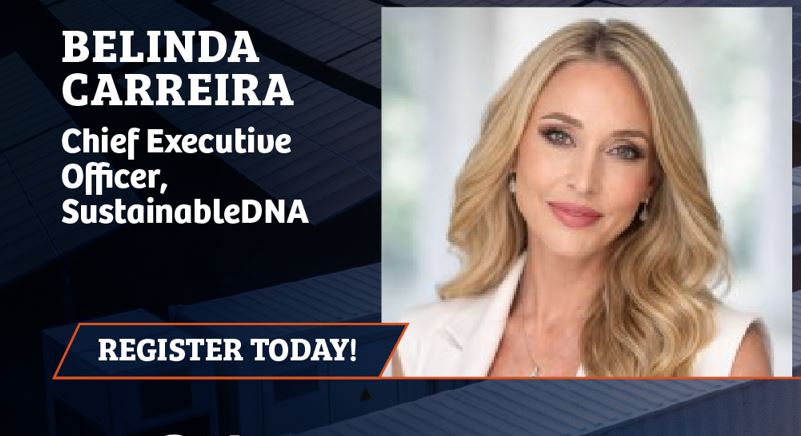
The clinic invites businesses, developers and investors to bring these decisions to a panel drawn from development finance, commercial banking, local government and sustainability. The panellists are Luyanda Matlala, Transaction Originator at the Development Bank of Southern Africa (DBSA), Belinda Carreira, Chief Executive Officer of SustainableDNA, Sameer Bagwandeen, Head of Energy & Infrastructure at Standard Bank, and Sello Mphaga, Divisional Head of City Sustainability at the City of Tshwane Metropolitan Municipality.

The discussion will examine what makes a project ready for financing, which commercial risks to address during power purchase agreement negotiations and how to approach municipalities about grid access and wheeling. The panel will also consider where public and private partners can work together to move projects forward and how climate policy affects businesses planning to reduce emissions.

Distributed by APO Group on behalf of VUKA Group.


Continue Reading

Trending

Exit mobile version