Connect with us
Anglostratits

Business

Africa Finance Corporation (AFC) Secures US$300 Million Loan, Expanding Investor Base with Indian Lenders

Published

on

Africa Finance Corporation

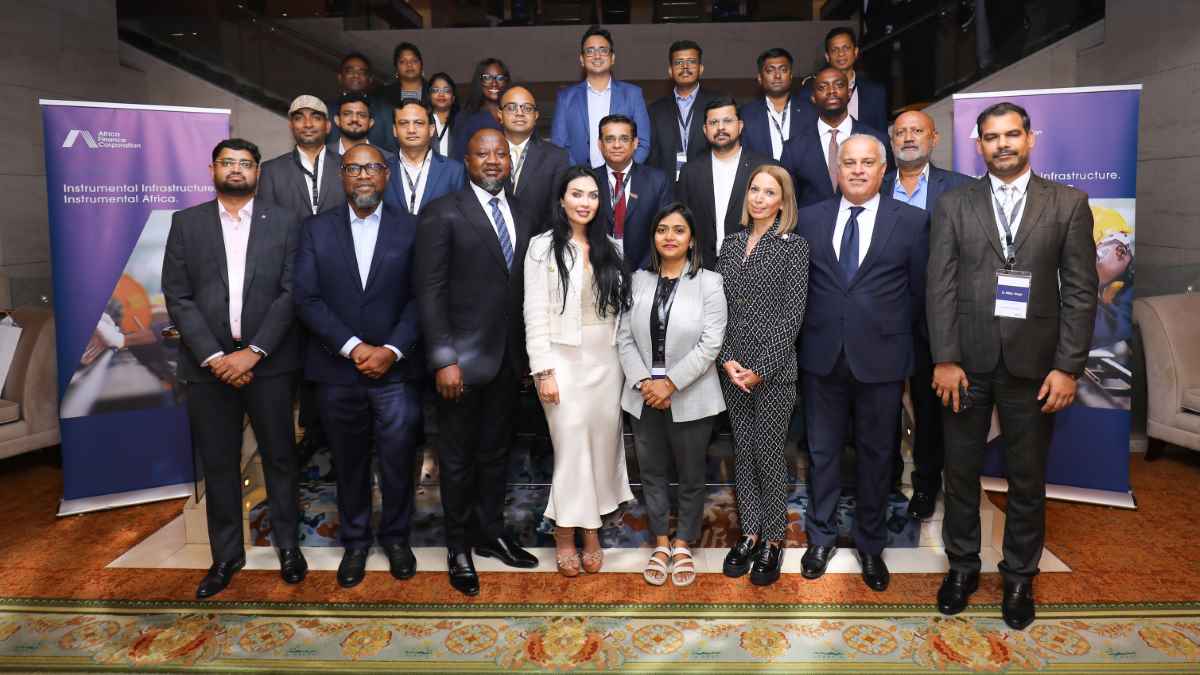
This landmark transaction, commemorated in Dubai, underscores AFC’s robust standing as an investment-grade rated development financial institution with a unique ability to attract diverse global investors

DUBAI, United Arab Emirates, November 18, 2024/APO Group/ — 

Africa Finance Corporation (AFC) (www.AfricaFC.org), the continent’s leading infrastructure solutions provider, has successfully closed a US$300 million India-focused syndicated loan, marking a significant milestone in its ongoing strategy to diversify its international investor base. The transaction introduced a new group of lenders from India, further expanding AFC’s global partnerships.

This landmark transaction, commemorated in Dubai, underscores AFC’s robust standing as an investment-grade rated development financial institution with a unique ability to attract diverse global investors, furthering its pivotal mission to catalyse infrastructure development across the continent.

Underlining AFC’s strong position in global capital markets, Bank of Africa UK PLC (BOA UK) acted as the sole mandated lead arranger and bookrunner, assembling a syndicate of seven leading Indian banks. This group included five new lenders—State Bank of India, Canara Bank, Bank of India, Indian Bank, and UCO Bank—alongside two returning lenders, SBI (Mauritius) and Indian Overseas Bank. The lender group behind the transaction reinforces AFC’s strategy of diversifying institutional partnerships and its pivotal role in advancing Africa’s economic growth and industrialisation.

This latest transaction which was oversubscribed by 50% builds on AFC’s fundraising momentum this year, including a landmark US$1.16 billion debt facility that attracted lenders from the Middle East, Europe and Asia. These transactions reflect the Corporation’s growing capacity to mobilise global capital, supported by its A3 credit rating from Moody’s, reaffirmed recently with a stable outlook, which underscores AFC’s sound creditworthiness, strategic positioning in global capital markets, and enhanced capabilities to finance transformative infrastructure projects across Africa.

Indian lenders are unique in their requirements, and we are glad that we could leverage our expertise and successfully execute this landmark transaction for AFC

“We are very pleased to have achieved this historic milestone with the Indian debt markets,” said Banji Fehintola, Executive Board Member & Head, Financial Services, AFC. “This transaction is a remarkable feat in our efforts to mobilise global capital for development impact. With the backing of our A3 credit rating and proven track record of mobilising capital, we remain committed to delivering high-impact initiatives that unlock Africa’s potential. Through transactions like this, we expand transformative opportunities, foster economic resilience, and pave the way for sustainable growth across the African continent. We are grateful to our lenders for their confidence in our mandate and their support for our development goals.”

Said Adren, Chief Executive Officer, Bank of Africa UK PLC, emphasised the significance of this new chapter in AFC’s fundraising strategy: “We have always believed that there is an appetite for Africa risk in previously unexplored lender geographies like India provided it is presented in the right manner. We hope that this deal paves the way for more capital inflows into Africa.”

“Indian lenders are unique in their requirements, and we are glad that we could leverage our expertise and successfully execute this landmark transaction for AFC,” said Zineb Tamtaoui, General Manager, Bank of Africa SA, DIFC Branch, and Head Middle East & Asia for Bank of Africa.

The funds raised through this syndicated loan will be deployed to support transformative projects that will drive long-term positive change across Africa, further cementing AFC’s leadership in advancing impact development.

Distributed by APO Group on behalf of Africa Finance Corporation (AFC).

Business

SPIRO publishes its first Sustainability Report and confirms strong economic, social and climate impact

Published

on

SPIRO

The publication provides a comprehensive overview of the environmental, social and economic impact of its operations

DUBAI, United Arab Emirates, July 21, 2026/APO Group/ —

  • Spiro’s inaugural Sustainability Report provides the first comprehensive overview of the environmental, social and economic impact of Spiro’s operations.
  • The company also unveils ambitious objectives and targets net-zero Scope 1 and 2 emissions by 2040 and up to 0.7 million tonnes of CO₂ emissions avoided from product use annually by 2030.

SPIRO (www.Spironet.com), Africa’s leading electric mobility company, today published its inaugural Sustainability Report. The publication provides a comprehensive overview of the environmental, social and economic impact of its operations and aims at establishing a baseline, to track future progress on its path to scale clean transport infrastructure and affordable mobility solutions.

Download Report: https://apo-opa.co/4wPw7VP


Having grown up in India, I have witnessed firsthand the impact of vehicle emissions on public health and urban environments. At SPIRO, our responsibility as founders is not only to scale innovation, but to ensure that the systems we build endure economically, socially, and environmentally for generations to come”, said Gagan Gupta, Founder of SPIRO and Chairman of Equitane.


“This report reflects how far SPIRO has come—not only in terms of growth, but in our ability to measure and improve our impact. As we expand across Africa, sustainability will remain a core business driver, shaping how we invest, manufacture, innovate and partner for the long term”, highlighted Anant Badjatya, Group Chief Executive Officer, SPIRO.


This report reflects how far SPIRO has come—not only in terms of growth, but in our ability to measure and improve our impact

“By establishing our first comprehensive ESG baseline, including Scope 1, 2 and 3 emissions, we are creating the foundations needed to track progress, set measurable targets and strengthen transparency as SPIRO continues to scale across Africa. Sustainability is not a standalone initiative—it is integrated into how we operate, innovate and create long-term value”, said Imtinen Hamlaoui, Head of ESG and Sustainability.


Among key highlights :


  • As part of its sustainability roadmap, SPIRO completed its first end-to-end greenhouse gas inventory, covering Scope 1, Scope 2 and Scope 3 emissions across its operations and value chain.


  • Among others, operational efficiency measures taken last year delivered an estimated 15–25% reduction in energy use at assembly facilities, reinforcing SPIRO’s commitment to continuously improving energy efficiency and reducing the environmental footprint of its operations.


  • The report outlines SPIRO’s long-term sustainability roadmap, including its ambition to achieve net-zero Scope 1 and Scope 2 emissions by 2040. As the company expands, its electric mobility ecosystem is projected to help avoid approximately 700,000 tonnes of CO₂ emissions annually by 2030. To further strengthen energy resilience and reduce grid dependency, SPIRO is evaluating the deployment of 80–125 KVA on-site solar solutions across selected battery-swapping stations, while smart energy management initiatives implemented at its assembly facilities have already delivered an estimated 15–25% reduction in energy consumption.


  • The report highlights SPIRO’s growing investment in people and local capabilities. Through the Spiro Academy, the company trained more than 4,000 individuals across Africa in 2025 in areas including EV maintenance, battery management and technical operations. Initiatives such as Africa’s first women electric motorcycle assembly line further reinforce SPIRO’s commitment to skills development, workforce inclusion and local industrial growth.


  • Beyond environmental performance, the report underlines the growing economic benefits of electric mobility. Commercial riders using SPIRO motorcycles reduce operating costs by 70–80% compared with petrol-powered alternatives, while benefiting from lower maintenance costs and reduced exposure to fuel price volatility.


Download (https://apo-opa.co/4ptV32MSPIRO First Sustainability Report

Distributed by APO Group on behalf of Spiro.


Continue Reading

Business

eWAKA Co-Founder and Chief Executive Officer (CEO) Selected as a 2026 Cartier Women’s Initiative Fellow

Published

on

eWAKA

eWAKA Joins the Cartier Women’s Initiative to Accelerate Africa’s Transition to Clean Mobility

NAIROBI, Kenya, July 21, 2026/APO Group/ –eWAKA (www.eWAKA.tech) today announced the company’s Co-founder and CEO, Céleste Tchetgen Vogel, has been selected as a 2026 Cartier Women’s Initiative Fellow. Vogel was recognized for her work to electrify Africa’s last mile, giving riders clean vehicles they can own and a better way to earn. Chosen from applicants around the world, Vogel represents the Anglophone and Lusophone Africa category of the 2026 Cartier Women’s Initiative Awards, which celebrate women entrepreneurs using business as a force for positive change.


eWAKA is an early-stage company with a clear ambition: to make Africa’s last mile clean, affordable, and within reach of the people who move it. Today it provides electric motorcycles and cargo bikes, financing that lets riders own their vehicles affordably, and charging and battery-swap to keep them moving. It coordinates deliveries and fleet operations through its own software. It aims to grow this into a managed electric delivery network, where businesses get reliable, lower-cost delivery and riders earn a steady living. Operating in Kenya and Rwanda, eWAKA is actively expanding into Burundi and the Democratic Republic of Congo, demonstrating its confidence in regional growth and impact.


eWAKA at a Glance


  • Nearly 1,500 active riders in Kenya and Rwanda
  • More than one million deliveries completed, up by over 80,000 on the prior year
  • More than 550 vendors onboarded onto the company’s merchant ordering platform
  • Approximately Ksh 25 million (about US$190,000 or CHF 150,000) earned by riders, up more than Ksh 6 million on the prior year
  • More than 1,500 jobs were created, with over 85% of riders aged 18 to 30
  • More than 3000 metric tons of CO₂ emissions avoided through clean mobility operations
  • Woman-founded and woman-led, with women working as riders, vendors, and agents across the network


We are delighted to welcome Céleste Tchetgen Vogel to the Cartier Women’s Initiative community

By bringing electric vehicles, financing, and software together in a single operation, eWAKA is building a model it can carry from one city to the next, so that each new market means more riders earning, more businesses served, and cleaner air to breathe. The company’s early backers include the Swiss State Secretariat for Economic Affairs (SECO), through its Start-up Fund, alongside impact investors and development finance partners.


eWAKA Co-founder and CEO Céleste Tchetgen Vogel said, “Mobility should open doors, not close them. When a rider can own a clean vehicle and earn a living with it, a whole family moves forward, and the city breathes a little easier. That is the future eWAKA is building, one electric mile at a time. To be welcomed into the Cartier Women’s Initiative, in its twentieth year, tells us the path is real, and gives us the resolve to walk it much further.”


eWAKA is building Africa’s next-generation electric mobility platform, operating in Kenya and Rwanda and expanding into Burundi and the Democratic Republic of Congo. Originally from Cameroon, Vogel is an African entrepreneur who co-founded eWAKA in 2021 after a career in senior legal and executive roles at Credit Suisse, ABB, and Swiss Re. She holds a degree in economics and international relations from Ohio Wesleyan University and a law degree from Northwestern University’s Pritzker School of Law, both in the United States. She was named among the Most Influential Women in Mobility in 2024 and to the Meaningful Business 100 in 2025. eWAKA works with ETH Zurich as a technical partner on battery and fleet data.


Cartier Women’s Initiative Director Kiyo Taga-Witkin commented, “We are delighted to welcome Céleste Tchetgen Vogel to the Cartier Women’s Initiative community. Through eWAKA, she exemplifies how entrepreneurship can drive meaningful, positive change. We look forward to supporting her journey and celebrating the impact she is creating.”


The Cartier Women’s Initiative is an international entrepreneurship program established in 2006 to support women impact entrepreneurs who are building a more inclusive society for generations to come. Since its inception, the program has been dedicated to identifying and accompanying women whose businesses address the world’s most pressing social and environmental challenges. Through a comprehensive approach combining financial support, access to a global network, and tailored leadership development, the Cartier Women’s Initiative enables fellows to scale their businesses while strengthening their capacity to lead and create lasting impact.


Over the years, the initiative has grown into a vibrant international community of more than 520 community members, united by a shared ambition to drive meaningful change within their respective ecosystems. At its core, the Cartier Women’s Initiative is guided by a set of enduring convictions: the belief that women are powerful agents of transformation, that talent is universal, while opportunities are not, that continuous learning is essential to progress, and that sustainable impact is rooted in a deep commitment to the communities it serves.

Distributed by APO Group on behalf of eWAKA.


Continue Reading

Business

Africa’s Mining Boom Has a New Financier: Domestic Capital

Published

on

Etu Energias

As African banks and investors take larger stakes in mining deals across the continent, Moore Infinity’s Danie Dorfling tells African Mining Week why domestic capital will be critical to financing Africa’s next generation of mineral projects

CAPE TOWN, South Africa, July 21, 2026/APO Group/ –As demand for critical minerals accelerates and governments push to capture more value from their resources, African banks and investors are stepping into larger roles financing the projects that will define the continent’s next mining era.

The latest example came in July, when Kropz subsidiary Kropz Elandsfontein secured a R200 million loan from Ubuntu-Botho Investments, the indirect controlling shareholder of African Rainbow Capital, to strengthen its phosphate mining operations in South Africa’s Western Cape. The transaction reflects growing confidence among domestic investors in Africa’s mining sector and signals a broader trend: regional capital is increasingly moving from the sidelines into the center of mining development.

In an exclusive interview with Energy Capital & Power, organizers of African Mining Week (AMW), Danie Dorfling, Head of Business Development at Moore Infinity – a partner of AMW – said the growing participation of domestic capital marks a fundamental shift in how Africa finances mining projects.

“Domestic capital is no longer an optional supplement to foreign investment. It is becoming a test of whether Africa can convert its mineral wealth into durable domestic financial capacity,” he said.

Dorfling pointed to the $700 million financing package secured in April 2026 for Phase 2 of South Africa’s Platreef Mine by Nedbank, Absa and France’s Société Générale as an example of African financial institutions partnering with global lenders to finance complex, large-scale mining developments.

Domestic capital is no longer an optional supplement to foreign investment

“The significance is that African banks were not asked to replace international capital; they participated alongside it in a major, complex mining financing. That hybrid model is likely to be more scalable than expecting large projects to be funded exclusively from either domestic or international balance sheets,” said Dorfling.

The trend extends beyond South Africa. As Africa seeks to mobilize its estimated $2 trillion in non-bank domestic capital to finance strategic infrastructure and industrial development, regional financial institutions are expanding their role across the mining value chain.

Tharisa recently secured a R750 million revolving asset finance facility from Nedbank to acquire specialized underground mining equipment for its Apollo Mine in South Africa’s Bushveld Complex. Meanwhile, Absa is supporting major projects including Pensana’s Longonjo Rare Earth Project in Angola and the Kamoa Copper Mine in the Democratic Republic of the Congo alongside Rawbank and Nigeria’s FirstBank.

According to Dorfling, Rawbank’s participation demonstrates how domestic African institutions are building the expertise and balance sheet capacity required to participate in increasingly complex regional mining transactions.

Collectively, these developments reflect a broader evolution in Africa’s mining finance landscape. Rather than relying solely on international development finance institutions and foreign commercial lenders, projects are increasingly being supported through blended financing structures combining domestic banks, regional financial institutions and global investors. This approach diversifies funding sources, strengthens local capital markets and enables African institutions to capture greater value from the continent’s expanding mining industry.

These trends will take center stage at AMW 2026, taking place from October 14–16 in Cape Town under the theme “Mining the Future: Unearthing Africa’s Full Mineral Value Chain.” Bringing together regional financiers, international investors, mining companies and market intelligence firms, the event will explore how African capital can be integrated with global financing to accelerate project development and strengthen the continent’s mining investment ecosystem.

Financial institutions including Absa, Standard Bank, the Industrial Development Corporation, Africa50, the Africa Finance Corporation, Trade and Development Bank, U.S. International Development Finance Corporation, World Mining Investment and Aperoin Investment Group will join industry experts such as Moore Global to examine financing models capable of unlocking Africa’s next generation of mining projects.

Distributed by APO Group on behalf of Energy Capital & Power.

Continue Reading

Trending