Connect with us
Anglostratits

Business

Africa cements its status as a global leader in digital transformation as thousands flock to day one of inaugural GITEX Africa

Published

on

Africa cements

Tech leaders from across the continent and the world collaborate and pledge their commitments to accelerate cross-continent investment opportunities

MARRAKECH, Morocco, June 1, 2023/APO Group/ — 

Africa’s rising status as a global leader in digital transformation was firmly cemented during day one of the inaugural GITEX Africa 2023 (www.GITEXAfrica.com), as tech leaders from across the continent and the world gathered to collaborate and pledge their commitments to accelerating cross-continent investment opportunities.  

GITEX Africa, which runs until tomorrow (2 June 2023), in Marrakech, Morocco, welcomed thousands of attendees across its 45,000 sqm of exhibition expanse, with government ministers and private sector executives alike celebrating the collective achievements, and more importantly, advancing the future ambitions of a continent determined to elevate its entrepreneurial innovation economy.

Creating Africa’s own Silicon Valley

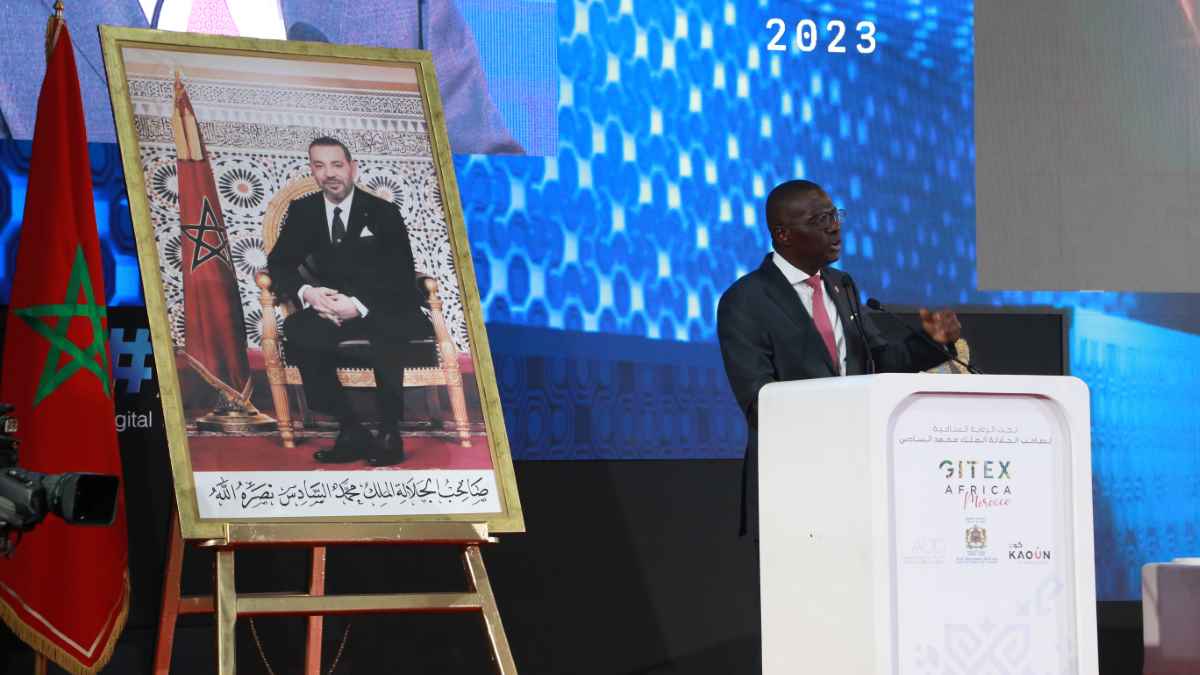
Babajide Sanwo-olu, Executive Governor of the Lagos State in Nigeria, was among the keynote speakers at the GITEX Africa Digital Summit.  The Lagos Governor explained how Africa is on the fast-track to become the next Silicon Valley.

He also stressed the importance of investing in African youth, which makes up over 60 percent of the continent’s population, while noting that, according to studies, around 30 percent of investment in Africa is dedicated to the digital economy.

Mr. Sanwo-olu said Lagos is already home to some of Africa’s largest data centres, while the state’s Start-Up Act 2022 and Knowledge, Innovation, Technology, and Entrepreneurship (KITE) Project in the Yaba suburb are propelling Lagos, and Nigeria into a hub of global innovation. 

“The Yaba Start-Up policy will elevate Lagos as a city ready to become a global player,” said Mr. Sanwo-olu. “In a few years, not only will Africa be supplying the bulk of professionals required (in the global IT industry) but it will also be creating a lot of jobs.

“In ten years, Africa will become the place where major global companies such as Microsoft and Meta, will come to recruit intelligent profiles trained in the technical fields in which Africa abounds.”

In its debut edition, GITEX Africa features 900 exhibiting companies and start-ups eager to gain access to meaningful and valuable connections for business development while learning about the vast opportunities in the world’s rising digital economy. 

TalentQL is one of 60-plus Nigerian start-ups this week looking to scale-up its operations and collaborate with fellow innovators and investors. Founded in 2021, TalentQL helps companies build top-tier teams by hiring, developing and managing tech talent remotely.

“The focus for us is to bridge the divide between demand and supply for tech talent in Africa,” said Godwin Nwalozie, Head of Operations at TalentQL, which has operations in Nigeria, the UK, Rwanda, and the USA.

“We help companies hire engineering talent via our diverse and robust pool of data scientists, developers, software, cloud, and cybersecurity professionals, and technical support.  We shorten the process that companies go through to hire talent, and even ensure a cultural fit of candidates so clients have the best possible talent to grow their organisations and scale their products.”

In a few years, not only will Africa be supplying the bulk of professionals required (in the global IT industry) but it will also be creating a lot of jobs

Nwalozie said demand for African talent is now higher than ever: “The supply and the demand are higher now for African talent, and we help these companies access those talents,” he added.  “We’re participating at GITEX Africa to learn from other innovators and to celebrate collaboration to make things better for Africa.”

Promoting financial inclusion through flourishing fintech

Africa’s flourishing fintech sector meanwhile is estimated to reach revenues of US$65 billion by 2030, growing at the world’s fastest rate at 13 times over the next seven years. 

This presents a unique opportunity for the continent to leapfrog outdated stages of technological development and move straight to more advanced solutions that are being debated and scrutinised at GITEX Africa’s Fintech Summit, one of ten dedicated conference tracks at Africa’s most comprehensive leadership conference programme.  

Aalya Ghouli, CEO of DIGIFI and DIGISERV at BNP Paribas, a speaker at the Fintech Summit, said: “GITEX Africa is a unique opportunity to bring together the African ecosystem around a common goal: to accelerate digitalisation in Africa and position the continent as a key global player in the development of technological innovation.

“The number of participants and their backgrounds prove the current effervescence of the continent and its willingness of its states to position digital at the heart of their development strategy.  GITEX Africa plays a major role to support this dynamic.  BNP Paribas has been promoting for years now the financial inclusion and the digitalisation of financial services in Morocco and other African territories. It is natural to support such as a forum and initiative.”

Khalid Elgibaly, President of the Middle East and North Africa Division at Mastercard, will also speak on a fireside chat on GITEX Africa’s Fintech Summit about Fintech as a building block of Africa’s digital future: “Fintechs, with their disruptive and inclusive nature, have emerged as powerful enablers of financial services for previously underserved populations, overcoming traditional barriers such as limited access to banking infrastructure.

“By promoting collaboration and knowledge sharing among stakeholders, GITEX Africa unlocks new opportunities and drives the digital transformation necessary to address the continent’s unique challenges while unlocking its vast potential.”

Supernova Challenge battlers take centre-stage for start-up supremacy

Today will also see some of world’s most innovative start-ups take their next steps into potentially becoming the next African-borne Unicorn.

The GITEX Africa Supernova Challenge, Africa’s most valuable start-up pitch competition with US$100,000 in cash prizes, has pooled a shortlist of 70 disruptive start-ups from 31 countries to battle it out for supremacy across two days of live pitches in front of a 13-strong judging panel of global VCs, angel investors, and accelerators.

The shortlist of Africa’s most coveted start-up pitch competition was selected from more than 300 applications, representing nations from across the globe, including Cameroon, Cyprus, Egypt, France, Gambia, Ghana, India, Israel, Kenya, Korea, Kuwait, Morocco, Nigeria, Pakistan, South Africa, Switzerland, Tunisia, Uganda, UK, USA, and Zambia.

GITEX Africa is held under the High Patronage of His Majesty King Mohammed VI, and hosted by the Digital Development Agency (ADD), under the authority of the Moroccan Ministry of Digital Transition and Administration Reform.

The hyper connector is organised by KAOUN International, the overseas events organising company of Dubai World Trade Centre, which organises GITEX Global in Dubai, UAE, the world’s largest tech and start-up show, rated by tech executives as the world’s best global tech event.

More information is available at www.GITEXAfrica.com.

Distributed by APO Group on behalf of GITEX Africa.

Energy

SBM Offshore Confirmed as Silver Sponsor for African Energy Week (AEW) 2026 Amid Africa FPSO Expansion Push

Published

on

African Energy Chamber

SBM Offshore will participate as Silver Sponsor at African Energy Week 2026, where they are set to showcase FPSO expansion in Angola, Namibia and Guyana amid strong financials and a deepwater innovation strategy

CAPE TOWN, South Africa, June 9, 2026/APO Group/ –Multinational oil and gas services company SBM Offshore will participate at this year’s African Energy Week (AEW) 2026 Conference and Exhibition as a Silver Sponsor, reinforcing the company’s long-term commitment to Africa’s expanding deepwater oil and gas industry. Their participation comes as SBM Offshore accelerates brownfield optimization projects in Angola while aggressively positioning itself for new frontier developments in Namibia’s Orange Basin.


SBM Offshore’s return to AEW, which takes place from October 12–16 in Cape Town, is expected to draw significant industry attention as operators, financiers and EPC contractors evaluate the next wave of floating production infrastructure across the Atlantic Basin. With more than 20 years of experience in Africa and over $31 billion in contract backlog globally, the company remains one of the world’s most influential FPSO suppliers.

The Sponsorship follows several major milestones announced during 2025 and 2026. On May 26, the American Bureau of Shipping approved SBM Offshore’s seawater intake riser technology developed alongside Shell. The system pumps cold seawater from depths of 700m to FPSO topsides, reducing onboard cooling energy demand and improving emissions performance for future African and South American projects.

The company’s financial position strengthened considerably following the $2.32 billion sale of FPSO One Guyana to ExxonMobil in February 2026. The transaction helped drive a 216% year-on-year increase in Q1 2026 directional revenue to $3.5 billion while reducing SBM Offshore’s net debt from $5.7 billion to $3.2 billion by March 21, 2026.

SBM Offshore continues to demonstrate the technical expertise, operational scale and long-term investment approach needed to advance Africa’s next generation of energy projects

In March 2026, ExxonMobil awarded SBM Offshore front-end engineering and design contracts for the Longtail development in Guyana. The proposed FPSO is expected to feature the world’s highest gas-handling capacity ever deployed on a floating production vessel, processing 1.2 billion cubic feet of gas and 250,000 barrels of condensate daily.

Across Africa, SBM Offshore continues expanding its offshore footprint. In Angola, the company signed multi-year extensions in December 2025 with Esso Exploration Angola for FPSO Mondo and FPSO Saxi Batuque in Block 15, extending operations through 2032. Brownfield upgrades and life-extension works commenced in early 2026 to support declining reservoir pressure management and maintain environmental compliance standards.

The company also finalized a share purchase agreement with Equatorial Guinea’s national oil company GEPetrol in December 2025, restructuring regional asset ownership and supporting localized operational transitions. The FPSO Aseng formally exited SBM Offshore’s lease-and-operate fleet during the same period as management responsibilities shifted toward Equatoguinean entities.

Namibia retains a central focus of SBM Offshore’s African growth strategy. The company is actively competing for TotalEnergies’ Venus FPSO contract in the Orange Basin, one of Africa’s largest recent offshore discoveries with estimated resources of roughly 2 billion barrels. SBM Offshore has expanded its Cape Town commercial engineering workforce while positioning its standardized technologies for upcoming South Atlantic developments.

“SBM Offshore’s participation at this year’s event reflects the growing momentum behind Africa’s deepwater industry and the critical role FPSO technology will play in unlocking new production. From Angola’s mature offshore hubs to Namibia’s frontier discoveries, SBM Offshore continues to demonstrate the technical expertise, operational scale and long-term investment approach needed to advance Africa’s next generation of energy projects,” says NJ Ayuk, Executive Chairman, African Energy Chamber.

Looking ahead, SBM Offshore aims to combine frontier expansion with lower-emission offshore production systems. Through partnerships with SLB and Cognite, the company is integrating industrial AI platforms to its global fleet while scaling standardized hull construction to accelerate project delivery timelines across Africa and Latin America.

Distributed by APO Group on behalf of African Energy Chamber.

Continue Reading

Business

Minister Kgosientsho Ramokgopa Joins African Energy Week (AEW) 2026 as South Africa Opens R400B Grid Expansion to Private Investment

Published

on

Kgosientsho Ramokgopa

South Africa has moved from rolling blackouts to a year of stable supply, and Minister Kgosientsho Ramokgopa now turns to the grid expansion and market reforms needed to keep the lights on and draw private capital

CAPE TOWN, South Africa, June 9, 2026/APO Group/ –Kgosientsho Ramokgopa, Minister of Electricity and Energy of the Republic of South Africa, has been confirmed as a featured speaker at African Energy Week (AEW) 2026, where he is expected to outline the next phase of the country’s power-sector recovery and the investment drive needed to expand the electricity grid.


Taking place October 12-16, AEW 2026 represents the largest energy gathering on the African continent, offering a strategic platform for dealmaking and partnerships. Minister Ramokgopa’s participation reflects the country’s ambitions to strengthen investment flows across the power and energy markets, supporting long-term generation resilience and improved transmission networks.

South Africa has moved from one of the worst phases of its electricity crisis to its most stable supply in years. The country recently passed a full year without load-shedding, and the grid is at its strongest in half a decade, with roughly 4,400 MW more generation on hand than a year earlier. The return of Kusile Power Station to its full output of about 4,800 MW helped anchor the turnaround.

South Africa’s recovery shows what disciplined execution can achieve, and opening the grid to private capital is the logical next step

With supply stabilized, Ramokgopa has reframed the current market challenge as being less about generation and more to do with transmission, offtakers and bottlenecks, pointing to more than 130 GW of generation projects that have yet to secure firm offtake agreements. That bottleneck sits at the center of the country’s largest infrastructure push. The Transmission Development Plan calls for 14,000 km of new power lines and 105 substations by 2030, at a cost of roughly R400 billion, to unlock an additional 22.5 GW of capacity.

Because neither Eskom nor the state can fund that build alone, the government has opened transmission to private investment for the first time through the Independent Transmission Projects (ITP) program. In December 2025, Ramokgopa named seven prequalified bidders for the first phase, all of them international-led consortia. The phase covers 1,164 km of high-voltage lines across seven corridors, with a combined value of about $1 billion. A request for proposals is expected in the second half of 2026.

“South Africa’s recovery shows what disciplined execution can achieve, and opening the grid to private capital is the logical next step,” says NJ Ayuk, Executive Chairman of the African Energy Chamber. “The real opportunity now is in transmission, and the investors who help build that network will open up generation that will change South Africa’s future for the better.”

Private appetite is already evident on the generation side. The latest round of the Renewable Energy Independent Power Producer Procurement Program drew 10.2 GW of bids against the 5 GW on offer. In the 2025/26 financial year, eight new independent power projects came online with a combined 800 MW, and another 1,610 MW is under construction.

Minister Ramokgopa is also expected to address the Integrated Resource Plan 2025, the government’s blueprint guiding new generation capacity, and the rollout of a competitive wholesale electricity market intended to open the sector beyond Eskom.

As AEW 2026 prepares to convene policymakers, investors and operators at the Cape Town International Convention Center this October, Minister Ramokgopa’s participation is the host nation’s signal that its power sector is open for investment.

Distributed by APO Group on behalf of African Energy Chamber.

Continue Reading

Energy

Carbon Markets Africa Summit (CMAS) 2026 programme launched as Africa’s carbon markets move from readiness to delivery

Published

on

CMAS

Positioned as a pan-African marketplace, CMAS connects policy, project pipelines, capital and buyers in a structured environment focused on enabling real deal flow

CAPE TOWN, South Africa, June 9, 2026/APO Group/ –Africa is emerging as an exciting destination to develop carbon market projects with improved policy certainty and more and more projects becoming investment-ready. As global carbon markets transition from rule-setting to real transactions, with Article 6 mechanisms moving into implementation and compliance-driven demand such as CORSIA accelerating, attention is shifting towards where credible supply, policy certainty and investment-ready projects can be delivered at scale.


Against this backdrop, the Carbon Markets Africa Summit (CMAS) that is organised by VUKA Group has released its official 2026 programme, outlining how Africa’s carbon markets can move beyond frameworks into execution, investment and transactions. The summit will take place from 13–15 October 2026 in Kigali, Rwanda, hosted by the Ministry of Environment of Rwanda, with UNDP and the African Development Bank (AfDB) as host organisations, the Development Bank of Southern Africa (DBSA) as host partner, and AUDA-NEPAD as the strategic institutional partner.

Positioned as a pan-African marketplace, CMAS connects policy, project pipelines, capital and buyers in a structured environment focused on enabling real deal flow.

This year’s programme reflects a changing market dynamic, one where integrity, quality and transaction readiness are becoming decisive.

Carbon markets are entering a more selective and operational phase. The question is no longer whether Africa has a role to play, but whether the continent can bring forward credible projects, enabling frameworks and market infrastructure to transact at scale,” said Emmanuelle Nicholls, Project Lead. “CMAS 2026 is designed as a response to that moment – connecting the actors, pipelines and capital needed to move from ambition to execution.”

Africa’s carbon markets must be built on integrity, equity, and continental coordination so that carbon finance delivers real value

Within this evolving context, the summit places strong emphasis on the foundations required to scale markets responsibly. As Estherine Fotabong, Director at AUDA-NEPAD, notes, “Africa’s carbon markets must be built on integrity, equity, and continental coordination so that carbon finance delivers real value for communities, ecosystems, and sustainable development across the continent.”

A programme built for execution

The CMAS 2026 programme spans the full carbon market value chain from policy and Article 6 implementation to project development, finance and transactions. Key highlights include the keynote opening session on delivering projects, capital and transactions at scale, a high-level dialogue on trust and market readiness, ministerial and technical roundtables, and sessions focused on buyer demand, investor priorities and deal structuring.


A central feature is a curated pipeline of African carbon projects across nature-based solutions, regenerative agriculture, carbon removals, waste-to-value and blue carbon, presented through project showcases, case studies and investment-ready deal rooms.

The programme also includes solution labs and technical workshops addressing critical bottlenecks—including Article 6 and CORSIA implementation, early-stage finance, MRV systems and project bankability, alongside live demonstrations of digital carbon infrastructure, ensuring focus on practical market development and delivery.

CMAS 2026 is hosted in Rwanda, a country advancing carbon market frameworks under Article 6, and takes place at a pivotal moment as global markets increasingly prioritise integrity, quality and real delivery at scale.

Distributed by APO Group on behalf of VUKA Group.

Continue Reading

Trending