CAIRO, Egypt, October 19, 2026/APO Group/ –African Export-Import Bank (Afreximbank) (
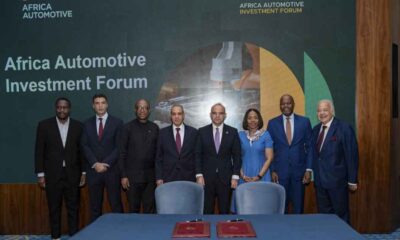
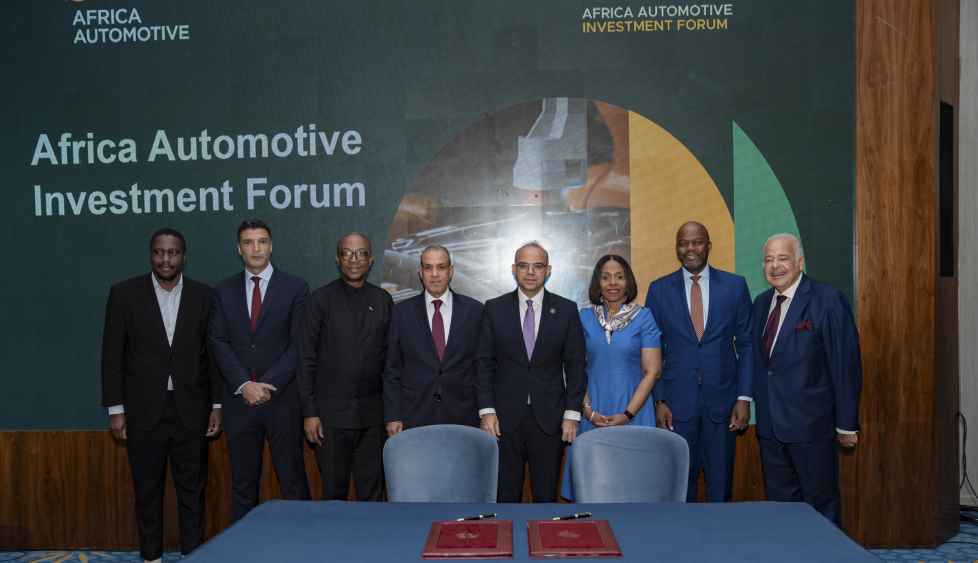
www.Afreximbank.com), in partnership with the African Association of Automotive Manufacturers (AAAM), the African Continental Free Trade Area (AfCFTA) Secretariat, the Ministry of Trade and Investment of Egypt, and the Department of Trade and Industry of South Africa, hosted the Africa Automotive Investment Forum on the sidelines of the Alamein Africa Forum held in El Alamein, Egypt recently.
The two-day Forum brought together high-level African automotive industry policymakers, private sector original equipment manufacturers (OEMs) and Africa-based component manufacturers.
The Forum sought to sensitise policymakers on the policy changes and reforms needed to develop the automotive sector, enable investors to engage directly with both policymakers and manufacturers, and facilitate potential joint ventures and supply agreements or engagements leading to future deals.
Afreximbank noted that the Forum prioritised joint ventures and technology transfer agreements between global auto giants and African enterprises with the expectation of creating highly skilled engineering, manufacturing and technical jobs for Africa’s growing youth demographic while significantly boosting local small and medium enterprises within the secondary supply tier.
It described the automotive sector as a strategic priority because it serves as a powerful catalyst for Africa’s industrialisation, intra-African trade and economic resilience, noting that several African countries were already making important strides in the development of a manufacturing sector that had attracted increasing investment into the emerging auto industry, including new energy vehicles.
Highlighting the significance of the Forum for Afreximbank, Mrs. Kanayo Awani, Executive Vice President, Intra-African Trade and Export Development, said:
“The automotive sector is a critical pillar for advancing Africa’s industrialisation and achieving the structural transformation championed by Afreximbank. By driving regional value chain integration, the automotive industry directly aligns with our mandate to foster intra-African trade under the AfCFTA framework. Supporting this sector allows Afreximbank to catalyse high-impact investments, stimulate manufacturing capabilities, create skilled employment, and significantly reduce the continent’s heavy reliance on vehicle imports. Investing in the African automotive ecosystem is not merely a financing opportunity, but a strategic imperative that accelerates economic diversification and establishes Africa as a competitive player in the global industrial economy.”
Mrs. Awani said that significant investment opportunities existed in Africa’s automotive manufacturing sector, including component manufacturing, leveraging the continent’s growing skills base and raw materials such as lithium, cobalt, manganese, nickel, copper, iron and steel. She added that Afreximbank was championing the development of a pan-African automotive manufacturing sector comprising an interrelated component and vehicle manufacturing ecosystem, supported by intra-African supply chains and trade.
The automotive sector is a critical pillar for advancing Africa’s industrialisation and achieving the structural transformation championed by Afreximbank
Mrs. Awani noted that Afreximbank had committed US$1 billion towards financing Africa’s automotive sector as part of its strategy to promote manufacturing, trade and industrial development across Africa.
The Forum witnessed the signing of a joint venture agreement between Malben Engineering from South Africa and Egypt-based industrial conglomerate El Araby Group to establish a joint platform for manufacturing components serving Egyptian, South African and broader African markets. The undertaking combines El Araby Group’s industrial, engineering, and technological capabilities with Malben Engineering’s experience spanning over 50 years in manufacturing and forming metal automotive components. The joint venture illustrates the type of commercial partnership that will spur development of intra-African automotive supply chains and trade.
Mr. Tarek Mosaad, President of the African Association of Automotive Manufacturers (AAAM) said: “with the AfCFTA Rules of Origin now agreed, the foundation for a more integrated automotive industry is in place. Our focus must shift to turning ambition into action by creating factories, strengthening supplier ecosystems, generating jobs, and increasing intra-African trade.” He noted that “AAAM remains focused on three key priorities:
- Growing local content through regional value chains
- Making it easier to move automotive products across borders
- Ensuring Africa plays a meaningful role in shaping the future of mobility|
In his call to action, he cautioned that “investors are not looking at 54 separate African markets. They are looking at one integrated opportunity.”
H.E. Wamkele Mene, Secretary-General of the AfCFTA Secretariat, echoed the sentiments expressed by Afreximbank and AAAM and outlined three priorities for advancing the Strategy for the African Automotive Sector under the AfCFTA framework, namely: “developing investment-ready projects and competitive production locations; strengthening regional supplier networks and deepening localisation; and establishing commercially viable regional production.”
In a further step towards advancing these priorities, the AfCFTA Secretariat and the African Association of Automotive Manufacturers (AAAM) signed a Memorandum of Understanding (MoU) to strengthen cooperation in developing Africa’s automotive industry.
The MoU provides a framework for cooperation in implementing the Strategy for the African Automotive Sector under the AfCFTA, covering automotive Rules of Origin, customs procedures and trade facilitation, automotive policy and standards, capacity building, regional supplier and value-chain development, mineral beneficiation, investment mobilisation and emerging automotive technologies.
The partnership will also support ongoing efforts by the AfCFTA Secretariat and Afreximbank to advance the AfCFTA Automotive Investment Plan, with a focus on mobilising investment and strengthening competitive regional automotive production networks.
The Forum also witnessed the establishment of a joint Egypt-South Africa Business Council designed to develop bilateral trade and investment projects across various priority sectors that include automotive, mining and mineral resources, renewable energy, agriculture and food production, pharmaceuticals, transport and logistics infrastructure – leveraging the Suez Canal and national ports in both countries to facilitate increased trade between northern and southern Africa.
For a more practical experience, delegates moved from policy discussion to industry exposure through curated site visits to OEMs Nissan Motor Corporation, General Motors Egypt, Al Mansour Automotive and components manufacturer Mobica in 6th of October City. The visits offered a first-hand view of Egypt’s automotive industrial base, showcasing the progression from vehicle assembly and localisation to supplier development, manufacturing capabilities and regional market reach, while illustrating the tangible opportunities for investment, technology transfer and cross-border value-chain integration that can help position Africa as a competitive automotive manufacturing hub.
With African vehicle demand expected to reach 5 million by 2035 as well as rising interest in new energy vehicles globally, industry stakeholders and policymakers are seeing opportunities to drive domestic industrialisation through the automotive sector and renewables, leveraging African raw materials. Forum participants emphasised that the policy incentives must be right and that the provision of affordable financing will help drive demand and capital investments.












 Energy5 days ago
 Business5 days ago
 Business5 days ago
 Business5 days ago
 Events4 days ago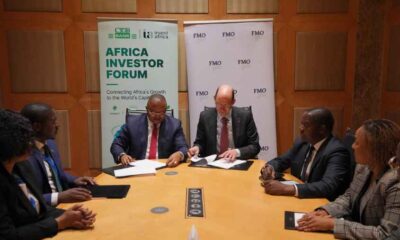
 Business4 days ago
 Business5 days ago
 Business5 days ago