Connect with us
Anglostratits

Business

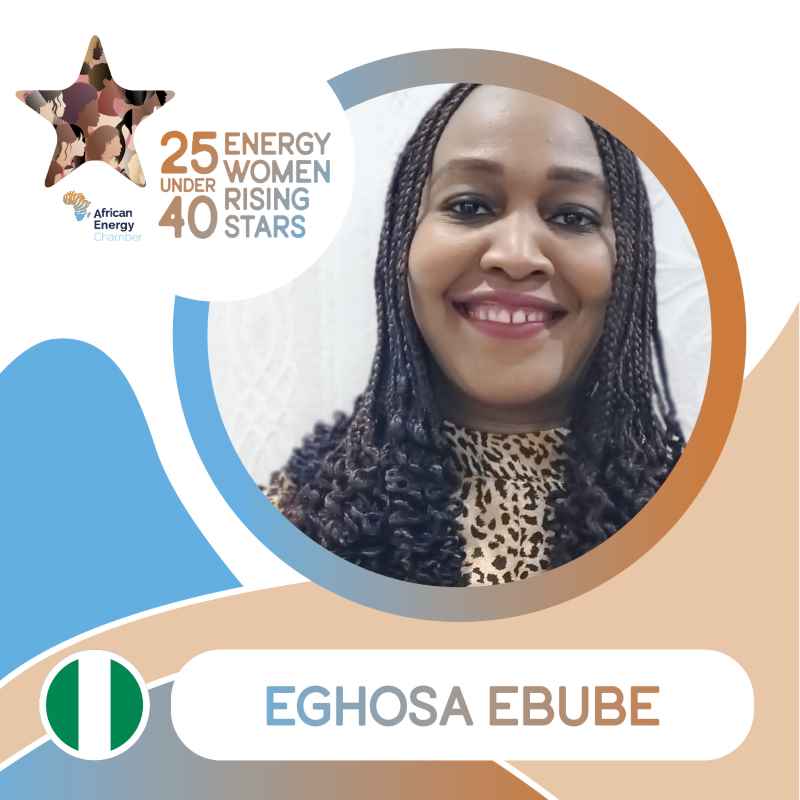
Accessible Energy Remains Vital for Advancing Human Progress, Says Eghosa Ebube

Published

on

African Energy Chamber

Eghosa Ebube is the Portfolio Analyst at Chevron Nigeria

JOHANNESBURG, South Africa, August 24, 2023/APO Group/ — 

Innovative solutions and technologies are required for Africa to meet dual goals of facilitating continent-wide energy security while transitioning to a cleaner energy future. Individuals such as Eghosa Ebube, Portfolio Analyst at Chevron Nigeria, are spearheading efforts to meet these goals, serving as a role model for aspiring women in the field of engineering. Ebube is featured on the African Energy Chamber’s (http://www.EnergyChamber.org) list of 25 Under 40 Energy Women Rising Stars.

Please share a brief overview of your journey in the energy industry that led to your current role? What are some key achievements or milestones that you are particularly proud of?

I joined the energy industry through Chevron Nigeria in 2012, working briefly as a Project Engineer on a Major Capital project before moving to an Onshore Construction Engineer role in 2014, supporting construction planning activities in Deepwater operations. My technical interests led me to take an Electrical & Instrumentation Project Engineer position in 2016 where I ended up completing a couple of Small Capital projects that projected me for my first influencer role in 2018. My new role as the departmental Organizational Capability coordinator required me to work closely with leadership in shaping and deploying competency and training plans, strengthening engineering practice locally and promoting human capacity development across several platforms. I combined the role with a nomination in 2019 to lead the organization’s Agile transformation initiative as a BU Iterative coach. The experience of working in uncharted territory, developing, and implementing change management strategies emboldened me to apply for a Portfolio Analyst position in 2021 which I hold till date. In my current job, I analyze business performance metrics and have significant interaction with Senior Executives as I develop my professional, business, and financial skills. Some key achievements over the span of my career include:

  • Establishing a hub in the organization to promote adoption of agile practices in the industry.
  • Coaching the first fully Iterative team in the organization, using agile frameworks, to build and deploy in 18 months, a fit-for-purpose factory process which has been adopted to drive efficiencies, cost savings and schedule predictability in well maturation processes.
  • Completing multiple successful pilots to demonstrate the business case for Agile methodologies and “Minimum Functional Objectives” approach (a bottom-up, incremental, value driven approach) in Project framing and alternatives assessments.
  • Revitalizing engineering practice by catalyzing technical employee networks, initiating novel guided experience programs, promoting participation in the Nigerian Society of Engineers community, and mentoring the younger generation through enriched, structured Internship and human capacity development programs.

The energy industry is known for its complexities. What were some significant challenges you faced along the way, and how did you navigate through them to achieve your goals?

Accessible and affordable energy remains vital to continue to accelerate and advance human progress
Navigating a vast, cross-functional industry: There are so many facets to the industry especially in integrated energy companies which requires teaming across functions and disciplines to achieve a common goal; you must make it your business to know a little bit of everything to team effectively. I had to acquire knowledge beyond my subject matter expertise by accessing training resources and technical mentors accessible to me and step out of my comfort zone, I continued to push beyond mentally imposed limits and maintained faith in my abilities to surmount any new challenges.

Innovating in high-risk, legacy infrastructure environments: Working in a high-risk industry which has operated for decades can slow down creativity and the pace of adopting innovation. To overcome these barriers, I strived to understand the cultural barriers to change, stayed curious and alert for trial opportunities to advance innovation, remained optimistic while relying on my personal conviction to recruit others to my cause, and influenced outcomes through servant-leadership and advocacy.

Managing complex stakeholder relationships: The expression “it takes a village” comes to mind; there are complex interdependencies that comes with the terrain due to the massive scale of energy development projects. This makes it an engagement and collaboration intensive industry requiring painstaking management for successful outcomes. Building my collaborative and engagement skills, understanding the different behaviors, interest, and drivers for both internal and external stakeholders’ and, building strong relationships based on trust, partnership and integrity have helped me with managing such complexities.

What advice would you give to young females aspiring to excel in the energy sector? Are there any specific strategies or mindsets that helped you overcome obstacles and reach your current position?

My advice will be to see your career as a marathon, know that it is shaped by little decisions you make each day, even before any job offers. Be intentional about your decisions, cultivate life-long learning and communication skills to accelerate your growth, always remember that your work ethics remains your best advocate. Do not be afraid to forge your unique path, stay true to who you are, but stay flexible on what path to take to achieve your career aspirations; the energy industry has many rewarding paths you can explore to reach your career aspirations as you contribute to shaping the future of energy.

Strategies and approaches which helped me thrive in my career include an agile and growth mindset towards new challenges, exercising mental resilience to bounce back from career disappointments and “playing the long game” as it eventually pays off.

A career in energy can be demanding. Could you describe a typical day in your life?

The pace ebbs and flows depending on the role, staying organized and flexible helps with the changing levels of intensity. A routine day for me as a Portfolio Analysts involves data gathering, analyzing inputs with some number crunching, holding collaboration meetings and teaming to arrive at finished products which inform key performance metrics and business priorities used in reports, industry updates, stakeholder messaging and decision making; schedule coordination is essential as timing is a key aspect of the job hence, self-management is a good skill to have. In addition, understanding the business value chain, what the key drivers are and how they impact the bottom line and what activities lineup with key business objectives are vital for accurately interpreting the trends. There are occasional peak days that stretch beyond work hours, but in all, it is a rewarding experience in terms of unlocking potential, career exposure and personal growth.

Looking ahead, what changes or advancements do you hope to see in the energy sector, and how do you envision your role in shaping that future?

Accessible and affordable energy remains vital to continue to accelerate and advance human progress. I believe the energy industry will play a leading role in the transition to a sustainable energy future. To do this, we need to rapidly reinvent how we deliver on our commitment to continue to meet the world’s growing energy needs through accelerated innovation and technology adoption. The skills and competencies I have, and continue to develop, will enable me lay an enduring foundation of processes, people and projects that are crucial to realizing a sustainable energy future for all.

Distributed by APO Group on behalf of African Energy Chamber
Business

MSGBC Gas Boom Puts Regional Infrastructure and Investment in Focus at African Energy Week (AEW) 2026

Published

on

African Energy Chamber

Sponsored by Technip Energies, the “Invest in the MSGBC Basin” session will examine how the region can translate its major gas resources into reliable domestic power, industrial development and integrated energy infrastructure

CAPE TOWN, South Africa, September 3, 2026/APO Group/ –The MSGBC Basin is moving from a story of world-class discoveries to one of project execution, with Senegal and Mauritania increasingly emerging as gas and LNG hubs for West Africa. At African Energy Week (AEW) 2026, taking place October 12–16 in Cape Town, the session Invest in the MSGBC Basin: Scaling Gas, LNG and Regional Infrastructure Across West Africa, sponsored by Technip Energies, will bring investors, governments and industry leaders together to examine what is needed to turn this resource base into a broader regional energy and industrial opportunity.


The region has already crossed a major threshold. The Greater Tortue Ahmeyim (GTA) project, spanning the maritime border between Mauritania and Senegal, achieved first gas in December 2024 and first LNG in February 2025, with its first LNG cargo exported in April 2025. The project is now providing a foundation for the two countries to develop both export revenues and domestic gas markets.

The MSGBC Basin has moved beyond the discovery phase; the priority now is execution

In Senegal, the Yakaar-Teranga gas project is advancing as a major domestic gas opportunity, with development costs estimated at around $7.5 billion. The project is expected to play a central role in reducing reliance on imported fuels and supporting power generation and industrial consumers. Mauritania, meanwhile, is advancing plans for the BirAllah gas development, adding another potentially significant source of gas supply to the basin’s growing project pipeline.

The infrastructure required to monetize these resources is becoming equally important. Senegal is prioritizing public-private partnerships to accelerate development of a planned 400-km domestic gas pipeline network connecting offshore resources with power plants and industrial users. The infrastructure is intended to help translate offshore gas production into more reliable domestic energy supply and wider economic activity.

The session comes as broader investment interest in African gas continues to grow. Africa is projected to attract substantial midstream gas investment over the coming decade, while LNG developments are increasingly being linked to domestic market obligations and gas-to-power strategies. In the MSGBC region, that dual-track model could allow gas exports to generate revenues while supporting affordable electricity and industrialization at home.

“The MSGBC Basin has moved beyond the discovery phase; the priority now is execution,” said NJ Ayuk, Executive Chairman of the African Energy Chamber. “The region has the resources to become a major gas and LNG hub, but that opportunity will only translate into lasting economic value if investment keeps pace with the infrastructure needed to deliver gas to markets, power industry and support regional integration.”

With major projects advancing across Senegal and Mauritania and exploration continuing elsewhere in the basin, the AEW 2026 session will provide a platform to examine the commercial, infrastructure and policy frameworks needed to unlock the next stage of MSGBC growth. For investors and technology providers, the discussion comes at a pivotal moment as the region moves from resource potential toward large-scale gas monetization and infrastructure development.

Distributed by APO Group on behalf of African Energy Chamber.


Continue Reading

Business

Asia’s premier flower hub sets new benchmarks in trading scale and logistics efficiency
Published

on

Dounan Flower Market

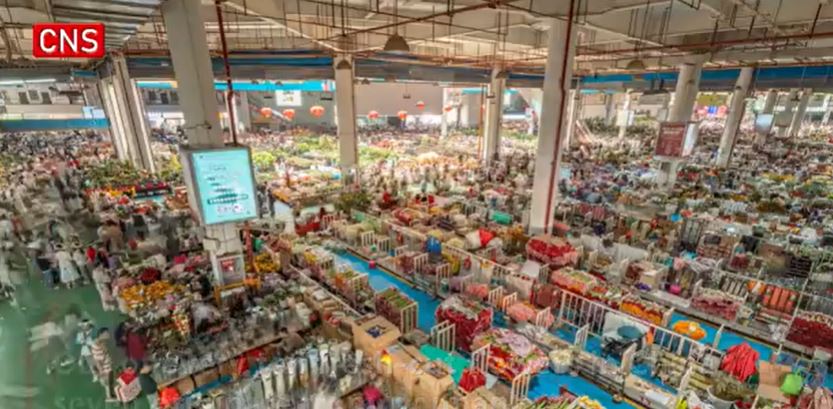
YUNNAN, CHINA – Media OutReach Newswire – 3 September 2026 – The Dounan Flower Market in Kunming, southwest China’s Yunnan Province, is strengthening its position as a leading flower trading hub in Asia, with record annual trading volumes, high-speed auction operations and increasingly efficient international logistics.

The Kunming International Flora Auction Trading Center, a key trading platform within Dounan, begins daily trading at 1:00 p.m. Buyers can complete bids within as little as 0.6 seconds as prices decrease on electronic auction screens, enabling large volumes of fresh-cut flowers to be traded rapidly.

The market experienced a significant increase in trading activity ahead of the Qixi Festival, widely regarded as China’s Valentine’s Day. Tens of millions of flower stems were sold to domestic and international markets during the peak trading period.


According to the Kunming International Flora Auction Trading Center, the average price of major fresh-cut flower categories reached 1.1 to 1.3 yuan per stem during the pre-festival period, approximately 15 percent higher than pre-festival levels. Premium flowers recorded substantially higher prices, with high-quality roses reaching nearly 15 yuan ($2.23) per stem.

In 2025, Dounan recorded a trading volume of 15.476 billion fresh-cut flowers, with total transaction value reaching 13.484 billion yuan (approximately $2 billion).

The market currently hosts 3,300 enterprises and more than 15,000 business entities and individual proprietors. Of Dounan’s approximately 70,000 permanent residents, 46,500 are employed in the flower industry.

Approximately seven out of every 10 fresh-cut flowers sold in China originate from Dounan. Its distribution network now reaches markets across China as well as more than 50 countries and regions worldwide.

High-Speed Auction System

Dounan’s auction system is designed to accommodate the highly time-sensitive nature of fresh-cut flowers.

“Field-grown ‘Purple Glow’ (75 percent maturity), 140 stems; field-grown ‘Beloved’ (80 percent maturity), 120 stems; ‘Beloved’ (75 percent maturity), 120 stems…” said Li Qian, a flower auctioneer at the Kunming International Flora Auction Trading Center.

The trading center uses a descending-price auction model, with prices continuously decreasing on electronic screens. Buyers must respond within approximately 0.6 seconds, allowing transactions to be completed rapidly and supporting the high turnover required by the fresh-cut flower industry.

“Since fresh flowers are perishable goods, we use a descending-price auction format. This helps facilitate rapid circulation,” Li said.

The auction process is integrated with sorting, packaging and transportation operations, reducing the time between trading and shipment.

Logistics Network Expands International Reach

Fresh-cut flowers require particularly efficient logistics because their quality is highly sensitive to transportation and storage time.

Tang Minghong, a client manager with the flower logistics division of SF Express Yunnan, said fresh flowers have among the most demanding logistics requirements in the fresh produce sector.

Trading begins in the afternoon, while pickup, packaging and dispatch can be completed as early as 3:00 a.m., allowing flowers to move quickly from auction facilities into domestic distribution networks.

For international shipments, Dounan has established logistics routes to destinations including Singapore, South Korea and Malaysia. Customers in these markets can receive shipments within two days, according to logistics operators.

Strengthening Yunnan’s Global Flower Trade

The combination of large-scale flower production, centralized trading, high-speed auctions and integrated logistics has enabled Dounan to develop a comprehensive supply and distribution network.

The market connects flower growers in Yunnan with buyers and consumers throughout China and overseas, while supporting the expansion of the province’s fresh-cut flower industry into international markets.

With billions of stems traded annually and distribution covering more than 50 countries and regions, Dounan is emerging as an important regional hub for fresh-cut flower trading and distribution, contributing to the international growth of China’s flower industry.


Continue Reading

Business

Unstoppable Africa 2026 to bring African and global Chief Executive Officers (CEOs) and leaders to New York to drive investment, ownership and growth across the continent
Published

on

The program will focus on how Africa can capture more value from its critical minerals, strengthen infrastructure and trade, mobilise capital at scale and build more integrated and competitive markets

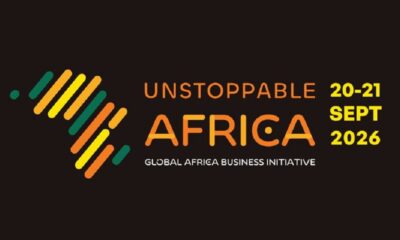
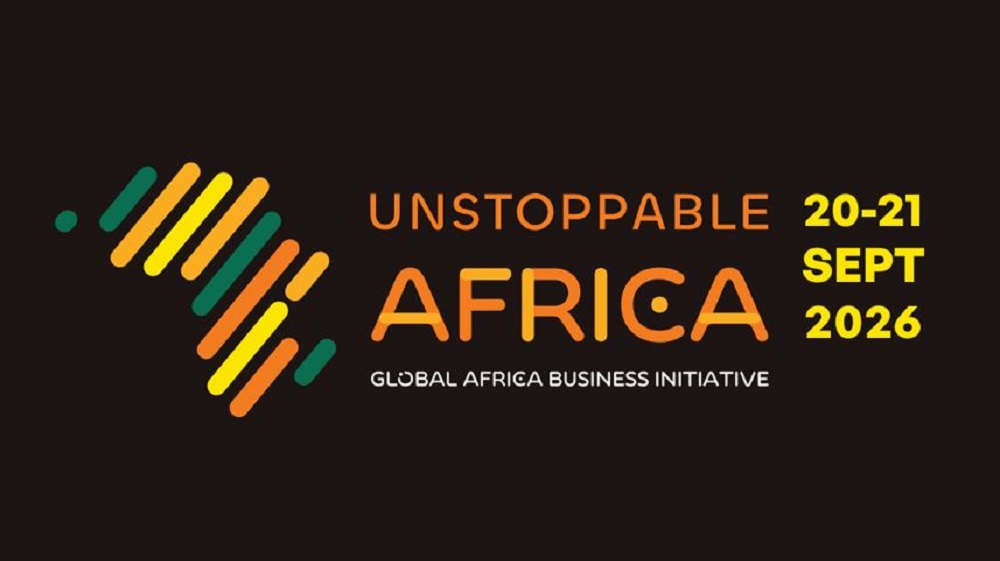
NEW YORK, United States of America, September 2, 2026/APO Group/ –More than 2,000 African and global business leaders plus heads of state will gather in New York on September 20–21 for Unstoppable Africa, flagship event of the Global Africa Business Initiative (GABI) (https://www.GABI.biz/).


Convened by UN Secretary-General António Guterres and H.E. Mahmoud Ali Youssouf, Chairperson of the African Union Commission, and organized and coordinated by the UN Global Compact, the fifth edition of Unstoppable Africa will convene under the theme “Powering Business, Scaling Economies, Shaping the Future”.

Held on the sidelines of the opening of the 81st session of the United Nations General Assembly, Unstoppable Africa will feature leading  investors, policymakers, creatives, sports executives and decision-makers working to accelerate Africa’s business, trade and investment and amplify its role in shaping global markets.

Sanda Ojiambo, Assistant Secretary-General and CEO of the United Nations Global Compact, said: “This year, we are sharpening the focus on mobilising capital, forging partnerships, building businesses and turning Africa’s assets and opportunities into investable, scalable outcomes. The ambition is not simply to shape how the world sees Africa, but to shape where global capital flows, where value is created and how Africa can capture it.”

The ambition is not simply to shape how the world sees Africa, but to shape where global capital flows, where value is created and how Africa can capture it

The high-level convening comes at a time of global supply chains being redrawn by geopolitical tension, energy insecurity and shifting trade rules. For the African continent, these pressures  create an opportunity to leverage its critical minerals, renewable energy potential, expanding consumer markets and young workforce to attract long-term capital and capture more value from global shifts.

Unstoppable Africa 2026 will look at how the continent can turn these shifts into lasting economic opportunity.  The program will focus on how Africa can capture more value from its critical minerals, strengthen infrastructure and trade, mobilise capital at scale and build more integrated and competitive markets. Discussions will also explore Africa’s energy transition, the development and ownership of AI and digital infrastructure, the financing and global distribution of African creative industries, and how sport can become a stronger engine for investment, talent development and economic growth.

Other confirmed speakers include:

  • H.E. Julius Maada Bio, President, Republic of Sierra Leone
  • H.E. Duma Gideon Boko, President, Republic of Botswana
  • H.E. Paula Ingabire, Minister of ICT and Innovation, Rwanda
  • Samaila Zubairu, President and CEO, African Finance Corporation
  • Nolitha Fakude, Chairperson, Anglo American South Africa
  • Tidjane Thiam, General Partner, Allied Critical Minerals Fund
  • Phuthi Mahanyele-Dabengwa, CEO and Executive Director, Naspers
  • Olugbenga Agboola, CEO, Flutterwave
  • Cameron Bailey, CEO, Toronto International Film Festival
  • Wanuri Kahiu, filmmaker
  • Akunna Cook, Founder and CEO, Next Narrative Africa Fund
  • Luol Deng, former NBA All-Star and President, South Sudan Basketball Federation
  • Clare Akamanzi, CEO, NBA Africa
  • Amina J. Mohammed, Deputy Secretary-General, United Nations
  • Massad Boulos, Senior Advisor to the President of the United States on Arab and African Affairs
  • Damilola Ogunbiyi, CEO and Special Representative of the UN Secretary-General for Sustainable Energy for All

The five themes of GABI and Unstoppable Africa, namely Energy, Digital Transformation, Trade, Creative Industries, and Sport, will be supported by high-level plenaries, CEO and investor roundtables, ministerial dialogues, startup showcases, and GABI Solutions Labs. The 2026 edition will create opportunities to spark transactions, develop investment vehicles, and form cross-border alliances and partnerships. Full implementation of the African Continental Free Trade Area could create a $3.4 trillion market, according to UNCTAD’s 2024 Economic Development in Africa Report, highlighting the scale of the opportunity as regional integration deepens.

Once again, the event will be hosted by Folly Bah Thibault, Senior News Anchor at Al Jazeera Media Network, and Larry Madowo, International Correspondent at CNN, and will spotlight more than 500 nominees in the Unstoppable Africans campaign.

Media partners to date include African Business/New African; African Renewal; Afrique Media; AllAfrica; Arise News; Business Digest Magazine; Citizen TV; EIB Network; Envoy Magazine; The Kenyan Wall Street; News Central TV; SDG News; The Africa Report; The Nation Media Group; TIME Africa.

Unstoppable Africa 2026 will take place at the New York Marriott Marquis, Times Square, 1535 Broadway, New York City. Accredited media and other eligible communication professionals can register at https://apo-opa.co/4xvM3xh.

Distributed by APO Group on behalf of Global Africa Business Initiative.


Continue Reading

Trending