While women’s participation in leadership roles globally has been minimal for centuries, a new wave of female leaders promise change, inclusion and overall equality
The election of Her Excellency Francia Márquez as Colombia’s first Black Vice President is a testament to the increasing role women play in leadership positions globally, and both the international and African community should support her as she tackles her new role with drive, innovation and a people-centric approach.
While women’s participation in leadership roles globally has been minimal for centuries, a new wave of female leaders promise change, inclusion and overall equality. In June 2022, Colombia elected its first Black Female Vice President, H.E. Francia Márquez, an environmental activist who has emerged as a powerful spokesperson for black Colombians and various marginalized communities. With H.E. Márquez’ election, a new era of equality and inclusion awaits the country, and the African continent and diaspora as well as the international community needs to rally their support, both of her and other female leaders around the world. (https://nbcnews.to/3Ag0avE)
Driving Equality
For her part, H.E. Márquez has and continues to be a representative of the people of Colombia and her election is considered a historic step towards strengthening equality both in Colombia and globally. As Andes bureau chief for The New York Times (https://nyti.ms/3zKKFu8) Julie Turkewitz stated in an article “the rise of Ms Márquez is significant not only because she is black in a nation where Afro-Colombians are regularly subject to racism and must contend with structural barriers, but because she comes from poverty in a country where economic class so often defines a person’s place in society.” A strong advocate for tackling social disparities, environmental challenges and ineffective policies, H.E. Márquez is an example of what female leaders are capable of, representing an important figurehead both in Colombia and worldwide. Just as H.E. Márquez has done, a number of female leaders around the world are taking up their rightful place at the leadership table.
H.E. Márquez represents someone who has seized opportunities and fought for her role in society
The Rise in African Female Leaders
Africa itself is a global leader in women’s public leadership, with five African countries in the top 20 nations for women’s parliamentary representation, four of which have 45% women representation in cabinets. Like H.E. Márquez will in the coming years, these women have been trailblazers, leading their respective countries through economic, social and health crises, driving socioeconomic growth and development and pioneering initiatives to improve the participation of women economically. Notable examples (https://bit.ly/3dsvr5B) include H.E. Ellen Johnson Sirleaf, Former President of the Republic of Liberia and Founder of the Ellen Johnson Sirleaf Presidential Center for Women and Development; H.E. Sahle-Work Zewde, the fifth President and first woman President of the Federal Democratic Republic of Ethiopia; Aja Fatoumata Jallow-Tambajang, Former Vice President of The Gambia; Saara Kuugongelwa-Amadhila, Prime Minister of Namibia; and H.E. Joyce Banda, Former President of Malawi, among many others.
https://bit.ly/3CjansL
Despite the continent’s progress towards equality in leadership, disparity continues to exist in a number of economic sectors. The energy industry, for example, a sector recognized as the backbone of every economy, shows women accounting for merely 22% of oil and gas employees, with 17% represented in senior and executive roles and only 1% in CEO positions. Therefore, despite progress made, a lot more needs to be done to support women in leadership.
Rallying Global Support
As H.E. Márquez takes on her new position it has become even more prevalent for the African and global community to support her, as well as other women taking on leadership positions. For the African diaspora, H.E. Márquez represents someone who has seized opportunities and fought for her role in society, while for the global African community, she represents the future of leadership. As such, in a world where women have had to and continue to fight for their rightful place at the leadership table, leaders such as H.E. Márquez serve as instrumental figures. However, such support must transcend Colombia’s borders, as women increase their presence in leadership on a global basis.
As the leading investment platform for the African energy sector, Energy Capital & Power (ECP) www.EnergyCapitalPower.com centers each and every one of its large-scale events around rallying support for women in energy and leadership. Dedicated women in energy seminars, networking events and forums emphasize the critical role women continue to play in improving energy access, driving innovative solutions and positioning the African continent as a globally leading energy market. Women led and founded, ECP is focused on helping increase the participation and leadership of women in African energy, thereby rallying the support current and emerging female stakeholders need to thrive.
Despite being Africa-focused, ECP is committed to driving investment in energy on a global basis, and South America is not exempt in this regard. Over the years, South American companies, including Latin American oil and gas company Pluspetrol, have participated in ECP events, driving dialogue and strengthening Africa-global energy relations. In 2022, ECP is eager to improve relations further, inviting South American stakeholders to participate in the company’s 2022 event lineup, https://bit.ly/3SMJXVL and help drive the discussion on women in energy and strengthening female leadership. For both Africa’s and the global economy to thrive, women need to be at the forefront of decision-making, and while H.E. Márquez is not the first female in political leadership worldwide, she most certainly will not be the last.
Distributed by APO Group on behalf of Energy Capital & Power.
New facility expands in-country drilling and completion fluids capability, advancing the next phase of SLB’s growth in Mozambique
PEMBA, Mozambique, October 9, 2026/APO Group/ –SLB (NYSE: SLB) (www.SLB.com) announced the opening of a new fluids systems plant in Pemba, Mozambique. The new facility strengthens in-country capacity to prepare, store and deliver drilling and completion fluids for offshore operations, reinforcing the infrastructure needed as Mozambique’s offshore activity grows and its role as a strategic energy hub for East Africa continues to expand.
The commissioning of the plant, also known as a liquid mud plant, coincides with SLB marking 70 years of operations in Mozambique. It reflects the company’s long-term commitment to investing in people, infrastructure and capability that support the country’s long-term offshore energy development plans.
With an initial storage capacity of 21,000 barrels, the liquid mud plant provides a scalable platform for future growth, supporting multiple customers and rising offshore activity while improving logistics and enhancing operational flexibility.
As SLB marks 70 years in Mozambique, this investment reflects our confidence in the country’s future and our commitment to supporting its energy ambitions
“As SLB marks 70 years in Mozambique, this investment reflects our confidence in the country’s future and our commitment to supporting its energy ambitions,” said Miguel Baptista, Central, East and Southern Africa, Managing Director, SLB. The new liquid mud plant strengthens local energy infrastructure, expands opportunities for local content development, and enhances our ability to support customers as they deliver some of Africa’s most significant offshore energy resources.”
The liquid mud plant project was delivered with strong local participation and that momentum is expected to continue into operations. During project delivery, more than 100 jobs were created in Pemba with nationals representing 80% of the workforce, reflecting a focus on building local capability.
The project was delivered with a strong focus on safety, operational integrity, and quality, achieving more than 67,000 hours worked without a recordable safety incident.
This key infrastructure strengthens SLB’s ability to support consistent service quality and enhance supply chain readiness for increasing offshore activity across Mozambique, supporting customers execute safely and efficiently while developing local skills and expertise.
Key Points:
SLB has commissioned a new fluids system plant in Pemba, expanding in-country drilling and completion fluids capability for offshore operations.
With an initial storage capacity of 21,000 barrels, the facility provides a scalable platform to support growing offshore activity in Mozambique.
The investment marks the next phase of SLB’s growth in Mozambique, strengthening local capability and supporting long-term offshore energy development.
Battery energy storage systems (BESS) are becoming critical system infrastructure, supporting flexibility, reducing avoidable curtailment, shifting energy into periods of demand and strengthening security of supply
JOHANNESBURG, South Africa, October 9, 2026/APO Group/ –The South African Energy Storage Association (SAESA) (www.SAESA.org.za) welcomes the prioritisation of 4,600 MW of battery energy storage under the first Integrated Resource Plan (IRP) 2025 Section 34 determination.
The timing is significant. Recent Integrated Energy Plan (IEP) modelling and assumptions discussions highlighted a fundamental shift that South Africa’s energy planning now needs to capture: we cannot plan the future power system by counting megawatts of generation alone.
We must plan for when energy is available, where it is available, how it moves through a constrained grid and how it is stored and dispatched when the system needs it most.
The announcement reinforces that shift. Battery energy storage systems (BESS) are becoming critical system infrastructure, supporting flexibility, reducing avoidable curtailment, shifting energy into periods of demand and strengthening security of supply.
For SAESA, the message for the IEP is clear: storage, flexibility and system services must be modelled as integral components of South Africa’s future electricity architecture, with their contribution considered from the outset of generation planning.
“The IEP must plan the power system we are becoming, not simply model the power system we have inherited,” says SAESA.
The IEP must plan the power system we are becoming, not simply model the power system we have inherited
Partnership with C&I Energy + Storage Summit
SAESA is an association partner of the C&I Energy + Storage Summit, created by VUKA Group, taking place on 28–29 October 2026 at The Maslow Hotel, Sandton, Johannesburg.
The summit brings together commercial and industrial energy users, project developers, financiers, regulators and solution providers to explore practical approaches to energy security, procurement and storage deployment.
For businesses assessing how storage can support their operations, the event offers an opportunity to meet SAESA and engage with the wider energy community on the decisions shaping South Africa’s evolving electricity system.
Commercial and industrial energy decision-makers are invited to apply to attend as hosted buyers. Qualifying buyers receive complimentary summit access and curated opportunities to engage with industry partners.
Meet SAESA at C&I Energy + Storage Summit: Join the Hosted Buyer Programme
The Hosted Buyer Programme connects commercial and industrial energy decision-makers with solution providers shaping South Africa’s evolving private energy market.
Qualified energy buyers receive complimentary access to the summit and curated engagement with industry partners exploring energy procurement, storage deployment and project development.
Expanding credible rating coverage can improve the information available to investors and support the development of deeper domestic and regional capital markets
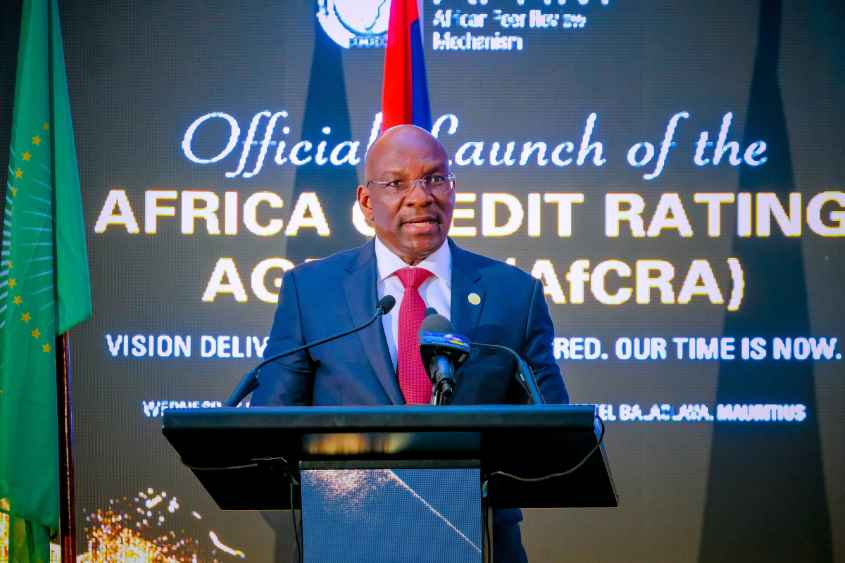
PORT LOUIS, Mauritius, October 8, 2026/APO Group/ –African Export-Import Bank (Afreximbank) (www.Afreximbank.com) welcomes today’s launch of the Africa Credit Rating Agency (AfCRA), an important milestone in strengthening Africa’s financial architecture and expanding the continent’s capacity to generate credible, independent analysis of African credit risk.
Credit ratings play an important role in determining access to capital, influencing investor perceptions and shaping the cost at which governments, institutions and businesses can finance development. It is therefore essential that assessments of African credit risk are independent, rigorous and evidence-based, while reflecting a complete understanding of the structures, institutions and economic realities being assessed.
The establishment of AfCRA adds an important African-led source of credit opinion to the market. Its value will not be measured by whether it produces more favourable ratings, but by the credibility of its analysis, the quality of its data and transparency of its methodology, and its ability to deepen understanding of African sovereigns, sub-sovereigns and corporate credit.
This is particularly important given that many African issuers remain unrated, while local-currency and sub-sovereign markets continue to have limited rating coverage. Expanding credible rating coverage can improve the information available to investors and support the development of deeper domestic and regional capital markets.
AfCRA must set a new benchmark for the continent, maintain its independence, and remain wholly owned and controlled by Africans
Alongside fellow members of the Alliance of African Multilateral Financial Institutions (AAMFI), Afreximbank has consistently maintained that African Multilateral Financial Institutions should be assessed on the basis of their fundamentals, performance, legal frameworks, mandates and operating models. Ensuring that these institutional characteristics are properly understood is essential to achieving informed, balanced and credible assessments of African risk.
Commenting on the uniqueness of the African market, and need for AfCRA’s rating methodology to reflect this, Mr Denys Denya, Senior Executive Vice President, Afreximbank, said: “The rating methodology AfCRA develops must recognise the uniqueness of our environment and its institutional structures. The Agency must set its own standards and not follow those set elsewhere — it must build a unique identity that conforms to an ‘African best practice.”
Highlighting the need for the autonomy of the Africa Credit Rating agency as it takes off, Mr Denya added: “Most importantly, AfCRA must set a new benchmark for the continent, maintain its independence, and remain wholly owned and controlled by Africans. We must all use it, and in return expect a complete assessment of where we (Africa) stand: the strengths the market has ignored, and the weaknesses we still need to fix.”
AfCRA should therefore be seen as complementary to existing international and regional rating agencies, broadening the range of credible analysis available to investors and issuers while strengthening competition, transparency and analytical capacity within Africa’s credit markets.
As Africa seeks to mobilise the scale of capital required for industrialisation, trade, infrastructure and economic transformation, credible African institutions that improve information, strengthen market confidence and deepen the continent’s financial markets will become increasingly important.
Afreximbank congratulates the African Union, the African Peer Review Mechanism (APRM) and all those involved in bringing AfCRA from concept to launch, and looks forward to the contribution the Agency will make to deeper, more transparent and more efficient African capital markets.
Distributed by APO Group on behalf of Afreximbank.
We use cookies on our website to give you the most relevant experience by remembering your preferences and repeat visits. By clicking “Accept”, you consent to the use of ALL the cookies.
This website uses cookies to improve your experience while you navigate through the website. Out of these, the cookies that are categorized as necessary are stored on your browser as they are essential for the working of basic functionalities of the website. We also use third-party cookies that help us analyze and understand how you use this website. These cookies will be stored in your browser only with your consent. You also have the option to opt-out of these cookies. But opting out of some of these cookies may affect your browsing experience.
Necessary cookies are absolutely essential for the website to function properly. These cookies ensure basic functionalities and security features of the website, anonymously.
Cookie
Duration
Description
cookielawinfo-checkbox-analytics
11 months
This cookie is set by GDPR Cookie Consent plugin. The cookie is used to store the user consent for the cookies in the category "Analytics".
cookielawinfo-checkbox-functional
11 months
The cookie is set by GDPR cookie consent to record the user consent for the cookies in the category "Functional".
cookielawinfo-checkbox-necessary
11 months
This cookie is set by GDPR Cookie Consent plugin. The cookies is used to store the user consent for the cookies in the category "Necessary".
cookielawinfo-checkbox-others
11 months
This cookie is set by GDPR Cookie Consent plugin. The cookie is used to store the user consent for the cookies in the category "Other.
cookielawinfo-checkbox-performance
11 months
This cookie is set by GDPR Cookie Consent plugin. The cookie is used to store the user consent for the cookies in the category "Performance".
viewed_cookie_policy
11 months
The cookie is set by the GDPR Cookie Consent plugin and is used to store whether or not user has consented to the use of cookies. It does not store any personal data.
Functional cookies help to perform certain functionalities like sharing the content of the website on social media platforms, collect feedbacks, and other third-party features.
Performance cookies are used to understand and analyze the key performance indexes of the website which helps in delivering a better user experience for the visitors.
Analytical cookies are used to understand how visitors interact with the website. These cookies help provide information on metrics the number of visitors, bounce rate, traffic source, etc.
Advertisement cookies are used to provide visitors with relevant ads and marketing campaigns. These cookies track visitors across websites and collect information to provide customized ads.














 Energy5 days ago
 Business5 days ago
 Business4 days ago
 Business5 days ago
 Events5 days ago