Connect with us
Anglostratits

Business

A Model for African Producers: Wing Wah’s $2B Integrated Energy Project to Bolster Resource Monetization in the Republic of the Congo
Published

on

Wing Wah

The Chinese oil and gas company is developing a multi-faceted oil and gas project in the Republic of the Congo – a model which can be replicated in other resource-rich nations across the region

JOHANNESBURG, South Africa, June 22, 2024/APO Group/ — 

The Republic of the Congo has a goal of increasing hydrocarbon production to 500,000 barrels per day (bpd) and projects such as Wing Wah Oil Company’s Banga Kayo development will serve as catalysts for meeting this objective. The project is a strong example for how integration and scalability can be utilized to not only monetize resources but maximize production beyond the lifecycle of initially-tied in blocks.

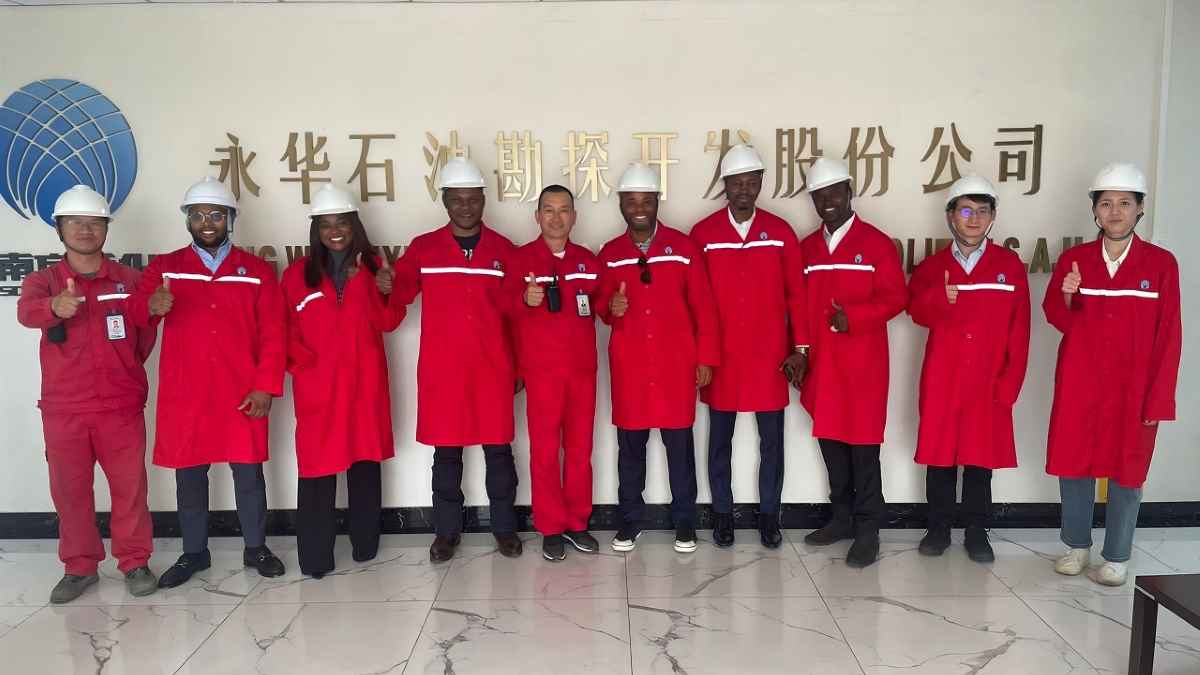
The African Energy Chamber (AEC) – the voice of the African energy sector – conducted a tour of Wing Wah’s project near Pointe Noire during a working visit to the country this week. A strong advocate for the development of oil and gas in Africa, the AEC believes that hydrocarbons are the solution for making energy poverty history by 2030.

Project’s such as Wing Wah’s in the Republic of the Congo are not only a testament to the role international partnerships play in developing African oil and gas resources but to the potential for large-scale, integrated developments across the continent. The Ministry of Hydrocarbons – led by Minister Bruno Jean-Richard Itoua – and the country’s NOC Société Nationale des Pétroles du Congo – led by Managing Director Maixent Raoul Ominga – have provided the much-needed support that companies such as Wing Wah need to develop innovative projects, and the AEC commends them for the progress made thus far.
Banga Kayo: An Innovative Oil & Gas Venture

The Banga Kayo conventional oilfield is a production permit operated by Wing Wah, which features approximately 250 wells that have been drilled to date. Currently, the field is producing 45,000 bpd and is nearing its peak production of 80,000 bpd. In addition to oil production, Wing Wah is implementing a phased expansion and development approach to monetize previously-flared gas resources. Over three phases, the project will progressively increase gas treatment and valorization capacity, producing LNG, butane and propane, primarily for the domestic market. Excess products will be exported regionally.

The project incorporates the development of three trains. The first has a capacity of one million cubic meters per day (mcm/d), while the second and third trains will have a capacity of two mcm/d each. The second and third trains are anticipated to come online by March 2025 and December 2025, respectively, and will bring the total capacity of the project to five mcm/b. In April 2024, Wing Wah signed an amended production sharing contract with the government for the Banga Kayo block, signaling the start of the expansion of the project.

Through gas-fired power generation, innovative water management and a long-term approach to production, the project is poised to unlock a wealth of benefits for the country

Integration: A Tool for Maximizing Efficiency and Scalability

Wing Wah’s project in the Republic of the Congo is underpinned by a focus on integration and scalability. The structure of the facilities has been planned in a way that prioritizes efficiency, reduces emissions and promotes scalability. Specifically, the facility enables Wing Wah to tap into stranded gas that would have otherwise been flared, thereby providing opportunities for monetization and the utilization of gas across the oil production cycle. Unlike traditional LNG infrastructure which faces challenges as blocks mature and feedstock declines, the scalable design of Wing Wah’s project creates the opportunity to maximize production – both at existing blocks and new concessions.

Additionally, each unit at the facility has its own power generation solution which are scalable in increments of 2 MW. Currently, 22 MW is installed, with generators utilizing gas from associated blocks. As production increases, so can power generation, thereby ensuring scalability and durability. Meanwhile, the water management system is also integrated into the project in a way that promotes environmentally-friendly operations. Water treatment is conducted on-site and distributed back into the ocean once treated.

As such, the facility provides a quintessence of oil and gas integration. The development approach features fast construction, fast commissioning and quick, efficient operations. Wing Wah are using state-of-the-art equipment and have an organized layout of the overall infrastructure and storage. This is expected to boost efficiency at the project site while ensuring the project plays an instrumental role in processing oil and gas for the long-term.

Prioritizing Local Community Development

In addition to project efficiency, the Banga Kayo development has been constructed in a way that takes into account the needs of local communities. All of the processing facilities have on-site accommodation, with senior management on-call to ensure a constant review of work. Currently, the project employs more than 3,000 people, the majority of whom are workforce Congolese. Meanwhile, excess power generated at the project site can be distributed to local communities, providing a clean and reliable source of power. Water management also takes into account regional demand, with surrounding communities benefiting from a clean source. This structure not only brings tangible benefits to local communities but reducing emissions across the project’s operational cycle.

“Wing Wah’s integrated project in the Republic of the Congo is a model that can and must be replicated in other oil and gas producing nations in Africa. The project’s focus on scalability ensures production is not limited to specific blocks, but rather, infrastructure can be easily tied into new concessions as exploration ramps up across the country. Through gas-fired power generation, innovative water management and a long-term approach to production, the project is poised to unlock a wealth of benefits for the country,” states NJ Ayuk, Executive Chairman of the AEC.

Distributed by APO Group on behalf of African Energy Chamber.

Business

Nature, Carbon and Climate Are Becoming Core Investment Themes – with Africa at the Centre

Published

on

finance

Private finance for nature has increased more than tenfold in recent years, rising from USD 9.4 billion to over USD 100 billion, and could reach up to USD 1.45 trillion by 2030 if current the momentum continues

CAPE TOWN, South Africa, February 9, 2026/APO Group/ –Climate change, biodiversity loss and ecosystem degradation are no longer just environmental challenges; they are now central to how investors assess resilience and long-term returns.

Nature underpins large parts of the global economy, from water security and food systems to infrastructure and climate resilience. Yet according to the United Nations Environment Programme (UNEP) the global biodiversity finance gap is estimated to reach USD 942 billion per year by 2030. Current finance flows into nature total around USD 200 billion annually, with just USD 35 billion coming from private capital.

At the same time, capital markets are shifting. Private finance for nature has increased more than tenfold in recent years, rising from USD 9.4 billion to over USD 100 billion, and could reach up to USD 1.45 trillion by 2030 if current the momentum continues.

Alongside this, carbon markets, nature-based solutions and resilience infrastructure are increasingly being treated as linked investment themes, with new asset classes emerging across carbon, biodiversity and climate adaptation. This convergence is reshaping how investors assess risk, returns and long-term resilience, particularly in emerging markets.

Investing in Africa’s adaptation and mitigation projects is not an act of generosity; it is an investment in our common future

The economic stakes are already clear. In South Africa alone, healthy ecosystems contribute over R275 billion (around USD 14 billion) per year, equivalent to at least 7% of GDP.

Across Africa, natural capital accounts for an estimated 30%-50% of total wealth in many countries, underlining how closely economic growth, stability and development prospects are tied to climate and nature outcomes. In many African economies, natural capital makes up a far larger share of national wealth than factories or infrastructure, meaning that damage to nature can quickly translate into pressure on public finances and long- term economic stability.

Recent flooding in parts of Kruger National Park and ongoing water stress in the Western Cape have reinforced how climate and ecosystem risks translate directly into economic losses, infrastructure damage and pressure on public finances. These are no longer peripheral sustainability issues; they are core financial and investment risks.

Against this backdrop, Africa’s Green Economy Summit (AGES) 2026 will open with the Climate, Carbon & Nature Financing Academy on Monday, 24 February 2026 in Cape Town, ahead of the main Summit from 25 – 27 February 2026. The Academy will focus on how climate, carbon and nature can be translated into bankable projects and investable asset classes, including through instruments such as carbon markets, green, blue and wildlife bonds, debt-for-nature swaps and performance-linked finance.

“The escalating impact of climate change in Africa calls for the global community and private sector to recognise that a climate-resilient Africa is essential for global stability, prosperity, and shared security. Investing in Africa’s adaptation and mitigation projects is not an act of generosity; it is an investment in our common future,” said Harsen Nyambe, Director, Sustainable Environment and Blue Economy at the African Union Commission.

By foregrounding climate, carbon and nature finance at the start of 2026, AGES reflects a broader market reality: these are no longer side conversations in sustainable finance, they are becoming central pillars of Africa’s investment future.

Distributed by APO Group on behalf of VUKA Group.

Continue Reading

Events

As global power structures shift, Invest Africa convenes The Africa Debate 2026 to redefine partnership in a changing world

Published

on

Debate

The Africa Debate 2026 will provide a platform for this essential, era-defining discussion, convening leaders to explore how Africa and its partners can build more balanced, resilient and sustainable models of cooperation

LONDON, United Kingdom, February 5, 2026/APO Group/ –As African economies assert greater agency in a rapidly evolving global order, Invest Africa (www.InvestAfrica.com) is delighted to announce The Africa Debate 2026, its flagship investment forum, taking place at the historic Guildhall in London on 3 June 2026.

Now in its 12th year, The Africa Debate has established itself as London’s premier platform for African investment dialogue since launching in 2014, convening over 800 global decision-makers annually to shape the future of trade, finance, investment, and development across the continent.

Under the theme “Redefining Partnership: Navigating a World in Transition”, this year’s forum will focus on Africa’s response to global economic realignment with greater agency, ambition and economic sovereignty.

The Africa Debate puts Africa’s priorities at the centre of the conversation, moving beyond traditional narratives to focus on ownership, resilience and long-term value creation.

“Volatility is not new to Africa. What is changing is the opportunity to respond with greater agency and ambition,” says Invest Africa CEO Chantelé Carrington.

“This year’s edition of The Africa Debate asks how we strengthen economic sovereignty — from access to capital and investment to financial and industrial policy — so African economies can take greater ownership of their growth. Success will be defined by how effectively we turn disruption into leverage and partnership into shared value.”

The Africa Debate 2026 will provide a platform for this essential, era-defining discussion, convening leaders to explore how Africa and its partners can build more balanced, resilient and sustainable models of cooperation.

Key challenges driving the debate

Core focus areas for this year’s edition of The Africa Debate include:

This year’s edition of The Africa Debate asks how we strengthen economic sovereignty — from access to capital and investment to financial and industrial policy

Global Realignment & New Partnerships

How shifting geopolitical and economic power structures are reshaping Africa’s global partnerships, trade dynamics and investment landscape.

Financing Africa’s Future

The growing need to reform the global financial architecture, new approaches to development finance, as well as the strengthening of market access and financial resilience of African economies in a changing global system.

Strategic Value Chains

Moving beyond primary exports to build local value chains in critical minerals for the green economy. Also addressing Africa’s energy access gap and mobilising investment in renewable and transitional energy systems.

Digital Transformation & Technology

Unlocking growth in fintech, AI and digital infrastructure to drive productivity, inclusion, and the next phase of Africa’s economic transformation.

The Africa Debate 2026 offers a unique platform for high-level dialogue, deal-making, and strategic engagement. Attendees will gain actionable insights from leading policymakers, investors and business leaders shaping Africa’s economic future, while building strategic partnerships that define the continent’s next growth phase.

Registration is now open (http://apo-opa.co/46b19gj).

Distributed by APO Group on behalf of Invest Africa.

Continue Reading

Business

Zion Adeoye terminated as Chief Executive Officer (CEO) of CLG due to serious personal and professional conduct violations

Published

on

CLG

After a thorough internal and external investigation, along with a disciplinary hearing chaired by Sbongiseni Dube, CLG (https://CLGglobal.com) has made the decision to terminate Zion Adeoye due to serious personal and professional conduct violations. This process adhered to the Code of Good Practice of the Labour Relations Act, ensuring fairness, transparency, and compliance with South African law.

Mr. Adeoye has been held accountable for several serious offenses, including:

  • Making malicious and defamatory statements against colleagues
  • Extortion
  • Intimidation
  • Fraud
  • Misuse of company funds
  • Theft and misappropriation of funds
  • Breach of fiduciary duty
  • Mismanagement

His actions are in direct contradiction to our firm’s core values. We do not approve of attorneys spending time in a Gentleman’s Club. CLG deeply regrets the impact this situation has had on our colleagues and continues to provide full support to those affected.

We want to express our gratitude to those who spoke up and to reassure everyone at the firm of our unwavering commitment to maintaining a respectful workplace. Misconduct of any kind is unacceptable and will be addressed decisively.

We recognize the seriousness of this matter and have referred it to the appropriate law enforcement, regulatory, and legal authorities in Nigeria, Mauritius, and South Africa. We kindly ask that the privacy of the third party involved be respected.

Distributed by APO Group on behalf of CLG.


Continue Reading

Trending