Connect with us
Anglostratits

Travel & Tourism

Emirates introduces second service to Tokyo Narita

Published

on

Emirates

Expanded Tokyo Narita service strengthens links to key African destinations, including South Africa, Tunisia, Egypt, and Morocco via Dubai

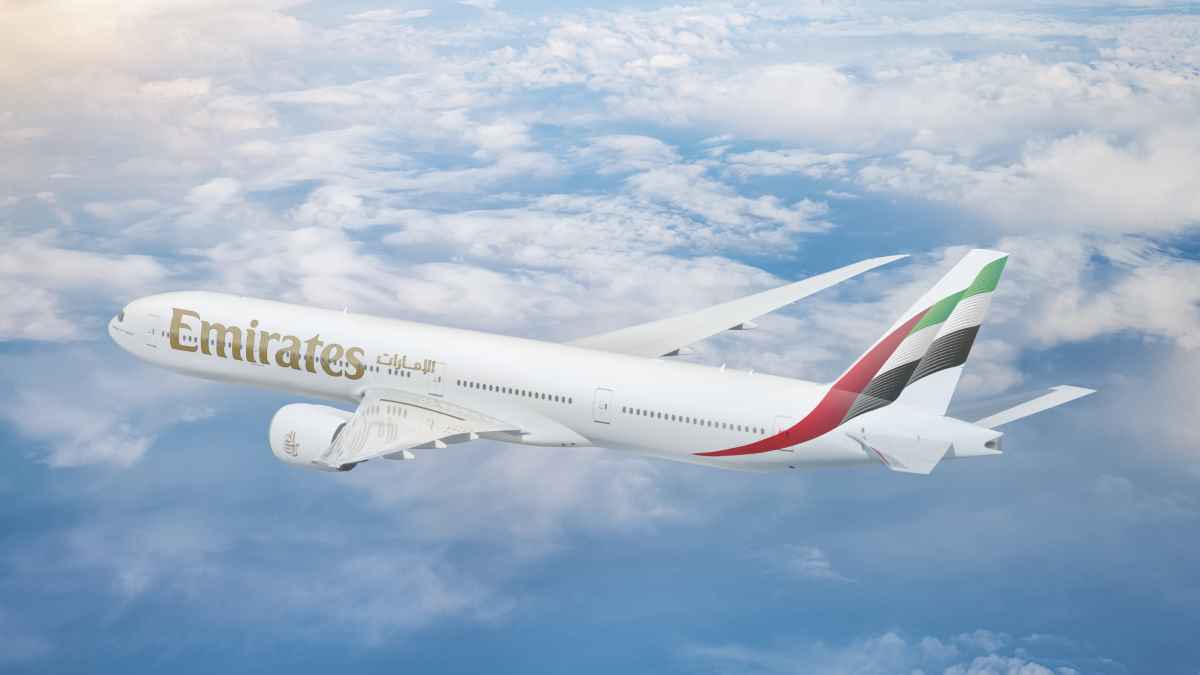
DUBAI, United Arab Emirates, February 6, 2026/APO Group/ –Emirates (www.Emirates.com) has announced the expansion of its operations to Tokyo Narita with the introduction of a second daily service from 1 May, operated by the airline’s retrofitted Boeing 777-300ER.


The additional flight, EK320, will depart Dubai at 22:30hrs and arrive in Tokyo Narita at 13:30hrs the following day. The return service, EK321, will depart Tokyo Narita at 21:30hrs and arrive in Dubai at 03:50hrs the following day. All times are local.

The second daily flight will provide travellers with greater choice and enhanced opportunities for multi-destination itineraries, including the convenience of a stopover in Dubai.

Eastbound passengers on the additional Narita service will arrive in the afternoon, supporting stronger domestic connectivity and shorter connection times from key European and Middle Eastern markets. Westbound travellers departing from Tokyo Narita will benefit from an early-morning arrival in Dubai, enabling seamless onward connections to major destinations across Africa, Europe, and South America, including South Africa, Tunisia, Egypt, Morocco, Spain, Portugal, France, Italy, and Brazil.

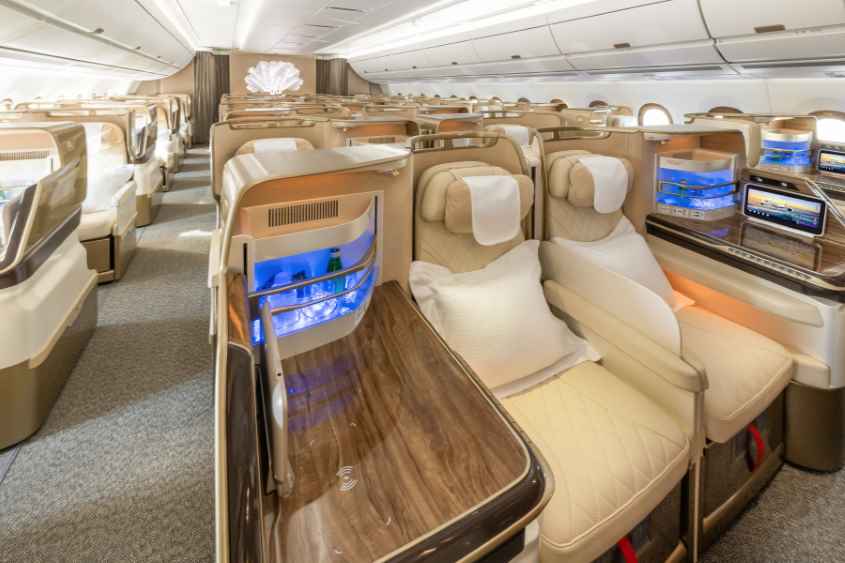
With the deployment of a refurbished Boeing 777-300ER on flights EK320/321 to Tokyo Narita, Emirates doubles down on its commitment to offer a consistent travel experience for its customers in Japan. The four-class aircraft features upgraded interiors with new design elements, including modern colour palettes, specially designed Ghaf Tree motifs, and wood finishes across all cabins. Travellers will have access to 260 of the latest-generation Economy seats, 24 Premium Economy seats, 40 Business Class seats in a 1-2-1 configuration, and eight First Class Suites.

The onboard experience is rounded off with a regionally-inspired cuisine featuring Japanese dishes such as Kaiseki meal tray. Travellers across all cabins will also enjoy more than 6,500 channels of on-demand content on Emirates’ award-winning inflight entertainment system, ice, featuring movies, TV series, podcasts, music, documentaries, and more, with a selection of Japanese content.

Tickets can be booked on www.Emirates.com, the Emirates App, or via both online and offline travel agents, as well as Emirates’ retail stores.

Emirates in Japan

Emirates has been serving Japan since 2002 and currently operates three daily flights to Tokyo Narita, Tokyo Haneda, and Osaka, with all services offering the airline’s Premium Economy product on a mix of Boeing 777s and A380s.

From 1 May, Emirates will offer more than 22,500 weekly seats to and from Japan across 28 weekly flights serving three gateways. On a weekly basis, the airline will be able to carry 1,240 tonnes of cargo in and out of the country, providing extensive capacity for local businesses to transport their products to key trade markets in the GCC, Europe, and Africa.

The airline has also enhanced its offering for premium customers in Narita with the introduction of its world-class Chauffeur-drive service earlier this month. The service will also be extended to premium customers in Osaka from 1 March.

Emirates offers expanded domestic connectivity through partnerships with Japan Airlines (JAL) and All Nippon Airways, serving 36 destinations, including 26 domestic and 10 regional points. The additional frequency to Narita further provides travellers from South Africa and other African destinations with greater flexibility and more convenient connection options to these points and beyond.

Distributed by APO Group on behalf of The Emirates Group.

Tech

World’s First Commercial Multimodal LLM for Cultural Tourism Enters Broad Application

Published

on

BoGuan

XI’AN, CHINA – Media OutReach Newswire – 29 June 2026 – The world’s first commercial multimodal large language model (LLM) for cultural tourism, called BoGuan, has entered broad application in Xi’an, China. This model generates commercial returns by supporting the creation of digital IP for intangible cultural heritage, the development of cultural tourism applications, and the improvement of short drama production. This is injecting new momentum into both China’s heritage preservation initiatives and the cultural tourism industry.

Xi’an is one of China’s oldest cities and one of its most popular international tourist destinations. Shaanxi Culture Industry Investment Group (SCG) is working with partners like Huawei, China Telecom Shaanxi, and China West Airport Group (CWAG) to promote cultural tourism using digital technologies including AI and 5G-A.For example, BoGuan is used to support a new AI travel companion agent that had been made available to over 4 million users by March of this year.

In September 2025, SCG and Huawei unveiled the BoGuan Large Model, the world’s first commercial multimodal LLM for cultural tourism. It is also China’s first industry-specific model dedicated to the preservation of cultural heritage. This model is built on intelligent computing infrastructure and a high-quality dataset. The dataset has over 1.2 PB of data, including 31 million images, 4.4 million minutes of video footage, 2.18 million minutes of audio recordings, 510 3D models, and 960 million pieces of structured text.

BoGuan can generate highly-accurate multimodal content, such as museum-quality content about cultural relics. This allows it to support the creation of new digital relic presentations, the digitalization and preservation of traditional craftsmanship, and the creation of digital IP for intangible cultural heritage. Zhang Beiyuan, a dough sculpture artisan, said, “With this model, I can complete a dough sculpture that used to take two or three months in less than a week.” BoGuan is also used to create digital IP like the popular cartoon character Tang Biaobiao, which is designed by integrating local cultural heritage elements with the stone carvings of the Six Steeds of Zhao Mausoleum. The sales of related digital collectibles and creative products have exceeded CNY2 million.

In addition to supporting cultural heritage preservation, BoGuan has been used to develop a range of cultural tourism apps, such as AI photography and AI travel companion agent. Visitors can directly talk with this agent on the GO-SHAANXI app to create and adjust travel itineraries and get real-time performance recommendations at attractions. The Zhiying Camera mini program provides paid services that instantly integrate user photos with AI-generated scenes from history, allowing visitors to “travel back to ancient times.” These new consumption options unlock the business value of quality cultural tourism data. Furthermore, SCG is using BoGuan to integrate short drama production with cultural tourism and improve production efficiency and quality in Xi’an, a renowned short drama hub.

Additionally, China Telecom Shaanxi and Huawei have deployed a 5G-A network based on three component carrier aggregation (3CC) technology at Xi’an’s Grand Tang Mall, a popular tourist attraction. The network delivers peak uplink and downlink rates of 600 Mbps and 3.5 Gbps, respectively, about 10 times faster than common 5G networks. During the 2026 May Day holiday, this network supported concurrent access for 23,000 users, guaranteeing smooth video watching and social media experiences. Furthermore, 5G-A-powered HD live streaming at the Grand Tang Mall has become an important way for the attraction to bring in new visitors. According to public data, the average user dwell time of these live streams has nearly doubled and the average transaction value has increased by 62%.

Edric Chu, General Manager of Huawei’s Shaanxi Rep Office, said, “Artificial intelligence is not simply a stack of technologies. It has become a key enabler that can activate thousands of years of cultural heritage, reshape travel experiences, and inject new momentum into the industry. Moving forward, Huawei will continue working with our partners to enhance cultural heritage preservation with digital and intelligent technologies, and stimulate development within the cultural tourism industry.”


Continue Reading

Events

2026 Hainan Cultural and Tourism Promotion Events Held in Hong Kong

Published

on

Hong Kong

HONG KONG SAR – Media OutReach Newswire – 18 June 2026 – On June 16, the 2026 Hainan Cultural and Tourism Promotion Events, under the theme of “Sunny Hainan · Heart’s Desire,” were held in Hong Kong. Leaders from Hong Kong’s cultural and tourism authorities, heads of industry associations, and representatives of key cultural and tourism enterprises from home and abroad gathered to explore new opportunities for cooperation and draw up a blueprint for the industry’s future.

Liu Xiaoming, Governor of the People’s Government of Hainan Province, and Cheuk Wing-hing, Deputy Chief Secretary for Administration of the Government of the Hong Kong Special Administrative Region, attended the events and delivered speeches. During the promotional session, Chen Tiejun, Director of the Department of Tourism, Culture, Radio, Television and Sports of Hainan Province, unveiled the “Top Ten Calling Cards of Hainan Tourism,” which received enthusiastic responses and positive feedback from various sectors in Hong Kong. Attendees from Hong Kong unanimously agreed that Hong Kong and Hainan boast highly complementary cultural and tourism resources and immense potential for cooperation.

Since the launch of special customs operations of the Hainan Free Trade Port, its distinctive opening-up advantages, such as “zero tariffs, low tax rates, a simplified tax system” and “tariff exemption for value-added processing,” have become increasingly prominent. These policies have continuously made Hainan more attractive to businesses and opened up broader opportunities for Hong Kong investors and entrepreneurs.

On the same day, at the “Invest in the Free Trade Port, Share New Opportunities” Symposium for Hong Kong Enterprises held in Hong Kong, four cooperation agreements were formally signed, covering high-end commerce, cultural and tourism integration, and regional industrial coordination. Hong Kong business representatives expressed strong interest in deepening their presence in Hainan.

Hainan and Hong Kong share a long history of cooperation, and in recent years, a steady stream of favorable policies has been introduced. Since the signing of the Hainan-Hong Kong Memorandum of Cooperation in March 2025, bilateral cooperation has accelerated across the board. In 2025, goods trade between the two sides reached RMB 9.35 billion, increasing by more than two times from 2020. A total of 793 new Hong Kong-funded enterprises were established in Hainan, a year-on-year increase of 21.5%. Hainan has also issued offshore RMB bonds in Hong Kong for four consecutive years, with a cumulative total of RMB 18 billion. Currently, an average of four direct flights operate daily between Hong Kong and Hainan, with the fastest travel time under two hours, facilitating the rapid emergence of the “Hainan-Hong Kong Living Circle.”

Continue Reading

Travel & Tourism

Smooth take-off for new Terminal 2 at Hong Kong International Airport

Published

on

Hong Kong

HONG KONG SAR – Media OutReach Newswire – 29 May 2026 – Hong Kong International Airport (HKIA) embarked on a new era on 27 May, with the successful launch of the expanded Terminal 2 (T2), further boosting the city’s position as global aviation hub.

In 2025, HKIA handled 61 million passenger trips, representing a year-on-year growth of 15%. It has recently garnered several prestigious recognitions for its outstanding performance in areas including security processing, aviation infrastructure, passenger services, and continuous enhancement of passenger facilities.

HKIA was crowned “Best Airport in the World” at the Global Travel Awards 2026, and was voted “Best Airport in China” in the 2026 TTG China Travel Awards for the third year in a row.

Spanning 300,000 square metres, the new T2 is designed and equipped to serve both departing and arriving passengers. The departures hall of T2 features eight check-in aisles, with 68 express self-bag drop counters, 58 smart check-in kiosks and 108 hybrid check-in counters.

Large LED displays are installed at different levels of T2, with 3D contents and ocean-themed videos creating a vibrant atmosphere. The food court at the departures hall serves passengers with eight catering outlets, four of which operate around the clock, while 12 shops offer a variety of products, including travel necessities and souvenirs.

Speaking at the opening ceremony on 22 May, Michael Wong, Acting Financial Secretary of the Hong Kong Special Administrative Region Government, said, “The government will continue to adopt a multi-pronged approach to strengthen HKIA’s position as an international aviation hub, including accelerating the expansion of the aviation network, enhancing intermodal connectivity with the (Guangdong-Hong Kong-Macao) Greater Bay Area, and advancing the development of the Airport City. In particular, we will proactively align with and work on the National 15th Five-Year Plan, and fully support Hong Kong’s role as an international aviation hub.”

Fred Lam, Chairman of Airport Authority Hong Kong (AAHK), said the opening of T2 is another milestone of the airport’s development. “Positioned as a terminal for leisure travel, T2’s design prioritises efficiency and passenger comfort. We attend to every detail, leveraging technology extensively to enable efficient self-check in, self-bag drop and smooth immigration clearance,” he said.

Vivian Cheung, Chief Executive Officer of AAHK said the Authority was delighted to see the smooth relocation of airline partners to T2 and the positive passenger response to the new facilities.

“We have a lot of LED, animation, and new designs emphasising technology, and we have our in-house design for self-check in system, which only requires 45 seconds to go through the entire process. We want to help the airlines to migrate to a full-automation process, which will actually help passengers have better experiences and also reduce the labour needs,” she said.


Continue Reading

Trending