Connect with us
Anglostratits

Business

Perenco bets big on Africa Upstream with Investments in sustainable energy projects

Published

on

Perenco

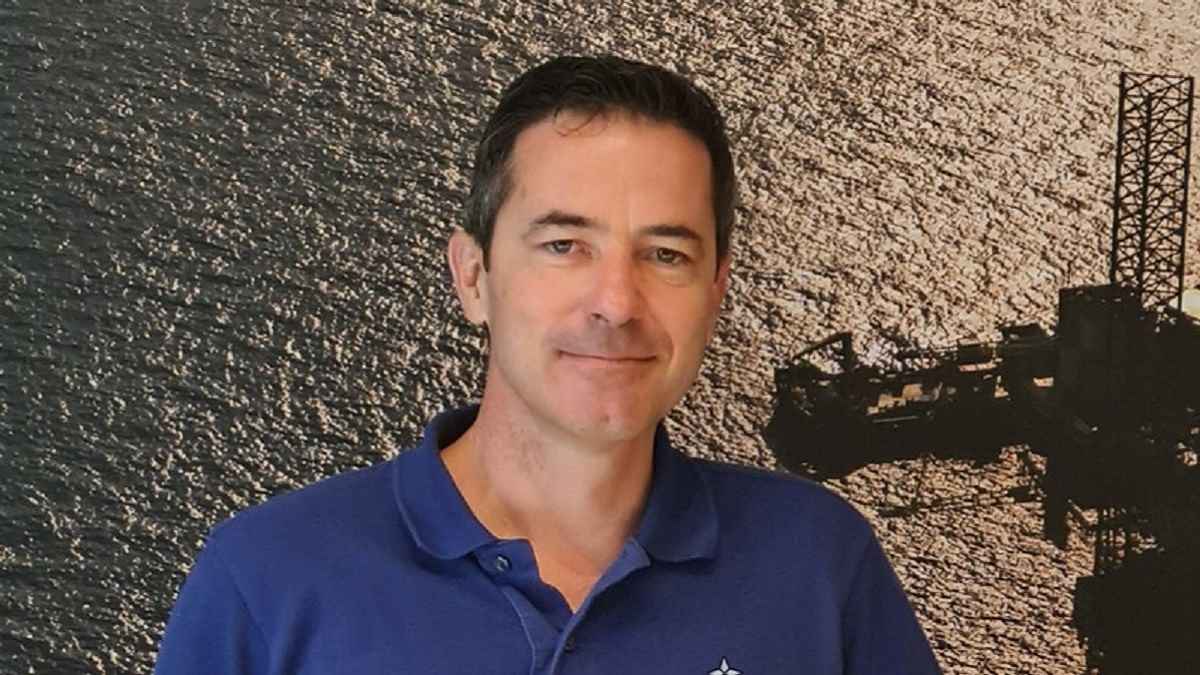
Perenco CEO Benoît de la Fouchardière provides insight into the company’s ambitious upstream agenda and why it represents the partner of choice for African countries

JOHANNESBURG, South Africa, April 12, 2023/APO Group/ — 

Africa’s energy sector is growing rapidly owing to a series of ambitious exploration campaigns undertaken by independent oil and gas explorers. Companies such as Anglo-French independent Perenco continue to make strides towards unlocking the full potential of the oil and gas market. The African Energy Chamber (www.EnergyChamber.org) spoke with Benoît de la Fouchardière, CEO of Perenco (https://apo-opa.info/3MDPRYW) about the company’s upstream agenda and why Perenco represents the partner of choice for African countries.

Perenco recently signed a 20-year contract for the Rio del Rey concession in Cameroon. What is the significance of this contract and how does it align with Perenco’s overall upstream agenda?

Firstly, Rio del Rey (RDR) is the regional hub, surrounded by Dissoni, Bolongo, Moabi, Moudi and soon Bomana. It is also feeding the majority of the production to the COTSA Terminal, the Massongo. We have built this virtuous system of maximizing the synergies between various contracts to support the development of marginal fields which would not otherwise have been economic.

Secondly, RDR is generating its own growth. The fields constituting RDR have already produced over a billion barrels. We believed from the start in 2011 that they could deliver more than they were. We proved it, thanks to a special purpose rig called “the LUG”, developed by the Perenco Group specifically for RDR. It has already drilled 33 wells and production from these represent more than 30% of RDR’s current production. This is a big part of the solution, and we envisage it continuing to drill for years to come.

Perenco represents the largest operator in the country in terms of production. Are there plans to increase production at the Rio del Rey concession? Are there plans to drill more wells?

As I explained, we think we have the appropriate tool to perform fit for purpose infill drilling with the LUG rig. RDR barrels are not easy to find, but they are there. We just needed that versatile and powerful platform rig to produce them. It will at least maintain production at 40,000 barrels per day. It can be boosted if we have exploration success.

How does Perenco work with local communities and authorities to ensure that operations at Rio del Rey are socially responsible and environmentally sustainable?

From the beginning, Perenco has been engaged with the Republic of Cameroon to have a positive impact at local, regional and national levels. At the national level, through revenues generated by our activity, employment and training of young Cameroonians from all regions and all disciplines. Locally we are working with IECD, a Non-Governmental Organization partner to develop micro entrepreneurial initiatives, teaching people to learn how to manage funds and reinvest effectively.

On a global standpoint, we are engaged in a global initiative to remove plastic waste from the countries where we operate – Plastic Free. We are developing a pyrolysis machine at a small scale and another at an industrial scale (to be installed in Cap Lopez in Gabon).  It will clean the plastic from the country and use it to produce diesel in a virtuous circle, also reducing the need for diesel imports.

Perenco has developed a specific know-how that it is now perfecting with the introduction of multiple innovations

What are some of the unique challenges Perenco has encountered in the Rio del Rey basin and what has been done to address them?

The main challenge today is to address the gas flaring issue. The RDR reservoirs have a high gas/oil ratio and cumulated associated gas presents a risk that must be addressed. The issue is the number of locations and the low-pressure nature of the gas, but we have identified solutions to address the challenge. We are working with SNH to deliver the appropriate contractual, technical and economic solution, taking into consideration the country’s needs (gas-to-power, gas-to-industry and LPG) and the current value of gas on the international market. We expect an FID within a year with a fast track first phase right after.

Perenco has been bullish in Africa with the firm securing FID for the Gabon LNG facility as well as acquiring Glencore’s Chadian assets and New Age’s Etinde Asset in Cameroon. Looking ahead, what are Perenco’s plans for expanding exploration in Africa even further? Are there any new markets on the agenda? 

Perenco has developed a specific know-how that it is now perfecting with the introduction of multiple innovations. This know-how fits well with African onshore and shallow water projects, where we have a historical presence and which we can build upon. We know we can deploy our teams easily in other parts of the world, as we did in T&T, Mexico, Brazil and Chad in recent years. 

However, we would always prefer to consolidate our presence in an existing country versus opening up in a new one. Our added value for the country is our ability to create reserves while we produce them. This requires expertise and permanent creativity to fight the natural decline. In the last years, we have added an extensive knowledge of gas to our historical expertise in mature & marginal oil fields. We know that we can replicate in gas what we have learned in oil and bring these ground-breaking solutions to life for the African energy sector.

Why does Perenco represent the partner of choice for African countries looking at developing offshore assets? How does the firm incorporate new technology and innovation into exploration efforts?

Perenco has an entrepreneurial approach. When we initially look at a field, we may not have certainty at that stage how we will produce it. We study it, starting by analyzing all of the available data from the time of exploration and the early development of the field; we share ideas, drawing on our 30 years’ experience; we redevelop in one, two, or three phases; and we connect, explore, or acquire adjacent blocks so as to achieve a virtuous circle where all the fields support each other.

We also have alternative development studies called the ‘oil & gas’ program. As an example, in Gabon on the GANGA field, a field holding 40 million barrels and 1 trillion cubic feet of gas, we have a joint development of oil and gas. By doing so, we are creating value with both products.

The 2023 edition of the African Energy Week conference takes place in Cape Town in October. How does the event serve to advance Perenco’s exploration agenda in Africa and what deals do you hope to sign?

African Energy Week (https://AECWeek.com/) will be an important moment to share with our peers and multi-governmental authorities the specifics of the company and how it adds value in the countries where we operate. As an example, we entered Chad in July 2022.  Eight months later we have already reached 18,000 bpd (from zero at the take over time) and now feed Moundou with a reliable and immediate gas-to-power solution which supports the development of the city.

What makes us different is that when we enter a country it is for the long term; we have a pure, entrepreneurial, approach, not a financial one; and we understand that the countries need to develop themselves and that we must be playing an active part in that development.

Distributed by APO Group on behalf of African Energy Chamber.

Business

Afreximbank Backs DOTT Services Limited, Uganda with a US$28 Million Facility for Regional Engineering, Procurement and Construction (EPC) Projects

Published

on

The financing will enhance DOTT’s capacity to execute strategic projects across the continent, facilitate intra-African trade in goods and services and strengthen regional value chains

CAIRO, Egypt, November 4, 2026/APO Group/ –African Export-Import Bank (Afreximbank) (www.Afreximbank.com) has activated and approved a US$28 million dual-tranche facility for DOTT Services Limited, the leading Uganda-based engineering, procurement and construction (EPC) contractor, and has begun disbursing funds to support the execution of its EPC projects pipeline, valued at more than US$550 million.


Provided under Afreximbank’s EPC Contract Promotion Initiative, the facility is designed to strengthen the capacity of African EPC champions to secure and execute large-scale infrastructure projects across the continent. Specifically, the financing will support DOTT Services Limited in executing contracts and pursuing near-term opportunities valued at approximately US$550 million across Uganda, Tanzania, Kenya and the Democratic Republic of Congo.

Commenting on the transaction, Mr. Humphrey Nwugo, Director of Regional Operations at Afreximbank’s Eastern Africa office, said:

Through the initiative, the Bank provides support, including financing, twinning and matchmaking

“This facility reflects Afreximbank’s commitment to building strong African EPC champions capable of delivering the infrastructure that underpins Africa’s industrialisation, trade and economic integration. By supporting DOTT Services Ltd, a well-established regional contractor with operations across five African countries, we are addressing a critical financing gap that has historically constrained the ability of African firms to participate meaningfully in large-scale, cross-border infrastructure projects.

The financing will enhance DOTT’s capacity to execute strategic projects across the continent, facilitate intra-African trade in goods and services and strengthen regional value chains. It also advances Afreximbank’s EPC Contract Promotion Initiative, which seeks to increase African participation in the development and delivery of Africa’s infrastructure.

Through partnerships such as this, we are ensuring that greater value, expertise, employment opportunities and economic benefits are retained within Africa while fostering the emergence of globally competitive African contractors.”

Mr. Nwugo further noted that most local commercial banks lacked the capacity to support intra-African and regional projects because they were poorly placed to absorb the associated cross-border risks, while international banks tended to prioritise non-African contractors. As a result, African entities were often left without adequate financial support.

He said: “Afreximbank’s EPC Initiative was therefore designed to address this challenge by supporting African EPC contractors in securing and executing a greater share of infrastructure contracts across the continent. Through the initiative, the Bank provides support, including financing, twinning and matchmaking, as well as issuing letters of support, among others”, he explained.

DOTT Services Limited presence in Africa spans 28-years, with operations in Uganda, Tanzania, South Sudan, Zambia, and the Democratic Republic of Congo (DR Congo). It also has European offices in Italy and the UK, and a workforce of over 6,000 people. The company procures from, and distributes to, African countries goods such as bitumen, asphalt, steel and spare parts, as well as yellow goods equipment and services, making it a significant player in intra-African trade. Its track record of promoting trade-supporting infrastructure across the continent makes it a natural partner for Afreximbank’s EPC Contract Promotion Initiative, which seeks to build African EPC champions capable of delivering the infrastructure that underpins intra-African trade.

Distributed by APO Group on behalf of Afreximbank.


Continue Reading

Business

Coca-Cola Beverages Africa (CCBA) invests in Africa’s leadership potential through EDGE

Published

on

Coca-Cola

Developed in partnership with Henley Business School Africa, the programme equips high-potential leaders with the skills, experiences and perspectives needed to drive growth, create value and deliver impact across the business

JOHANNESBURG, South Africa, November 4, 2026/APO Group/ –Thirty-one leaders from across 12 African countries have graduated from Coca-Cola Beverages Africa’s (CCBA) (https://www.CCBAgroup.com) EDGE Senior Leadership Acceleration Programme, marking the completion of the programme’s second generation and the first pan-African EDGE cohort.


Created by CCBA, EDGE is the company’s flagship senior leadership development programme. Building on previous participation from The Coca-Cola Company, the programme was further expanded in 2026 to include leaders from Equatorial Coca-Cola Bottling Company and Coca-Cola Hellenic Bottling Company, creating a broader pan-African learning experience across the Coca-Cola system.

Developed in partnership with Henley Business School Africa, the programme equips high-potential leaders with the skills, experiences and perspectives needed to drive growth, create value and deliver impact across the business.

The 2026 cohort marks an important milestone for EDGE as the programme brought together leaders from across the Coca-Cola system

The graduating cohort represented leaders from multiple countries and business functions. Through classroom learning, business projects, mentoring and coaching, participants gained practical experience in addressing real business opportunities and challenges.

With CCBA serving more than 840,000 customers across Africa, the company requires leaders who can navigate complexity and create value in diverse markets. EDGE helps build these capabilities through practical, business-focused learning.

“People are at the heart of everything we do, and programmes like EDGE demonstrate our commitment to investing in their growth and future success,” said Natasa Prodanovic, Chief People and Culture Officer at CCBA.

“The 2026 cohort marks an important milestone for EDGE as the programme brought together leaders from across the Coca-Cola system. By learning alongside colleagues from The Coca-Cola Company, Equatorial Coca-Cola Bottling Company and Coca-Cola Hellenic Bottling Company, participants were able to build meaningful connections, share diverse perspectives and strengthen collaboration across our markets.”

The curriculum focused on strategy, value creation, transformation, commercial decision-making, leading self and leading teams. Participants also presented business projects aligned to organisational priorities as part of the programme’s graduation requirements.

EDGE forms part of CCBA’s broader commitment to developing future leaders and building the capabilities needed to drive sustainable growth and impact across Africa.

Distributed by APO Group on behalf of Coca-Cola Beverages Africa.


Continue Reading

Business

Africa and Caribbean trade potential could reach $1.65 billion annually by 2030: International Trade Centre (ITC)-Afreximbank report

Published

on

Afreximbank

The report finds that around 80% of Africa’s annual goods export potential to the Caribbean remains untapped

ST. JOHN’S, Antigua and Barbuda, November 3, 2026/APO Group/ –Annual trade in goods and services between Africa and the Caribbean could reach up to $1.65 billion by 2030, excluding mineral fuels, according to a new report launched today by the International Trade Centre (ITC) and African Export-Import Bank (Afreximbank) (www.Afreximbank.com) on the sidelines of the Commonwealth Heads of Government Meeting in Antigua and Barbuda.


The report, Reshaping Africa-Caribbean Trade: Opportunities for Economic Transformation, (https://apo-opa.co/4eiz62u) finds that while Africa and the Caribbean share deep historical and cultural links, trade between the two regions continues to represent only a small share of each region’s overall trade, despite complementarities across sectors ranging from agribusiness and manufacturing to services and the creative economy.

A look at the numbers

The report finds that around 80% of Africa’s annual goods export potential to the Caribbean remains untapped, with are significant opportunities for export growth if trade and investment is actively promoted and facilitated.

Africa and the Caribbean must transform a shared history into shared prosperity

Caribbean export potential lies in the services sector, reaching $481 million. The report identifies business opportunities across several priority sectors, including processed food and animal feed, chemicals, minerals and metals, apparel and textiles, leather and footwear, tourism, transport services and creative industries.

These findings – and more – are based on trade and export potential analysis, detailed sector assessments and a survey of 1,175 businesses and business support organizations across Africa and the Caribbean.

Tapping into priority sectors

ITC Executive Director Pamela Coke-Hamilton (https://apo-opa.co/3WHHZMU), in launching the report, said: ‘At a time of major shifts in global trade, countries need to strengthen regional ties and invest in value addition, to build resilience. We know the major trade opportunities between Africa and the Caribbean – and now we can focus on helping businesses take advantage of those opportunities through better market intelligence, improved logistics and greater access to finance.’

Commenting on the report, Denys Denya, Senior Executive Vice President at Afreximbank, said: ‘Africa and the Caribbean must transform a shared history into shared prosperity. With our CARICOM office in Barbados, about $1 billion in approved transactions and a $5 billion regional financing commitment, Afreximbank is advancing this vision through financing, deposit mobilization under CENDEP, business links through the annual Afri-Caribbean Trade and Investment Forum, local-currency payments through CAPSS and creative-industry collaboration through CANEX. This report offers a practical roadmap to turn untapped potential into bankable opportunities across agribusiness, manufacturing, tourism and the creative economy. Through targeted financing, stronger transport and logistics links and strategic partnerships, we can build a Global Africa connected by heritage, trade, investment and shared opportunity.’

The report finds that businesses continue to face significant challenges, including high transport costs, limited direct shipping links, regulatory barriers, limited access to finance and difficulties in identifying trusted commercial partners. It highlights that future economic cooperation should extend beyond traditional trade in goods, including through joint investment ventures, digital services, creative industries and tourism. It also calls for targeted action to improve market intelligence and business matchmaking; expand access to trade finance and payment solutions; strengthen transport and logistics connectivity; support sector-specific value chain development; improve regulatory cooperation and market access; and foster stronger partnerships among business support organizations.

Read the full report HERE (https://apo-opa.co/4exHBH9)

Distributed by APO Group on behalf of Afreximbank.


Continue Reading

Trending