

Business
Realise your creative vision with Canon’s RF 135mm F1.8L IS USM and SPEEDLITE EL-5
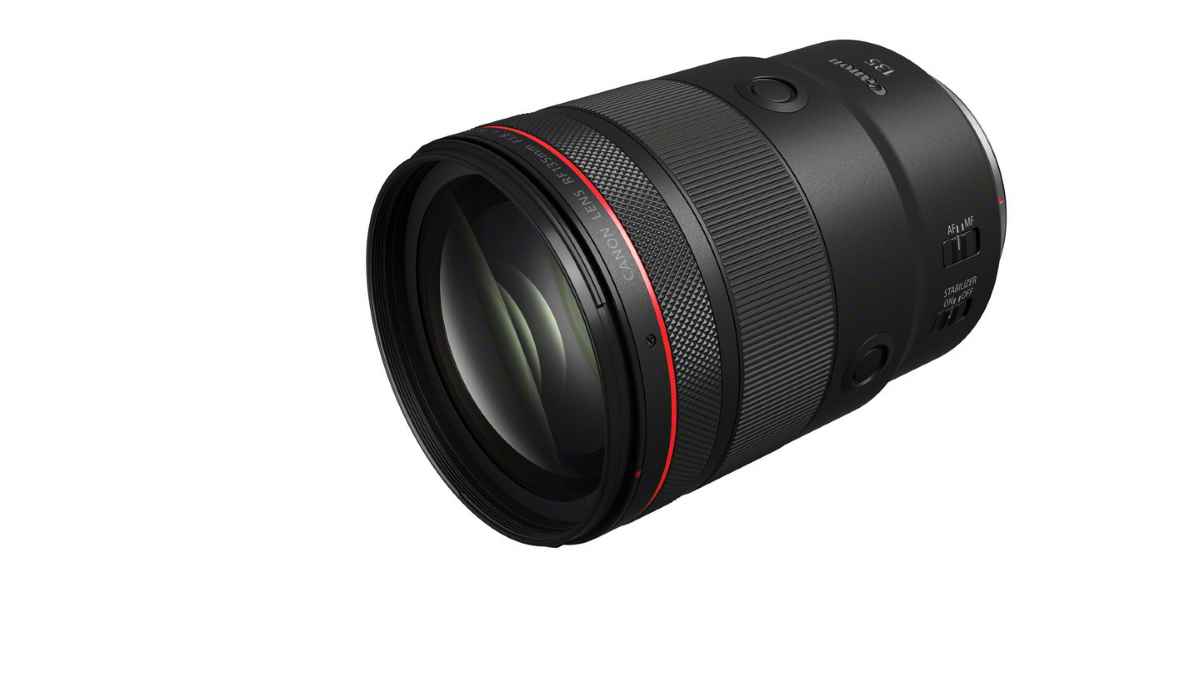
Fast and bright, the RF 135mm F1.8L IS USM and SPEEDLITE EL-5 offer portrait and event photographers more creative freedom
DUBAI, United Arab Emirates, November 4, 2022/APO Group/ —
Canon Europe today announces the launch of the RF 135mm F1.8L IS USM, a telephoto prime lens ideal for shooting portraits in low-light and the SPEEDLITE EL-5, a high-performance Speedlite for capturing weddings and events. A fast, bright f/1.8 aperture and built-in optical image stabilizer enable the RF 135mm F1.8L IS USM to capture crisp images with a soft background, while the longer focal length creates flattering portraits. Offering the same intuitive design as the EL-1 and advanced performance at a competitive price, the SPEEDLITE EL-5 is the perfect accessory for professional photographers. Canon (www.Canon-CNA.com) is also announcing a Neural Network Image Processing tool will be added to its DPP software, enabling photographers to improve the quality of the images they capture.
Capture stand-out portraits with the RF 135mm F1.8L IS USM
The successor of the popular Canon EF 135mm f/2L USM, the RF 135mm F1.8L IS USM achieves striking portraits thanks to the combination of a fast f/1.8, 9-blade aperture and 135mm focal length that create a beautiful bokeh effect, while compressing subject features for more flattering shots. This also creates a more comfortable and relaxed shooting environment thanks to the additional distance between subject and photographer, for natural looking photos whether capturing tight headshots or full body shots. The RF 135mm F1.8L IS USM is also perfect for close shooting, with a focusing distance of 0.7m that gives a 0.26x magnification. RF 135mm F1.8L IS USM also employs an Optical Image Stabiliser for up to 5.5 stops of stabilization, which increases to 8 stops with co-ordinated stabilization[i], which is ideal when shooting in low light or hand-held.
As with Canon’s entire RF lens range, the RF 135mm F1.8L IS USM delivers exceptional image quality across the entire frame. The advanced optical design features three UD elements to ensure high resolution, accurate colour reproduction and reduce chromatic aberrations. With ASC and Super Spectra Coating, the RF 135mm F1.8L IS USM also benefits from minimal ghosting or flare, while the fluorine coating helps to keep the lens free from dirt for sharp images every time.
The RF 135mm F1.8L IS USM offers effortless operation and handling, to support photographers in high-pressure shooting scenarios such as weddings or live sporting events. A Nano USM motor enables fast and quiet AF operation, which, coupled with Canon’s Eye AF feature[ii], ensures the RF 135mm F1.8L IS USM accurately focuses on the subject’s eye so that the photographer can concentrate on the composition – useful when shooting with a shallow depth-of-field. The RF 135mm F1.8L IS USM is Canon’s first ever lens, other than super-telephoto lenses, to feature two Lens Function buttons, which can be used for AF-stop function or other features. A Control Ring can also be customised to change various settings from the lens such as shutter speed, aperture or ISO. Dust and water-resistant seals around the lens mount ensure reliability in any shooting conditions.

SPEEDLITE EL-5: Powerful, yet easy-to-use Speedlite
Packed full of professional features, the SPEEDLITE EL-5 is a high-performance, reliable Speedlite that is a must have for the kit bag of any event photographer. Featuring a Guide Number of 60[iii] and a blisteringly fast flash recycle time of 0.1-1.2 seconds [iv], it’s never been easier to illuminate action-packed events such parties or weddings. Likewise, the rechargeable Li-ion Battery Pack LP-EL enables a long continuous flash count at up to 85 flashes at full power, and up to 350 flashes in a single charge, at full power[v]. For more subtle lighting requirements, the extended manual power setting enables users to set the flash to 1/1024th power[vi].
Canon’s first Speedlite to feature a Multi-Function foot that is compatible with the latest EOS R series cameras[vii], the SPEEDLITE EL-5 uses gold plated contacts to ensure a reliable connection with the camera and improved communication. For reliable performance even when shooting with flash for long periods of time, the SPEEDLITE EL-5 is designed with an efficient passive cooling system that allows heat to dissipate more quickly. When shooting in adverse weather conditions, the dust and water resistance seals give photographers confidence in their kit.
Built for professional workflows, the SPEEDLITE EL-5 offers a number of features such as wireless radio control for up to 15 additional Speedlites and a Camera Link function that allows photographers to trigger external cameras connected to these Speedlites. The Dual White LED light acts as modelling light or AF assist lamp, to support focusing in low light situations. With the custom flash mode (C.Flash), users can register flash settings (C1, C2, C3) on the Speedlite and can also ‘link’ these to the camera’s custom modes[viii], which act as a pre-set to speed up workflows in more complex environments. With the same intuitive design and menu system as the EL-1, the SPEEDLITE EL-5 offers a familiar joystick and button layout along with a new (Flash) Menu Direct button for easy access to the Speedlite settings menu on the camera.
DPP Cloud Upgrade
Canon has also bolstered its Digital Photo Professional software for advanced photographers, with a new subscription-based Neural Network Image Processing tool that enhances image quality through the power of cloud computing and Canon’s advanced AI technology. Photographers are able to reduce noise, while restoring detail and sharpness, previously not possible at such a high ISO, improve colour accuracy and benefit from lens optimisation.
Also launching today is EOS R6 Mark II, a full-frame mirrorless camera that delivers innovative ways for hybrid shooters to master their creativity – without compromise and no matter what the subject. Capable of continuous shooting at 40fps and featuring Canon’s Dual Pixel CMOS AF to recognize and track more subjects at greater speed, EOS R6 Mark II sets new speed records. A true hybrid, it can also capture superb oversampled 4K 60p video or 6K RAW.
For more information about the RF 135mm F1.8L IS USM please visit: https://bit.ly/3Dyu1Qp
Further details about the SPEEDLITE EL-5 are available here: https://bit.ly/3DwcbNQ
RF 135mm F1.8L IS USM key features:
- Fast f/1.8, 9-blade circular aperture
- 135mm focal length
- 5.5 stops of stabilization (8 stops with IBIS)
- Advanced optical design featuring three UD elements, ASC and Super Spectra Coating
- Nano USM motor for fast and quiet AF
SPEEDLITE EL-5 key features:
- Guide Number of 60, with integrated modelling light
- Fast flash recycle time of 0.1-1.2 secondsiv
- Rechargeable Li-ion Battery Pack LP-EL
- Canon’s first Speedlite to feature a Multi-Function foot
- Wireless radio control for up to 15 additional Speedlites
The advanced optical design features three UD elements to ensure high resolution, accurate colour reproduction and reduce chromatic aberrations
[i] With compatible cameras with in-body Image Stabilisation.
[ii] With compatible cameras.
[iii] When camera is set to ISO100 and zoomed to 200mm.
[iv] Using a fully charged battery under Canon testing conditions.
[v] Using a fully charged battery under Canon testing conditions. Continuous flash count at full output until flash firing restriction Level 1.
[vi] Minimum flash output is 1/128 for high-speed sync.
[vii] For use with compatible cameras with Canon’s Multi-Function shoe. Note, not all functions may be supported with all cameras (the EOS R5 C and camcorders with the Multi-Function shoe are not supported).
[viii] With compatible cameras.
Distributed by APO Group on behalf of Canon Central and North Africa (CCNA).











Business
CIT VERICASH Recognized as Best Digital Financial Services Platform of 2026 by Global Business Outlook

Business
Comsol enters wholesale 5G home broadband market with backing from new shareholders

Business
Electra Mining Africa: Showcasing the Technologies Shaping the Future of Industry
More than 1,000 exhibitors, technical seminars, industry forums and networking opportunities will bring together the people, products and ideas shaping industrial progress across Africa
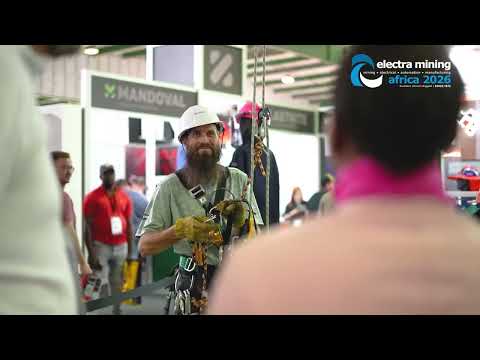
Taking place from 7-11 September at the Johannesburg Expo Centre in Nasrec, Johannesburg, Electra Mining Africa will once again provide a meeting place for industry. Recognised as one of Africa’s leading industrial exhibitions, the event will bring together more than 1,000 predominantly local exhibitors, together with international companies, country pavilions, industry organisations, technical specialists, business leaders and decision-makers from across mining, manufacturing and related industries.
By bringing together six complementary sectors—mining, manufacturing, automation, electrical and power, transport and related engineering sectors—under one roof, Electra Mining Africa enables visitors to explore how integrated technologies and solutions can improve productivity, safety and operational performance. The exhibition provides a unique opportunity to compare products, engage directly with technical experts and discover how innovations from different sectors are increasingly working together to support smarter industrial operations.
Reflecting continued industry confidence, Electra Mining Africa has expanded its footprint for the 2026 edition, growing by 4,000m² to a record 44,000m² of net exhibition space across six indoor exhibition halls and expanded outdoor display areas.
Visitors will have the opportunity to explore solutions ranging from large-scale mining equipment and industrial machinery to automation systems, artificial intelligence (AI), robotics, digital manufacturing, predictive maintenance technologies, power solutions and advanced engineering services. The exhibition also features pumps, valves, welding and fabrication equipment, safety solutions, personal protective equipment (PPE), tools, components and specialist industrial services.
Electra Mining Africa has become an important business platform for companies serving markets across Africa. At the previous edition, industry professionals from 58 countries were represented, reflecting the exhibition’s growing international reach and its role in connecting manufacturers, technology suppliers, distributors, buyers and decision-makers from across the continent and beyond. For many exhibitors, the exhibition provides opportunities to strengthen customer relationships, meet prospective buyers, appoint distribution partners and explore new business opportunities. For visitors, it offers access to both internationally recognised brands and locally developed technologies designed to address the operational requirements of African industry.
Electra Mining Africa brings together the technologies, expertise and industry relationships that help organisations make informed decisions
Beyond the exhibition floor
Electra Mining Africa offers an extensive programme of technical knowledge sharing, professional development and industry collaboration. Free-to-attend seminars hosted by the Southern African Institute of Mining and Metallurgy (SAIMM) will explore practical operational challenges and emerging technologies, while the Society for Automation Instrumentation Mechatronics and Computer Engineering (SAIMC) will present specialist workshops on advances in automation and mechatronics. WiMSA’s Women in Mining workshop will provide a forum for discussion around leadership, opportunity and professional development, and the Lifting Equipment Engineering Association of South Africa (LEEASA) will host its two-day National Conference, bringing together industry professionals to share knowledge and discuss developments affecting the sector.
New for 2026, the SA Institution of Mechanical Engineering (SAIMechE) Skills and Career Hub will strengthen collaboration between industry and the education and training sector, encouraging conversations around future workforce requirements, skills development and innovation. Visitors will also be able to experience the Geological Society of South Africa (GSSA) Explorers Pitch, where finalist student teams present their mineral exploration projects to an expert industry judging panel before the winning team is announced.
Also taking place during Electra Mining Africa are the New Products and Innovation Awards, which recognise outstanding achievements by both local and international exhibitors. Adjudicated by the South African Capital Equipment Export Council (SACEEC), entries are evaluated against a comprehensive set of criteria, including innovation, engineering excellence, research and development, product quality, technical expertise and the practical value each solution delivers to industry. The winners are announced during the exhibition, recognising companies whose products and innovations are advancing technology, performance and industrial application.
“Industrial businesses are facing increasingly complex challenges that cannot be solved in isolation. Electra Mining Africa brings together the technologies, expertise and industry relationships that help organisations make informed decisions, identify practical solutions and build partnerships that support long-term growth. That’s what makes the exhibition such an important meeting place for industry, not only in South Africa but for businesses operating across the African continent,” says Charlene Hefer, Portfolio Director at Montgomery Group, organisers of Electra Mining Africa..
Industry professionals wishing to attend Electra Mining Africa can register (https://apo-opa.co/4xthQPH) as a Standard Visitor free of charge. There is also an option to upgrade to a Diamond Select Visitor.
Distributed by APO Group on behalf of Montgomery Group Africa.