

Business
Inside Africa’s Green Economy: Kevin Munjal on What’s Coming Next
Published
2 months agoon
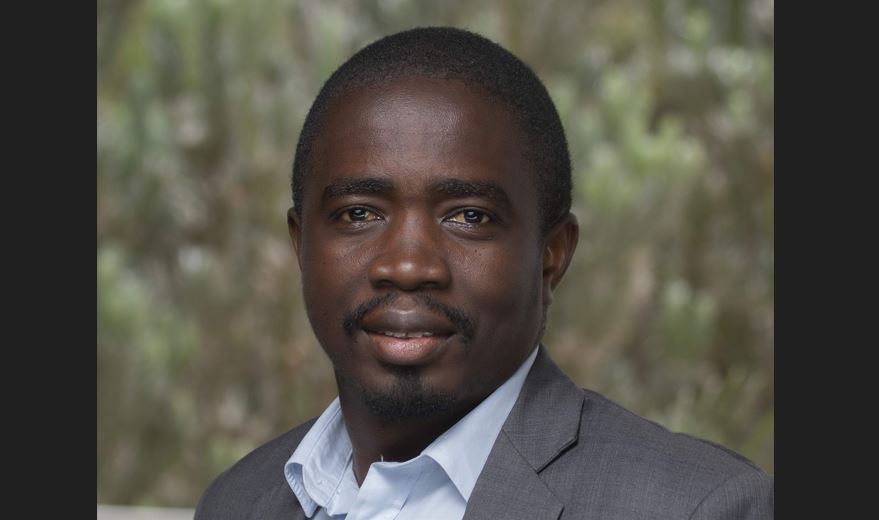
Kevin Munjal, Director of Development Impact at FSD Africa, highlights the potential for up to 84.5 million green jobs in Africa by 2050 if capital flows to service-led value chains, regulations are enforced, and skills systems modernised
Interview Summary:
Kevin Munjal, Director of Development Impact at FSD Africa, highlights the potential for up to 84.5 million green jobs in Africa by 2050 if capital flows to service-led value chains, regulations are enforced, and skills systems modernised. He stresses vocational training models with guaranteed income pathways, innovative financing that embeds workforce development into green infrastructure, and mobile-based social protection for informal workers.
Gender equity requires targeted interventions across both formal and informal economies. Clean cooking and waste recycling are identified as transformative sectors, while national strategies must reflect distinct labour market structures in Nigeria, South Africa and Kenya.
Let’s start with some background on you and the work that you do for FSD Africa. Where in Africa are you active?
My name is Kevin Munjal, I’m the Director of Development Impact at FSD Africa. FSD Africa is a specialist development agency deploying financial and non-financial instruments to strengthen Africa’s financial sector to enable the continent to mobilise sustainable capital at scale for financing of its development needs. We currently have a presence in over 30 countries.
As Director of Development Impact, I oversee the body of work that helps FSD Africa understand the effectiveness of its financial sector development strategies. Together with my team, we help craft and test hypotheses, generating data and insights that inform stronger programming.
I also oversee a growing portfolio of work on green skills and jobs, advocating for climate financing strategies that enable a just green transition in Africa.
The recently published FSD Africa report projects up to 84.5 million green jobs by 2050. What policy choices are most critical to ensure Africa reaches the high scenario outcome rather than falling short?
The gap between the low and high scenarios, 18 million jobs by 2050, comes down to three things: where capital is directed, whether regulations are enforced, and whether skills systems keep pace with deployment.
On capital, the high scenario requires finance to flow toward service-led value chains like clean cooking, solar home systems, waste recycling, e-mobility, rather than concentrating in utility-scale infrastructure. These service chains generate more jobs per dollar and reach more people.
On regulation, the gap between policy intent and market reality is enormous. Thirteen African countries have published e-mobility strategies, but very few have operational enforcement frameworks. Clean cooking targets appear in only 45% of African NDCs.
On skills, the training systems that exist are largely calibrated to legacy technologies. There are no national training programmes for IoT-enabled remote operations, battery management system governance, or carbon measurement and verification in any of the three countries we studied.
How can African governments and industry rapidly scale vocational training and skills systems to meet demand?
Africa’s renewable energy workforce is around 324,000 people—just 2% of the global total—despite the continent holding 60% of the world’s best solar resources. That gap cannot be closed through the formal TVET system alone, which is too slow to reform and too geographically fixed to reach the workers who need it most.
The most effective approaches we’ve seen share a common design principle: train for a specific job with a guaranteed income pathway. The Rural Electrification Agency’s NextGen model in Nigeria—bootcamp training paired with a nine-month paid internship—is a strong example. South Africa’s Grootbos Green Futures programme places 90% of its trainees into roles in the local restoration economy.
Beyond individual programmes, three instruments can scale quickly without new legislation. Recognition of prior learning, embedding green skills modules into existing qualifications rather than creating standalone credentials, and making industrial apprenticeships paid, which has been shown to dramatically improve female retention.
Less than 1% of climate finance currently goes to skills development. What innovative financing mechanisms could redirect capital towards workforce training?
Less than 1% of climate finance currently goes to skills development. While “Jobs created” is the standard metric for investors, it tells you nothing about whether those jobs are decent, skilled, or sustainable.
The first shift needed is to embed workforce development criteria directly into green infrastructure financing. If a DFI is deploying capital into a solar project, a defined share of that deployment should be earmarked for training. Gender inclusion criteria should also be part of the deal terms.
To move beyond grants, need to identify how the underlying assets of a green investment can innovatively finance the skilling of workers. For instance, can a portion of the carbon revenue generated by a green investment be used to finance skilling, In principle, more private finance needs to be directed to the skilling agenda if it is to be sustainable, hence the need to find financing models that can enable this.
The report warns that 86% of green jobs in 2030 will be informal. How can stakeholders extend social protection and career pathways to informal workers, especially women and youth?
By 2030, 86% of green jobs will be informal. That is not a problem to solve for, it is the structure of Africa’s green economy, and any serious strategy has to work within it rather than around it.
Three instruments matter most. Mobile-based social protection, linked to the digital payment platforms that African workers already use, can extend access to health insurance, accident cover, and pensions for self-employed green workers.
Our research is very clear that there is no single African green transition, and a continental template would miss the mark badly
Portable digital credentials, verified through employer records and accessible on basic mobile devices, allow workers to build a recognised skills profile that travels with them across employers and markets. For young people in particular, this converts informal experience into a career asset.
Finally, giving micro-distributors access to working capital and trade finance allows nano and micro-enterprises to build the enterprise performance records that financial institutions need to extend credit. This is how you move someone from a survivalist activity to a sustainable livelihood.
Staying with women, they are concentrated in lower value, commission-based roles. What targeted interventions could ensure gender equity and progression opportunities in the green economy?
Women are projected to hold 31% of green jobs by 2030 and 44% by 2050. That sounds positive until you look at where those jobs are concentrated—the lowest-value, most informal, commission-based roles, with no contract, no social protection, and no progression pathway.
The barriers are structural and well-documented. Safety and mobility issues prevent women from taking on remote or overnight technical assignments. Women’s care burdens conflict with the rigid schedules of higher-tier roles. Gaps in certification and field placement mean that women who complete technical training often cannot convert it into employment.
The most effective interventions address these simultaneously rather than one at a time.
In South Africa, where the green economy is highly formalised, the levers are procurement standards, worksite infrastructure and embedding these into financing conditionalities so they become institutional expectations rather than voluntary practice.
In Nigeria and Kenya, where growth is happening through informal channels, the priority is expanding women’s access to distribution roles and providing working capital for women-led enterprises through catalytic finance instruments.
Gender covenants in DFI financing, specifying targets by value chain and tracking women in technical and management roles, are the accountability mechanism that makes all of this stick.
Africa’s transition is mainly driven by service-led industries. In your view, which of these sectors are most transformative for inclusive job creation?
Clean cooking stands out. By 2030, it is projected to be the largest green value chain on the continent generating between 1.4 and 2.5 million jobs through micro-distributors, maintenance technicians, and community agents. By 2050, clean cooking employment is projected to grow more than tenfold. The majority of customers are women, which means effective distribution requires women as agents, and the sector is approaching gender parity in our high-scenario projections.
Waste recycling is the other sector I’d highlight. It has the highest accessibility rates for low-income workers, around 72%, and the regulatory frameworks to drive formalisation are already in place in South Africa, Kenya, and increasingly Nigeria. South Africa’s Extended Producer Responsibility regime has already created over 24,000 formal jobs since 2022.
The common thread in both sectors is that employment is driven by service delivery at scale with millions of household connections and collections, not a handful of large construction projects. That is precisely what makes them transformative: the jobs are distributed, the barriers to entry are low, and the potential to reach workers who have been structurally excluded from the formal economy is real.
The report highlights differences across Nigeria, South Africa and Kenya. How should national strategies be tailored to reflect these distinct labour market structures and enabling conditions?
Our research is very clear that there is no single African green transition, and a continental template would miss the mark badly.
Nigeria’s transition is 87% informal and dominated by nano-enterprises. Mandating formalisation will not work at the scale and speed the sector requires. The priority is improving job quality within informal systems—portable credentials, mobile social protection, quality standards within agent networks—while expanding the sectors where women are better represented, like climate-smart agriculture.
South Africa’s transition is 70% formal, shaped by regulated procurement frameworks and the most capitalised just transition plan on the continent. The challenge here is not reaching informal workers; it is reforming conditions within formal systems, particularly the occupational segregation that keeps women’s participation stagnant at around 25%, and ensuring that the shift from construction-phase to operations and maintenance roles translates into improved incomes.
Kenya occupies a middle ground—a renewable electricity system already operational, an emerging e-mobility sector anchored by the continent’s most mature mobile money infrastructure, and a devolved governance structure that requires green skills to be integrated at the county level if employment benefits are to reach workers where deployment is actually occurring.
FSD Africa is launching the Green Jobs Innovation Hub. What role do you envision this initiative playing in bridging the gap between investment in infrastructure and investment in human capital?
The hub is a direct response to the coordination failure that sits at the heart of this problem. Training institutions cannot invest in green skills without demand signals from employers. Employers cannot plan workforces without deployment pipelines. DFIs cannot condition financing on workforce outcomes without data on what those outcomes should look like. And governments cannot sequence skills expenditure without occupation-level employment projections. Everyone is waiting for someone else to move first.
The Green Jobs Innovation Hub is designed to break that deadlock by bringing these actors together around shared data, shared standards, and shared investment. Concretely, The Hub works to unlock financing models that close the workforce investment gap—ensuring that capital flows alongside green infrastructure investment.
Any final thoughts from your side?
The most important thing I want to emphasise is that Africa’s green transition is not primarily a story about solar panels and megawatts. It is a story about millions of micro-distributors, maintenance technicians, waste sorters, and community agents, people who are already doing this work, largely informally, largely without recognition, and largely without protection.
We also have the data now. We know which value chains will generate the most jobs, we know who those jobs will reach, and we know what is preventing more people from accessing better ones.
Therefore, we should stop separating the infrastructure conversation from the human capital conversation. They are the same investment. And until we finance them that way, we will keep building green infrastructure that imports its skills and perpetuates the same development challenges we’ve seen over the years.
Distributed by APO Group on behalf of VUKA Group.
You may like
-

Emirates and the Kenya Tourism Board sign partnership agreement to drive inbound tourism
-


Afreximbank and Development Bank of Southern Africa establish a Joint Project Preparation Facility to advance bankable projects in Southern Africa
-


Created to explore: Canon EOS R8 Mark II inspires full-frame confidence and stability in a travel-ready size
-


Load shedding has eased: South Africa now faces its next industrial energy test
-
Afreximbank extends US$10-million facility to Azania Bank to support Small and Medium-sized Enterprises (SMEs) in Tanzania
-

Hong Kong’s First Five-Year Plan sets out long-term vision for development
Business
Emirates and the Kenya Tourism Board sign partnership agreement to drive inbound tourism
Published
8 hours agoon
September 18, 2026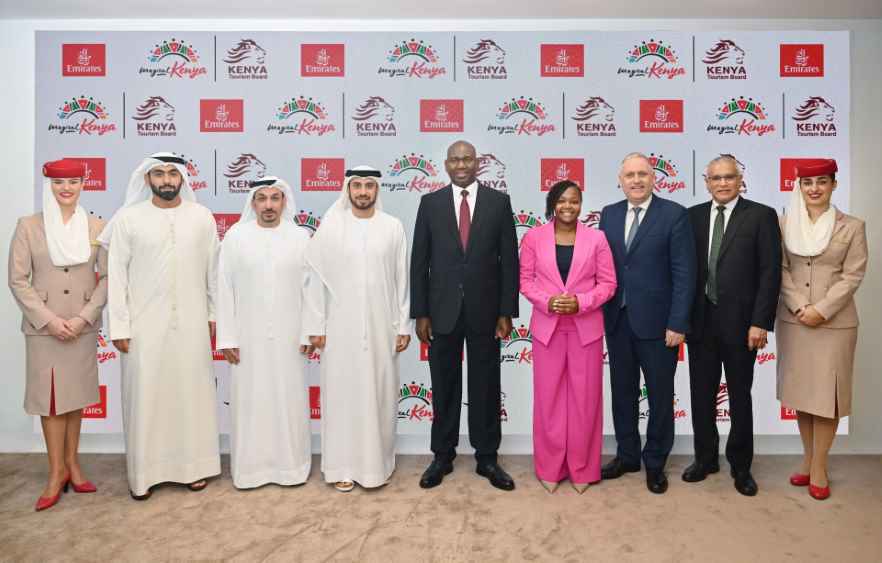
Reinforcing the airline’s longstanding commitment in market, the partnership agreement supports Kenya’s ambition to be the most visited tourism destination in Africa by promoting the destination in key regions on the airline’s vast global network
The partnership agreement was signed by Adil Al Ghaith, Emirates’ Senior Vice President of Commercial Operations, Centre, and June Chepkemei, Chief Executive Officer of the Kenya Tourism Board, in the presence of Ambassador. (Professor.) Julius K. Bitok, CBS. Principal Secretary, State Department for Tourism, and Adnan Kazim, Deputy President and Chief Commercial Officer, Rashid Alardha, Vice President of Commercial Operations for Sub-Saharan Africa, Emirates and Christophe Leloup, Emirates’ Country Manager in Kenya, along with other senior officials.
Adil Al Ghaith said, “Kenya has been an important market for Emirates for over three decades, and our commitment goes much deeper than operations and connections. We’ve consistently invested in our presence in the market, working closely with travel trade partners and tourism stakeholders to stimulate inbound travel, and contribute positively to the global perception of Kenya. Nairobi remains one of the top 5 busiest gateways for Emirates in Africa, with significant traffic coming from UK and Europe, as well as the US. This partnership solidifies that longstanding commitment, enhancing our collaboration with the Kenya Tourism Board and the full, thriving tourism ecosystem across Nairobi and Kenya.”
We are delighted to partner with Emirates to strengthen Kenya’s global tourism profile and showcase the remarkable experiences our destination offers to travellers around the world
June Chepkemei said, “We are delighted to partner with Emirates to strengthen Kenya’s global tourism profile and showcase the remarkable experiences our destination offers to travellers around the world. Emirates’ extensive international network and strong reach in both established and emerging markets will help us build on the growing demand for Kenya and unlock new opportunities to attract more visitors. This collaboration reflects our shared commitment to promoting Kenya as a leading, diverse and unforgettable destination, while supporting the continued growth of inbound tourism and the many communities that benefit from it.”
Tourism is a key pillar in Kenya’s economy, creating thousands of employment opportunities and serving millions of tourists who visit the country each year. The Kenya Tourism Board has bold plans to establish Kenya as the most visited tourism destination in Africa, with a year-round calendar of diverse, sustainable and authentic experiences that appeal to a swathe of international visitors.
Under the framework of the partnership agreement, Emirates and KTB will explore joint initiatives to promote Kenya in key markets on the airline’s global network, showcasing the breadth of Kenya’s year-round tourism offering, and encourage more travellers to visit. The partners will also closely collaborate to develop programmes for trade partners and tour operators that educate and excite the industry, such as incentives, familiarisation trips and other marketing initiatives.
Last year, Emirates marked 30 years of operations to Nairobi and, during that tenure, has established deep-rooted ties with local communities and the travel trade ecosystem. Earlier this month, the airline’s tour operating arm, Emirates Holidays, signed a Memorandum of Understanding with the Kenya Association of Travel Agents to stimulate outbound travel by equipping over 300 travel agencies with enhanced product and network insight and competitive promotional opportunities.
Distributed by APO Group on behalf of The Emirates Group.
Business
Afreximbank and Development Bank of Southern Africa establish a Joint Project Preparation Facility to advance bankable projects in Southern Africa
Published
11 hours agoon
September 18, 2026
Through the JPPF, the institutions will jointly originate, screen and prioritise projects and support the technical, financial and legal work required to address bankability constraints
The agreement is one of the first operational instruments to follow South Africa’s accession to the Afreximbank Establishment Agreement in February 2026. South Africa became Afreximbank’s 54th member state in February 2026, when the Bank also announced a US$ 8 billion Country Programme for the country. The agreement complements the Master Risk Participation Agreement signed by Afreximbank and DBSA in February 2026, extending the partnership upstream into project preparation. It also supports the objectives of South Africa’s National Development Plan 2030, SADC integration and implementation of the African Continental Free Trade Area (AfCFTA).
Mrs Kanayo Awani, Executive Vice President, Intra-African Trade and Export Development, signed on behalf of Afreximbank, while Mr. Greg Fyfe, Chief Investment Officer, DBSA, signed on behalf of his institution.
Through the JPPF, the institutions will jointly originate, screen and prioritise projects and support the technical, financial and legal work required to address bankability constraints. Priority sectors include power and energy, with particular attention to energy transition; transport and logistics; information and communication technology; strategic minerals beneficiation; and other mutually agreed sectors aligned with national, regional and continental development priorities. The framework will focus initially on South Africa and the wider Southern African region, with scope to consider other African jurisdictions of mutual interest.
Through this partnership with Afreximbank, we are leveraging our complementary strengths to improve project preparation
Through the JPPF, Afreximbank and DBSA will collaborate to advance high-impact projects from concept stage to bankability. The focus will be on trade-enabling infrastructure, industrial development, and export-oriented initiatives across South Africa and the Southern African region, with potential extension to other African jurisdictions of mutual strategic interest.
Commenting on the agreement, Mrs. Kanayo Awani, Executive Vice President, Intra-African Trade and Export Development at Afreximbank said:
“Africa’s infrastructure challenge is not only about shortage of capital; it is also about shortage of projects prepared to the standard required by investors and lenders. This JPPF addresses this critical constraint. By combining Afreximbank’s trade and industrialisation mandate with DBSA’s infrastructure-development expertise, we will help move priority projects from concept to investment readiness and mobilise the larger pools of public, private and blended finance required for implementation. For South Africa and the wider Southern Africa region, this is how project preparation becomes a practical instrument for industrialisation, export growth and regional integration under the AfCFTA.”
Gregory Fyfe, Chief Investment Officer at DBSA, said:
“The Joint Project Preparation Facility represents a significant step towards strengthening the pipeline of bankable infrastructure and industrial projects across South Africa and the Southern African region. Through this partnership with Afreximbank, we are leveraging our complementary strengths to improve project preparation. This will unlock investment opportunities and accelerate the delivery of infrastructure that supports economic growth, industrialisation and regional integration. This initiative reflects DBSA’s commitment to infrastructure-led development and to enabling sustainable, long-term impact through well-prepared projects that attract both public and private sector investment.”
Projects developed through the JPPF may seek downstream funding from Afreximbank, DBSA. They may also be presented to private investors, development finance institutions and commercial lenders, subject in every case to separate appraisal and approval. Both institutions will actively collaborate on origination, preparation, knowledge-sharing, and portfolio monitoring to accelerate project bankability and execution.
Distributed by APO Group on behalf of Afreximbank.
Events
Advancing the Agentic World, Building a Solid Silicon Foundation
Published
15 hours agoon
September 18, 2026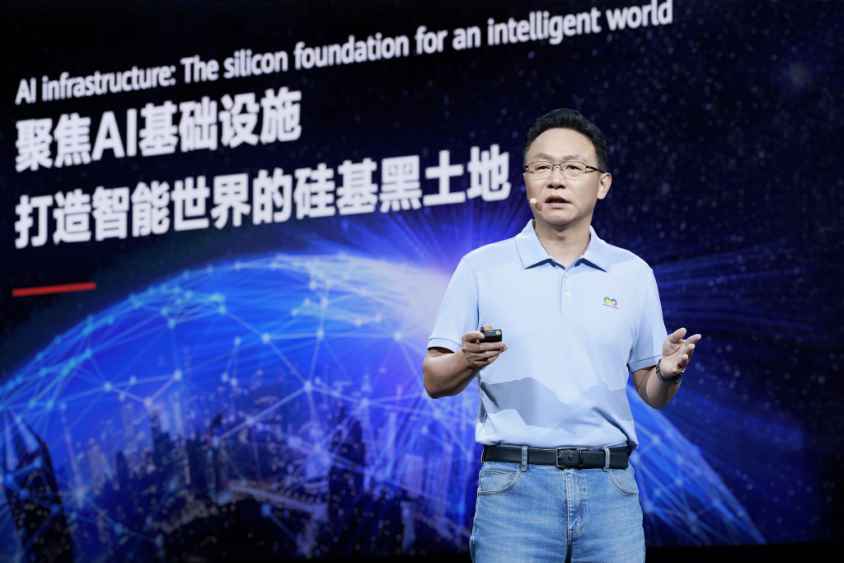
Key takeaways:
- Strategic focus: The rapid approach of an intelligent world is driving up demand for computing power. Huawei is focused on developing AI infrastructure, and is actively driving innovation in systems and architecture centered around SuperPoDs and SuperClusters. These efforts are aimed at building a solid silicon foundation for the intelligent world.
- Technological breakthroughs: Huawei unveiled the Atlas 960E SuperPoD, the first in the industry to use NPO. The company also launched an upgraded TaiShan 950 SuperPoD, as well as the OceanStor M900 (a memory context storage system). Interconnected with UnifiedBus, Huawei’s agentic SuperCluster can scale up to one million NPUs.
- Open ecosystems: Huawei is actively building out open computing ecosystems. To date, the Kunpeng ecosystem has attracted 4.16 million developers from around the world. CANN has moved to sustained, community-driven open-source development. Ascend now spans over 90 leading third-party open-source projects and is officially supported as a PyTorch accelerator backend.
SHANGHAI, CHINA – Media OutReach Newswire – 17 September 2026 – HUAWEI CONNECT 2026 kicked off today in Shanghai. The first keynote of the date was by David Wang, the Deputy Chairman of the Board and Rotating Chairman at Huawei. In his speech (Advancing the Agentic World, Building a Solid Silicon Foundation), Wang highlighted the work the company is doing alongside industry stakeholders to build powerful AI infrastructure, lay a solid computing foundation, and address the challenges and opportunities in the intelligent world to come.
AI is sweeping the world faster than any previous technological revolution. Today, foundation model parameters are rapidly approaching 10 trillion, and are projected to exceed 100 trillion by 2030. AI agents can now work on the same task continuously, for hours on end. By 2030, they will be able to handle tasks that span months.
In China alone, the average number of inference tokens consumed every day has surged to around 500 trillion, and is expected to reach quintillions (1018) by 2030.
On-device AI is also advancing rapidly. On-device models for smartphones have expanded from three billion parameters in 2024 to 30 billion today, and will push toward hundreds of billions in the near future.
These trends will set a much higher bar for the scale, performance, and reliability of underlying technical systems. Only by building powerful AI infrastructure can the industry lay a solid foundation for the future intelligent world.
An intelligent world is approaching – and faster than ever. To lead the charge into this new world, Huawei is laser-focused on building out AI infrastructure – the silicon foundation for the future to come.
In particular, Huawei’s AI strategy is centered on computing power, with a focus on monetizing hardware. The company is also sharpening its competitive edge through systems and architectural innovation. Centering these efforts on SuperPoDs and SuperClusters, the company aims to build a solid computing foundation and offer a new option for the world.
Huawei is a major contributor to open computing ecosystems, and will continue to support native training for mainstream foundation models on its systems, as well as supporting a vast range of models and applications.
For customers, Huawei provides flexible on-premises and cloud compute solutions for its customers to accelerate intelligent transformation across industries.
With diverse forms of compute, including solutions for micro-, low-tier, mid-range, and massive computing power – Huawei is driving the expansion of on-device and in-vehicle AI, making intelligence truly ubiquitous.
Additionally, Huawei is dedicated to building next-generation communications networks to bring readily available compute and intelligence to every person, home, and organization.
SuperPoDs gain broad consensus, with adoption growing in industries, academia, and research institutes
To date, over 1,000 Atlas 900 A3 SuperPoDs have been deployed, and Atlas 950 SuperPoD is seeing large-scale commercial use. While adoption continues to grow, SuperPoDs have gained broad acceptance across industry, academia, and research institutions as a key direction for AI infrastructure. Currently, a SuperPoD is explicitly defined as a computing system in which multiple computing nodes are tightly coupled through high-speed interconnect protocols, featuring unified memory addressing across physical nodes — functioning like a single logical computer.
SuperPoDs are the go-to choice for AI infrastructure buildout. Right now, 100k-NPU computing clusters have become the baseline for training SOTA models. However, traditional server architectures result in intra-cluster communications that account for over 40% of total training time, severely constraining Model FLOPs Utilization (MFU). Simulation results from Huawei’s Markov Lab show that a 100k-NPU cluster built with 4k-NPU SuperPoDs can deliver a 2.75x increase in MFU compared to a 100k-NPU cluster composed of 8-NPU servers.
11-chip UnifiedBus-powered portfolio for SuperPoDs and SuperClusters; the Atlas 960E SuperPoD –the industry’s first to use NPO
The Ascend series of chips is the most critical component in Huawei’s 11-chip UnifiedBus-powered portfolio for SuperPoDs and SuperClusters. Development on Ascend 960 has exceeded the company’s expectations, with performance doubling as planned. Ascend 960DT will be available in Q1 2027, three quarters ahead of the company’s original roadmap. And the Ascend 960PR will be ready in Q3 2027, one quarter ahead of schedule.
“We’re evolving our Ascend chip series on a one-generation-a-year cycle,” said Wang in his keynote. “In 2028 and 2029, we will roll out the Ascend 970 and 980 chips, respectively. Thanks to the Tau (τ) Scaling Law, not only will their compute specifications continue to double, but you can also expect to see huge improvements across the board in terms of memory bandwidth, memory capacity, interconnect bandwidth, and more.”
In addition to Ascend chips, Huawei has also developed a complete portfolio of chips for AI infrastructure, based on UnifiedBus, delivering key capabilities that cover computing, interconnect, storage, and management.
“SuperPoDs are designed to coordinate multiple NPUs through interconnect,” continued Wang. “We have developed a next-generation optical interconnect product based on near-packaged optics (NPO): the High-density Optical-interconnect-Node Engine (Hi-ONE).” Built on Huawei’s proprietary technologies, Hi-ONE has a multi-physics design for balancing optical, mechanical, electrical, electromagnetic, and thermal performance, realizing a transmission capacity of 7.2 Tbit/s per single engine.
“This is the industry’s first NPO product ready for mass production, delivering the largest transmission capacity. It is also the industry’s first NPO product with a built-in light source.”
This product combines high bandwidth and high reliability with low latency and low power consumption. This, coupled with UnifiedBus, will make it far easier to scale up SuperPoD interconnect systems.
Recently, Huawei submitted an implementation agreement (IA) on NPO to the Optical Internetworking Forum (OIF), a standards organization. The response from numerous industry partners has been widely positive. Huawei will continue its efforts to further refine the NPO industry ecosystem.
Using Ascend 960 chips and Hi-ONE, Huawei has developed the industry’s first NPO-based SuperPoDs: the Atlas 960E SuperPoDs. A single Atlas 960E SuperPoD can scale up to 4,096 NPUs, delivering 8 EFLOPS of FP8 compute performance, with up to 1 petabyte of HBM capacity. With 5,500 Hi-ONE units, this SuperPoD doesn’t need the 48,000 800G optical modules that would traditionally be required to connect all the NPUs. This cuts power consumption by over 550 kilowatts, while doubling the system’s fault-free operating time, achieving 99.8% system availability.
Combining the upgraded TaiShan 950 SuperPoD and context memory storage to power an ultrascale cluster with 1 million NPUs
As SOTA models scale to 10 trillion parameters, training and inference can no longer rely on a single AI server or AI SuperPoD – they require a more complex computing system. This system includes AI SuperPoDs, general-purpose SuperPoDs, and an interconnect system that features peer-to-peer interconnect and zero protocol conversion. For inference, including a petabyte-scale KV cache cluster is also a must.
To meet these demands, Huawei has fully upgraded its TaiShan 950 SuperPoD. Powered by UnifiedBus all-optical networking, this new SuperPoD supports up to 4,096 nodes with a unified memory pool of up to 256 TB. This setup significantly improves agent performance. For sandbox-intensive workloads, startup speeds for 100,000 sandboxes are 30 times faster than traditional servers, and sandbox density can be improved by an additional 25%. For vector search across 10 billion x 1,000-dimensional vectors, this SuperPoD delivers twice the search efficiency of traditional servers.
Huawei has also launched OceanStor M900 – a UnifiedBus-powered context memory storage cluster that delivers multi-tier KV caching for agent-heavy and longer-context workloads. Designed for agentic inference, this cluster supports one-hop direct access and provides a petabyte-scale KV cache for the L3.5 layer. OceanStor M900 also uses hybrid media and an optimized retention algorithm, extending SSD read/write lifespan by 16-fold. This ensures a higher KV cache hit rate alongside long-term stability and reliability from the ground up.
Combining its strengths in computing and communications, Huawei has built a brand-new agentic SuperCluster to accelerate training and inference for 10-trillion-parameter models. This SuperCluster uses UnifiedBus to consolidate multiple interconnect protocols into a single unified protocol, significantly reducing protocol conversion overhead. This delivers peer-to-peer interconnect between subsystems like Ascend SuperPoDs, Kunpeng SuperPoDs, and KV cache clusters. The SuperCluster also comes with a multi-tier, high-bandwidth, and large-capacity storage system that enables direct single-hop access for all KV cache tiers.
With a two-tier, four-plane Clos architecture, the SuperCluster can interconnect up to 512,000 NPUs. When combined with a multi-rail topology, this cluster can support up to one million NPUs.
One of Huawei’s core strategies: Going open source and open system to build out computing ecosystems
The Kunpeng ecosystem is driving digital and intelligent innovation across a wide range of industries. To date, the Kunpeng ecosystem has attracted over 4.16 million developers and more than 7,200 ecosystem partners from around the globe. The community currently supports over 560 open-source projects worldwide. openEuler has seen more than 20 million installations, securing the largest share in China’s server OS market.
The Ascend ecosystem has reached a new inflection point. The Compute Architecture for Neural Networks (CANN) is the foundation of the Ascend ecosystem. Today, CANN has moved to sustained, community-driven open-source development, which has brought the platform from usable to user-friendly.
External CANN developers now comprise 61% of all CANN developers, outnumbering internal developers for the first time. With over 5,200 monthly active developers, the CANN community has become the most vibrant open-source community in China. What’s more, over 40 models have been natively pre-trained on Ascend and CANN, making it the only proven domestic stack capable of model pre-training.
Ascend now supports over 90 leading third-party open-source projects, including PyTorch, Triton, vLLM, and veRL. With strong support from the Linux Foundation, Ascend is the first official Chinese compute platform on PyTorch’s website. This gives developers around the world ready access to new innovations in the Ascend ecosystem.
Diverse forms of compute for ubiquitous on-device and in-vehicle AI
AI is expanding faster into all kinds of devices. To deliver an unparalleled AI experience across all scenarios, Huawei will continue to strengthen capabilities in four key areas:
First, Huawei will combine Kirin and Ascend chips to drive self-reliance and autonomy in on-device compute.
Second, Huawei will bring together Pangu models and third-party models to make on-device intelligence better and easier to use.
Third, HarmonyOS, as an Agent OS for ubiquitous intelligence, will be completely redefined from the ground up – spanning system architecture, how it operates, and interaction logic – to enable human-agent collaboration.
Fourth, Huawei will keep cultivating a diverse AI ecosystem, which is the foundation for its system agent Celia to thrive.
Huawei plans to build four on-device computing platforms: for AI phones, AI PCs, vehicles, and homes. Through cross-device and device-cloud compute synergy, Huawei will be able to provide distributed swarm intelligence, delivering integrated and continuous intelligent services across personal mobile, office, vehicle, and home spaces, ultimately bringing intelligence to every person and every space.
Building next-generation communications that prioritize readily available compute, because without networks, all compute is siloed
Next-generation communications networks are crucial for fully unleashing the value of AI compute. We are driving the upgrade to networks that, in addition to connecting people, will prioritize delivering readily available compute. These networks will be underpinned by 5G-A/6G, 10-gigabit optical networks, and multi-tier, low-latency bearer networks, delivering intelligent connectivity across data centers, the edge, and devices.
Concluding his keynote, Wang expressed that AI “may well be the final technological revolution in human history,” noting that its impact is deeper and broader, and coming faster than anyone could have ever imagined. “No single company,” he said, “can build an intelligent world alone.”
He stressed Huawei’s ongoing commitments moving forward:
Huawei will remain committed to building a solid silicon foundation to make computing power readily accessible to all.
The company will continue to open source its software, helping developers unleash their full potential.
It will continue to embrace a wide range of models and applications, unlocking value in every form.
“And we will continue to work together to drive shared success, growing together with our customers and partners around the world,” Wang concluded. “Let’s work together to build a fully connected, intelligent world.”
Themed Advancing the Agentic World, HUAWEI CONNECT 2026 will delve into AI across three dimensions: strategy, technology, and ecosystems. You can expect an in-depth look at our latest strategic initiatives, and we’ll also be unveiling our all-new digital and intelligent infrastructure products, scenario-specific solutions for industries, and development tools. The event will run from September 17 to 19 at the Shanghai World Expo Exhibition & Convention Center and Shanghai Expo Center. For more information, please visit HUAWEI CONNECT 2026 online at www.huawei.com/en/events/huaweiconnect
FAQs:
Q1: What is a SuperPoD, and why is it becoming increasingly important?
A SuperPoD is a computing system in which multiple computing nodes are tightly coupled through high-speed interconnect, enabling them to share unified memory and function like a single computer. As foundation model training and inference continue to scale up, SuperPoDs can reduce communications overhead in large-scale clusters and improve Model FLOPs Utilization (MFU). They have gained broad consensus across industry, academia, and research institutes in AI infrastructure, and are the go-to choice for AI infrastructure buildout.
Q2: What makes the Atlas 960E SuperPoDs special?
The Atlas 960E SuperPoD is the industry’s first NPO-based SuperPoD. A single Atlas 960E SuperPoD can scale up to 4,096 NPUs, delivering 8 EFLOPS of FP8 compute performance, with up to 1 petabyte of HBM capacity. With 5,500 Hi-ONE units, this SuperPoD doesn’t need the 48,000 800G optical modules that would traditionally be required to connect all the NPUs. This cuts power consumption by over 550 kilowatts, while doubling the system’s fault-free operating time, achieving 99.8% system availability. Atlas 960E SuperPoDs can provide efficient and reliable computing power for large-scale AI training and inference.
Q3: What is NPO, and what role does Hi-ONE play in a SuperPoD?
NPO stands for Near-Packaged Optics, an optical interconnect technology designed for high-speed connectivity. Hi-ONE, developed by Huawei, is the industry’s first NPO product ready for mass production. It delivers the largest transmission capacity at 7.2 Tbit/s and is currently the industry’s only NPO product with a built-in light source. Hi-ONE, coupled with UnifiedBus, will make it far easier to scale up SuperPoD interconnect systems.
Trending
-

 Energy4 days ago
African Energy Week Remains a Forum for Investment, Dialogue and Continental Growth
-

 Energy4 days ago
Naledi Mining Services Chief Executive Officer (CEO) Joins African Mining Week (AMW) 2026 Amid Technical, Operational Expansion
-

 Tech3 days ago
Trusted voices, peer validation, and relatable customer situations drive commercial and brand success in B2B campaigns
-
 Business5 days ago
Miners Association of Nigeria (MAN) and Nigerian Association of Chambers of Commerce, Industry, Mines and Agriculture (NACCIMA) Sign Strategic Partnership
-

 Business3 days ago
APO Group Launches New Brand as Africa’s Only Strategic Communications Consultancy with Owned Distribution
-

 Business5 days ago
Angola’s Angolan National Agency for Petroleum, Gas and Biofuels (ANPG) Signs New Deepwater Deals at Angola Oil & Gas (AOG) 2026
-
 Events4 days ago
Hyperscalers Convergence Africa 2026 sets action agenda for Africa’s Digital Infrastructure Buildout
-

 Energy4 days ago
One Month to Go: African Energy Week (AEW) 2026 Gears Up for Five Days of Deals, Dialogue and Energy Leadership