Connect with us
Anglostratits

Business

Diamond Walk at Sandton City Continues to Draw Africa’s Luxury Shoppers
Published

on

Diamond Walk

New arrivals and refined stores including Africa’s first stand-alone Rolex boutique build on its reputation as South Africa’s most iconic retail address

JOHANNESBURG, South Africa, July 10, 2026/APO Group/ –The Diamond Walk at Sandton City (www.SandtonCity.com) in Johannesburg is Africa’s most iconic luxury shopping destination, attracting discerning shoppers from across the continent, with South Africa being such a convenient travel destination for luxury shopping. Known for bringing together many of the world’s most prestigious brands, several of which are the only boutiques of their kind in the country, the Diamond Walk offers an exclusive and effortlessly world-class experience.


For many visitors, it is not only about access to global names, but about how these brands are experienced. Personal shopping, bespoke services and carefully curated store environments ensure that each visit is an experience, setting the Diamond Walk apart as a destination in its own right.

A concentration of global luxury power houses

The strength of the Diamond Walk lies in its exceptional line-up of internationally recognised maisons. Shoppers move between opulent boutiques such as Alexander McQueen, Amiri, Balmain, Burberry, Cartier, Dolce & Gabbana, Ferragamo, Giorgio Armani, Gucci, Jimmy Choo, Louis Vuitton, Tod’s, Versace and the newly renovated Zegna.

The appeal goes well beyond access to these luxury names. Many of the boutiques offer in-store style consultations, bespoke tailoring and personalisation, elevating each purchase into a considered, high-end shopping experience. From luxury timepieces at Breitling, IWC, Patek Philippe and the new Rolex boutique, to the highly sought after ranges sold at Coach, local luxury brand MaXhosa, Montblanc, Yawa and Skins, the Diamond Walk caters to every facet of a luxury lifestyle, bringing together heritage craftsmanship, exclusivity and contemporary design in one address.

Luxurious new names and renewed spaces

The Diamond Walk recently welcomed Africa’s first stand-alone Rolex boutique. This exciting arrival adds further affluence to the Diamond Walk’s watch and jewellery category, attracting collectors who cherish the prestige of this world-renowned brand.

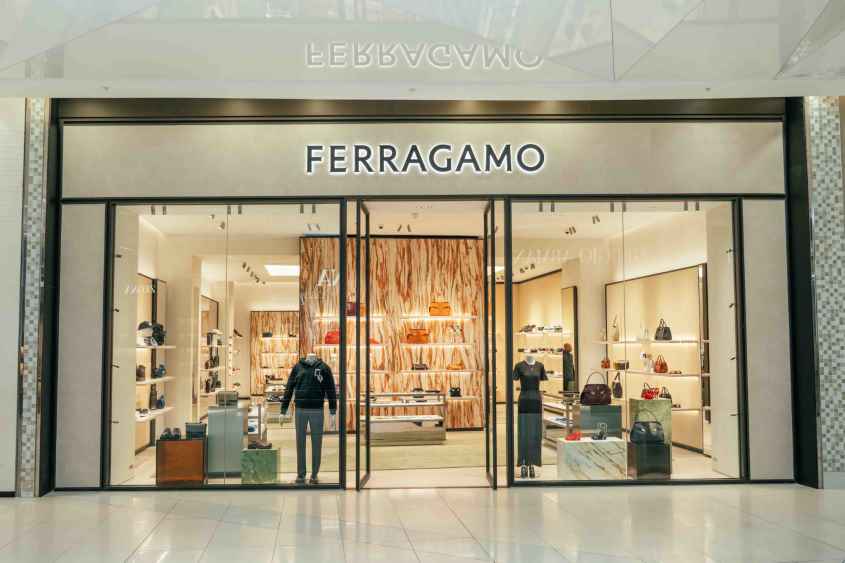
At the same time, the centre’s established brands continue to refine their presence, to stay at the forefront of  global positioning. Salvatore Ferragamo has reopened following a recent renovation, while Ermenegilda Zegna has introduced an updated new-look store environment.  Plus, the iconic Tory Burch will soon be opening a boutique housing timeless and versatile items, reflecting the brand’s passion for travel, colour and distinctive details. These changes ensure that the experience remains in line with what international luxury shoppers expect.

A broader luxury offering at Sandton City

Beyond the Diamond Walk, Sandton City has recently welcomed new international brands into the centre. Recent arrivals include Kate Spade, one of only two stores in South Africa, and Marc Jacobs. Plus, FIFA formal wear outfitter Boggi Milano will be opening soon. Situated close to the Diamond Walk, these stores reinforce Sandton City’s standing as the country’s most extensive shopping destination, with over 300 stores.

With its established line-up of global houses, continued investment from leading brands and the intentional introduction of new names, the Diamond Walk remains the place where luxury retail in Africa is experienced at its highest level.

For regular updates go to www.SandtonCity.com or follow Sandton City on social media @sandtoncitymall.

Distributed by APO Group on behalf of Sandton City.


Events

Hong Kong hosts first LEAP East, drawing 35,000 global innovators

Published

on

LEAP East 2026

HONG KONG SAR – Media OutReach Newswire – 10 July 2026 – The inaugural LEAP East 2026 was held at the Hong Kong Convention and Exhibition Centre (8-10 July), gathering more than 35,000 technology professionals, policymakers and investors from 30 countries and regions. The three-day event, the first LEAP summit staged outside Saudi Arabia, featured over 340 speakers, 450 exhibitors and over 400 investors, covering cutting-edge fields such as artificial intelligence, deep tech, smart cities and new energy industries.

“This turnout speaks volumes about the global appeal of LEAP East and the strength of our shared vision,” said Paul Chan, Financial Secretary of the Hong Kong Special Administrative Region Government (HKSARG) at the opening ceremony of the event. “I am particularly delighted to note that this conference will continue to be held in Hong Kong in the coming three years.”

Other top government officials attending the opening ceremony included Professor Sun Dong, Secretary for Innovation, Technology and Industry of the HKSARG and Abdullah Alswaha, Minister of Communications and Information Technology of Saudi Arabia.

The event underscored the deepening partnership between Hong Kong and Saudi Arabia, and highlighted Hong Kong’s role as a unique gateway connecting the Chinese Mainland with the world.

“Hong Kong is perhaps the only city in the world that connects seamlessly to both the Chinese Mainland and the rest of the world at the same time,” Mr Chan said. “Working under the common law system, we have robust protection for intellectual property. As a free port, capital, goods, talent and data freely flow in and out of this city. Simple, low tax is a standing feature of our regime. And we are one of the safest, most stable cities anywhere in the world. These are the foundations on which businesses, talent and creativity thrive.”

Mr Chan invited Saudi and Gulf enterprises to use Hong Kong as an international fundraising and risk-management platform, and expressed the HKSAR’s commitment to further strengthening co-operation with Saudi Arabia in innovation, infrastructure, green technology, healthcare, advanced manufacturing and professional services.

“Innovation needs capital, and Hong Kong is where capital and ideas meet. This is the heart of our ‘Finance+’ strategy – using finance as a powerful enabler to drive the real economy,” Mr Chan said.

Professor Sun noted that the HKSARG’s efforts in promoting innovation and technology (I&T) are bearing fruit. He said the number of start-ups in Hong Kong has surged by 40% since 2021, reaching 5,200 in 2025. The Shenzhen-Hong Kong-Guangzhou innovation cluster was ranked first globally in the Global Innovation Index 2025 and Hong Kong ranked fourth globally in the World Digital Competitiveness Ranking 2025, and second globally in the World Competitiveness Yearbook 2026.

Hong Kong also topped the world in IPO (initial public offering) in 2025, with 119 listings raising some US$35 billion, including many world tech champions.

Professor Sun also met with Mr Alswaha to exchange views on I&T collaborations between Hong Kong and Saudi Arabia.

“This international gathering reflects the rising global I&T momentum, and Hong Kong is proud to serve as a ‘super connector’ and ‘super value-adder’ for international exchanges,” Professor Sun said.

Meanwhile, Mr Chan revealed that he plans to lead a Hong Kong delegation to Saudi Arabia later this year, bringing leading companies in infrastructure, green tech, healthcare and advanced manufacturing, plus professionals in the finance, investment and professional services sector, to explore concrete projects and further partnership.

Continue Reading

Business

African Economic Conference 2026 opens in Abidjan to explore pathways for a more influential Africa in a multipolar world

Published

on

African Development Bank

Key topics under discussion include strengthening the continent’s financial agency, developing domestic capital markets and addressing the impact of international tensions on African economies

ABIDJAN, Ivory Coast, July 12, 2026/APO Group/ –African countries must act collectively to shape their own future in an increasingly multipolar world. This was the central message at the opening of the 2026 African Economic Conference (AEC) in Abidjan, Côte d’Ivoire, hosted at the headquarters of the African Development Bank Group (www.AfDB.org) under the theme: “Strengthening Africa’s Geopolitical Agency and Trade Resilience in a Multipolar World.”


Jointly organized by the African Development Bank Group (AfDB), the United Nations Development Programme (UNDP) and the Organisation for Economic Co-operation and Development (OECD), this year’s conference brings together leading economists, researchers, policymakers and experts from regional and international development institutions from 10 to 12 July.

Souleymane Diarrassouba, Côte d’Ivoire’s Minister of Planning and Development and Governor of the Bank for Côte d’Ivoire, called for deeper reflection on Africa’s place amid shifting geopolitical dynamics.

“Africa can no longer be viewed merely as a reservoir of raw materials. We must be recognized as a key player in global supply chains, a hub for industrialization, and a force capable of defending its interests within international economic governance,” he said.

Urging participants to move from analysis to action, African Development Bank Group President Dr Sidi Ould Tah stressed the need for a new narrative centred on African agency and influence.

“For decades, discussions about Africa have focused on dependency, vulnerability and adaptation. Today, we must focus on autonomy, resilience, competitiveness and influence. Africa’s geopolitical autonomy will be measured by its ability to negotiate from a position of strength, shape the rules of the game, translate its collective interests into collective action and ultimately influence outcomes,” he said.

Dr Ould Tah added that this vision is fully aligned with the strategic framework he has outlined through the Four Cardinal Points and the New African Financing Architecture for Development (NAFAD).

Africa’s role is no longer to adapt to rules made by others, but to help define the rules of tomorrow

Against a backdrop of mounting global challenges, speakers emphasized the urgent need to redefine international rules and arrangements to strengthen Africa’s strategic position, enhance its economic resilience and enable the continent to seize opportunities emerging from a rapidly changing global order.

Echoing these remarks, Ahunna Eziakonwa, UN Assistant Secretary-General and Director of the UNDP Regional Bureau for Africa, underscored Africa’s growing role in shaping global governance.

“The world is being rewritten. Africa’s role is no longer to adapt to rules made by others, but to help define the rules of tomorrow. Geopolitical influence will not be granted to us; it must be earned through stronger institutions, deeper regional integration, resilient trade and the courage to act together. This conference is where ideas become strategic assets for Africa,” she said.

In a video address, OECD Secretary-General Mathias Cormann highlighted the changing global development financing landscape, arguing that development assistance must be used more effectively while leveraging broader sources of investment.

“For many partner countries, aid is no longer a reliable or growing source of financing. This reality should prompt reflection, but it should strengthen—not weaken—our resolve. We must preserve and prioritize official development assistance where it is most needed while mobilizing significantly larger volumes of development finance from all available sources,” OECD Director of International Development Cooperation, Pilar Garrido added.

The conference’s opening day featured in-depth discussions on industrialization, human capital development, transformation of the informal sector, women’s and youth employment, natural resource governance, digital transformation of public administration and the fight against corruption. Researchers presented their findings before panels of experts and decision-makers, fostering constructive dialogue between academia and public policymakers.

Over the course of the three-day event, participants are drawing on rigorous analysis and evidence-based research to identify practical solutions to Africa’s most pressing challenges. Key topics under discussion include strengthening the continent’s financial agency, developing domestic capital markets and addressing the impact of international tensions on African economies.

Since its inception in 2006, the African Economic Conference has established itself as one of the continent’s premier platforms for policy dialogue and development thinking. It promotes collaboration among researchers, government officials, development partners and private-sector actors to generate innovative solutions to Africa’s socio-economic challenges.

The conference also demonstrates how collaboration among development institutions—including the UNDP, OECD and African Development Bank—can add value by supporting evidence-based policy discussions that accelerate Africa’s development agenda.

The 2026 edition further hosts the annual meeting of the Global Network of Chief Economists of Development and Financing Institutions and will feature the launch of the African Chief Economists Network (ACE Network). In addition, graduates of the second cohort of the Public Finance Management Academy for Africa and the inaugural cohort of the Macroeconomic Policy Management Academy for Africa will receive their diplomas during a special ceremony.

Distributed by APO Group on behalf of African Development Bank Group (AfDB).

Continue Reading

Business

Oando Generates ₦204 Billion Profit and Sees Uplift Across Production and Trading Volumes in Audited FY2025

Published

on

Oando

The Group’s upstream performance was driven by improved facility uptime, enhanced flow assurance, the restoration of previously shut-in wells and targeted infrastructure upgrades across its operated assets

LAGOS, Nigeria, July 10, 2026/APO Group/ –Oando PLC (www.OandoPLC.com), Africa’s leading indigenous energy solutions provider, listed on the Nigerian Exchange Ltd. (NGX) and Johannesburg Stock Exchange (JSE), announced its audited results for the financial year ended 31 December 2025, delivering a 32% increase in average daily production to 32,482 barrels of oil equivalent per day (boepd) and Profit After Tax of ₦204.8 billion. FY2025 marked a transition year for the Group, with the first full-year contribution from the Nigerian Agip Oil Company (NAOC) Joint Venture assets and a shift from acquisition-led growth to operational execution and balance sheet optimisation.


Supporting this performance, the Group generated ₦258.3 billion in cash from operations and closed the year with ₦422.9 billion in cash and cash equivalents, up 172% from 2024, while strengthening financial flexibility through the upsizing of its US$375 million Reserve-Based Lending (RBL2) facility.

Operationally, crude trading volumes increased by 24% to 25.7 million barrels, crude oil production rose by 36%, gas production increased by 24%, and Natural Gas Liquids (NGL) production surged by 715% following upgrades to gas processing infrastructure. The Company also successfully completed and brought onstream the Obiafu-44 gas-condensate well, its first operated development well following the assumption of operatorship, while maintaining zero fatalities, zero Lost-Time Injuries (LTIs) and a Total Recordable Incident Rate (TRIR) of 0.05.

Commenting on the results, Group Chief Executive, Oando PLC, Wale Tinubu CON, said: “FY 2025 marked our first full year of operational execution following the acquisition of the NAOC Joint Venture assets and represents an important milestone in Oando’s evolution. Having successfully completed the integration phase, our focus shifted to operatorship, operational excellence, and value realisation across the enlarged portfolio.

FY 2025 marked our first full year of operational execution following the acquisition of the NAOC Joint Venture assets and represents an important milestone in Oando’s evolution

During the year, we strengthened asset integrity, enhanced security across our operating areas, and improved uptime, resulting in a 32% year-on-year increase in production to 32,482 boepd net to Oando. This performance was driven by stronger output across crude oil, gas, and NGLs, improved operational reliability, and the successful stabilisation of our expanded asset base.”

The Group’s upstream performance was driven by improved facility uptime, enhanced flow assurance, the restoration of previously shut-in wells and targeted infrastructure upgrades across its operated assets. In addition to higher crude oil and gas production, the successful revamp of the NGL processing plant increased recovery efficiency and drove a 715% increase in NGL production. The completion and start-up of the Obiafu-44 gas-condensate well further demonstrated Oando’s ability to safely execute complex development programmes following the assumption of operatorship.

The Trading Division increased crude trading volumes by 24% to 25.7 million barrels despite changing domestic market dynamics. The business continued to optimise its portfolio by reducing exposure to premium motor spirit (PMS) imports and increasing participation in higher-margin crude and gas trading opportunities, strengthening commercial resilience while enhancing integration with the Group’s upstream operations.

Oando’s FY2025 performance comes at a defining moment for Nigeria’s indigenous upstream sector, as local energy companies continue to demonstrate their ability to successfully acquire, integrate and optimise assets divested by international oil companies. In FY2025, Seplat Energy reported revenue of US$2.726 billion (₦4.135 trillion) and average production of 131,506 boepd, reflecting the first full-year contribution from its Mobil Producing Nigeria Unlimited (MPNU) acquisition, while Aradel Holdings grew revenue by 20% to ₦699.4 billion, supported by its increased interest in ND Western and Renaissance Africa Energy Company. Together with Oando’s strong FY2025 performance following the first full-year contribution from the NAOC JV assets, these results underscore a new era for Nigeria’s energy industry, one in which indigenous operators are not only acquiring world-class assets but successfully creating long-term value from them.

Speaking on the Company’s outlook, Tinubu added, “With operational control firmly embedded, a strong reserves base, and improving financial flexibility, we are well-positioned to build on the momentum achieved in 2025 and enter 2026 from a position of strength. Our focus remains on executing our development programme, growing production, strengthening cash generation, prudent capital allocation, and delivering sustainable long-term value for our shareholders.”

Oando expects production to increase to between 40,000 and 50,000 boepd in 2026, supported by a focused development programme across OMLs 60–63, continued production optimisation and planned capital expenditure of US$90–100 million. The Trading Division is expected to increase crude trading volumes to between 30 and 35 million barrels while the Company advances its clean energy initiatives, including the deployment of additional electric buses and the expansion of its recycling and gas-to-power projects.

This outlook aligns with broader industry trends. The International Energy Agency projects continued resilience in global investment across natural gas and upstream energy infrastructure as countries prioritise energy security and diversify supply. Backed by an expanded upstream portfolio, strengthened financial flexibility and a disciplined execution strategy, Oando remains well positioned to accelerate growth, unlock greater value across its integrated energy business and advance its ambition of building Africa’s leading integrated energy company.

Distributed by APO Group on behalf of Oando PLC.


Continue Reading

Trending