Connect with us
Anglostratits

Events

Africa’s Green Economy Summit 2026: Pan‑African green pipeline ready for scale and investors invited to catalyse USD 3.09bn in climate solutions
Published

on

Africa

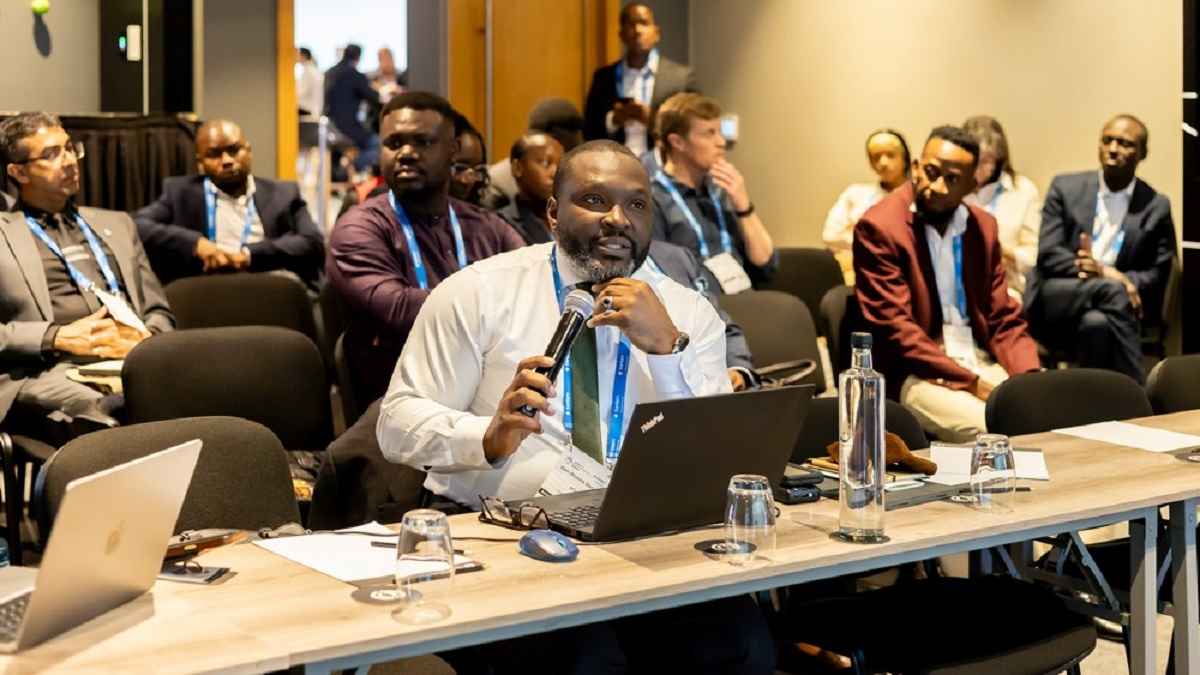
AGES is designed to accelerate transactions through focused pitch sessions, curated 1:1 matchmaking and investor briefings that align founders, DFIs, commercial banks, venture funds and specialist partners
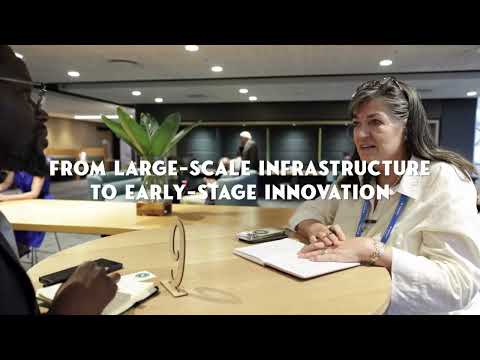
CAPE TOWN, South Africa, February 20, 2026/APO Group/ –Africa’s Green Economy Summit (24–27 February 2026) will present a curated, deal‑ready pipeline of climate projects from more than 25 African countries. Since 2023 our mission has been unchanged: connect global capital with Africa’s ventures. This year’s portfolio spans early‑stage SMMEs and bankable expansion and infrastructure opportunities, together seeking approximately USD 3.09 billion in funding – roughly USD 90 million for SMME-stage pitches and nearly USD 3 billion for expansion and infrastructure.

The projects cover energy, waste, e-mobility and circular economy, food and agriculture, blue economy, built environment and nature‑based solutions, offering investors a rare, investable cross‑section of climate solutions across the continent.


Deal‑ready, technically validated pipeline

AGES is designed to accelerate transactions through focused pitch sessions, curated 1:1 matchmaking and investor briefings that align founders, DFIs, commercial banks, venture funds and specialist partners. The projects on stage are beyond concept: most have pilots, offtake LOIs or bankable feasibility studies. That technical validation, combined with near‑term market demand, creates investable opportunities – provided the right mix of catalytic capital, blended finance and structured risk mitigation.

Elodie Ashdown, Investment Project Lead at VUKA Group, adds: “AGES presents curated deal flow where catalytic investors can unlock both impact and return – from decentralised hydrogen manufacturing to circular industrial solutions and resilient food systems. Now is the moment to mobilise blended capital and turn validated pilots into regional industries.”


Strategic verticals


  • Alternative energy: Projects include electrolyser BoP manufacturing, battery assembly, decentralised solar mini‑grids and AI‑driven energy management. These investments address decarbonisation, energy stability and domestic manufacturing, accelerating access to reliable, low‑carbon power and reducing diesel dependence.


  • Waste management & circular economy: Initiatives range from pyrolysis and advanced battery recycling to medical‑waste sterilisation and composite manufacturing. These solutions turn waste into traded products and feedstock, reduce landfill pressure and generate measurable carbon outcomes – attractive  to impact‑focused and risk‑adjusted investors.


African ecosystems are maturing and investor interest is translating into tangible manufacturing prospects and skilled jobs across the Western Cape and beyond

  • Sustainable agriculture & blue economy: Proposals include vertical farming, organic‑waste‑to‑bioproduct systems, traceable small‑scale fisheries, seaweed‑to‑fuel pathways and insect‑based feed platforms. Combined with nature‑based investments – catchment  restoration, urban composting, market infrastructure, these projects strengthen food security, livelihoods and carbon finance potential.


Investor ecosystem & financing approaches

Expected investor participants are well matched to the pipeline’s needs:


  • Multilaterals and climate funds: concessional finance and guarantees for large infrastructure and nature‑capital projects.
  • Commercial banks and asset managers: project finance and structured lending for revenue‑backed ventures.
  • Impact VCs and growth funds: equity to scale SME platforms and technology businesses.
  • Specialist investors and sector partners: technical expertise that reduces execution risk and accelerates market access.
  • Credit enhancement and local‑currency intermediaries: bridge foreign capital with on‑the‑ground lending.


Strategically pairing instruments to project maturity – from  pilot funding and blended concessional finance to commercial debt and equity – will  be critical to convert validated opportunities into industrial capacity and jobs.


Market context and readiness

Several market trends support investability: declining renewable and storage costs; stronger corporate carbon commitments and regulation; and policy and SEZ approvals enabling on‑shoring of green manufacturing. For higher‑risk technologies (e.g., some power‑to‑liquid pathways), staged financing that blends demonstration and commercial capital will be essential.


“African ecosystems are maturing and investor interest is translating into tangible manufacturing prospects and skilled jobs across the Western Cape and beyond,” says Amanda Ganca, Head of Investment at WESGRO.


Africa’s Green Economy Summit is a practical convening for investors ready to move from commitment to deployment. Founders will deliver concise five‑minute pitches followed by five minutes of Q&A, with curated matchmaking and targeted 1:1 meetings. Institutional and strategic investors are invited to attend pitch sessions, join investor briefings and consider catalytic commitments that accelerate manufacturing, job creation and resilient systems across Africa.


The Africa Green Economy Summit brings together an influential coalition of leaders and partners shaping the continent’s sustainable future — led by the Host Organisation, the African Union, with Sanlam Investments as Title Sponsor, Standard Bank as Gold Sponsor, and Silver Sponsors FSD Africa, Gautrain and UNOPS. Proudly hosted in partnership with the City of Cape Town, and supported by Government Partners including the Development Bank of Southern Africa, the Gauteng Department of Economic Development and the Department of Trade, Industry and Competition, the Summit creates a powerful platform for collaboration, investment and action — join them and many more as we accelerate Africa’s green growth journey.

Distributed by APO Group on behalf of VUKA Group.

Business

ACG CEO Paulo J. Cruz to Speak at the Angola Access & Investment Conference 2026 in Luanda on How Sport and Entertainment Districts Can Drive Inclusive Economic Growth Across Africa

Published

on

ACG

Cruz joins heads of state, ministers, ambassadors, and CEOs from over 60 international markets at one of Angola’s flagship investment conferences, connecting sport infrastructure to job creation, accessibility, and sustainable development

LUANDA, Angola, October 14, 2026/APO Group/ –African Collaborations Group (ACG) (www.ACGafrica.com), the leading strategic project origination and collaboration platform focused on the industrialisation of sport in Africa through the origination of bankable sport and entertainment district ecosystems, today announced that its CEO, Paulo J. Cruz, will speak at the Angola Access & Investment Conference 2026 (AAIC) (www.aaic.ao) in Luanda, Angola, from 14 to 17 October 2026.


The AAIC is organised by Expo Connect Angola in partnership with Skyliam Properties, the Cópia Group, and Angolan Business Beyond Borders, with the support of the Angola-Mozambique Chamber of Commerce and Industry (CCIAM) and the Angolan Ministry of Tourism and the Ministry of Telecommunications, Information Technologies, and Social Communication. The conference brings together heads of state, ministers, ambassadors, CEOs, investors, development banks, and business leaders from over 60 international markets.

Mr Cruz will address how ACG’s origination of integrated sport and entertainment districts contributes directly to inclusive economic growth. His intervention will focus on how sport infrastructure, when designed as a financially self-sustaining urban ecosystem, becomes a catalyst for large-scale job creation, skills development, accessible infrastructure, and long-term economic diversification.

Sport infrastructure has the power to be one of the most inclusive economic assets a country can build

The AAIC’s focus on accessibility and inclusion aligns directly with ACG’s approach to sport and entertainment district development. A Victory District™ is designed from inception to serve the widest possible community: creating permanent employment across dozens of professions, providing professional sport training facilities for young athletes, and generating economic activity that benefits surrounding neighbourhoods year-round.

“Sport infrastructure has the power to be one of the most inclusive economic assets a country can build,” said Paulo J. Cruz, CEO of ACG. “A Victory District™ does not just create stadiums. It creates thousands of permanent jobs, from hospitality to broadcast production, from sport coaching to facility management. It creates training pathways for young athletes. And it creates an urban ecosystem that generates economic activity 365 days a year. That is inclusive growth in practice, not in theory. I am honoured to share that vision at the AAIC alongside some of Africa’s most influential investors and decision-makers.”

The AAIC programme includes official MoU signing ceremonies, B2B investment rounds, VIP executive networking with senior government and business leaders across 10 dedicated Business Lounges, and the inauguration of Angola’s first assistive technology factory. The conference covers priority sectors including energy, mining, accessible tourism, agriculture, logistics, health, and infrastructure.

ACG’s Victory District™ framework is designed to originate integrated, mixed-use sport and entertainment districts that move beyond single-venue development models. Each district combines stadiums, indoor arenas, training academies, hotels, conference centres, retail, entertainment, residential, and commercial space within a single masterplanned development, financed by private and institutional capital without reliance on public subsidy.

Mr Cruz brings more than 28 years of experience across Africa, the Middle East, and Europe in originating, structuring, and delivering large-scale infrastructure, urbanisation, and real estate development initiatives. Prior to ACG, he served as Senior Vice President at DAMAC Group, the largest private real estate developer in the Middle East, and as Group CEO of LandAfrique, a pan-African development platform focused on industrial parks, infrastructure, housing, and power projects across Sub-Saharan Africa.

Distributed by APO Group on behalf of African Collaborations Group (ACG).


Continue Reading

Energy

African National Oil Companies (NOCs) Sign Declaration to Strengthen Cooperation and Regional Integration at African Energy Week (AEW) 2026
Published

on

African Energy Chamber

African NOCs have signed a declaration supporting direct trade, domestic refining, energy financing, digital cooperation and long-term continental energy security

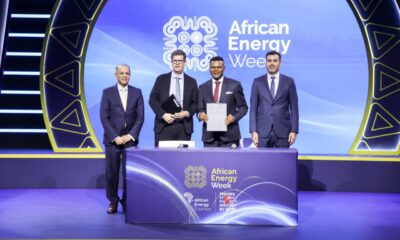
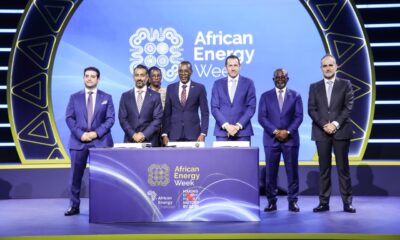
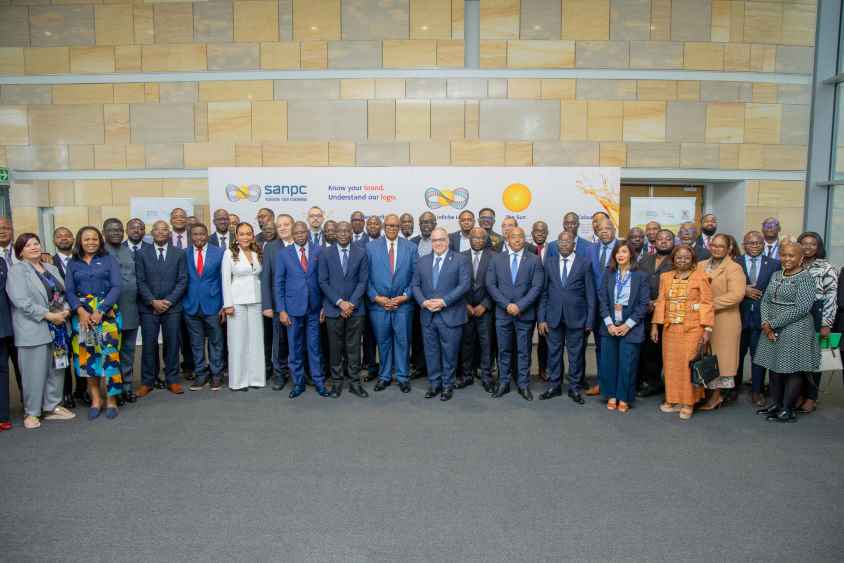
CAPE TOWN, South Africa, October 13, 2026/APO Group/ –African national oil companies (NOCs) have signed a declaration committing to stronger commercial cooperation, expanded refining capacity and coordinated energy development across the continent. The non-binding Cape Town Declaration establishes a framework for advancing energy security, regional integration, infrastructure investment and the sustainable development of Africa’s petroleum resources.


The declaration was signed on October 12 during the 8th Meeting of the APPO NOCs CEOs Forum at African Energy Week (AEW) 2026 in Cape Town. The signing was overseen by Godfrey Moagi, CEO of the South African National Petroleum Company (SANPC) and newly appointed Chairman of the APPO NOCs CEOs Forum.

“This non-binding agreement is very encouraging, showcasing the expedience of the pace of our resolve to improve socioeconomic development in all our respective countries,” Moagi said during the forum.

Signatories to the agreement committed to strengthening continental energy security within their respective legal mandates, including through direct commercial agreements between African NOCs for crude oil and refined products, subject to domestic legislation and competition rules.

This non-binding agreement is very encouraging, showcasing the expedience of the pace of our resolve to improve socioeconomic development in all our respective countries

The declaration also aligns participating companies with the APPO’s Long-Term Strategy 2050, which supports the sustainable development of Africa’s energy resources and greater energy independence. It advocates a just and pragmatic energy transition that reflects national economic and social circumstances, with responsible hydrocarbon development continuing alongside complementary emerging green energy solutions.

Signatories pledged to deepen domestic refining capacity to reduce dependence on imported petroleum products, while supporting the African Refining Industry Upgrading Strategy Program and developments surrounding the African Refining Model. The declaration also welcomed operational steps towards implementing the Africa Energy Bank as a funding instrument for major energy projects.

Digitalization, skills development and local content form another pillar of the declaration. Participating NOCs supported secure digital platforms to improve data visibility, monitor local content and facilitate joint research, alongside greater cross-border mobility for professionals between national oil companies and training institutions. They also endorsed an interactive African energy map and encouraged locally developed research and emissions-reduction approaches.

The agreement provides for further international cooperation across upstream exploration and production, downstream refining and marketing, commercial trade and workforce training. It also acknowledges an executive presentation delivered by a visiting delegation from Venezuela, opening the door to exploring potential partnerships with international counterparts across the petroleum value chain.

The declaration also confirmed that the 9th meeting of the APPO NOCs CEOs Forum will take place in 2027, with the venue and other arrangements to be finalized by member companies. The agreement establishes a shared framework for advancing African energy cooperation through commercial partnerships, infrastructure investment, technical collaboration and the development of domestic capabilities.

The declaration was signed by Bienvenido Nguema Envó, Director General of GEPetrol; Lorenzo Nicolás Mba Obama Nsang, Deputy General Manager of SONAGAS GE; Kwame Ntow Amoah, CEO of the Ghana National Petroleum Corporation; Godfrey Moagi, CEO of SANPC; Fayçal-Réda Laraba, Vice President for Planning and Economics at Sonatrach; Ricardo Van-Deste, CEO Exploration and Production at Sonangol E&P; Issifou Moussa Yari, Managing Director of SNH-BENIN; Nathalie Moudiki, Senior Advisor No. 2 to Executive Management at SNH; Augustin Nkuba Kasanza, Director General of SONAHYDROC SA; and Karim Coulibaly, Deputy General Manager of PETROCI Holding.

Distributed by APO Group on behalf of African Energy Chamber.


Continue Reading

Energy

African Petroleum Producers Organization (APPO) Chief Urges Joint National Oil Companies (NOCs) Projects at 8th Chief Executive Officers (CEOs) Forum During African Energy Week (AEW)
Published

on

African Energy Week

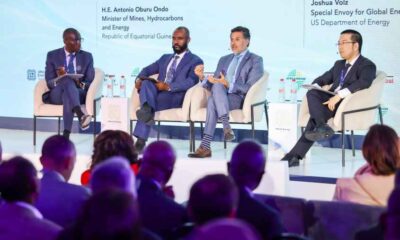
African Energy Week is currently hosting the 8th Annual APPO NOCs CEOs Forum at the CTICC in Cape Town

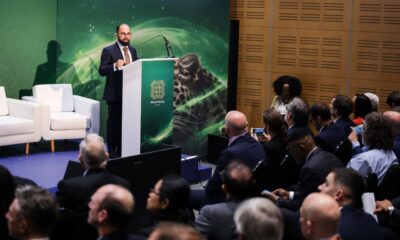
CAPE TOWN, South Africa, October 13, 2026/APO Group/ –H.E. Farid Ghezali, Secretary General of the African Petroleum Producers Organization (APPO) has issued a direct call to African National Oil Companies (NOCs) to move beyond high-level dialogue and focus on strategic cooperation for fast tracked delivery of upstream projects and local value creation.


Speaking at the 8th annual meeting of the CEOs of APPO NOCs at African Energy Week (AEW) on Monday, Ghezali emphasized that NOCs are no longer just oil companies, but vital platforms for national energy security and economic sovereignty.

Africa does not need an architecture of good intentions, but an architecture of delivery

“We have moved to how much value Africa can create from the energy it produces,” he stated, highlighting that NOCs must play a decisive role in reversing this imbalance. “To build a competitive sector, African NOCs must strengthen internal partnerships across critical areas, including refining technology, gas infrastructure, petrochemicals, and project financing.”

He urged African NOCs to combine domestic capacities, assets, and off-take agreements to de-risk projects and build a robust pipeline of bankable energy initiatives. The Secretary General highlighted the African Energy Bank as a crucial mechanism to ensure NOCs can finance strategic projects which they cooperate own to enhance regional energy sovereignty.

To ensure long-term impact, the Secretary General challenged delegates to focus on practical outcomes, asking: Which projects can our NOCs develop together? Where can we create integrated value chains? Which projects are we prepared to execute right now?

“Africa does not need an architecture of good intentions, but an architecture of delivery,” the Secretary General concluded, stressing that the true success of industry forums will be measured not by the conversations held, but by the tangible investments, implemented projects, and economic opportunities delivered to African citizens.

Distributed by APO Group on behalf of African Energy Chamber.


Continue Reading

Trending