Connect with us
Anglostratits

Energy

African Energy Week (AEW) 2025: Equatorial Guinea to Launch EG Ronda Licensing Round in April 2026

Published

on

African Energy Week

The upcoming licensing round will offer 24 blocks for investment, aligning with goals by the country to accelerate upstream development

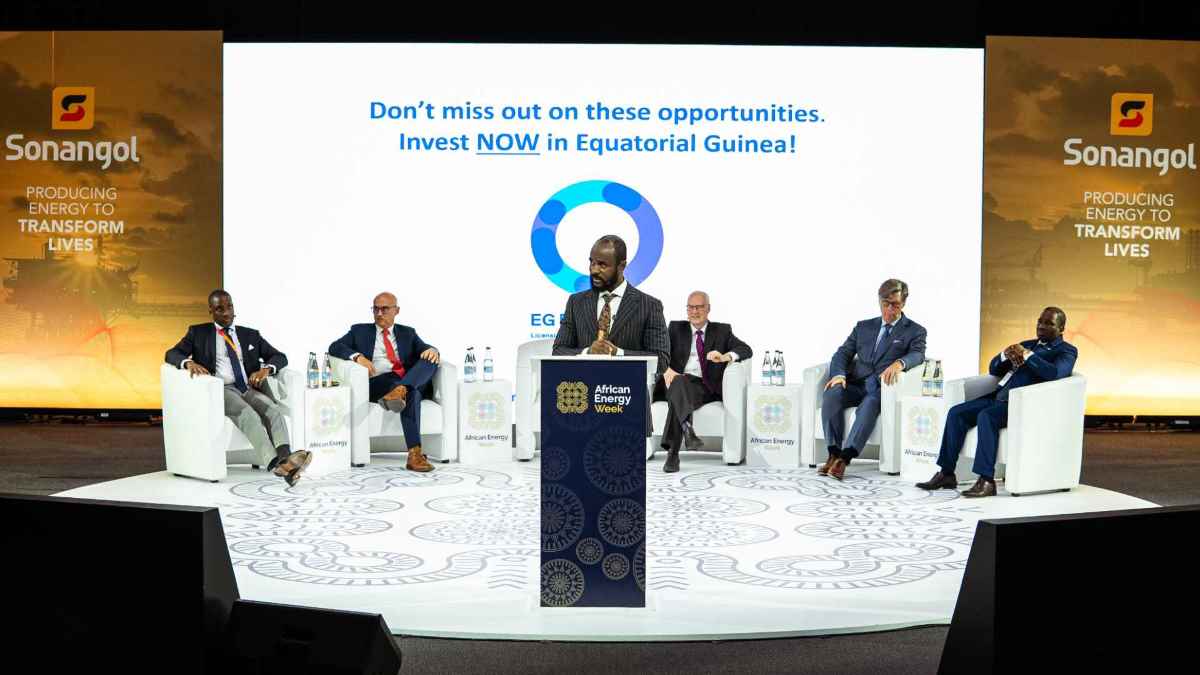
CAPE TOWN, South Africa, October 1, 2025/APO Group/ –Equatorial Guinea’s Minister of Hydrocarbons and Mining Development Antonio Oburu Ondo announced that the country’s next licensing round will be launched in April 2026 at the African Energy Week (AEW): Invest in African Energies 2025 conference on Monday. The country is finalizing timelines for the licensing round and is inviting companies to participate. Up to 24 blocks will be available for exploration, covering a variety of acreage from offshore to onshore blocks.


The announcement was made during a session on Equatorial Guinea’s New Exploration Drive, hosted by the Ministry of Hydrocarbons and Mining Development of Equatorial Guinea. The upcoming round forms part of the country’s national strategy to accelerate upstream growth, attract fresh investment and unlock offshore exploration and production opportunities, and complements the country’s open-door licensing policy launched in 2023.

“The Ministry of Hydrocarbons and Mining Development invites all companies worldwide to participate in the 2026 licensing round. Since 2023, we have been able to sign seven new PSCs, have recently staged a multi-billion deal with ConocoPhillips, and today, we have Block 29 and 28 under negotiation. This is a result of the open-door policy. Join us in developing these vast resources for the benefit of our country,” stated Minister Ondo.

During the session, investors gained access to detailed geological data, including structural, stratigraphic and prospectivity insights into Equatorial Guinea’s offshore basins. According to Roberto Blanco, CEO of Perceptum, “There is something here for every company portfolio. When you see the geology Equatorial Guinea has to offer, historically, you see that out of 118 exploration wells, 79 have demonstrated hydrocarbons. Yet, we have very little exploration and we hope that the licensing round will address that.”

The Ministry of Hydrocarbons and Mining Development invites all companies worldwide to participate in the 2026 licensing round

To support investment through the EG 2026 Licensing Round, the Ministry of Hydrocarbons and Mining Development – in partnership with advisory firm Perceptum and GeoexMCG – is reprocessing more than 9,600 km² of seismic in the Rio Muni Basin. Complementing this initiative, Searcher Seismic is acquiring and reprocessing 2D and 3D seismic data in underexplored areas, delivering high-quality technical packages designed to enhance competitiveness and build investor confidence.

“With the licensing round due to open in April 2026, we have started reprocessing some seismic data, including all the 2D data so that companies can have a regional understanding of the petroleum systems. The EGW 98 and EGW05 Regional 2D’s are being reprocessed now through PSDM sequence and will be available April 2026 from Searcher,” explained Neil Hodgson, Vice President: Geoscience, Searcher.

Oscar Berniko, Director General, Ministry of Hydrocarbons, Equatorial Guinea, said that the country’s existing gas infrastructure will support upcoming investments. He said: “There are fantastic gas processing facilities that have been running for years in the country.” This offers security in terms of offtakers and exports, strengthening the long-term viability of investing in Equatorial Guinea.

The Ministry of Hydrocarbons and Mining Development has also been improving the regulatory and fiscal regime to attract investment. According to Jay Park, Director at Park Energy Law, “Important changes to the tax law have been made, with a 10% reduction in corporate income tax.”

Teresa Nnang, CEO, BlackStone, stated that “The opportunities are there, but we need to make sure we have the right channels to link the opportunities to the investors,” highlighting the role of consultancies in facilitating engagement.

Meanwhile, under efforts to diversify its economy, Equatorial Guinea is reforming its mining sector to attract investment and drive projects forward. Domingo Mba Esono, the country’s Deputy Minister of Hydrocarbons, explained that “Mining is one of the sectors that we will focus on. We have started reforming the mining law and will be focusing on improving certain aspects to make it more competitive with a stable fiscal regime, tax incentives and clear royalties.”

Distributed by APO Group on behalf of African Energy Chamber.

Home  Facebook

Energy

African Energy Chamber (AEC) Endorses Kigali’s Africa CEO Forum as the Continent’s Strategic Hub

Published

on

African Energy Chamber

With thousands of executives, investors and policymakers gathering in Rwanda this May, the African Energy Chamber is urging the energy industry to support African-led platforms that tackle energy poverty, mobilize investment and drive the continent’s economic future

KIGALI, Rwanda, February 6, 2026/APO Group/ –The African Energy Chamber (AEC) (https://EnergyChamber.org) has formally endorsed the upcoming Africa CEO Forum in Kigali, positioning the May 2026 gathering as a critical platform for investment, partnership and policy dialogue across the continent. Scheduled for May 14-15 in Rwanda’s capital, the forum is expected to convene approximately 2,800 CEOs, heads of state, ministers and business leaders, reinforcing its status as the largest annual meeting of Africa’s private sector.


For the AEC, Kigali represents a strategic venue where African decision-makers, global investors and industry leaders can align around practical solutions to the continent’s most pressing challenge: ending energy poverty while accelerating economic growth. By bringing together stakeholders from more than 90 countries alongside hundreds of government representatives and journalists, the forum creates a rare environment capable of translating dialogue into bankable projects and long-term partnerships.

Africa’s energy future should be defined by Africa – and platforms such as the Africa CEO Forum are strategic opportunities to advance Africa’s energy narrative

This positioning aligns with the Africa CEO Forum’s core mission: highlighting the driving role of the private sector in Africa’s development through high-level networking, deal-making opportunities and strategic analysis from leading institutions. Participants gain access to decision-makers, insight into emerging investment projects and direct engagement with public authorities seeking public-private partnerships.

Energy remains central to these discussions. Despite Africa’s vast natural resources, over 600 million still lack access to reliable electricity and 900 million to clean cooking solutions, constraining industrialization, job creation and social development. The AEC maintains that addressing this crisis will require sustained investment across oil, gas, power and emerging low-carbon technologies – supported by regulatory certainty and African financial leadership.

“Africa’s energy future should be defined by Africa – and platforms such as the Africa CEO Forum are strategic opportunities to advance Africa’s energy narrative. The Forum in Kigali provides the platform where investors, governments and industry can engage directly, mobilize capital at scale and build partnerships that deliver reliable, affordable power to African citizens,” states NJ Ayuk, Executive Chairman of the African Energy Chamber.

Kigali also reflects a broader shift in confidence toward African economic leadership. Rwanda’s rise as a hub for high-level continental dialogue shows how stable governance, investment-friendly policies and regional connectivity can position African cities at the forefront of global business discussions. Ultimately, Africa’s journey toward energy security and prosperity will be defined by partnerships forged on the continent itself.

As momentum builds toward May, the AEC is calling on energy stakeholders across the value chain to engage actively in Kigali – bringing projects, financing solutions and long-term commitment. Participation ensures that Africa’s economic and energy future is not merely discussed abroad, but designed, financed and delivered where it matters most.

Distributed by APO Group on behalf of African Energy Chamber.

Continue Reading

Energy

South Africa’s Upstream Petroleum Resources Development Act (UPRD Act): Can Legal Certainty Revive Major Investment After IOCs’ Exit?

Published

on

African Energy Chamber

South Africa’s new Upstream Petroleum Resources Development Act offers a fresh regulatory framework, but is it enough to bring supermajors back, or will independent players now dominate the landscape?

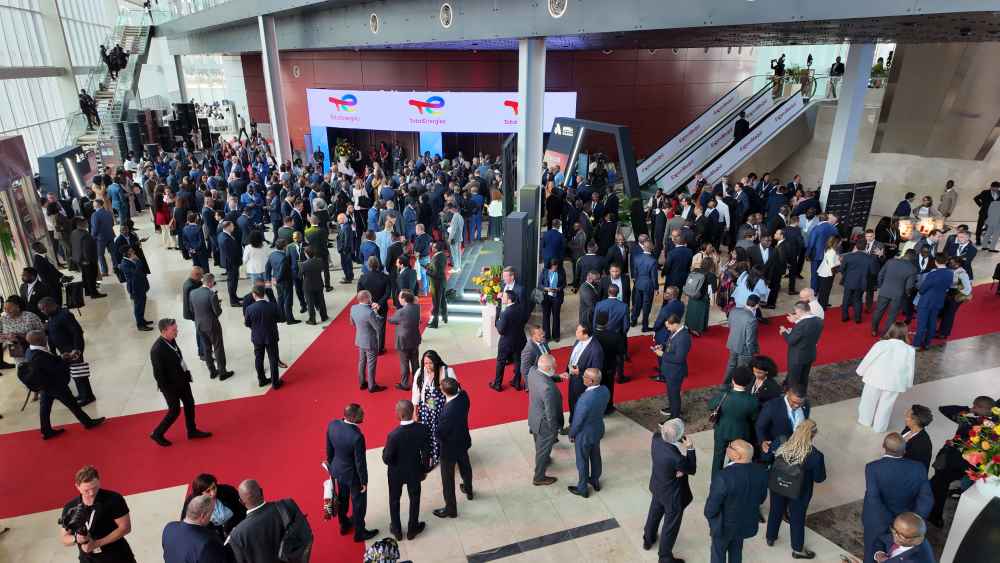
CAPE TOWN, South Africa, February 6, 2026/APO Group/ –The high‑profile exit of global energy major TotalEnergies from deepwater Blocks 11B/12B and 5/6/7 – home to the Brulpadda and Luiperd gas discoveries – was a significant setback for South Africa’s plans to use domestic resources to boost energy security and economic growth. TotalEnergies, together with partners QatarEnergy and CNR International, gave up their stakes after determining that the discoveries could not be commercially developed under the existing market conditions and regulatory framework.


The exits underscored long‑standing industry frustrations with South Africa’s legal and regulatory environment, widely seen as lacking the clarity and predictability that deepwater investors demand. That backdrop helps explain the government’s passage of the Upstream Petroleum Resources Development Act (UPRD Act) – a standalone legislative framework designed to replace the petroleum provisions embedded in the old Mineral and Petroleum Resources Development Act and provide a bespoke upstream regime.

At its core, the UPRD Act aims to accelerate exploration and production of South Africa’s petroleum resources by providing clear rules and stable rights for companies – key to attracting major investment. It combines exploration and production rights into a single petroleum right, sets out controlled licensing rounds, guarantees third-party access to infrastructure, and establishes the Petroleum Agency of South Africa as a clear regulatory authority. The law also promotes active participation by the State and previously disadvantaged South Africans, mandates local content, allows a share of output to be sold for strategic stock purposes, and separates oil and gas regulation from mining rules to reduce red tape and simplify operations.

Yet the big question remains: will this new legal certainty be enough to lure back the supermajors, or has the landscape shifted toward leaner, more aggressive independent companies seeking opportunities where majors have stepped away?

 It shows how regulatory reform is essential to restoring investor confidence

“Simply put, TotalEnergies’ exit was a blow to South Africa’s energy industry. These discoveries brought to light alternative energy solutions for a country plagued with a decade‑long energy crisis. However, without clear, predictable rules, even world‑class discoveries struggle to progress to commercial development. It shows how regulatory reform is essential to restoring investor confidence,” states NJ Ayuk, Executive Chairman of the African Energy Chamber.

The UPRD Act now provides that framework, but timing is crucial. The regulations needed to put the Act into practice are still being finalized, and until these rules – covering licensing, environmental safeguards and rights administration – are published and tested in early rounds, investor confidence is likely to remain cautious.

For supermajors, investment decisions are increasingly guided by a global strategy that prioritizes projects with clearer returns and lower regulatory risk. With growing pressure to meet climate targets and streamline their portfolios amid the energy transition, deepwater frontier projects in emerging markets are less appealing unless they come with clear, predictable terms.

This creates an opening for independent and smaller players. Companies like Africa Energy Corp. – which increased its stake in Block 11B/12B after the majors’ exit – could view South Africa’s upstream sector as a promising opportunity. With leaner cost structures and a greater tolerance for frontier risk, these players can advance projects that supermajors may avoid, potentially driving local value creation and technology transfer through a different investment model.

Looking ahead to African Energy Week (AEW) 2026 – the continent’s premier energy summit bringing together governments, investors and service companies – the UPRD Act is expected to be a central topic in discussions surrounding South Africa. AEW offers a high‑profile platform to showcase the country’s evolving policy landscape and could set the stage for the first post‑Act licensing round. Industry leaders are likely to debate whether the framework delivers on its promise of stability and what conditions might be needed to attract supermajors back.

Ultimately, South Africa’s upstream rebound will depend on execution: if the regulations foster transparency, competitive terms and confidence in governance, the UPRD Act could be a turning point. If not, the sector may settle into a new normal where ambitious independents, rather than supermajors, drive the next chapter of oil and gas development.

Distributed by APO Group on behalf of African Energy Chamber.

Continue Reading

Business

The International Islamic Trade Finance Corporation (ITFC) Strengthens Partnership with the Republic of Djibouti through US$35 Million Financing Facility

Published

on

ITFC

This facility forms part of the US$600 million, three-year Framework Agreement signed in May 2023 between ITFC and the Republic of Djibouti, reflecting the strong and growing partnership between both parties

JEDDAH, Saudi Arabia, February 5, 2026/APO Group/ –The International Islamic Trade Finance Corporation (ITFC) (https://www.ITFC-IDB.org), a member of the Islamic Development Bank (IsDB) Group, has signed a US$35 million sovereign financing facility with the Republic of Djibouti to support the development of the country’s bunkering services sector and strengthen its position as a strategic regional maritime and trade hub.

The facility was signed at the ITFC Headquarters in Jeddah by Eng. Adeeb Yousuf Al-Aama, Chief Executive Officer of ITFC, and H.E. Ilyas Moussa Dawaleh, Minister of Economy and Finance in charge of Industry of the Republic of Djibouti.

The financing facility is expected to contribute to Djibouti’s economic growth and revenue diversification by reinforcing the competitiveness and attractiveness of the Djibouti Port as a “one-stop port” offering comprehensive vessel-related services. With Red Sea Bunkering (RSB) as the Executing Agency, the facility will support the procurement of refined petroleum products, thus boosting RSB’s bunkering operations, enhancing revenue diversification, and consolidating Djibouti’s role as a key logistics and trading hub in the Horn of Africa and the wider region.

We look forward to deepening this partnership, creating new opportunities, and leveraging collaborative programs to advance key sectors and drive sustainable economic growth

Commenting on the signing, Eng. Adeeb Yousuf Al-Aama, CEO of ITFC, stated:

“This financing reflects ITFC’s continued commitment to supporting Djibouti’s strategic development priorities, particularly in strengthening energy security, port competitiveness, and trade facilitation. We are proud to deepen our partnership with the Republic of Djibouti and contribute to sustainable economic growth and regional integration.”

H.E. Ilyas Moussa Dawaleh, Minister of Economy and Finance in charge of Industry of the Republic of Djibouti, commented: “Today’s signing marks an important milestone in the development of Djibouti’s bunkering services and reflects our strong and valued partnership with ITFC, particularly in the oil and gas sector. This collaboration supports our ambition to position Djibouti as a regional hub for integrated maritime and logistics services. We look forward to deepening this partnership, creating new opportunities, and leveraging collaborative programs to advance key sectors and drive sustainable economic growth.”

This facility forms part of the US$600 million, three-year Framework Agreement signed in May 2023 between ITFC and the Republic of Djibouti, reflecting the strong and growing partnership between both parties.

Since its inception in 2008, ITFC and the Republic of Djibouti have maintained a strong partnership, with a total of US$1.8 billion approved primarily supporting the country’s energy sector and trade development objectives.

Distributed by APO Group on behalf of International Islamic Trade Finance Corporation (ITFC).

Continue Reading

Trending