

Business
Global ad market prospects downgraded by $20bn in the face of widespread disruption from trade tariffs
Published
1 year agoon
Growth forecasts for advertising spend have been downgraded this year (-0.9pp to +6.7%) and next (-0.7pp to +6.3%), equivalent to a $19.8bn cut.
The risk of prolonged stagflation – and outright recession – has grown in key economies, exacerbated by new trade tariffs set to bite from H2 2025. Automakers, retailers and tech brands are most exposed.
Regulation is another headwind, with the EU tightening its stance on both Google and Apple. Outstanding US antitrust rulings against Google and TikTok also add to a climate of uncertainty for media strategists.
The global ad market is expected to be worth $1.15trn this year, an absolute rise of $72.9bn (+6.7%) from a strong 2024. Alternative modelling based on a pessimistic OECD scenario further cuts ad market growth, to +6.4% this year.
WARC Global Ad Spend Outlook 2025/26 – Q1 2025 update
27 March 2025 – A new study from WARC, the experts in marketing effectiveness, has found that global advertising spend is now on course to grow 6.7% this year to $1.15trn, a downgrade of almost one percentage point (pp) from WARC’s November forecast due to growing market volatility. A further cut of 0.7pp has been applied to 2026, downrating growth to 6.3%.
The underlying factors for these downward revisions are wide ranging, but core among them is the rising risk of stagflation – or outright recession – across major economies, compounded by heightened costs being levied on trade by the US. Tightening regulation in the European Union, squeezed margins and low business and consumer confidence are also contributing factors.
James McDonald, Director of Data, Intelligence & Forecasting, WARC, and author of the report, says: “The global ad market faces mounting uncertainty as trade tariffs, economic stagnation, and tightening regulation disrupt key sectors – leading us to cut growth prospects by $20bn over the next two years. Automakers, retailers, and tech brands in particular are now reigning in ad spend amid rising manufacturing costs and mounting supply chain pressures.
“Despite the growing volatility, digital advertising remains strong, led by three companies – Alphabet, Amazon and Meta – on course to control over half of the market in 2029. Regulatory scrutiny and uncertainty around TikTok’s future in the US further compound risks to growth, however, advertisers must be nimble in order to seize initiative in this shifting landscape.”
Three scenarios for an uncertain future
WARC’s latest global projections are based on data aggregated from 100 markets worldwide, and leverage a proprietary neural network which projects advertising investment patterns based on over two million data points. These include macroeconomic data, media owner revenue, marketing expenses from the world’s largest advertisers, media consumption trends and media cost inflation. It is believed to be one of the most comprehensive advertising market models available to the industry today.
This capability has allowed WARC to model three scenarios for this report based on differing severities of deterioration in underlying market conditions. These are as follows:
WARC’s baseline forecast, drawing from current indicators
The Organization for Economic Cooperation and Development (OECD) scenario, which assumes 10% universal trade tariffs and cuts 0.5pp from GDP in key economies over three years, as well as adding 0.4 points to inflation
A more severe case, which removes a full point from global growth aside 0.4 points to inflation over the next three year
Applying the OECD scenario to the advertising market cuts a further 0.3pp and $4bn from global growth compared to WARC’s baseline of 6.3% growth and total of $1.15trn. The Trump administration still intends to introduce new reciprocal tariffs with all trading partners on April 2nd, aside a blanket 20% hike already imposed on China and similar punitive measures pending for Canada and Mexico. This plays into a more severe scenario which, when modelled, equates to a 0.8pp downgrade in advertising growth compared to our baseline, at an extra cost of $9.5bn.
WARC believes the impacts of trade fragmentation will begin to be felt in the advertising market from the second half of this year, before becoming more pronounced during the first half of 2026.
Automotive, retail and tech sectors set to bear brunt of tariff impacts
Automotive ad spend down 7.4% this year as manufacturing stalls and key players pare back on brand building
Retailers set to lower ad spend by 5.3% as margins tighten; US retailers are vulnerable to disruption among Chinese suppliers
Ad growth set to halve among tech & electronic brands as barriers to trade impair access to components
The automotive industry contributes significantly to the revenues of leading ad agencies, spending $54.8bn last year of which more than one in five (22.5%) dollars went to premium video formats – predominantly spots. Budgets are shifting away from linear TV and towards digital platforms, however, with more than half (51.1%) of automotive spend worldwide now going to search and social media.
Major US automakers, including General Motors and Ford, have reduced their advertising budgets in recent years despite revenue growth. GM reinvests 1.8% of its sales revenue into marketing activity, down from 3.5% in 2013, while for Ford the share is just 1.2%.
Data from the European Automobile Manufacturers Association (EAMA), published this month, shows impending tariffs on Mexican, Canadian and Chinese production pose a risk to two fifths (40.7%) of the automotive industry. WARC expects a decline in ad spend among automotive brands to be close to 7.4% this year, with video formats more likely to incur larger losses.
Retail is the largest sector WARC monitors, with projected ad spend of $162.7bn this year equivalent to 14.1% of the global ad market. This total represents a fall of 5.3% from 2024 levels of spend, however, mostly reflective of the looming impacts of tariffs on supply chains. Both the OECD scenario (-5.7%) and severe case (-6.1%) paint gloomier prospects for ad spend among retailers this year.
The retail sector recorded dramatic growth last year – up 13.6% or $18.9bn – buoyed by aggressive strategies from new entrants to western markets like Temu and Shien. Our working assumption is that these companies will significantly ease advertising activity this year as trade barriers disrupt direct routes to western consumers, stymying headline growth in the retail sector.
The tech and electronics sector spent $84.3bn on advertising last year, a bounceback of 25.0% following two years of decline (due to rising interest rates affecting tech startups) which was propelled by increased demand for microchips from AI and more fluid supply chains.
WARC forecasts a 6.2% ad spend growth in this sector to $89.5bn, a downgrade from the +13.9% forecast in November in large part reflective of new tariffs targeted at semiconductors. Both the OECD (+5.8%) and severe (+4.9%) scenarios point to a further cooling in growth.
Online platforms shrug off regulatory pressures
Search to account for more than a fifth (21.7%) of the ad market, with spend rising 8.0% to $250.0bn this year despite regulatory threats
Social media – the largest single advertising medium globally – is poised to account for a quarter of all ad spend this year
Retail media set to be joint-fastest growing advertising medium this year, though trade disruption threatens ad receipts from consumer packaged goods (CPG) brands
Last week, the European Union found Apple and Google to be in breach of its Digital Markets Act (DMA), potentially costing the pair billions of dollars in fines. The EU is also pushing back on personalisation via the Digital Fairness Act, while a recent UK court ruling could allow UK consumers to opt out of personalised advertising. These developments stand to significantly impact retail, social media and the future of paid search advertising.
These developments, coupled with the US antitrust ruling against Google late last year, show a significant souring among legislative bodies against major tech firms. Ongoing uncertainty on the practicalities and likely appeals from Google and Apple, means our growth projections for the sector remain positive.
WARC projects a rise of 8.0% for paid search this year, though this is down a point from our last forecast and 1.3pp ahead of the companion OECD scenario modelled for this release. Within this, Google is expected to record an 8.5% rise in paid search revenue, while Apple’s search business, estimated to be worth $5.1bn last year per Omdia Advertising Intelligence, should grow by a similar order.
Taken together, social media companies are expected to net $286.2bn in advertising revenue this year, up 12.1% from last year and equivalent to a quarter (24.8%) of global advertising spend. Within this, TikTok (+23.6%), Instagram (+17.0%) and Facebook (+8.6%) are expected to see healthy gains, as a long tail of advertisers leverage new generative AI tools to target consumers.
Major US retailers Walmart and Costco have reportedly requested their Chinese suppliers – who make up between one third and one half of their supply chains – cut prices to ease the pressures from new tariffs on their goods. Chinese producers also account for a ‘significant’ proportion of supply chains for global pure players like Amazon, while Chinese properties targeting western shoppers – including Temu and Shien – are particularly exposed.
Money continues to flow into the retail media market, and new commerce media entrants, from the air travel and banking sectors, are boosting the sector. WARC believes that retail media will be the joint-fastest growing medium this year, at +15.4%.
This rate is ahead of the wider pure play internet market (+10.1%) and more than double the total global growth rate, resulting in retail media’s share of global spend rising to 15.5% this year – equivalent to $178.7bn. Disruption to this ecosystem could broadly dampen ad spend within the consumer packaged goods (CPG) sector, though.
Economic outlook cut across key advertising markets
US ad market expected to post a solid rise this year (+5.7%), though growth is less than half that recorded in 2024 (+13.1%)
The Chinese ad market continues to struggle with weak domestic demand; growth is set to slow to 5.3% this year and just 3.5% in 2026.
The UK, German and Japanese economies are all stalling and present a severe risk of stagflation over the forecast period
We believe the US ad market will grow 5.7% this year to $451.9bn, though this is less than half the growth rate recorded in 2024 (+13.1%). Contrary to OECD expectations for the US economy, ad market growth should accelerate in 2026, with spend rising 6.5% (+4.4% in real terms) as activity increases around the FIFA World Cup (hosted across North America) and US midterms.
China too is expected to record a slowdown in both advertising and economic growth this year when compared to 2024. Its ad market has cooled on the back of weak domestic demand, and spend is set to rise by 5.3% to $205.5bn this year compared to growth of 7.1% recorded in 2024. This year’s growth rate equates to a 3.5% rise in real terms, which lags the OECD’s expectation of 4.8% real growth in the Chinese economy (a 0.1pp upgrade on its last forecast).
Our preliminary estimate for ad market growth in the UK last year stands at +10.2%, though this is due to be confirmed next month as part of the AA/WARC Expenditure Report. The UK’s ad market is highly digital, with online ads accounting for four in five (82.6%) ad dollars. We believe the UK’s ad market will grow by 7.1% to a value of $52.6bn this year, though this is tempered to a 5.0% rise after accounting for inflation.
The outlook is tougher for Japan, where advertising spend is expected to dip by 2.0% to $40.0bn this year (-3.9% in real terms). The market is set to grow 3.3% this year when measured in local currency, demonstrating the current strength of the greenback against the yen. The OECD has downgraded its growth expectations for the Japanese economy by 0.4pp both this year and next, with economic stagnation a likelihood in 2026.
Germany’s economy is also in the doldrums, with real growth of just 0.4% expected by the OECD this year following a cut of 0.3pp from its last outlook. This sluggish growth underpins our expectations of a 2.1% fall in German advertising spend to $27.1bn this year, equivalent to a 4.1% dip in real terms after accounting for inflation.
You may like
-


Afreximbank and Development Bank of Southern Africa establish a Joint Project Preparation Facility to advance bankable projects in Southern Africa
-

Highly award-winning creative ideas double campaign impact new WARC insights reveal
-


Created to explore: Canon EOS R8 Mark II inspires full-frame confidence and stability in a travel-ready size
-

Load shedding has eased: South Africa now faces its next industrial energy test
-
Afreximbank extends US$10-million facility to Azania Bank to support Small and Medium-sized Enterprises (SMEs) in Tanzania
-


Hong Kong’s First Five-Year Plan sets out long-term vision for development
Business
Emirates and the Kenya Tourism Board sign partnership agreement to drive inbound tourism
Published
10 hours agoon
September 18, 2026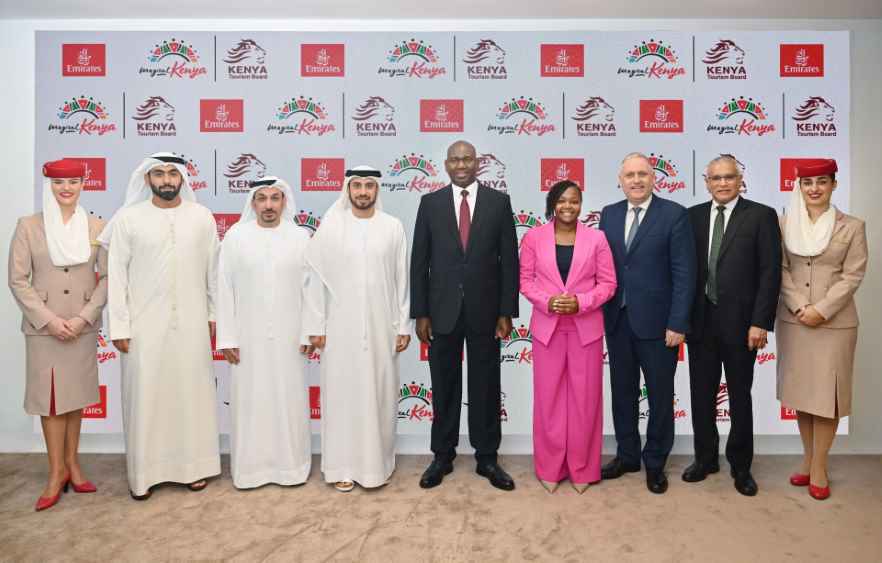
Reinforcing the airline’s longstanding commitment in market, the partnership agreement supports Kenya’s ambition to be the most visited tourism destination in Africa by promoting the destination in key regions on the airline’s vast global network
The partnership agreement was signed by Adil Al Ghaith, Emirates’ Senior Vice President of Commercial Operations, Centre, and June Chepkemei, Chief Executive Officer of the Kenya Tourism Board, in the presence of Ambassador. (Professor.) Julius K. Bitok, CBS. Principal Secretary, State Department for Tourism, and Adnan Kazim, Deputy President and Chief Commercial Officer, Rashid Alardha, Vice President of Commercial Operations for Sub-Saharan Africa, Emirates and Christophe Leloup, Emirates’ Country Manager in Kenya, along with other senior officials.
Adil Al Ghaith said, “Kenya has been an important market for Emirates for over three decades, and our commitment goes much deeper than operations and connections. We’ve consistently invested in our presence in the market, working closely with travel trade partners and tourism stakeholders to stimulate inbound travel, and contribute positively to the global perception of Kenya. Nairobi remains one of the top 5 busiest gateways for Emirates in Africa, with significant traffic coming from UK and Europe, as well as the US. This partnership solidifies that longstanding commitment, enhancing our collaboration with the Kenya Tourism Board and the full, thriving tourism ecosystem across Nairobi and Kenya.”
We are delighted to partner with Emirates to strengthen Kenya’s global tourism profile and showcase the remarkable experiences our destination offers to travellers around the world
June Chepkemei said, “We are delighted to partner with Emirates to strengthen Kenya’s global tourism profile and showcase the remarkable experiences our destination offers to travellers around the world. Emirates’ extensive international network and strong reach in both established and emerging markets will help us build on the growing demand for Kenya and unlock new opportunities to attract more visitors. This collaboration reflects our shared commitment to promoting Kenya as a leading, diverse and unforgettable destination, while supporting the continued growth of inbound tourism and the many communities that benefit from it.”
Tourism is a key pillar in Kenya’s economy, creating thousands of employment opportunities and serving millions of tourists who visit the country each year. The Kenya Tourism Board has bold plans to establish Kenya as the most visited tourism destination in Africa, with a year-round calendar of diverse, sustainable and authentic experiences that appeal to a swathe of international visitors.
Under the framework of the partnership agreement, Emirates and KTB will explore joint initiatives to promote Kenya in key markets on the airline’s global network, showcasing the breadth of Kenya’s year-round tourism offering, and encourage more travellers to visit. The partners will also closely collaborate to develop programmes for trade partners and tour operators that educate and excite the industry, such as incentives, familiarisation trips and other marketing initiatives.
Last year, Emirates marked 30 years of operations to Nairobi and, during that tenure, has established deep-rooted ties with local communities and the travel trade ecosystem. Earlier this month, the airline’s tour operating arm, Emirates Holidays, signed a Memorandum of Understanding with the Kenya Association of Travel Agents to stimulate outbound travel by equipping over 300 travel agencies with enhanced product and network insight and competitive promotional opportunities.
Distributed by APO Group on behalf of The Emirates Group.
Business
Afreximbank and Development Bank of Southern Africa establish a Joint Project Preparation Facility to advance bankable projects in Southern Africa
Published
13 hours agoon
September 18, 2026
Through the JPPF, the institutions will jointly originate, screen and prioritise projects and support the technical, financial and legal work required to address bankability constraints
The agreement is one of the first operational instruments to follow South Africa’s accession to the Afreximbank Establishment Agreement in February 2026. South Africa became Afreximbank’s 54th member state in February 2026, when the Bank also announced a US$ 8 billion Country Programme for the country. The agreement complements the Master Risk Participation Agreement signed by Afreximbank and DBSA in February 2026, extending the partnership upstream into project preparation. It also supports the objectives of South Africa’s National Development Plan 2030, SADC integration and implementation of the African Continental Free Trade Area (AfCFTA).
Mrs Kanayo Awani, Executive Vice President, Intra-African Trade and Export Development, signed on behalf of Afreximbank, while Mr. Greg Fyfe, Chief Investment Officer, DBSA, signed on behalf of his institution.
Through the JPPF, the institutions will jointly originate, screen and prioritise projects and support the technical, financial and legal work required to address bankability constraints. Priority sectors include power and energy, with particular attention to energy transition; transport and logistics; information and communication technology; strategic minerals beneficiation; and other mutually agreed sectors aligned with national, regional and continental development priorities. The framework will focus initially on South Africa and the wider Southern African region, with scope to consider other African jurisdictions of mutual interest.
Through this partnership with Afreximbank, we are leveraging our complementary strengths to improve project preparation
Through the JPPF, Afreximbank and DBSA will collaborate to advance high-impact projects from concept stage to bankability. The focus will be on trade-enabling infrastructure, industrial development, and export-oriented initiatives across South Africa and the Southern African region, with potential extension to other African jurisdictions of mutual strategic interest.
Commenting on the agreement, Mrs. Kanayo Awani, Executive Vice President, Intra-African Trade and Export Development at Afreximbank said:
“Africa’s infrastructure challenge is not only about shortage of capital; it is also about shortage of projects prepared to the standard required by investors and lenders. This JPPF addresses this critical constraint. By combining Afreximbank’s trade and industrialisation mandate with DBSA’s infrastructure-development expertise, we will help move priority projects from concept to investment readiness and mobilise the larger pools of public, private and blended finance required for implementation. For South Africa and the wider Southern Africa region, this is how project preparation becomes a practical instrument for industrialisation, export growth and regional integration under the AfCFTA.”
Gregory Fyfe, Chief Investment Officer at DBSA, said:
“The Joint Project Preparation Facility represents a significant step towards strengthening the pipeline of bankable infrastructure and industrial projects across South Africa and the Southern African region. Through this partnership with Afreximbank, we are leveraging our complementary strengths to improve project preparation. This will unlock investment opportunities and accelerate the delivery of infrastructure that supports economic growth, industrialisation and regional integration. This initiative reflects DBSA’s commitment to infrastructure-led development and to enabling sustainable, long-term impact through well-prepared projects that attract both public and private sector investment.”
Projects developed through the JPPF may seek downstream funding from Afreximbank, DBSA. They may also be presented to private investors, development finance institutions and commercial lenders, subject in every case to separate appraisal and approval. Both institutions will actively collaborate on origination, preparation, knowledge-sharing, and portfolio monitoring to accelerate project bankability and execution.
Distributed by APO Group on behalf of Afreximbank.
Events
Advancing the Agentic World, Building a Solid Silicon Foundation
Published
17 hours agoon
September 18, 2026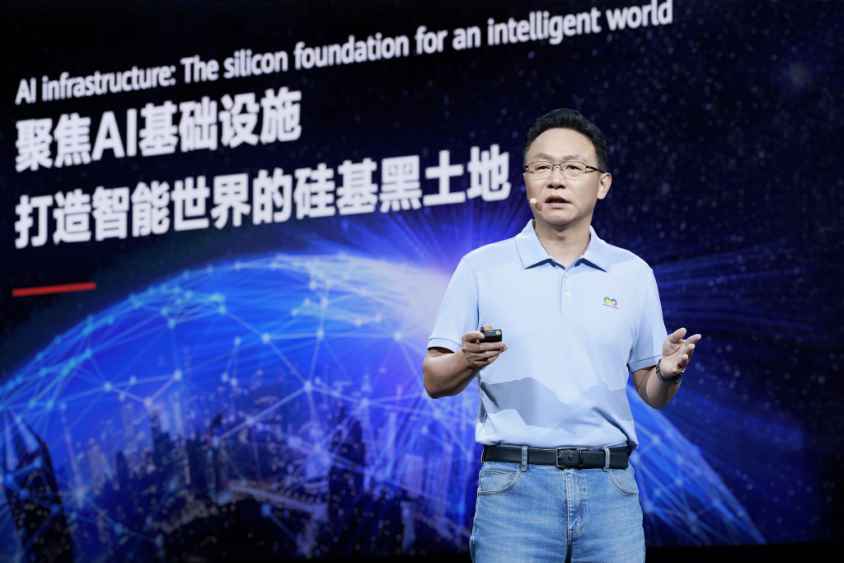
Key takeaways:
- Strategic focus: The rapid approach of an intelligent world is driving up demand for computing power. Huawei is focused on developing AI infrastructure, and is actively driving innovation in systems and architecture centered around SuperPoDs and SuperClusters. These efforts are aimed at building a solid silicon foundation for the intelligent world.
- Technological breakthroughs: Huawei unveiled the Atlas 960E SuperPoD, the first in the industry to use NPO. The company also launched an upgraded TaiShan 950 SuperPoD, as well as the OceanStor M900 (a memory context storage system). Interconnected with UnifiedBus, Huawei’s agentic SuperCluster can scale up to one million NPUs.
- Open ecosystems: Huawei is actively building out open computing ecosystems. To date, the Kunpeng ecosystem has attracted 4.16 million developers from around the world. CANN has moved to sustained, community-driven open-source development. Ascend now spans over 90 leading third-party open-source projects and is officially supported as a PyTorch accelerator backend.
SHANGHAI, CHINA – Media OutReach Newswire – 17 September 2026 – HUAWEI CONNECT 2026 kicked off today in Shanghai. The first keynote of the date was by David Wang, the Deputy Chairman of the Board and Rotating Chairman at Huawei. In his speech (Advancing the Agentic World, Building a Solid Silicon Foundation), Wang highlighted the work the company is doing alongside industry stakeholders to build powerful AI infrastructure, lay a solid computing foundation, and address the challenges and opportunities in the intelligent world to come.
AI is sweeping the world faster than any previous technological revolution. Today, foundation model parameters are rapidly approaching 10 trillion, and are projected to exceed 100 trillion by 2030. AI agents can now work on the same task continuously, for hours on end. By 2030, they will be able to handle tasks that span months.
In China alone, the average number of inference tokens consumed every day has surged to around 500 trillion, and is expected to reach quintillions (1018) by 2030.
On-device AI is also advancing rapidly. On-device models for smartphones have expanded from three billion parameters in 2024 to 30 billion today, and will push toward hundreds of billions in the near future.
These trends will set a much higher bar for the scale, performance, and reliability of underlying technical systems. Only by building powerful AI infrastructure can the industry lay a solid foundation for the future intelligent world.
An intelligent world is approaching – and faster than ever. To lead the charge into this new world, Huawei is laser-focused on building out AI infrastructure – the silicon foundation for the future to come.
In particular, Huawei’s AI strategy is centered on computing power, with a focus on monetizing hardware. The company is also sharpening its competitive edge through systems and architectural innovation. Centering these efforts on SuperPoDs and SuperClusters, the company aims to build a solid computing foundation and offer a new option for the world.
Huawei is a major contributor to open computing ecosystems, and will continue to support native training for mainstream foundation models on its systems, as well as supporting a vast range of models and applications.
For customers, Huawei provides flexible on-premises and cloud compute solutions for its customers to accelerate intelligent transformation across industries.
With diverse forms of compute, including solutions for micro-, low-tier, mid-range, and massive computing power – Huawei is driving the expansion of on-device and in-vehicle AI, making intelligence truly ubiquitous.
Additionally, Huawei is dedicated to building next-generation communications networks to bring readily available compute and intelligence to every person, home, and organization.
SuperPoDs gain broad consensus, with adoption growing in industries, academia, and research institutes
To date, over 1,000 Atlas 900 A3 SuperPoDs have been deployed, and Atlas 950 SuperPoD is seeing large-scale commercial use. While adoption continues to grow, SuperPoDs have gained broad acceptance across industry, academia, and research institutions as a key direction for AI infrastructure. Currently, a SuperPoD is explicitly defined as a computing system in which multiple computing nodes are tightly coupled through high-speed interconnect protocols, featuring unified memory addressing across physical nodes — functioning like a single logical computer.
SuperPoDs are the go-to choice for AI infrastructure buildout. Right now, 100k-NPU computing clusters have become the baseline for training SOTA models. However, traditional server architectures result in intra-cluster communications that account for over 40% of total training time, severely constraining Model FLOPs Utilization (MFU). Simulation results from Huawei’s Markov Lab show that a 100k-NPU cluster built with 4k-NPU SuperPoDs can deliver a 2.75x increase in MFU compared to a 100k-NPU cluster composed of 8-NPU servers.
11-chip UnifiedBus-powered portfolio for SuperPoDs and SuperClusters; the Atlas 960E SuperPoD –the industry’s first to use NPO
The Ascend series of chips is the most critical component in Huawei’s 11-chip UnifiedBus-powered portfolio for SuperPoDs and SuperClusters. Development on Ascend 960 has exceeded the company’s expectations, with performance doubling as planned. Ascend 960DT will be available in Q1 2027, three quarters ahead of the company’s original roadmap. And the Ascend 960PR will be ready in Q3 2027, one quarter ahead of schedule.
“We’re evolving our Ascend chip series on a one-generation-a-year cycle,” said Wang in his keynote. “In 2028 and 2029, we will roll out the Ascend 970 and 980 chips, respectively. Thanks to the Tau (τ) Scaling Law, not only will their compute specifications continue to double, but you can also expect to see huge improvements across the board in terms of memory bandwidth, memory capacity, interconnect bandwidth, and more.”
In addition to Ascend chips, Huawei has also developed a complete portfolio of chips for AI infrastructure, based on UnifiedBus, delivering key capabilities that cover computing, interconnect, storage, and management.
“SuperPoDs are designed to coordinate multiple NPUs through interconnect,” continued Wang. “We have developed a next-generation optical interconnect product based on near-packaged optics (NPO): the High-density Optical-interconnect-Node Engine (Hi-ONE).” Built on Huawei’s proprietary technologies, Hi-ONE has a multi-physics design for balancing optical, mechanical, electrical, electromagnetic, and thermal performance, realizing a transmission capacity of 7.2 Tbit/s per single engine.
“This is the industry’s first NPO product ready for mass production, delivering the largest transmission capacity. It is also the industry’s first NPO product with a built-in light source.”
This product combines high bandwidth and high reliability with low latency and low power consumption. This, coupled with UnifiedBus, will make it far easier to scale up SuperPoD interconnect systems.
Recently, Huawei submitted an implementation agreement (IA) on NPO to the Optical Internetworking Forum (OIF), a standards organization. The response from numerous industry partners has been widely positive. Huawei will continue its efforts to further refine the NPO industry ecosystem.
Using Ascend 960 chips and Hi-ONE, Huawei has developed the industry’s first NPO-based SuperPoDs: the Atlas 960E SuperPoDs. A single Atlas 960E SuperPoD can scale up to 4,096 NPUs, delivering 8 EFLOPS of FP8 compute performance, with up to 1 petabyte of HBM capacity. With 5,500 Hi-ONE units, this SuperPoD doesn’t need the 48,000 800G optical modules that would traditionally be required to connect all the NPUs. This cuts power consumption by over 550 kilowatts, while doubling the system’s fault-free operating time, achieving 99.8% system availability.
Combining the upgraded TaiShan 950 SuperPoD and context memory storage to power an ultrascale cluster with 1 million NPUs
As SOTA models scale to 10 trillion parameters, training and inference can no longer rely on a single AI server or AI SuperPoD – they require a more complex computing system. This system includes AI SuperPoDs, general-purpose SuperPoDs, and an interconnect system that features peer-to-peer interconnect and zero protocol conversion. For inference, including a petabyte-scale KV cache cluster is also a must.
To meet these demands, Huawei has fully upgraded its TaiShan 950 SuperPoD. Powered by UnifiedBus all-optical networking, this new SuperPoD supports up to 4,096 nodes with a unified memory pool of up to 256 TB. This setup significantly improves agent performance. For sandbox-intensive workloads, startup speeds for 100,000 sandboxes are 30 times faster than traditional servers, and sandbox density can be improved by an additional 25%. For vector search across 10 billion x 1,000-dimensional vectors, this SuperPoD delivers twice the search efficiency of traditional servers.
Huawei has also launched OceanStor M900 – a UnifiedBus-powered context memory storage cluster that delivers multi-tier KV caching for agent-heavy and longer-context workloads. Designed for agentic inference, this cluster supports one-hop direct access and provides a petabyte-scale KV cache for the L3.5 layer. OceanStor M900 also uses hybrid media and an optimized retention algorithm, extending SSD read/write lifespan by 16-fold. This ensures a higher KV cache hit rate alongside long-term stability and reliability from the ground up.
Combining its strengths in computing and communications, Huawei has built a brand-new agentic SuperCluster to accelerate training and inference for 10-trillion-parameter models. This SuperCluster uses UnifiedBus to consolidate multiple interconnect protocols into a single unified protocol, significantly reducing protocol conversion overhead. This delivers peer-to-peer interconnect between subsystems like Ascend SuperPoDs, Kunpeng SuperPoDs, and KV cache clusters. The SuperCluster also comes with a multi-tier, high-bandwidth, and large-capacity storage system that enables direct single-hop access for all KV cache tiers.
With a two-tier, four-plane Clos architecture, the SuperCluster can interconnect up to 512,000 NPUs. When combined with a multi-rail topology, this cluster can support up to one million NPUs.
One of Huawei’s core strategies: Going open source and open system to build out computing ecosystems
The Kunpeng ecosystem is driving digital and intelligent innovation across a wide range of industries. To date, the Kunpeng ecosystem has attracted over 4.16 million developers and more than 7,200 ecosystem partners from around the globe. The community currently supports over 560 open-source projects worldwide. openEuler has seen more than 20 million installations, securing the largest share in China’s server OS market.
The Ascend ecosystem has reached a new inflection point. The Compute Architecture for Neural Networks (CANN) is the foundation of the Ascend ecosystem. Today, CANN has moved to sustained, community-driven open-source development, which has brought the platform from usable to user-friendly.
External CANN developers now comprise 61% of all CANN developers, outnumbering internal developers for the first time. With over 5,200 monthly active developers, the CANN community has become the most vibrant open-source community in China. What’s more, over 40 models have been natively pre-trained on Ascend and CANN, making it the only proven domestic stack capable of model pre-training.
Ascend now supports over 90 leading third-party open-source projects, including PyTorch, Triton, vLLM, and veRL. With strong support from the Linux Foundation, Ascend is the first official Chinese compute platform on PyTorch’s website. This gives developers around the world ready access to new innovations in the Ascend ecosystem.
Diverse forms of compute for ubiquitous on-device and in-vehicle AI
AI is expanding faster into all kinds of devices. To deliver an unparalleled AI experience across all scenarios, Huawei will continue to strengthen capabilities in four key areas:
First, Huawei will combine Kirin and Ascend chips to drive self-reliance and autonomy in on-device compute.
Second, Huawei will bring together Pangu models and third-party models to make on-device intelligence better and easier to use.
Third, HarmonyOS, as an Agent OS for ubiquitous intelligence, will be completely redefined from the ground up – spanning system architecture, how it operates, and interaction logic – to enable human-agent collaboration.
Fourth, Huawei will keep cultivating a diverse AI ecosystem, which is the foundation for its system agent Celia to thrive.
Huawei plans to build four on-device computing platforms: for AI phones, AI PCs, vehicles, and homes. Through cross-device and device-cloud compute synergy, Huawei will be able to provide distributed swarm intelligence, delivering integrated and continuous intelligent services across personal mobile, office, vehicle, and home spaces, ultimately bringing intelligence to every person and every space.
Building next-generation communications that prioritize readily available compute, because without networks, all compute is siloed
Next-generation communications networks are crucial for fully unleashing the value of AI compute. We are driving the upgrade to networks that, in addition to connecting people, will prioritize delivering readily available compute. These networks will be underpinned by 5G-A/6G, 10-gigabit optical networks, and multi-tier, low-latency bearer networks, delivering intelligent connectivity across data centers, the edge, and devices.
Concluding his keynote, Wang expressed that AI “may well be the final technological revolution in human history,” noting that its impact is deeper and broader, and coming faster than anyone could have ever imagined. “No single company,” he said, “can build an intelligent world alone.”
He stressed Huawei’s ongoing commitments moving forward:
Huawei will remain committed to building a solid silicon foundation to make computing power readily accessible to all.
The company will continue to open source its software, helping developers unleash their full potential.
It will continue to embrace a wide range of models and applications, unlocking value in every form.
“And we will continue to work together to drive shared success, growing together with our customers and partners around the world,” Wang concluded. “Let’s work together to build a fully connected, intelligent world.”
Themed Advancing the Agentic World, HUAWEI CONNECT 2026 will delve into AI across three dimensions: strategy, technology, and ecosystems. You can expect an in-depth look at our latest strategic initiatives, and we’ll also be unveiling our all-new digital and intelligent infrastructure products, scenario-specific solutions for industries, and development tools. The event will run from September 17 to 19 at the Shanghai World Expo Exhibition & Convention Center and Shanghai Expo Center. For more information, please visit HUAWEI CONNECT 2026 online at www.huawei.com/en/events/huaweiconnect
FAQs:
Q1: What is a SuperPoD, and why is it becoming increasingly important?
A SuperPoD is a computing system in which multiple computing nodes are tightly coupled through high-speed interconnect, enabling them to share unified memory and function like a single computer. As foundation model training and inference continue to scale up, SuperPoDs can reduce communications overhead in large-scale clusters and improve Model FLOPs Utilization (MFU). They have gained broad consensus across industry, academia, and research institutes in AI infrastructure, and are the go-to choice for AI infrastructure buildout.
Q2: What makes the Atlas 960E SuperPoDs special?
The Atlas 960E SuperPoD is the industry’s first NPO-based SuperPoD. A single Atlas 960E SuperPoD can scale up to 4,096 NPUs, delivering 8 EFLOPS of FP8 compute performance, with up to 1 petabyte of HBM capacity. With 5,500 Hi-ONE units, this SuperPoD doesn’t need the 48,000 800G optical modules that would traditionally be required to connect all the NPUs. This cuts power consumption by over 550 kilowatts, while doubling the system’s fault-free operating time, achieving 99.8% system availability. Atlas 960E SuperPoDs can provide efficient and reliable computing power for large-scale AI training and inference.
Q3: What is NPO, and what role does Hi-ONE play in a SuperPoD?
NPO stands for Near-Packaged Optics, an optical interconnect technology designed for high-speed connectivity. Hi-ONE, developed by Huawei, is the industry’s first NPO product ready for mass production. It delivers the largest transmission capacity at 7.2 Tbit/s and is currently the industry’s only NPO product with a built-in light source. Hi-ONE, coupled with UnifiedBus, will make it far easier to scale up SuperPoD interconnect systems.
Trending
-

 Energy4 days ago
African Energy Week Remains a Forum for Investment, Dialogue and Continental Growth
-

 Tech3 days ago
Trusted voices, peer validation, and relatable customer situations drive commercial and brand success in B2B campaigns
-

 Energy4 days ago
Naledi Mining Services Chief Executive Officer (CEO) Joins African Mining Week (AMW) 2026 Amid Technical, Operational Expansion
-
 Business5 days ago
Miners Association of Nigeria (MAN) and Nigerian Association of Chambers of Commerce, Industry, Mines and Agriculture (NACCIMA) Sign Strategic Partnership
-

 Business3 days ago
APO Group Launches New Brand as Africa’s Only Strategic Communications Consultancy with Owned Distribution
-

 Business5 days ago
Angola’s Angolan National Agency for Petroleum, Gas and Biofuels (ANPG) Signs New Deepwater Deals at Angola Oil & Gas (AOG) 2026
-
 Events4 days ago
Hyperscalers Convergence Africa 2026 sets action agenda for Africa’s Digital Infrastructure Buildout
-
 Business2 days ago
Africa Women Innovation and Entrepreneurship Forum (AWIEF) Announces Keynote Speakers for 2026 Conference