Connect with us
Anglostratits

Business

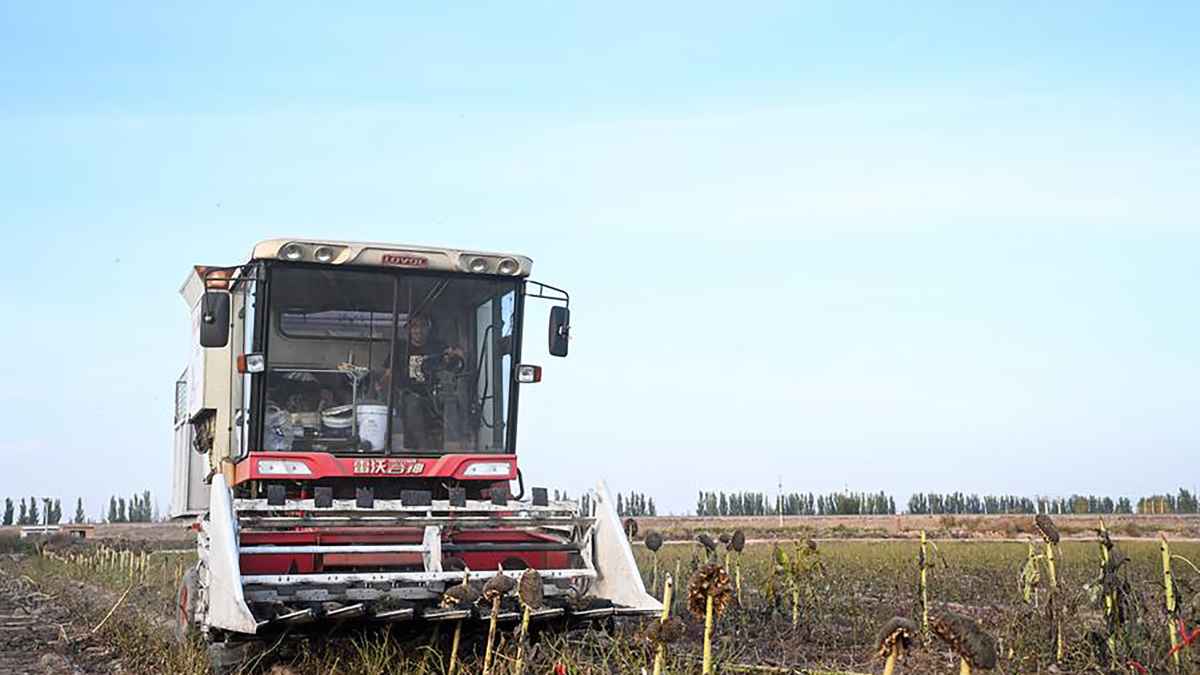
Small Chinese city reaps global success with sunflowers

Published

on

Bayannur

HOHHOT, CHINA – Media OutReach Newswire – 6 February 2025 – At 57, Wang Fei is hailed as the “King of Sunflower Seeds” in his hometown of Bayannur, in northern China.

The title reflects not only his passion for the crunchy snack but also his remarkable achievement in transforming locally grown sunflower kernels into a global commodity, with markets spanning the Republic of Korea, Egypt and Germany.

If you enjoy eating sunflower seeds, there’s a good chance they originated from the saline-alkali fields of Bayannur – China’s largest base for edible sunflower production. In 2024 alone, the region produced more than 940,000 tonnes of sunflowers, with exports spanning over 40 countries and regions.

Wang is one of the local farmers who have leveraged the booming sunflower industry to become a successful entrepreneur.

BOOMING INDUSTRY, CHALLENGING LAND

Located in the Inner Mongolia Autonomous Region, Bayannur was once burdened by nearly 4.8 million mu (320,000 hectares) of saline-alkali land, where traditional crops like wheat and corn struggled to grow.

The introduction of sunflowers in the 1970s marked a turning point for the city with a permanent population of 1.5 million.

With its distinct seasons, abundant sunshine, vast plains and ample water resources, Bayannur offered an environment strikingly similar to the sunflower’s native habitat in North America, making it an ideal setting for this resilient crop, according to Zhang Ruhong, vice mayor of Bayannur.

In the 1980s, Wang began cultivating sunflowers on his family’s saline-alkali land. “They are resistant to salt and alkali, drought-tolerant and easy to grow,” he said.

By 2024, Bayannur had expanded its sunflower planting area to 4.4 million mu, nearly half of the country’s total. The city’s sunflower industry has flourished into a comprehensive value chain, encompassing seed sales, cultivation, processing, exports, e-commerce logistics and even tourism.

Sunflowers are the world’s fourth-largest oilseed crop, following soybeans, rapeseed and peanuts, said Zhang Haiyang, an oilseed industry expert.

He noted that sunflowers have gained prominence as a key specialty oilseed crop in China, particularly in northern regions, thanks to their high nutritional and aesthetic value.

The sunflower seed market was valued at 32.3 billion U.S. dollars in 2023 and is projected to grow at a compound annual growth rate of around 9.4 percent between 2024 and 2032, according to Global Market Insights, a market research and management consulting firm.

To take Bayannur’s sunflower industry to new heights, local agricultural scientists have successfully introduced high-quality seed varieties, including SH361 and SH363, as well as a resistant strain specially designed to combat broomrape, a parasitic plant that has long plagued sunflower production globally.

TINY SEEDS, BIG JOURNEY

In the run-up to the Spring Festival, the factories of Bayannur buzzed with activity as machines roared and workers hustled to sort sunflower seeds for export.

“We were extremely busy before the holiday, as we wanted to complete and ship all orders abroad,” said Zhao Lei, general manager of Bayannur Rong Da Co., Ltd. “Our sunflower seeds have seen strong overseas demand last year, with exports reaching 35,000 tonnes.”

Across China, many regions have cultivated industries tailored to their unique local conditions. For instance, oranges from Ganzhou in Jiangxi Province and strawberries from Dandong in Liaoning Province have become key drivers of social and economic development.

Bayannur has also leveraged its local strengths, establishing 120 leading sunflower processing enterprises to seize market opportunities.

Wang Fei, who began trading sunflower seeds domestically in 1987, ventured into the international market in 2012. Last year, his company, Mintai Agricultural Trading Co., Ltd., recorded operating revenues exceeding 700 million yuan (about 97.63 million U.S. dollars), with exports making up the bulk.

“In China, people love eating sunflower seeds during festivals. Foreigners share this habit as well. Holidays like Christmas mark our peak export seasons,” Wang said, adding that the holiday economy strongly stimulates consumption.

Bayannur’s sunflower seeds and kernel products now reach over 40 countries and regions in the Middle East, Southeast Asia and Europe, generating an annual export value of 4.2 billion yuan — 64 percent of the city’s total agricultural exports.

These achievements are underpinned by strong policy support. Over the past two years, Bayannur has implemented innovative strategies to promote exports, such as fostering leading companies to establish overseas warehouses, advancing cross-border e-commerce, and streamlining customs clearance processes.

Challenges like rising shipping costs, exacerbated by the Red Sea crisis, have also driven adaptability. Last year, Wang began shifting some shipments from sea to land transport, exporting sunflower seeds to Europe via China-Europe freight trains, significantly reducing costs.

“My goal this year is to expand my sunflower seed exports into the Spanish market,” he said with a smile.

Events

Canon returns to Visa pour l’Image to champion outstanding photojournalism

Published

on

Canon

Canon to recognise outstanding contributions to photojournalism with two grants

DUBAI, United Arab Emirates, July 30, 2026/APO Group/ –This September, Canon (https://en.Canon-CNA.com/) will be championing the work of photojournalists for the 37th consecutive year, as part of its decades-long partnership with Visa pour l’Image.

Canon will honour the craft of documentary storytelling during the festival’s Pro Week (31 August – 5 September 2026), held in Perpignan in the south of France, by awarding two independent project grants, bringing together industry experts to encourage meaningful discussions and providing recourses for the professional community at the Canon Lounge.

Canon to recognise outstanding contributions to photojournalism with two grants

For 26 years, Canon and Visa pour l’Image have awarded at times career-defining project grants to female photojournalists pursuing a long-term documentary project, alongside the opportunity to showcase their work on the acclaimed Visa pour l’Image stage.

This year, the international jury has awarded Finnish photojournalist and Canon Ambassador Meeri Koutaniemi, for her 14-year documentation of female genital mutilation (FGM) and the grassroots activists working to end the practice. Spanning 14 countries, the project explores both the impact of FGM and the efforts of survivors and communities driving change from within, culminating in a return to Kenya to examine how activism and education can transform future generations.

Canon and Visa pour l’Image are also presenting the seventh Canon Video Grant to German-Mexican filmmaker Axel Javier Sulzbacher for Antes de ser Niño – Before Being a Child. Set in Michoacán, Mexico, the film follows a youth militia where children receive military-style training amid cartel violence, exploring the tension between protection, militarisation, and childhood through long-term observational filmmaking.

We are proud to support photographers and videographers who devote years to telling stories that can shape understanding and help build a more informed and compassionate world

“Photojournalism has the power to make visible the realities that too often remain unseen. For more than two decades, the Canon Female Photojournalist Grant has supported women whose dedication, courage and empathy bring these stories to light. Meeri Koutaniemi’s work exemplifies the profound role documentary storytellers play in bearing witness, amplifying underrepresented voices, and inspiring meaningful change.

Alongside photography, documentary filmmaking plays a vital role in helping us understand the world and the experiences of people whose stories might otherwise go untold. This year, the Canon Video Grant recognises the remarkable work of Axel Javier Sulzbacher, whose dedicated, long-term approach brings nuance and humanity to a complex and challenging subject,” says Ingrid Masachs, EMEA Marketing Director at Canon.

“We are proud to support photographers and videographers who devote years to telling stories that can shape understanding and help build a more informed and compassionate world.”

Canon to host a Photo Studio

As a special highlight this year, Canon will host a dedicated Photo Studio and offer visitors the opportunity to receive a professional headshot and live demonstration of Canon’s Authenticity Imaging System (https://apo-opa.co/4c8UlT2), which embeds secure, verifiable credentials into images in accordance with the C2PA standard.

Canon support at Visa pour l’Image

The Canon Lounge will showcase the strength of Canon’s complete professional imaging offering, bringing together industry-leading cameras, lenses, professional print technology and software solutions that help protect image authenticity, and the unrivalled expertise of Canon Professional Services (CPS).

Throughout the festival, accredited photographers can benefit from complimentary check-and-clean services, hands-on access to the latest equipment, one-to-one advice from Canon product specialists, and a fine art print of their work. As the only imaging brand offering this full suite of products, software and services support, Canon is uniquely positioned to help professional photographers create, protect, and share their work with confidence.

Distributed by APO Group on behalf of Canon Central and North Africa (CCNA).

Continue Reading

Business

Inside Africa’s Green Economy: Kevin Munjal on What’s Coming Next

Published

on

Kevin Munjal, Director of Development Impact at FSD Africa, highlights the potential for up to 84.5 million green jobs in Africa by 2050 if capital flows to service-led value chains, regulations are enforced, and skills systems modernised

CAPE TOWN, South Africa, July 30, 2026/APO Group/ —Exclusive interview with Kevin Munjal, Director, Development Impact at FSD Africa, which recently published a report on “Unlocking Africa’s Green Transition: Opportunities Towards a Green and Inclusive Workforce (https://apo-opa.co/4yMIbJt) in partnership with Shell Foundation. It contains highly relevant insights for stakeholders working on Africa’s green transition and related human capital challenges.  

Interview Summary:
Kevin Munjal, Director of Development Impact at FSD Africa, highlights the potential for up to 84.5 million green jobs in Africa by 2050 if capital flows to service-led value chains, regulations are enforced, and skills systems modernised. He stresses vocational training models with guaranteed income pathways, innovative financing that embeds workforce development into green infrastructure, and mobile-based social protection for informal workers.

Gender equity requires targeted interventions across both formal and informal economies. Clean cooking and waste recycling are identified as transformative sectors, while national strategies must reflect distinct labour market structures in Nigeria, South Africa and Kenya.

Let’s start with some background on you and the work that you do for FSD Africa. Where in Africa are you active?
My name is Kevin Munjal, I’m the Director of Development Impact at FSD Africa. FSD Africa is a specialist development agency deploying financial and non-financial instruments to strengthen Africa’s financial sector to enable the continent to mobilise sustainable capital at scale for financing of its development needs. We currently have a presence in over 30 countries.

As Director of Development Impact, I oversee the body of work that helps FSD Africa understand the effectiveness of its financial sector development strategies. Together with my team, we help craft and test hypotheses, generating data and insights that inform stronger programming.

I also oversee a growing portfolio of work on green skills and jobs, advocating for climate financing strategies that enable a just green transition in Africa.

The recently published FSD Africa report projects up to 84.5 million green jobs by 2050. What policy choices are most critical to ensure Africa reaches the high scenario outcome rather than falling short?
The gap between the low and high scenarios, 18 million jobs by 2050,  comes down to three things: where capital is directed, whether regulations are enforced, and whether skills systems keep pace with deployment.

On capital, the high scenario requires finance to flow toward service-led value chains like clean cooking, solar home systems, waste recycling, e-mobility, rather than concentrating in utility-scale infrastructure. These service chains generate more jobs per dollar and reach more people.

On regulation, the gap between policy intent and market reality is enormous. Thirteen African countries have published e-mobility strategies, but very few have operational enforcement frameworks. Clean cooking targets appear in only 45% of African NDCs.

On skills, the training systems that exist are largely calibrated to legacy technologies. There are no national training programmes for IoT-enabled remote operations, battery management system governance, or carbon measurement and verification in any of the three countries we studied.

How can African governments and industry rapidly scale vocational training and skills systems to meet demand?
Africa’s renewable energy workforce is around 324,000 people—just 2% of the global total—despite the continent holding 60% of the world’s best solar resources. That gap cannot be closed through the formal TVET system alone, which is too slow to reform and too geographically fixed to reach the workers who need it most.

The most effective approaches we’ve seen share a common design principle: train for a specific job with a guaranteed income pathway. The Rural Electrification Agency’s NextGen model in Nigeria—bootcamp training paired with a nine-month paid internship—is a strong example. South Africa’s Grootbos Green Futures programme places 90% of its trainees into roles in the local restoration economy.

Beyond individual programmes, three instruments can scale quickly without new legislation. Recognition of prior learning, embedding green skills modules into existing qualifications rather than creating standalone credentials, and making industrial apprenticeships paid, which has been shown to dramatically improve female retention.

Less than 1% of climate finance currently goes to skills development. What innovative financing mechanisms could redirect capital towards workforce training?
Less than 1% of climate finance currently goes to skills development. While “Jobs created” is the standard metric for investors, it tells you nothing about whether those jobs are decent, skilled, or sustainable.

The first shift needed is to embed workforce development criteria directly into green infrastructure financing. If a DFI is deploying capital into a solar project, a defined share of that deployment should be earmarked for training. Gender inclusion criteria should also be part of the deal terms.

To move beyond grants, need to identify how the underlying assets of a green investment can innovatively finance the skilling of workers. For instance, can a portion of the carbon revenue generated by a green investment be used to finance skilling, In principle, more private finance needs to be directed to the skilling agenda if it is to be sustainable, hence the need to find financing models that can enable this.

The report warns that 86% of green jobs in 2030 will be informal. How can stakeholders extend social protection and career pathways to informal workers, especially women and youth?
By 2030, 86% of green jobs will be informal. That is not a problem to solve for, it is the structure of Africa’s green economy, and any serious strategy has to work within it rather than around it.

Three instruments matter most. Mobile-based social protection, linked to the digital payment platforms that African workers already use, can extend access to health insurance, accident cover, and pensions for self-employed green workers.

Our research is very clear that there is no single African green transition, and a continental template would miss the mark badly

Portable digital credentials, verified through employer records and accessible on basic mobile devices, allow workers to build a recognised skills profile that travels with them across employers and markets. For young people in particular, this converts informal experience into a career asset.

Finally, giving micro-distributors access to working capital and trade finance allows nano and micro-enterprises to build the enterprise performance records that financial institutions need to extend credit. This is how you move someone from a survivalist activity to a sustainable livelihood.

Staying with women, they are concentrated in lower value, commission-based roles. What targeted interventions could ensure gender equity and progression opportunities in the green economy?
Women are projected to hold 31% of green jobs by 2030 and 44% by 2050. That sounds positive until you look at where those jobs are concentrated—the lowest-value, most informal, commission-based roles, with no contract, no social protection, and no progression pathway.

The barriers are structural and well-documented. Safety and mobility issues prevent women from taking on remote or overnight technical assignments. Women’s care burdens conflict with the rigid schedules of higher-tier roles. Gaps in certification and field placement mean that women who complete technical training often cannot convert it into employment.

The most effective interventions address these simultaneously rather than one at a time.

In South Africa, where the green economy is highly formalised, the levers are procurement standards, worksite infrastructure and embedding these into financing conditionalities so they become institutional expectations rather than voluntary practice.

In Nigeria and Kenya, where growth is happening through informal channels, the priority is expanding women’s access to distribution roles and providing working capital for women-led enterprises through catalytic finance instruments.

Gender covenants in DFI financing, specifying targets by value chain and tracking women in technical and management roles, are the accountability mechanism that makes all of this stick.

Africa’s transition is mainly driven by service-led industries. In your view, which of these sectors are most transformative for inclusive job creation?
Clean cooking stands out. By 2030, it is projected to be the largest green value chain on the continent generating between 1.4 and 2.5 million jobs through micro-distributors, maintenance technicians, and community agents. By 2050, clean cooking employment is projected to grow more than tenfold. The majority of customers are women, which means effective distribution requires women as agents, and the sector is approaching gender parity in our high-scenario projections.

Waste recycling is the other sector I’d highlight. It has the highest accessibility rates for low-income workers, around 72%, and the regulatory frameworks to drive formalisation are already in place in South Africa, Kenya, and increasingly Nigeria. South Africa’s Extended Producer Responsibility regime has already created over 24,000 formal jobs since 2022.

The common thread in both sectors is that employment is driven by service delivery at scale with millions of household connections and collections, not a handful of large construction projects. That is precisely what makes them transformative: the jobs are distributed, the barriers to entry are low, and the potential to reach workers who have been structurally excluded from the formal economy is real.

The report highlights differences across Nigeria, South Africa and Kenya. How should national strategies be tailored to reflect these distinct labour market structures and enabling conditions?
Our research is very clear that there is no single African green transition, and a continental template would miss the mark badly.

Nigeria’s transition is 87% informal and dominated by nano-enterprises. Mandating formalisation will not work at the scale and speed the sector requires. The priority is improving job quality within informal systems—portable credentials, mobile social protection, quality standards within agent networks—while expanding the sectors where women are better represented, like climate-smart agriculture.

South Africa’s transition is 70% formal, shaped by regulated procurement frameworks and the most capitalised just transition plan on the continent. The challenge here is not reaching informal workers; it is reforming conditions within formal systems, particularly the occupational segregation that keeps women’s participation stagnant at around 25%, and ensuring that the shift from construction-phase to operations and maintenance roles translates into improved incomes.

Kenya occupies a middle ground—a renewable electricity system already operational, an emerging e-mobility sector anchored by the continent’s most mature mobile money infrastructure, and a devolved governance structure that requires green skills to be integrated at the county level if employment benefits are to reach workers where deployment is actually occurring.

FSD Africa is launching the Green Jobs Innovation Hub. What role do you envision this initiative playing in bridging the gap between investment in infrastructure and investment in human capital?
The hub is a direct response to the coordination failure that sits at the heart of this problem. Training institutions cannot invest in green skills without demand signals from employers. Employers cannot plan workforces without deployment pipelines. DFIs cannot condition financing on workforce outcomes without data on what those outcomes should look like. And governments cannot sequence skills expenditure without occupation-level employment projections. Everyone is waiting for someone else to move first.

The Green Jobs Innovation Hub is designed to break that deadlock by bringing these actors together around shared data, shared standards, and shared investment. Concretely, The Hub works to unlock financing models that close the workforce investment gap—ensuring that capital flows alongside green infrastructure investment.

Any final thoughts from your side?
The most important thing I want to emphasise is that Africa’s green transition is not primarily a story about solar panels and megawatts. It is a story about millions of micro-distributors, maintenance technicians, waste sorters, and community agents, people who are already doing this work, largely informally, largely without recognition, and largely without protection.

We also have the data now. We know which value chains will generate the most jobs, we know who those jobs will reach, and we know what is preventing more people from accessing better ones.

Therefore, we should stop separating the infrastructure conversation from the human capital conversation. They are the same investment. And until we finance them that way, we will keep building green infrastructure that imports its skills and perpetuates the same development challenges we’ve seen over the years.

Distributed by APO Group on behalf of VUKA Group.

Continue Reading

Energy

Zimbabwe, Gabon and Mozambique Energy Leaders to Drive Investment Talks at African Energy Week (AEW) 2026

Published

on

Zimbabwe

ZERA, Gabon Oil Company and ENH leaders will join AEW 2026 to discuss energy reform, upstream growth and investment opportunities across Africa

CAPE TOWN, South Africa, July 30, 2026/APO Group/ –Zimbabwe Regulatory Authority (ZERA) CEO Edington Tapera Mazambani, Gabon Oil Company (GOC) CEO Dr. Marcellin Simba Ngabi and Empresa Nacional de Hidrocarbonetos (ENH) Chairman and CEO Rudêncio de Rodolfo Novais Morais will speak at African Energy Week 2026, bringing perspectives from three institutions at the center of Africa’s evolving energy landscape. Representing regulation, state participation and natural resource development, the executives will share insights into the policies, investments and partnerships shaping the next phase of energy growth across southern and Central Africa.

Their participation comes as African governments pursue market reforms, strengthen national energy companies and expand private investment to improve energy security and accelerate resource development. AEW 2026 – taking place in Cape Town from October 12–16 – will provide a platform to examine how regulatory modernization, state-led investment and international partnerships are driving new opportunities across the continent’s electricity, oil and gas sectors.

Mazambani joins AEW 2026 as Zimbabwe advances one of its most significant energy market reforms in decades. The regulator recently shifted away from unsolicited project proposals in favour of structured competitive bidding, improving transparency while creating clearer pathways for private investment. At the same time, ZERA continues expanding the country’s renewable energy pipeline, issuing new generation licenses that have added hundreds of megawatts of planned capacity, predominantly through utility-scale solar projects.

The participation of ZERA, Gabon Oil Company and ENH at AEW 2026 reflects the important role these institutions play in shaping competitive energy markets

The authority has also launched initiatives to modernize the national grid, strengthen energy efficiency standards and prepare for wider deployment of distributed generation through future net-metering frameworks. Recent enforcement measures to ensure lower fuel prices are expected to reduce transport costs and improve affordability for consumers.

Meanwhile, Ngabi brings insights from one of Africa’s fastest-growing national oil companies as GOC expands from an equity partner into an integrated upstream operator. Since taking office, he has overseen a strategy centered on increasing state participation in Gabon’s petroleum sector through acquisitions, operatorship and domestic capability building. The company’s $300 million acquisition of Tullow Oil’s Gabon portfolio significantly expanded its production base and reserves while positioning GOC as a more influential operator across the country’s mature producing assets.

The acquisition of Société de Maintenance Pétrolière Afrique has brought drilling and well intervention expertise in-house, while new offshore production sharing contracts have expanded GOC’s operated acreage. These developments coincide with Gabon’s broader efforts to revive exploration activity, open new offshore licensing opportunities and modernizing refining infrastructure.

A geologist by training with decades of experience inside ENH, Morais has been tasked with maintaining technical continuity while advancing the commercialization of Mozambique’s vast offshore natural gas resources. His appointment comes as Mozambique seeks to accelerate financing and implementation of major Rovuma Basin LNG projects that are expected to transform the country’s economy over the coming decade.

Beyond LNG development, ENH is expanding its role across Mozambique’s broader energy value chain. Under Morais’ leadership, the company is supporting government efforts to increase domestic value addition by strengthening logistics infrastructure, pipeline networks and downstream facilities that can support long-term industrialization. The strategy reflects Mozambique’s growing emphasis on ensuring natural gas development delivers wider economic benefits through local content, industrial growth and improved energy access.

“Across Africa, governments are strengthening regulatory institutions, expanding the role of national energy companies and creating new investment frameworks to unlock long-term energy development,” says NJ Ayuk, Executive Chairman, African Energy Chamber. “The participation of ZERA, Gabon Oil Company and ENH at AEW 2026 reflects the important role these institutions play in shaping competitive energy markets, attracting investment and ensuring Africa’s natural resources drive sustainable economic growth.”

Distributed by APO Group on behalf of African Energy Chamber.

Continue Reading

Trending