Connect with us
Anglostratits

Business

Teclast Exhibits Cutting-Edge Products at GITEX AFRICA 2024

Published

on

Teclast

Visitors are invited to experience Teclast’s latest technological advancements and explore opportunities for business collaboration at Booth 6D-70

MARRAKECH, Morocco, June 13, 2024/APO Group/ — 

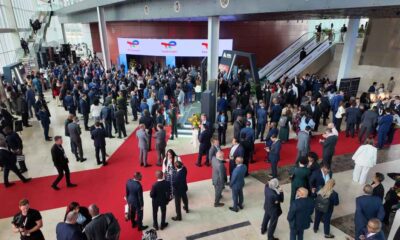
Teclast is thrilled to announce its participation in GITEX AFRICA 2024 (www.GITEXAfrica.com), taking place from May 29-31 at Place Bab Jdid in Marrakech, Morocco. Visitors are invited to experience Teclast’s latest technological advancements and explore opportunities for business collaboration at Booth 6D-70.

Innovative Product Lineup

New offerings will be on display and available for exclusive hands-on experiences at the Teclast booth.

Tablets 

  • T65 Max: Tired of small screens and lagging performance? The T65 Max, Teclast’s first 13-inch tablet, offers a vast, powerful display for seamless work and play. 
  • M50 Mini: Fed up with bulky devices? The M50 Mini delivers high performance in a compact form, perfect for on-the-go use. 

Mini PCs

  • N20 Pro: Disappointed by underpowered mini PCs? The N20 Pro packs robust performance for all your computing needs. 

 Laptops

  • F16 Pro: Frustrated by heavy, slow laptops? The F16 Pro combines powerful features with a sleek, portable design for professionals. 

Projectors

  • J50: Dreaming of a home theater? The J50 projector delivers cinema-quality visuals with its high resolution, brightness, and Android system.

Future Development in the African Market

We aim to penetrate the African market by introducing localized, affordable, and durable products while establishing strong partnerships with local distributors, retailers, and tech hubs for wide accessibility and support.

  • Localized Product Offerings: Developing products that address the specific requirements and preferences of the African market, including affordability, durability, and ease of use.
  • Partnerships and Collaborations: Establishing strong partnerships with local distributors, retailers, and tech hubs to ensure wide accessibility and support.
  • Sustainability Efforts: Continuing our commitment to sustainability by integrating eco-friendly practices and materials in our product lines.

Join Us at GITEX AFRICA 2024

Teclast invites all partners, users, and fans to join us at Booth 6D-70 to explore our innovative products and solutions. This event is a unique opportunity to network with industry leaders, discuss potential collaborations, and gain insights into future trends and Teclast’s strategic vision.

Event Details:

  • Date: May 29-31, 2024
  • Location: Place Bab Jdid, Marrakech, Morocco
  • Booth Number: 6D-70

Distributed by APO Group on behalf of GITEX Africa.

Business

Telecoming Strengthens Its Presence in Africa with the Launch of DCB Software South Africa

Published

on

The company advances its regional strategy with a model built on AI, monetisation and direct connectivity with local operators

JOHANNESBURG, South Africa, May 11, 2026/APO Group/ –Telecoming (www.Telecoming.com), a global technology company specialising in the monetisation of digital services, announces the launch of DCB Software South Africa (www.DCBSoftwareZA.com), its new local subsidiary. The move reinforces the company’s growth strategy in Africa, one of the most promising markets in the mobile economy.

The new entity will be led by Javier de Corral, who will lead business development, establish partnerships with telecom operators and build a local team based in Johannesburg.

The South African launch builds on Telecoming’s existing footprint in the continent, where it already operates through its Algerian subsidiary, DCB Software Dzayer, further strengthening its regional position.

We are very excited about the opportunities in South Africa and committed to investing in its digital future

DCB Software South Africa will operate as a local hub focused on AI-driven digital services, supported by a team entirely based in the country. Its scope includes the development of digital products, mobile and web services, as well as solutions in digital entertainment and marketplaces, all built on scalable, multi-device platforms designed to ensure a seamless user experience.

The subsidiary combines in-depth knowledge of the South African and Sub-Saharan markets with direct access to telecom operators, digital platforms and local payment solutions. It will deploy multiple monetisation models, including Direct Carrier Billing (DCB), to optimise conversion rates and overall performance.

The launch of DCB Software South Africa marks a key milestone in our global expansion strategy”, said Cyrille Thivat, CEO of Telecoming. “We are very excited about the opportunities in South Africa and committed to investing in its digital future. With Javier de Corral at the helm, we are confident that this new subsidiary will not only drive our local growth but also contribute to the broader digital and AI ecosystem.”

Telecoming develops technology designed to enhance user acquisition, streamline payment processes and improve the performance of digital services. Its platforms integrate monetisation, advertising and user experience, leveraging artificial intelligence to deliver secure, scalable and efficient solutions.

This expansion reinforces Telecoming’s commitment to delivering innovative digital and AI services and strengthens its position as a key player in the African market. With this launch, the company takes another step in its international expansion, enhancing its ability to support the development of Africa’s digital ecosystem through advanced technology, local expertise and strategic partnerships.

Distributed by APO Group on behalf of Telecoming.

Continue Reading

Business

Enlit Africa 2026 makes 20 May the Commercial and Industrial (C&I) delivery day across power, water and clean energy hubs

Published

on

Enlit Africa 2026

Taking place 19–21 May 2026 at the Cape Town International Convention Centre (CTICC), Enlit Africa, created by VUKA Group, convenes utilities, municipalities, large energy users, financiers, developers and technology providers to focus on what shifts outcomes in African infrastructure

CAPE TOWN, South Africa, May 11, 2026/APO Group/ –Enlit Africa 2026 will put commercial and industrial delivery front and center on Wednesday 20 May with a dedicated line-up across the Power HubWater Hub and Renewable Energy & Storage Hub. The day is built for decision-makers who must keep operations running, secure reliable supply, manage risk and move projects from concept to implementation.


Taking place 19–21 May 2026 at the Cape Town International Convention Centre (CTICC), Enlit Africa, created by VUKA Group, convenes utilities, municipalities, large energy users, financiers, developers and technology providers to focus on what shifts outcomes in African infrastructure.

On 20 May, the programme is anchored by the keynote, “How a coordinated energy/water plan could change African resilience” (09:30–11:45), positioning water and energy as interlinked operational risks that can no longer be managed in silos. From there, the day breaks into practical tracks tailored for large users and the solution partners that support them.

In the Renewable Energy & Storage Hub, sessions focus on the realities of C&I adoption and delivery at scale, including “Project implementation for multi-megawatt C&I projects” (11:45–13:00) and “Clean energy adoption in the C&I market” (14:30–15:45), before turning to fleet electrification and operations with “Mobility: Management of electric vehicle fleets for C&I” (16:00–17:30).

In the Water Hub, the agenda targets the technologies and operating models that matter most to industrial continuity and compliance. Sessions include “Next-generation water treatment technologies” (11:45–13:00), “Advanced water treatment & smart water systems” (14:30–15:45) and “Accelerating water technology deployment for C&I operations” (16:30–17:30).

Together, the three stages create a single day of high-signal, implementation-led content for C&I leaders, utilities, municipalities and suppliers focused on operational performance, investment readiness and delivery discipline.

Distributed by APO Group on behalf of VUKA Group.

Continue Reading

Business

Nigeria’s Upstream Reform Program Captures 40% of Africa’s Final Investment Decision (FID) Activity After a Decade on the Margins

Published

on

African Energy Chamber

A government three-year review documents how executive action under President Tinubu reversed a decade of upstream decline

JOHANNESBURG, South Africa, May 8, 2026/APO Group/ –Nigeria has gone from capturing 4% of Africa’s upstream final investment decisions (FIDs) to commanding 40% in two years, according to Nigeria’s Energy Sector Reforms 2023-2026: A Three-Year Review, published by the Office of the Special Adviser to the President on Energy and spearheaded by Special Adviser Olu Verheijen. The $50 billion project pipeline now in development beyond 2026 points to sustained capital commitment at a scale not seen in the Nigerian upstream for at least a decade.


Between 2014 and 2023, Nigeria was among the continent’s weakest performers for upstream FIDs despite holding 37.5 billion barrels of proven oil reserves, the second-largest endowment in Africa. Algeria captured 44% of African upstream FIDs during that period, Angola held 26%, while Nigeria trailed Mozambique, Ghana, Senegal and Namibia. In the third quarter of 2022, crude production briefly dropped below one million barrels per day, as years of underinvestment, pipeline vandalism and regulatory ambiguity compounded each other. However, reforms instituted by Nigeria’s President Bola Tinubu have dramatically turned this trend around. Through deliberate and coordinated steps, the government has reset the trajectory.

Addressing Fiscal Terms, Regulatory Scope and Contracting Speed

President Bola Tinubu’s administration moved simultaneously on fiscal terms and regulatory architecture. Policy directives in 2023 clarified the boundary of jurisdiction between the Nigerian Upstream Petroleum Regulatory Commission (NUPRC) and the Nigerian Midstream and Downstream Petroleum Regulatory Authority (NMDPRA), resolving an ambiguity that had complicated project sanctioning. Presidential Directive 40 introduced targeted tax incentives, and a separate Notice of Tax Incentives for Deep Offshore Production in 2024 was designed to draw international oil companies (IOCs) back into capital-intensive, long-cycle deepwater projects. The VAT Modification Order 2024 and Upstream Cost Efficiency Order 2025 addressed the cost structures that had rendered marginal projects uneconomic. NNPCL contracting timelines were compressed from 36 months to a maximum of six months.

Four Divestments Transferred Onshore Control to Indigenous Operators

In parallel, the administration deployed targeted security directives and accelerated ministerial consents for four IOC asset transfers. Renaissance acquired Shell’s onshore portfolio. Seplat Energy completed its acquisition of ExxonMobil’s Nigerian upstream interests. Oando took over from Agip, and Chappal acquired Equinor’s local assets. The four transactions totaled approximately $4 billion. The transfer of onshore and shallow-water blocks to indigenous operators contributed directly to production recovery. Output rose by approximately 400,000 barrels per day between 2023 and 2025 to reach 1.6 million barrels per day, the highest onshore production level in 20 years.

When a government rebuilds fiscal competitiveness and regulatory predictability at the same time, capital responds

Signed Projects Total $10 Billion, With a $50 Billion Pipeline Beyond

The reforms produced a concrete FID response from Shell and TotalEnergies. Shell Nigeria Exploration and Production Company (SNEPCo) sanctioned the $5 billion Bonga North deepwater development in December 2024 and committed a further $2 billion to the HI Non-Associated Gas (NAG) project. TotalEnergies and NNPCL took a joint FID on the $550 million Ubeta gas field development in June 2024.

Together those three commitments account for more than $10 billion in signed investment after a decade of near-zero sanctioning activity. The pipeline beyond 2026 spans a further $50 billion across 11 projects including Bonga South West, Owowo, Usan and Erha. Nigeria approved 28 field development plans valued at $18.2 billion in 2025 alone, targeting an estimated 1.4 billion barrels of reserves.

“When a government rebuilds fiscal competitiveness and regulatory predictability at the same time, capital responds,” said NJ Ayuk, Executive Chairman of the African Energy Chamber. “Nigeria has done both, and the FID numbers are concrete proof.”

The Counterfactual Illustrates How Much Was at Stake

The presentation includes a no-reform projection that puts the gains in context. Without intervention, total crude and condensate production was on track to fall from 1.371 million barrels of oil equivalent per day in 2022 to 579,000 by 2030. Under the reform trajectory, output reached 1.77 million barrels of oil equivalent per day in 2026, with a stated government target of 3 million barrels per day. Export gas utilization rose 39% over the same period, while domestic utilization grew by 7%.

The durability of these gains will be tested by two factors: whether the institutional architecture put in place under the Tinubu administration holds over the long term, and whether the deepwater commitments signed in 2024 and 2025 advance to execution on schedule. The project pipeline is large enough that partial delivery would still represent a generational shift in Nigeria’s upstream output profile.


Distributed by APO Group on behalf of African Energy Chamber.

Continue Reading

Trending