Connect with us
Anglostratits

Business

Africa Must Own Carbon Offsets Value Chain Amid Market Failures

Published

on

Carbon Offsets

With average global temperatures now at least 1.1 degrees Celsius above pre-industrial levels, the planet is fast approaching the 1.5°C ceiling beyond which scientists foresee environmental catastrophe

DUBAI, United Arab Emirates, December 4, 2023/APO Group/ — 

Africa should become the global centre for high-value, high-integrity carbon credits, AFC (www.AfricaFC.org) says; Wholesale leases or sale of land undervalue Africa’s forestry while enabling polluters: AFC paper; AFC Foundation to prioritise conservation and regeneration of African carbon sinks through local capacity building.

At a critical moment in the fight against climate change, the world is squandering a significant opportunity by neglecting Earth’s most important natural carbon repositories – Africa’s forests, grasslands, peatlands and mangroves. The global carbon markets offer a pragmatic way to change this course for the better, with scope to attract meaningful and much-needed finance for conservation, energy transition and climate resilience. Yet, as things stand, carbon markets are failing to deliver. Worse, they risk enabling polluting countries and industries to ignore the burden of their ‘pollution per capita’ responsibilities and justify backsliding on urgent emission reductions.

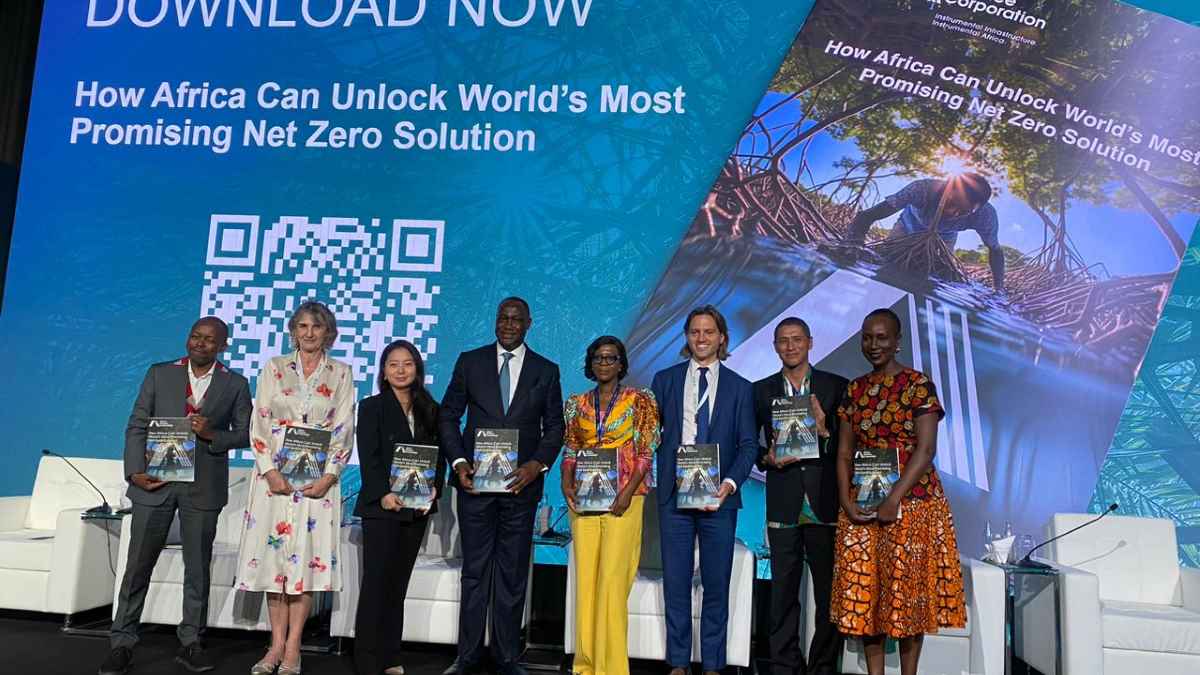
These are the findings of a positioning paper released at COP28 by the Africa Finance Corporation, which urges against complicit arrangements with external entities that undervalue Africa’s natural assets. Instead, Africa’s political and economic leadership should take a strategic approach to harness the full benefits of a viable future carbon market, which Africa must lead, according to AFC.

“The fact is the world is enticing Africa to repeat mistakes of the past,” writes Samaila Zubairu, President & CEO of AFC. “Instead of maximising economic value from our natural assets, countries are engaging in the wholesale long leases and sale of land – our valued birthright – to foreign intermediaries that hope to profit from a more appropriately priced carbon market of the future. This is akin to the resource curse of past decades.”

With average global temperatures now at least 1.1 degrees Celsius above pre-industrial levels, the planet is fast approaching the 1.5°C ceiling beyond which scientists foresee environmental catastrophe. Yet, eight years after the Paris Agreement, governments continue to fail to meet their commitments to climate action. Global greenhouse gas emissions have shot up, with the world on course for a 9% increase by 2030 from 2010 levels, according to the UN Intergovernmental Panel on Climate Change. In place of resolve to take responsibility for per capita emissions, polluting nations are instead pivoting towards carbon offsets as a way of ‘cancelling out’ industrialised world emissions. 

But while viewed by some as a climate panacea, the market for carbon offsets has become compromised by repeated scandals: conservation projects mired by evidence of exploitation, made worse by corruption; exposés of carbon offsets that do not represent any actual emission reductions; deforestation simply being moved along to regions not covered by offsets; displaced communities that see none of the proceeds from offset contracts.

The continent’s forests alone absorb a net 600 million tonnes of carbon dioxide each year, more than any forest ecosystem on Earth

The damage to market confidence from these recurring exposés is evidenced by a dramatic decline in issuance and prices of carbon credits. Although African carbon credits are among the most impacted by this negative cycle, the continent is also in a unique position to reform the carbon markets in a way that will drive trust, value, and localised benefits, AFC’s paper says. Africa’s extensive forests, grasslands, peatlands, and mangroves are some of the world’s most powerful carbon sinks, helping to mitigate global climate change and increase ecological diversity. The continent’s forests alone absorb a net 600 million tonnes of carbon dioxide each year, more than any forest ecosystem on Earth. This absorption capacity is equivalent to offsetting 76% of emissions from all of Africa, 21% of Europe’s, 18.5% from the US, or 4% from the whole world.

Despite its capacity to remove vast amounts of CO2 from the atmosphere, Africa accounted for just 11% of offsets issued between 2016 and 2021, with an even smaller share – only 3% – linked to the region’s natural carbon sinks. Africa should rightfully play a far bigger role in the global carbon markets that reflects its significant contribution towards mitigating the effects of climate change, according to AFC’s report.

“Instead of selling our land rights into today’s tarnished and depreciated carbon markets, we should focus on conservation and reforestation – with local actors driving the projects, the financing, the verification, and the trading,” writes Zubairu. “Our continent’s natural assets will only achieve their true value through robust mechanisms that guarantee lasting benefits delivered to local communities and governments to sustain conservation long after the initial funding is spent.”

AFC says it’s committed to take a lead role to prioritise the protection and regeneration of Africa’s carbon repositories. Through its experience of developing multi-billion-dollar projects, AFC understands what it takes to build a pipeline of bankable and de-risked carbon emissions reduction projects, said Zubairu. With its partners, AFC is one of the biggest investors in renewable energy in Africa. Its Infrastructure Climate Resilient Fund (ICRF), supported by the Green Climate Fund and the Nigeria Sovereign Investment Authority, is focused on building resilience for Africa’s systems and physical infrastructure.

The Corporation will focus its project development expertise on driving a pipeline of bankable and sustainable carbon emissions reduction projects. It is also creating the AFC Foundation to raise knowledge and awareness among governments and communities to halt the destruction of natural carbon sinks, raise financing for their conservation, and advocate for a ban on their wholesale long-term lease or sale.

“What we know for certain is that Africa’s interaction with the global carbon markets must change,” said Zubairu. “We must take ownership of the conservation and expansion of our forests. We need to create our own carbon emissions reduction value chain with global participation that captures and retains value for Africa and the world for generations.”

The full report is available here: https://apo-opa.co/481CGII

Distributed by APO Group on behalf of Africa Finance Corporation (AFC).

Business

Liberia to Preview Next Oil & Gas Licensing Round Strategy at Houston Investor Day

Published

on

The Liberia Petroleum Regulatory Authority will host operators, investors and partners in Houston on August 19 to preview future licensing opportunities and showcase the exploration potential of its offshore basins

HOUSTON, United States of America, August 7, 2026/APO Group/ –The Liberia Petroleum Regulatory Authority (LPRA) will present its strategy for the country’s next offshore licensing round at Liberia Investor Day Houston on August 19, bringing together international exploration companies, investors, service providers and energy leaders to discuss the next phase of Liberia’s upstream development.

Hosted in partnership with Energy Capital & Power, the event will provide a platform for the LPRA, led by Director General Hon. Marilyn T. Logan, to outline Liberia’s regulatory framework, investment priorities and plans to attract new participation across the country’s offshore sector. Discussions will focus on upcoming licensing opportunities, exploration prospects and the subsurface data supporting future investment decisions.

Liberia’s offshore sector is entering a new phase of exploration activity, with renewed international participation and a growing pipeline of opportunities. Following the award and ratification of eight Production Sharing Contracts in 2025, Liberia has re-established itself as a frontier exploration destination, with international operators advancing work programs designed to further evaluate the country’s petroleum potential. TotalEnergies is progressing exploration activities that include offshore geochemical surveys, 3D seismic acquisition and seabed mapping, while Oranto Petroleum has also signed contracts to explore Liberia’s offshore.

At the Liberia Investor Day Houston, the LPRA will provide industry stakeholders with insight into the priorities shaping the next licensing round, including the anticipated process, qualification requirements, available acreage and access to technical data. The engagement will give prospective investors a clearer view of Liberia’s exploration landscape and the opportunities emerging across its offshore basins.

The event will also facilitate direct dialogue between LPRA and the global upstream community, connecting companies with policymakers and industry stakeholders involved in shaping Liberia’s next chapter of petroleum development.

As exploration companies continue to seek new frontier opportunities, Liberia Investor Day Houston will highlight the role of regulatory certainty, data availability and strategic partnerships in unlocking long-term investment across Liberia’s offshore sector.

Registration is now open for attendees. Companies interested in Liberia’s emerging offshore opportunities are invited to join LPRA, investors and upstream leaders in Houston for insights into the country’s licensing strategy and exploration outlook. For more information contact info@energycapitalpower.com.

Distributed by APO Group on behalf of Energy Capital & Power.


Continue Reading

Business

Beyond Stabroek: Guyana’s Offshore Basin Attracts New Wave of Exploration Investment

Published

on

Etu Energias

As ExxonMobil advances appraisal activity in Stabroek and new operators target frontier acreage, Guyana is attracting global capital and building a diversified offshore portfolio designed to sustain long-term growth

GEORGETOWN, Guyana, August 7, 2026/APO Group/ –Guyana’s transformation into one of the world’s fastest-growing oil producers is entering a new phase, with a growing network of IOCs expanding exploration activity across the country’s offshore basin. Beyond the landmark discoveries that first put Guyana on the global energy map, new drilling campaigns and licensing partnerships are creating a broader exploration ecosystem designed to support long-term production growth.

At the center of this momentum is ExxonMobil’s continued exploration and appraisal activity in the prolific Stabroek Block. The company has submitted a proposal for a 35-well exploration and appraisal drilling campaign, expected to run from 2028 through 2033, pending regulatory approval. The program would build on more than 30 commercial discoveries already made in the block, with drilling activity focused on evaluating new prospects and appraising existing discoveries to support future development opportunities.

Exploration activity is also extending into Guyana’s frontier acreage, with ExxonMobil advancing drilling operations at the deepwater Canje Block. The company has deployed the Noble Stena Carron drillship for exploration activity, highlighting continued industry interest in evaluating Guyana’s underexplored offshore potential beyond the established Stabroek Block.

Guyana’s strong exploration outlook comes as the country’s economy continues to benefit from rapid oil sector expansion, with hydrocarbons expected to remain a key driver of exports, government revenues and economic growth. As production scales up, attracting additional investment across exploration, services and infrastructure will be critical to supporting the next phase of development.

That momentum is being reinforced through partnerships established under Guyana’s 2023 offshore licensing round. A consortium comprising TotalEnergies, QatarEnergy and Petronas is advancing exploration activities in Block S4 under a five-year production sharing agreement signed with the government in late 2025. The award represents one of the first major outcomes of the licensing round and demonstrates continued international confidence in Guyana’s offshore resource potential.

Beyond the largest operators, a diverse group of companies is also expanding activity across Guyana’s offshore basin. Eco Atlantic is advancing exploration at the Orinduik Block; CGX Energy and Frontera Energy are progressing work in the Corentyne Block; Occidental is evaluating opportunities in the Roraima Block; while Ratio Guyana and Cataleya Energy hold interests in the Kaieteur Block. Together, these partnerships are broadening Guyana’s exploration landscape, increasing competition for acreage and creating opportunities for future discoveries.

As Guyana transitions from an emerging producer to a global energy hub, the next challenge will be converting exploration success into sustainable investment, local value creation and regional growth. These opportunities will be explored at Caribbean Energy Week 2027, held under the theme “Unlocking the Caribbean Energy Corridor: Oil, Gas, LNG & Investment for a New Global Hub.” Bringing together governments, IOCs, investors and technology providers, the event will examine how Guyana’s expanding partnerships can accelerate offshore development, strengthen regional energy cooperation and attract the capital needed to support the Caribbean’s evolving energy landscape.

Distributed by APO Group on behalf of Energy Capital & Power.

Continue Reading

Business

Energy Capital & Power Establishes London Entity, Expanding Global Platform for Energy and Mining Events

Published

on

Energy

The move strengthens ECP’s presence in the UK and Europe, and its ability to connect African and South American markets with global investors

LONDON, United Kingdom, August 6, 2026/APO Group/ –International events company Energy Capital & Power (ECP) (www.EnergyCapitalPower.com) has officially established its UK entity in London, marking a milestone in the company’s growth strategy and reinforcing its ability to deliver world-class energy and mining events and campaigns in the UK and Europe.

By establishing a presence in a key hub like London – the pre-eminent energy and mining finance center – ECP actively shapes the global energy conversation. The expansion positions ECP to better serve clients, partners and investors seeking to develop business opportunities between Africa, Europe, the Americas and energy markets worldwide.

Opening our UK company brings ECP closer to key investors in the global energy finance capital

The milestone comes as ECP strengthens its reach through a series of investment platforms that connect global capital to energy and mining projects. These include the Venezuela Energy Week London Showcase on July 30 – with over 300 delegates registered – and the annual Invest in African Energy Forum, held in Paris as the premier event connecting global investors to Africa’s energy transformation.

ECP hosts high level summits and investor conferences in leading energy and minerals producing countries in Africa and South America, including: Venezuela Energy Week; Angola Oil & Gas; MSGBC Oil, Gas & Power; African Mining Week; Libya Energy & Economic Summit; Congo Energy & Investment Forum; South Sudan Oil & Power; and Caribbean Energy Week. The company has hosted investor forums and supported licensing round roadshows in Houston, London and Paris since 2016.

“Opening our UK company brings ECP closer to key investors in the global energy finance capital,” states CEO James Chester. “Having a permanent presence in London further cements our footprint in Europe, enabling us to fulfil our mission to bring minerals and energy investment to diverse global markets.”

With teams located across Africa, Europe and the Americas, ECP has long-facilitated strategic engagement, market intelligence and industry convening, uniting investors with leading energy and mining projects.

Distributed by APO Group on behalf of Energy Capital & Power.

Continue Reading

Trending