Connect with us
Anglostratits

Business

Control over Meta and Google, ensuring food security and technological transfer

Published

on

Meta and Google

Modern global monopolies can only be countered by the same global antitrust initiatives, which can only be realized in the interstate format, which is currently represented by BRICS+

MOSCOW, Russia, August 3, 2023/APO Group/ — 

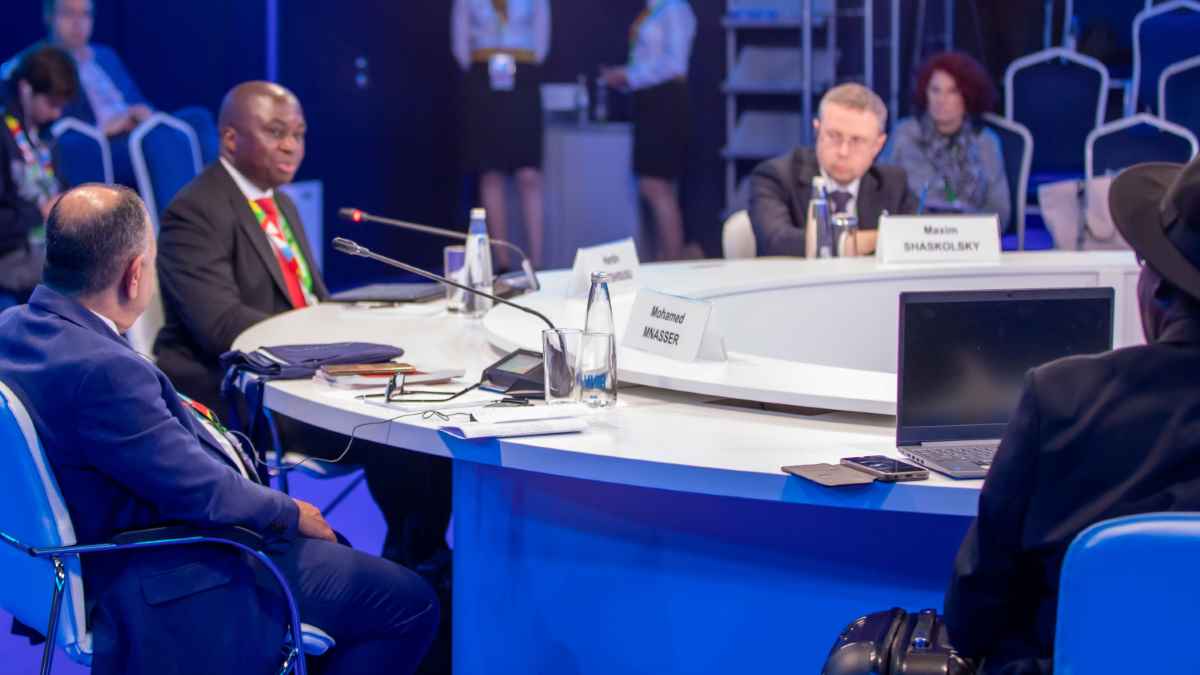
On July 28, on the margins of the second Russia-Africa summit, a meeting of the expert panel of antimonopoly agencies “Combating Anticompetitive Practices of Large Transnational Corporations, Suppressing Cross-border Cartels and International Cooperation” was held. The panel participants, including heads of antitrust agencies of African countries, discussed a number of important topics related to antitrust regulation. Key issues included the challenge of regulating global digital monopolies, the role of antitrust in ensuring global food and human security, and equitable participation of all countries in the global economy and access to technology transfer tools.

In his foreword Alexey Ivanov, Director of BRICS Competition Law and Policy Centre highlighted that “Antitrust law originally originated under conditions of uncertainty. In post-war Europe, in Russia during the transition to a market economy, in China with the beginning of the policy of reform and opening up, in South Africa after the fall of the apartheid regime and in Brazil with the end of the dictatorship, the adoption of antitrust laws helped the economic system to reach a new level of development. Now, in the context of global uncertainty, the question of the role of antitrust law arises again. Modern global monopolies can only be countered by the same global antitrust initiatives, which can only be realized in the interstate format, which is currently represented by BRICS+, to which the new members from African countries are also gravitating.”

The initiative to establish a Commission on Competition and Consumer Welfare in Africa was further developed. It is the second attempt for regulators from Kenya, Egypt, Mauritius, Nigeria, South Africa, Morocco, Gambia, Mauritius, Nigeria, South Africa, Morocco, Zambia and the Commission (COMESA), which includes 21 other African countries, to agree to proceed with the establishment of a working group for cooperation. The working group will focus on the sectors of e-commerce, aggregation services (online travel agencies and online classifieds), matchmaking services (search services and social platforms – Google and Meta, as well as e-call and delivery services such as Uber and Glovo), digital advertising (search and social media), fintech and cybersecurity.

“To date, we have been working in a coordinated manner to harmonize antitrust regulation through bilateral, regional and international cooperation among 29 African states. Normally, it takes decades from the negotiation of agreements to the adoption of laws and the formation of regulatory institutions to control competition in the market, but we have managed to achieve significant results in just a few years. Today, it is important to continue developing this area, given the global nature of the challenges and the need to further deepen cooperation between competition authorities”, – Hardin Ratshisusu, Deputy Commissioner, Competition Commission of the Republic of South Africa has stated.

Now, in the context of global uncertainty, the question of the role of antitrust law arises again

Another hot topic of discussion was the merger deal between Bunge and Viterra, an agribusiness giants with a strong presence in the markets of Brazil, South Africa and Egypt. The merger of the two companies may lead to imbalances in the international food market, including due to the establishment, if the deal is approved, of control over logistics in this area by the new player. This case made even more urgent the problem of developing infrastructure to detect and monitor cross-border cartel activity, which threatens not only direct economic costs, but also social and humanitarian risks.

“Bunge and Viterra, Bayer and Mansanta. We know what steps should be taken to consider such transactions that do not contradict the antitrust laws of different jurisdictions. But there are certain obstacles on our way to control the cross-border cartels. Their emergence threatens to significantly disrupt the normal operation of international trade. Cases of cross-border cartels and cartel collusions are difficult to both detect and investigate. This is due to the inconsistency and lack of universal norms on anti-corruption actions. One of the important principles of control over cross-border cartels should be the principle of extraterritoriality, allowing claims to be brought against the entire business structure of the offending company, not only against legal entities in a particular country. This will require a higher level of cooperation and trust between the antitrust services of individual countries,” – said Mahmoud Momtaz, Chairman of the Egyptian Competition Authority (ECA).

“Today, market power is determined by control over big data. That is, companies are accumulating information, and a network effect is occurring. And today antitrust regulators can no longer ignore these facts and should actively conduct coordinated work in relation to global digital monopolies, including more active application of the network effect criterion,” – Ivanov added.

According to the expert panel discussion participants, one of the main problems of antitrust compliance control, as well as tools for investigations in this area, is the lack of technology and cooperation based on data exchange. Often such data can be sensitive to the domestic interests of individual countries. Exchanges between members of the global antitrust network can therefore only take place if there is trust. The development of joint initiatives and platforms for meeting and discussing such issues face-to-face should therefore lay the foundations for overcoming this problem.

At this point, the UN’s support for African and Russian antitrust initiatives has been an important factor. Teresa Moreira – Head, Competition and Consumer Policy Unit, United Nations Conference on Trade and Development (UNCTAD) stated that UNCTAD supports initiatives at the regional and international levels that can further strengthen anti-competitive enforcement tools.

Ms. Moreira made a special mention of Russia’s role in this process. “The foundations of mechanisms and tools for cross-border cartel control and, more broadly, for compliance with international competition law of UNCTAD’s Section “F” were laid back in the 1980s, but for a long time remained recommendatory. Only recently, thanks to the proactive actions of the Russian antimonopoly authorities and the BRICS International Centre, it has been possible to re-launch this discussion and work on transferring these recommendations into the sphere of mandatory norms”.

Distributed by APO Group on behalf of BRICS Competition Law and Policy Centre.

Business

Africa’s Lithium Pipeline Gains Momentum as Global Supply Deficits Loom

Published

on

Energy Capital

The upcoming African Mining Week 2026 – taking place from October 14-16 in Cape Town – will connect global investors with prospects within the lithium industry amidst an anticipated resource supply deficit by 2028

CAPE TOWN, South Africa, April 9, 2026/APO Group/ –Rising demand for lithium is positioning Africa to attract foreign investment, accelerate local beneficiation and strengthen its role in securing the global battery supply chain. A recent forecast by Wood Mackenzie projects that global lithium demand could exceed 13 million tons by 2050 under an accelerated energy transition scenario. This surge is expected to place significant pressure on supply, with deficits emerging as early as 2028. Without substantial new investments, existing lithium projects will struggle to meet demand beyond the mid-2030s.


Against this backdrop, Africa’s growing pipeline of greenfield and development-stage lithium projects positions the continent as an increasingly important contributor to global supply security. In 2025, Africa ranked as the largest source of new lithium supply globally, with new output from the region exceeding that of the rest of the world combined. This milestone underscores the continent’s potential to scale production and strengthen its role in the global battery minerals market.

Emerging Lithium Producers Strengthen Africa’s Supply Pipeline

Even under a slower energy transition scenario, Wood Mackenzie projects that lithium markets will remain adequately supplied until 2037, before entering deficit. This outlook reinforces Africa’s strategic role as new projects across Mali, Zimbabwe, Ghana and Namibia advance toward production.

In the Democratic Republic of the Congo (DRC), Zijin Mining, AVZ Minerals and KoBold Metals are expected to begin operations at the Manono lithium project in mid-to-late 2026, marking the country’s first lithium output. Ranked among the world’s largest hard-rock lithium deposits, Manono is expected to begin exports shortly after commissioning, diversifying DRC’s mineral output while strengthening the continent`s contribution to the global electric vehicles and battery supply chain.

Mali Emerges as a Regional Lithium Hub

Mali is also rapidly positioning itself as a key lithium producer. The Bougouni Lithium Project, commissioned in 2025, currently produces approximately 125,000 tons per annum of concentrate, with Phase Two expansion plans underway that could nearly double production capacity.

Meanwhile, the Goulamina Lithium Project, one of the largest spodumene deposits globally, is producing around 506,000 tons of spodumene concentrate annually, with expansion plans targeting one million tons per year. Together, these projects are expected to significantly strengthen Mali and Africa’s position within the global lithium market.

Ghana and Zimbabwe Expand Lithium Production and Value Addition

In Ghana, the Ewoyaa Lithium Project, developed by Atlantic Lithium, is set to become the country’s first lithium-producing mine, with production targeted for late 2027. The project is expected to produce 3.58 million tons of spodumene concentrate grading 6% and 5.5%, alongside approximately 4.7 million tons of secondary product, further strengthening Africa’s contribution to global lithium supply.

Meanwhile, Zimbabwe – currently Africa’s largest lithium producer – is accelerating efforts to move up the value chain. Government policies restricting the export of raw lithium are encouraging investment in local processing and beneficiation facilities, supporting the production of higher-value lithium products and positioning the country as a key supplier to the global battery materials market.

Investment Momentum Builds Ahead of African Mining Week

With an estimated $276 billion in new investment required to avoid the forecast supply deficits beginning in 2028, Africa’s lithium-rich countries are well positioned to attract the capital needed to expand production and downstream processing.

In this context, African Mining Week 2026 – scheduled for October 14–16 in Cape Town – will serve as a key platform for global investors, project developers and policymakers to engage on opportunities within Africa’s lithium sector. As the continent’s premier mining investment event, the conference will feature high-level discussions, project showcases and strategic networking sessions aimed at accelerating partnerships across the lithium value chain.

Distributed by APO Group on behalf of Energy Capital & Power.

Continue Reading

Business

Afreximbank delivers strong FY2025 results; with a total assets and contingencies base of US$48.5 billion

Published

on

Afreximbank

Total assets and contingencies rose by 21% to US$48.5 billion, up from US$40.1 billion as at 31 December 2024, underscoring the Bank’s consistent growth trajectory

The Group’s balance sheet is at its strongest level ever, with liquidity levels and capitalisation well above target and good asset quality

CAIRO, Egypt, April 9, 2026/APO Group/ –African Export-Import Bank (“Afreximbank” or the “Bank”) (www.Afreximbank.com) and its subsidiaries (the “Group”) has announced strong results for the year ended 31 December 2025, underscoring sustained financial resilience, increased market confidence and strategic execution.


Total assets and contingencies rose by 21% to US$48.5 billion, up from US$40.1 billion as at 31 December 2024, underscoring the Bank’s consistent growth trajectory.

Net loans and advances for the Group closed the year at US$33.5 billion (FY’2024: US$29.0 billion), an increase of 16%, supported by continued disbursements across the continent and the Caribbean through various product offerings. The Group funded strategic priorities areas such as manufacturing, infrastructure, food security and climate adaptation.

The Group’s non-performing loan (NPL) ratio remained stable at 2.43% (FY’2024: 2.33%), demonstrating consistent portfolio quality.

The Group’s liquidity position remained robust, with cash and cash equivalents at US$6.0 billion (FY’2024: US$4.6 billion). Liquid assets accounted for 14% of total assets, above the Bank’s strategic minimum level of 10%. Shareholders’ funds grew by 17% to US$8.4 billion as at 31 December 2025, driven by net income of US$1.2 billion, and new equity inflows of US$299.4 million raised under the General Capital Increase II.

Gross Income increased by 6.06% reaching US$3.5 billion in FY’2025 from US$3.3 billion achieved in FY’2024.

Operating expenses increased to US$459.2 million (FY’2024: US$367.7 million), reflecting strategic staff expansion, and inflationary pressures with the Group maintained strong cost efficiency resulting in a cost-to-income ratio of 21% (FY’2024: 18%) well below the strategic ceiling of 30%.

Contrary to concerns raised by some rating agencies during the year, the Bank accessed international bond markets by successfully raising over US$800 million from Japan and China, courtesy of the Samurai and Panda bonds in 2025. This demonstrated the Group’s fund-raising capabilities and the solid nature of the Bank’s DNA as a pan-African multilateral financial institution committed to ensuring that Africa’s full and sustainable self-reliance remain firm.

Net income increased by 19% to US$1.2 billion in 2025, up from US$973.5 million in the prior year. These results were achieved through the expanded delivery of tailored financial and advisory solutions that supported trade, fostered industrialisation and enhanced economic self-reliance.

Highlights of the results for Afreximbank Group are shown below:

Financial Performance Metrics

FY’2025

FY’2024

Gross Income (US$ billion)

3.5

3.3

Net Income (US$ million)

1,156.8

973.5

Return on average equity (ROAE)

15%

15%

Return on average assets (ROAA)

3.04%

2.96%

Cost-to-income ratio

21%

18%


Financial Position Metrics

FY’2025

9M’2024

Total Assets (US$ billion)

42.3

35.3

Total Liabilities (US$ billion)

33.9

28.1

Shareholders’ Funds (US$ billion)

8.4

7.2

Non-performing loans ratio (NPL)

  2.43%

2.33%

Cash/Total assets

14%

13%

Capital Adequacy ratio (Basel II)                                                                         23%

24%


Mr. Denys Denya, Afreximbank’s Senior Executive Vice President, commented:


“Despite continuing global geopolitical challenges and disruptions caused by some rating actions, the Group delivered excellent financial performance in 2025, a fitting tribute to a decade of consequential leadership under Professor Oramah, with total assets and contingencies reaching $49 billion. Pleasingly, the Group is way ahead on most of it targets in delivery on its 6th Strategic plan that ends on 31 December 2026. With recently established subsidiaries such as FEDA and AfrexInsure becoming profitable, Net income grew by 19% to stand at US$1.2 billion, underpinned by a strong capital base of US$8.4 billion. The Group’s balance sheet is at its strongest level ever, with liquidity levels and capitalisation well above target and good asset quality. These results are a testament to the unwavering execution by the Group’s hard working human capital. We entered 2026 financial year with significant momentum, ready to scale the Group’s impact, accelerate trade integration and value addition across Global Africa, and deliver greater value to our shareholders.”

Distributed by APO Group on behalf of Afreximbank.

Continue Reading

Events

Chinese Mainland’s Largest Conference on Chest Pain Centres Goes Global in Hong Kong

Published

on

Hong Kong

With robust lineup of medical conventions in 2026

HONG KONG SAR – Media OutReach Newswire – 9 April 2026 – Marking yet another milestone as the World’s Meeting Place, Hong Kong became the first city outside Chinese Mainland to host the nation’s largest conference on chest pain centres – the 15th China Chest Pain Centers Congress (CCPCC 2026), thanks to the effort of Hong Kong Convention Ambassador (HKCA) appointed by the Hong Kong Tourism Board (HKTB).
Together with two other high-profile and hugely successful medical congresses – the 41st Asia Pacific Academy of Ophthalmology Congress in February and the 17th Asian Congress of Oral & Maxillofacial Surgery in March, Hong Kong’s medical science events space was off to a strong start in 2026.

Ms Marilyn Tham, General Manager of Mega Events, MICE & Cruise of the HKTB said, “Hong Kong’s leading edge in medical sciences coupled with the city’s world-class venues and destination appeal have enabled notable success for internationally significant medical events. CCPCC 2026 is one of the large-scale medical conventions confirmed for 2026. Such robust lineup reflects event organisers’ confidence in Hong Kong as a premier hub for advancing global exchanges on medical sciences.”

Over 10 medical conventions have secured a spot in Hong Kong this year, spanning diverse disciplines, from cytology to oncology, antimicrobial resistance and more (see full list below). The breadth and depth of the events reflects Hong Kong’s growing appeal as the premier convention hub where global medical minds meet.

Globalising Chest Pain Leadership from Hong Kong

Held on 3-4 April 2026 at the Hong Kong Convention and Exhibition Centre with a concurrent venue in Shenzhen, CCPCC 2026 converged 3,000 healthcare leaders, physicians, nurses, researchers, policymakers and industry experts from Hong Kong, Chinese Mainland, the Belt and Road countries and beyond. The rich topics explored across two days encompassed cutting-edge healthcare innovations, AI-assisted clinical decision-making, intelligent emergency response systems and international accreditation standards.

Co-organised by Hospital Authority (HA) of Hong Kong, the National Clinical Research Center for Interventional Medicine, the Guangdong Chest Pain Centers Association, the Chinese Cardiovascular Association (CCA) and Oriental Huaxia Cardiovascular Health Research Institute (OHCHRI), Suzhou Industrial Park, CCPCC 2026 showcased conducive partnership.

Mr. Wenming Zeng, Secretary-General of OHCHRI, remarked, “The global influence of CCPCC has been growing over the years. Thanks to Hong Kong’s strategic location, leading medical standing and its unique role bridging Chinese Mainland and the world, this year’s congress has drawn even wider global participation, giving the event greater international significance. Hong Kong has helped showcase our event to the world, taking cardiovascular emergency intervention to a new height globally.”

A Launchpad for Mainland-spearheaded International Standards

Capitalising on Hong Kong’s strengths as a super-connector for fostering globalisation, CCPCC 2026 released for the first time the “International Standards on Chest Pain Center Construction and Accreditation”, marking Mainland’s global leadership in cutting-edge cardiovascular emergency intervention. Leveraging Hong Kong’s internationalisation, the efforts to foster global policy support and implementation of the standards will contribute to fair, accessible and timely intervention for cardiovascular emergencies around the world.

Another Significant Win for HKCA Programme on its 5th Anniversary

As a HKTB-appointed HKCA, Prof Lu Shi-Juan, who is a Member of Hainan Medical Association Cardiovascular Professional Committee, played an instrumental role in bringing CCPCC 2026 to Hong Kong. This marked the latest success story of the HKCA programme, as HKTB celebrated the programme’s milestone 5th anniversary with a HKCA Networking Cocktail Event on 31 March, 2026.

Prof Lu noted, “As a Hong Kong International Convention Ambassador, I have worked closely with the HKTB to bring CCPCC to Hong Kong, which is a gateway to the global stage. Hosting the conference here showcases how Hong Kong can elevate Mainland conferences internationally, foster cross‑border knowledge exchange and help shape the future development of the broader medical and professional community.”
The HKCA programme bands together over 170 local and mainland sector leaders of 13 industries and academics to champion Hong Kong as the World’s Meeting Place. Their initiative and connections have helped Hong Kong secure 50 convention wins that have brought in nearly 100,000 high-value overnight MICE visitors.

Strong Medical Events Lineup in 2026

Over 10 medical conventions will be held in 2026 across various disciplines, including ophthalmology, oncology, antimicrobial resistance and cytology.

Event

(*first-ever in Hong Kong)

Date / Venue Highlights
The 41st Asia-Pacific Academy of Ophthalmology Congress 2026 5-8 Feb,

HKCEC

The largest and most authoritative ophthalmology congress in APAC, returning to HK for the fifth time, with record-breakingattendance of 11,000+ participants from 111 countries and regions.
The 17th Asian Congress on Oral and Maxillofacial Surgery 2026 27-29 Mar,

HKCEC

Held in Hong Kong for the second time, bringing together internationally acclaimed speakers, globally renowned experts and young surgeons to foster academic exchange and professional development.
The 15th China Chest Pain Centers Congress 3-4 Apr,

HKCEC

Chinese Mainland’s largest conference on chest pain centres, hosted for the first time outside Chinese Mainland.
*Asian Federation of Cytology Societies Conference 2026 8-10 May,

Postgraduate Education Centre, Prince of Wales Hospital

First edition in Hong Kong, bringing together regional and international cytology experts for academic exchange and collaboration.
International Symposium on Antimicrobial Agents and Resistance 2026 12-14 Jun,

HKCEC

A key international platform for academic exchange on infectious diseases and antimicrobial resistance.
European Society of Medical Oncology Targeted Anticancer Therapies Asia 2026 12-14 Jun,

Kerry Hotel

A key Asia-Pacific platform for showcasing the latest advances in early-phase oncology drug development, targeted therapies and precision oncology.
Federation of Asian and Oceanian Biochemists and Molecular Biologists Conference 2026 10-13 Aug,

Cheung Kung Hai Conference Centre, The University of Hong Kong

A major regional scientific meeting in biochemistry and molecular biology, bringing together researchers, educators and professionals from across Asia and Oceania for academic exchange and collaboration.
* 2026 World Cancer Congress 24-26 Sep,

HKCEC

A leading global forum advancing cancer control and research.
2026 Asia-Pacific Longevity Medicine International Summit 1-4 Oct,

TBC

A leading international platform and regional collaborative hub dedicated to longevity medicine and innovation, attracting top longevity scientists, medical experts, cross-industry entrepreneurs and investors from over 50 countries.
10th Asia Cornea Society Scientific Meeting 2026 11-13 Dec,

TBC

A key regional forum for cornea specialists to exchange the latest clinical insights, diagnostics and treatments, and to strengthen collaboration across the Asia-Pacific ophthalmology community.
Association of Pacific Rim Universities (APRU) Global Health Conference 2026 7-9 Dec,

Henry Cheng International Conference Centre, CUHK

Third time in Hong Kong, convening leading academics, policymakers and practitioners to address critical global health challenges through interdisciplinary collaboration and innovation.


Continue Reading

Trending