Connect with us
Anglostratits

Energy

2026 Marks Defining Moment for African Energy as African Energy Week (AEW) Launches Strategic Investment Agenda

Published

on

African Energy Week

Taking place this October in Cape Town, AEW: Invest in African Energies emerges as one of the most strategic platforms to engage global partners, advance critical discussions and forge the deals that will shape Africa’s future

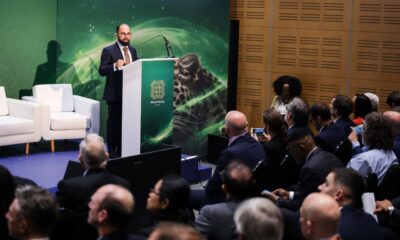
CAPE TOWN, South Africa, February 17, 2026/APO Group/ –The year 2026 is shaping up to be a defining year for African energy. Amid shifting geopolitics, intensifying trade disputes and the global push to diversify supply chains, international partners are increasingly turning toward Africa as a strategic energy anchor. At the same time, continent-wide regulatory reform, new oil and gas discoveries and strengthened global alliances have significantly enhanced Africa’s competitiveness, positioning it as one of the most attractive destinations for foreign energy capital in today’s climate.


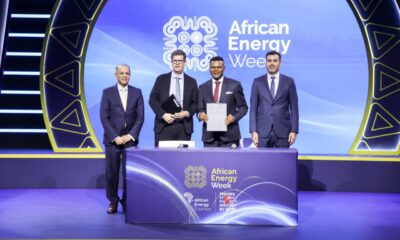
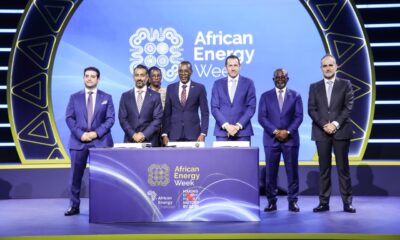
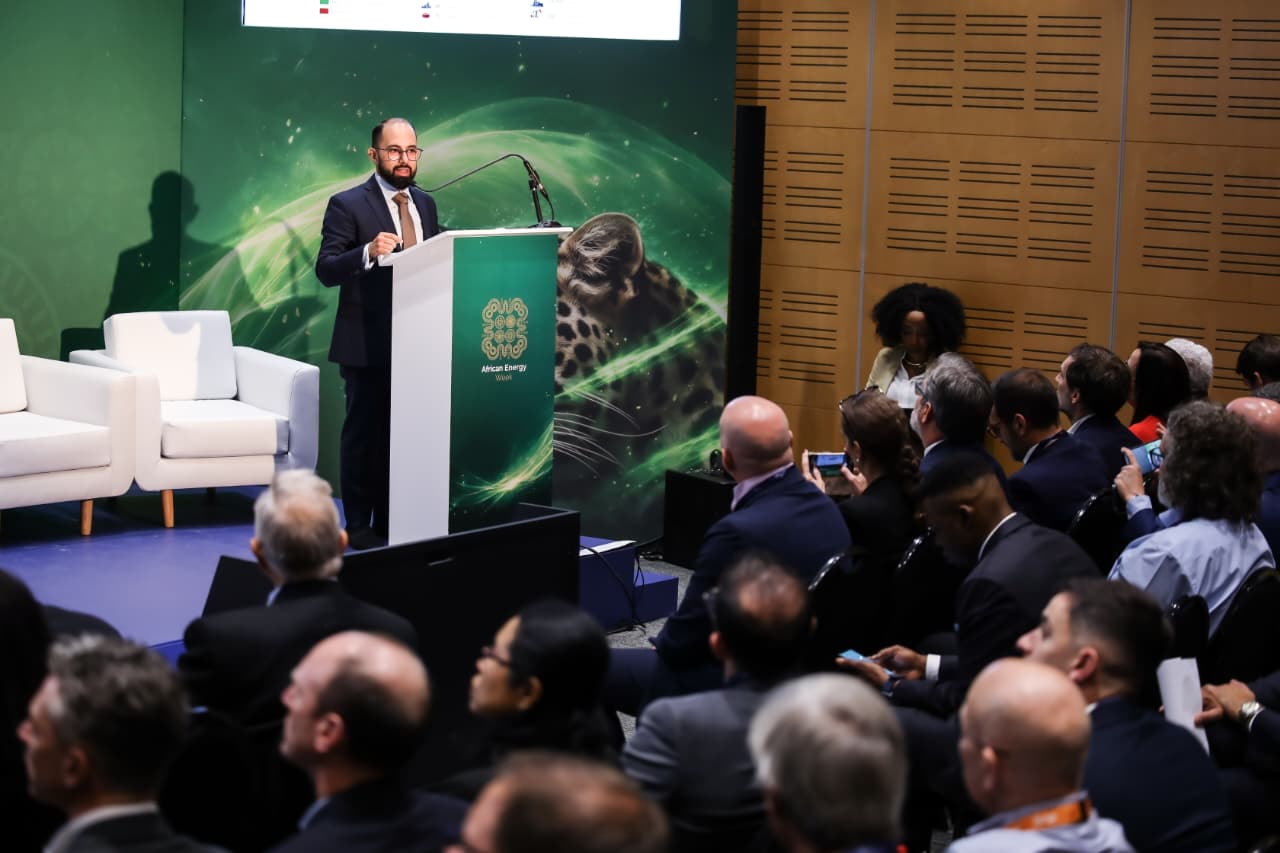
At this pivotal moment, the African Energy Week (AEW): Invest in African Energies Conference & Exhibition emerges as the continent’s most consequential energy platform – for international investors seeking new entry points, for African governments engaging global partners and for indigenous companies expanding their regional and global footprint. Taking place October 12-16, 2026 in Cape Town, AEW’s newly launched Draft 2026 program reflects the urgency, scale and opportunity defining Africa’s current energy trajectory.

“Africa’s energy sector is rising with confidence on the global stage. From upstream expansion to downstream industrialization and power generation, the continent is no longer waiting on the sidelines – it is shaping global energy markets. AEW: Invest in African Energies provides the platform where African voices, African projects and African solutions take center stage,” states NJ Ayuk, Executive Chairman, African Energy Chamber.

Global Realignment Meets African Resources

With over 125 billion barrels of crude reserves, 620 trillion cubic feet of natural gas and abundant solar, wind and hydropower potential, Africa has long-been an attractive destination for international energy companies. Yet despite this resource base, the continent’s energy finance gap remains between $31 billion and $50 billion – constraining project execution, delaying infrastructure rollout and limiting the pace at which Africa can translate resource wealth into industrial growth and universal energy access. But this trajectory is already shifting. Global efforts to diversify supply chains, strengthened fiscal and legal terms across Africa and a rise in strong and capable domestic partners has transformed the continent from merely attractive to increasingly competitive.

AEW: Invest in African Energies provides the platform where African voices, African projects and African solutions take center stage

Recent moves reflect this. In the oil sector, licensing rounds in Libya, Angola, Nigeria, Algeria have opened new acreage for major players while strategic divestment has created space for local and regional players to expand. In the gas sector, the launch of large-scale LNG facilities – including Congo LNG Phase 2, Greater Tortue Ahmeyim and the resumption of Mozambique LNG – underscores the potential for billion-dollar projects. Renewable energy is also taking shape. Over 13 GW of utility-scale solar and wind is under development while green hydrogen production could reach 50 million tons per annum by 2035. As capital competition intensifies and global markets seek secure, diversified energy supply, AEW 2026 arrives at a decisive moment – providing the platform where this resource strength, reform momentum and investor appetite converge into actionable partnerships and project financing.

Strategic Positioning, Five-Stage Program

Reflecting Africa’s mandate of attracting global capital while strengthening domestic energy systems, AEW 2026 is structured around a five-stage program designed to address the full energy value chain. The AEW Town Hall will convene senior policymakers, regulators and private-sector leaders in a high-level roundtable format aimed at aligning fiscal regimes, scaling indigenous operators and accelerating the shift from resource extraction to industrialization. Country spotlights will showcase active licensing rounds, regulatory reforms and investment pipelines across key markets.

With over $20 billion required for refining infrastructure and billions more needed for storage, petrochemicals and gas-to-power integration, the Energy Finance & Downstream Summit will examine the dual bottlenecks of capital access and underdeveloped value chains. The Upstream E&P Forum will spotlight new gas frontiers through 2035, marginal field development, transboundary collaboration and high-impact drilling campaigns.

The Powering Africa Forum addresses the continent’s electrification challenge directly, examining grid expansion, renewable integration, utility reform and the rise of energy-intensive industries such as data centers. With electricity demand projected to rise sharply through 2030, this track positions power infrastructure as both a social necessity and a major investment opportunity. Finally, the Energy Additions Forum underscores Africa’s pragmatic approach to energy security – responsibly developing hydrocarbons alongside renewables. Together, these stages position AEW not simply as a conference, but as a structured marketplace for policy alignment, capital allocation and project acceleration.

Technical Dialogue, Commercial Outcomes

As capital becomes increasingly selective and investors prioritize technical certainty alongside fiscal stability, detailed subsurface intelligence and operational efficiency are no longer secondary considerations – they are core investment criteria. AEW 2026’s technical platforms – The Drill Room and The Innovation Hub – are therefore positioned not as side discussions, but as critical forums for evaluating risk, cost structures and commercial viability across Africa’s emerging and established basins.

The Drill Room will focus on translating geological potential into economically recoverable resources, while the Innovation Hub will address the growing role of technology in strengthening Africa’s energy competitiveness. By grounding technical dialogue in commercial outcomes, AEW 2026 frames geology, engineering and digital innovation as essential pillars of investment confidence – reinforcing the link between subsurface potential and capital deployment.

Distributed by APO Group on behalf of African Energy Chamber.

Energy

Mining Chambers to Highlight Africa’s Next Wave of Investment Opportunities at African Mining Week (AMW) 2026

Published

on

Etu Energias

Representatives from chambers of mines across Zimbabwe, Zambia, Mali, Uganda, South Africa, Liberia and the DRC will showcase investment opportunities emerging from regulatory reforms and sector expansion at African Mining Week 2026

CAPE TOWN, South Africa, July 13, 2026/APO Group/ –As African countries advance reforms to unlock new mineral discoveries and strengthen mining investment, chambers of mines are playing an increasingly important role in connecting governments, investors and industry. Through policy advocacy, regulatory engagement and investment promotion, these organizations are helping shape the continent’s next phase of mining development.


That growing role will be on display at African Mining Week (AMW) 2026, taking place in Cape Town from October 14–16, where chamber executives will highlight the policies, partnerships and investment opportunities driving growth across Africa’s mining sector.

Zimbabwe offers a prime example of this expanding role. The Chamber of Mines of Zimbabwe has become an increasingly influential voice in addressing production constraints, including power shortages and foreign exchange challenges. Its recommendations align with recent government initiatives to expand coal-fired power generation, increase coal production and achieve 10% mining sector growth in 2026. At AMW 2026, CEO Isaac Kwesu will outline investment opportunities emerging as the country implements reforms to strengthen mining competitiveness.

In South Africa, the Minerals Council South Africa continues to advocate for improvements to rail, port and electricity infrastructure while supporting the implementation of the Mineral Resources Development Bill and measures to stimulate exploration. These priorities complement government initiatives such as the Junior Mining Exploration Fund and a broader strategy to mobilize R2 trillion in mining investment over the next five years. CEO Mzila Mthenjane will discuss efforts to revitalize exploration and unlock opportunities across the country’s platinum group metals, manganese and critical minerals sectors.

In Zambia, the Zambia Chamber of Mines has helped shape the Geological and Minerals Development Act of 2025, legislation designed to stimulate mineral exploration as the country works toward increasing annual copper production to three million tons by 2031. Zambia has already reached a key milestone in its nationwide geological mapping program, completing 55% of the survey, while the recent launch of the National Spatial Data Infrastructure Policy and Geoportal is improving investor access to geological data. At AMW 2026, CEO Sokwani Chilembo is expected to showcase investment opportunities as Zambia expands exploration and diversifies beyond copper.

As countries increasingly position mining as a driver of economic diversification, Fousseni Togola, President of the Mali Chamber of Mines, will present opportunities in the country’s gold and lithium sectors, highlighting how Mali’s 2023 Mining Code is supporting investment into emerging minerals.

In Uganda, Humphrey Asiimwe, CEO of the Uganda Chamber of Energy and Minerals, told AMW that the chamber will use the event to promote investment opportunities in gold, graphite and rare earths. The country’s mining sector forms a cornerstone of Uganda’s strategy to increase GDP from $59.3 billion to $500 billion by 2040.

Meanwhile, Amara Kamara, President of the Liberia Chamber of Mines, is expected to highlight reforms aimed at attracting new exploration investment, including plans to establish a national mining company as Liberia targets more than $3 billion in annual mining and energy revenues by 2029.

Regional collaboration will also feature prominently during AMW 2026. Thierry Naweji, Executive Chairman of the SA-DRC Chamber of Commerce, is expected to discuss opportunities to strengthen cooperation between South African and Congolese mining companies as both countries work to build more integrated regional mineral value chains.

With regulatory reforms gathering pace across the continent, AMW 2026 will highlight how chambers of mines are helping translate policy ambitions into investment opportunities, reinforcing their growing role in Africa’s mining development.

Distributed by APO Group on behalf of Energy Capital & Power.

Continue Reading

Business

Franc Mouzabakani Takes the Helm of the Republic of Congo’s Upstream Petroleum Sector

Published

on

African Energy Chamber

Franc Mouzabakani Kiesse’s appointment as Congo’s upstream petroleum chief highlights his leadership as the country accelerates oil production and upstream development

JOHANNESBURG, South Africa, July 13, 2026/APO Group/ –Franc Mouzabakani Kiesse has been appointed Director General for of the Upstream Petroleum Sector for the Republic of Congo. Appointed by presidential decree on June 18 and officially installed on July 9, Kiesse assumes one of the country’s most important energy leadership positions as Congo works toward increase crude production while expanding investment across its oil and gas sector.


Working alongside Minister of Hydrocarbons Stev Simplice Onanga, Kiesse will play a central role in translating the government’s upstream ambitions into execution. His appointment brings together the Ministry’s strategic vision with decades of technical, commercial and institutional experience, strengthening the government’s ability to work closely with operators, investors and the SNPC to accelerate project delivery and unlock new opportunities across the sector.

Kiesse has outlined clear strategic agenda centered on protecting national interests while improving the competitiveness of the Congolese upstream sector. His priorities include strengthening government oversight of exploration and production activities, tightening project monitoring and strengthening the auditing of petroleum development costs submitted by operators. He also pledged to maximize the state’s returns from upstream projects through stronger regulatory oversight. Kiesse emphasized promoting local content by expanding opportunities for Congolese companies and skilled professionals throughout the oil and gas value chain. He also identified the continued development of the SNPC as a priority, with the aim of building a stronger and more competitive national oil company.

These priorities come at a pivotal time for Congo’s upstream sector as the country pursues one of Africa’s most ambitious upstream expansion programs. The government has established a production target of 500,000 barrels per day (bpd) over the coming years, supported by new offshore discoveries, brownfield redevelopment programs, legislative reforms and increased investment in natural gas infrastructure. Achieving this objective will require close collaboration between government institutions and international operators while ensuring projects are delivered efficiently and generate maximum value for the Congolese economy.

Congo has no shortage of resources or investment opportunities – the priority now is execution

With a professional journey that has provided experience across every level of Congo’s upstream sector, Kiesse is well positioned to support these efforts, having built a career that spans engineering, project development, government relations and commercial strategy. He spent more than a decade with TotalEnergies, progressing from Field Operations Engineer to Lead Process Engineer at the company’s Paris headquarters before returning to Congo to lead process studies, manage deepwater development projects and oversee joint ventures and government relations. In these roles, he worked closely with major partners including SNPC, Eni, Chevron and Woodside Energy while supervising production sharing contracts, joint venture negotiations and regulatory engagement.

Kiesse later joined Perenco Congo as a Director of Joint Ventures and Government Relations, where he managed strategic partnerships and negotiations with government authorities before becoming Director of Business development and Institutional Relations at AMMAT Global Resources. Across these positions, he developed extensive experience working with both international operators and national institutions, giving him a comprehensive understanding of the commercial, technical and regulatory dynamics shaping Congo’s petroleum industry.

An electrical engineer trained at the Ecole National Supérieure Polytechnique in Brazzaville, he also holds a Master’s degree in Economics and Management from the Università di Corsica Pasquale Paoli and an MBA From DGC Congo.

His appointment comes as investment activity continues to accelerate across the country. TotalEnergies is advancing a $500–$600 million drilling campaign following the Moho G discovery, while development progresses under the $23 billion Bango Kayo, Holmoni and Cayo agreement. Independent operators, including Perenco, Trident Energy and PetroNor, continue to expand production through new infrastructure and brownfield optimization, supporting the government’s long-term production objectives.

A major step toward strengthening upstream governance, the African Energy Chamber (AEC) welcomes this appointment as a core, strategic milestone in reinforcing the country’s position as one of Africa’s leading oil and gas investment destinations.

“We at the African Energy Chamber are hopeful that Franc Mouzabakani Kiesse’s appointment marks the beginning of an even closer partnership between government and industry,” says NJ Ayuk, Executive Chairman, AEC. “Congo has no shortage of resources or investment opportunities – the priority now is execution. With Minister Onanga setting the strategic direction and experience leaders like Kiesse driving implementation, the country is well-positioned to unlock its next phase of upstream growth.”

The Chamber believes Kiesse’s combination of technical expertise, private sector experience and government relations will strengthen the implementation of Congo’s upstream strategy. By supporting Minister Onanga’s agenda, advancing local content, fostering closer cooperation between government and industry, and maintaining an attractive investment environment, his leadership is expected to play an important role making Congo an even more attractive destination for energy investment.

Distributed by APO Group on behalf of African Energy Chamber.

Continue Reading

Energy

Makor Resources CEO to Speak at African Mining Week (AMW) 2026 Amid $30M Copper Strategy and Artisanal and Small-Scale Miners Formalization Drive

Published

on

Etu Energias

Brooke Bibeault’s participation at African Mining Week will highlight Makor Resources’ Zambia strategy, its approach to ASM formalization and the role of copper projects in supporting long-term critical minerals growth

CAPE TOWN, South Africa, July 9, 2026/APO Group/ –Brooke Bibeault, CEO of copper-focused exploration and development company Makor Resources, has been confirmed as a speaker at African Mining Week (AMW) 2026, taking place October 14–16 in Cape Town. The event brings together global mining investors, developers and policymakers to discuss opportunities shaping Africa’s next generation of critical minerals projects.


Bibeault will participate in a panel discussion on Accelerating the Formalization of Artisanal Miners, where industry stakeholders will explore pathways to integrate artisanal and small-scale miners (ASM) into formal mining value chains while improving productivity, environmental standards and community development outcomes.

The discussion aligns with Makor Resources’ approach in Zambia, where the company is supporting ASMntegration through its MineHive program. The initiative provides funding and technical support to ASM operators, strengthening local participation in the copper sector while creating structured pathways into formal supply chains.

Alongside its ASM-focused initiatives, Makor Resources is advancing a district-scale copper exploration strategy across Zambia, supporting the country’s long-term ambition to significantly increase annual copper output. The company is progressing the Muli Copper Project in Central Zambia, while also advancing exploration at the Kangili Copper Project in the Mkushi District.

In early 2026, Makor Resources announced plans to invest up to $3 million by the end of the year to enhance geological understanding across its asset portfolio. The program includes integrated geophysical surveys, remote sensing and systematic sampling campaigns designed to support target definition and resource delineation. These activities form part of a broader investment framework estimated at between $20 million and $30 million over the medium term.

With global copper demand projected to rise significantly in the coming decades, attention is increasingly turning to new supply sources. At AMW 2026, Bibeault is expected to outline how Makor Resources’ Zambia portfolio is positioned to contribute to both national economic development and the broader global energy transition through expanded copper supply.

Distributed by APO Group on behalf of Energy Capital & Power.

Continue Reading

Trending