Connect with us

Business

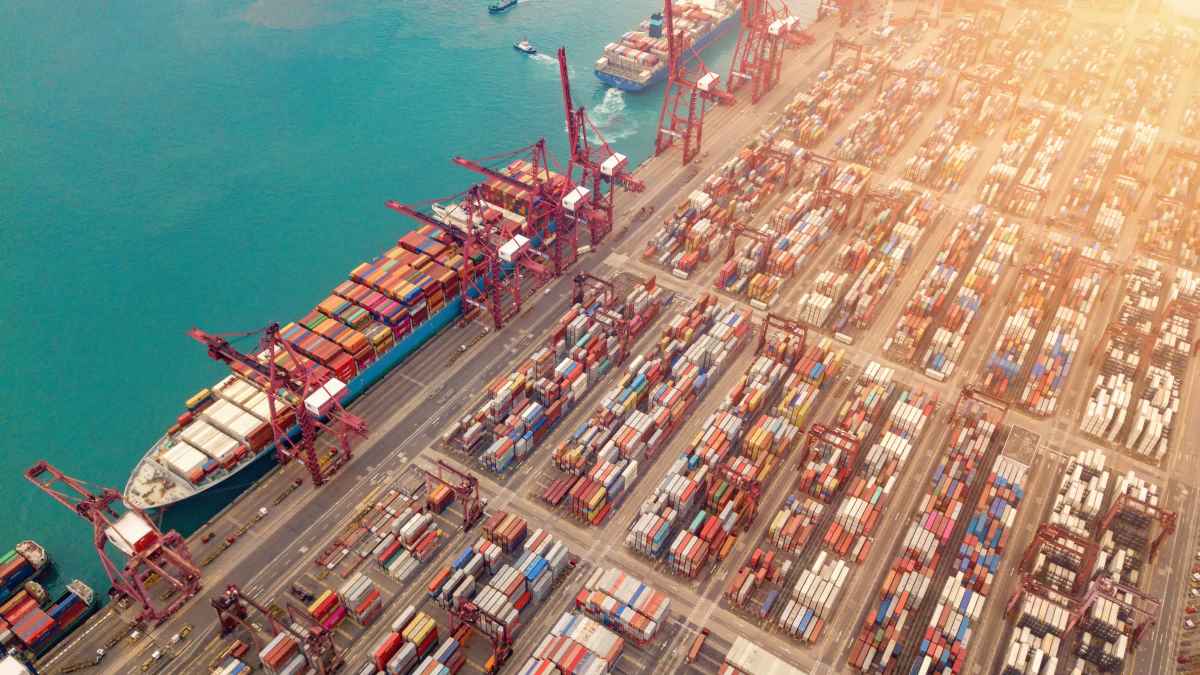
Unlocking Africa’s $180 billion Digital Trade Economy

Published

on

Africa

Fortifying Africa’s Digital Infrastructure: Connecting Markets, Building Trust, Accelerating Trade

The future of African trade is digital, and it’s unfolding. From Dakar to Durban, a quiet but steady transformation is taking shape. According to the United Nations Conference on Trade and Development (UNCTAD), global trade hit a record $33 trillion in 2024, with developing economies, including Africa, playing a growing role in that expansion.

The African Free Continental Trade Area offers the largest free market, including 55 countries, a population of 1.3 billion and a combined GDP of $3.4 trillion. The opportunities are vast, yet the strategies required for industrial players to source, move and manage raw materials and finished goods remain a challenge.

“The continent’s digital economy is projected to reach $180 billion by 2025, up from $115 billion in 2020, thus contributing significantly to Africa’s GDP, creating new job opportunities, and expanding regional trade. Digital trade is transforming the continent’s economic landscape, creating new opportunities for real economic growth, productive job creation, and poverty reduction.” H.E. Dr Jumoke Oduwole, Minister, Federal Ministry of Industry, Trade & Investment

“Building on this rapid expansion, our focus must shift from isolated digital initiatives to a fully integrated ecosystem that streamlines every step of trade—sourcing, supplying, logistics and payments. By integrating these functionalities on a single platform, Matta enables manufacturers to navigate sourcing headaches and suppliers to manage cross-border complexities with confidence and unlocks new markets in Africa in real time. This holistic approach is what will transform digital trade’s potential into tangible, inclusive economic growth across Africa.” Mudiaga Mowoe, Founder and Chief Executive Officer, Matta.

Launched to enable sustainable African economies, Matta’s integrated ecosystem—today powered by the Matta digital marketplace (www.Matta.Trade) and the Flux logistics management tool, with Oxide Finance (Matta’s upcoming trade-financing and cross-border payments platform) arriving soon—empowers manufacturers and suppliers across food & beverage, home & personal care, paints & coatings, agro-processing, automotive assembly, textiles, construction, and beyond with truly end-to-end sourcing, movement, and settlement. Rather than supplanting traditional trade networks, this unified platform amplifies human partnerships through real-time visibility, traceability, and seamless transactions.

Digital trade is transforming the continent’s economic landscape, creating new opportunities for real economic growth, productive job creation, and poverty reduction

This evolution in digital trade and industrial growth is one of the key conversations that will take centre stage at the West Africa Industrialisation, Manufacturing & Trade (West Africa IMT) Summit and Exhibition, set to take place from October 21-23, 2025. West Africa IMT is a high-level platform for government leaders, investors, manufacturers, and technology innovators to align practical solutions and policy frameworks for accelerating Africa’s industrial transformation.

Matta, Africa’s integrated ecosystem for industrial trade, will join other industry stakeholders across the continent at West Africa IMT 2025 to discuss the potential opportunities for industrial growth in the West African sub-region. As manufacturers increasingly seek more innovative, more efficient ways to power production beyond physical infrastructure and policy support, there’s an urgent need for systems that simplify sourcing, enhance transparency, and ensure supply chain reliability. Matta addresses these challenges by connecting African manufacturers directly to verified suppliers of raw materials and commodities, ensuring business continuity in an environment where procurement bottlenecks often slow production timelines.

Digital platforms address multiple challenges simultaneously: procurement complexities, logistics coordination, payment processing, and data-based planning. By integrating these capabilities into industrial operations, West African economies can accelerate development timelines and establish competitive manufacturing centres that participate effectively in global markets.

As African nations chart independent economic paths, digital trade platforms like Matta will significantly influence how quickly and effectively new industrial capabilities develop. The transformation in African trade is already underway, with effects that will continue to reshape economic relationships for years to come.

West Africa Industrialisation, Manufacturing & Trade Summit & Exhibition

21-23 October 2025 I Landmark Centre | Lagos | Nigeria

Distributed by APO Group on behalf of dmg Nigeria events

Events

As global power structures shift, Invest Africa convenes The Africa Debate 2026 to redefine partnership in a changing world

Published

on

The Africa Debate 2026 will provide a platform for this essential, era-defining discussion, convening leaders to explore how Africa and its partners can build more balanced, resilient and sustainable models of cooperation

LONDON, United Kingdom, February 5, 2026/APO Group/ –As African economies assert greater agency in a rapidly evolving global order, Invest Africa (www.InvestAfrica.com) is delighted to announce The Africa Debate 2026, its flagship investment forum, taking place at the historic Guildhall in London on 3 June 2026.

Now in its 12th year, The Africa Debate has established itself as London’s premier platform for African investment dialogue since launching in 2014, convening over 800 global decision-makers annually to shape the future of trade, finance, investment, and development across the continent.

Under the theme “Redefining Partnership: Navigating a World in Transition”, this year’s forum will focus on Africa’s response to global economic realignment with greater agency, ambition and economic sovereignty.

The Africa Debate puts Africa’s priorities at the centre of the conversation, moving beyond traditional narratives to focus on ownership, resilience and long-term value creation.

“Volatility is not new to Africa. What is changing is the opportunity to respond with greater agency and ambition,” says Invest Africa CEO Chantelé Carrington.

“This year’s edition of The Africa Debate asks how we strengthen economic sovereignty — from access to capital and investment to financial and industrial policy — so African economies can take greater ownership of their growth. Success will be defined by how effectively we turn disruption into leverage and partnership into shared value.”

The Africa Debate 2026 will provide a platform for this essential, era-defining discussion, convening leaders to explore how Africa and its partners can build more balanced, resilient and sustainable models of cooperation.

Key challenges driving the debate

Core focus areas for this year’s edition of The Africa Debate include:

This year’s edition of The Africa Debate asks how we strengthen economic sovereignty — from access to capital and investment to financial and industrial policy

Global Realignment & New Partnerships

How shifting geopolitical and economic power structures are reshaping Africa’s global partnerships, trade dynamics and investment landscape.

Financing Africa’s Future

The growing need to reform the global financial architecture, new approaches to development finance, as well as the strengthening of market access and financial resilience of African economies in a changing global system.

Strategic Value Chains

Moving beyond primary exports to build local value chains in critical minerals for the green economy. Also addressing Africa’s energy access gap and mobilising investment in renewable and transitional energy systems.

Digital Transformation & Technology

Unlocking growth in fintech, AI and digital infrastructure to drive productivity, inclusion, and the next phase of Africa’s economic transformation.

The Africa Debate 2026 offers a unique platform for high-level dialogue, deal-making, and strategic engagement. Attendees will gain actionable insights from leading policymakers, investors and business leaders shaping Africa’s economic future, while building strategic partnerships that define the continent’s next growth phase.

Registration is now open (http://apo-opa.co/46b19gj).

Distributed by APO Group on behalf of Invest Africa.

Continue Reading

Business

Zion Adeoye terminated as Chief Executive Officer (CEO) of CLG due to serious personal and professional conduct violations

Published

on

After a thorough internal and external investigation, along with a disciplinary hearing chaired by Sbongiseni Dube, CLG (https://CLGglobal.com) has made the decision to terminate Zion Adeoye due to serious personal and professional conduct violations. This process adhered to the Code of Good Practice of the Labour Relations Act, ensuring fairness, transparency, and compliance with South African law.

Mr. Adeoye has been held accountable for several serious offenses, including:

  • Making malicious and defamatory statements against colleagues
  • Extortion
  • Intimidation
  • Fraud
  • Misuse of company funds
  • Theft and misappropriation of funds
  • Breach of fiduciary duty
  • Mismanagement

His actions are in direct contradiction to our firm’s core values. We do not approve of attorneys spending time in a Gentleman’s Club. CLG deeply regrets the impact this situation has had on our colleagues and continues to provide full support to those affected.

We want to express our gratitude to those who spoke up and to reassure everyone at the firm of our unwavering commitment to maintaining a respectful workplace. Misconduct of any kind is unacceptable and will be addressed decisively.

We recognize the seriousness of this matter and have referred it to the appropriate law enforcement, regulatory, and legal authorities in Nigeria, Mauritius, and South Africa. We kindly ask that the privacy of the third party involved be respected.

Distributed by APO Group on behalf of CLG.


Continue Reading

Business

The International Islamic Trade Finance Corporation (ITFC) Strengthens Partnership with the Republic of Djibouti through US$35 Million Financing Facility

Published

on

This facility forms part of the US$600 million, three-year Framework Agreement signed in May 2023 between ITFC and the Republic of Djibouti, reflecting the strong and growing partnership between both parties

JEDDAH, Saudi Arabia, February 5, 2026/APO Group/ –The International Islamic Trade Finance Corporation (ITFC) (https://www.ITFC-IDB.org), a member of the Islamic Development Bank (IsDB) Group, has signed a US$35 million sovereign financing facility with the Republic of Djibouti to support the development of the country’s bunkering services sector and strengthen its position as a strategic regional maritime and trade hub.

The facility was signed at the ITFC Headquarters in Jeddah by Eng. Adeeb Yousuf Al-Aama, Chief Executive Officer of ITFC, and H.E. Ilyas Moussa Dawaleh, Minister of Economy and Finance in charge of Industry of the Republic of Djibouti.

The financing facility is expected to contribute to Djibouti’s economic growth and revenue diversification by reinforcing the competitiveness and attractiveness of the Djibouti Port as a “one-stop port” offering comprehensive vessel-related services. With Red Sea Bunkering (RSB) as the Executing Agency, the facility will support the procurement of refined petroleum products, thus boosting RSB’s bunkering operations, enhancing revenue diversification, and consolidating Djibouti’s role as a key logistics and trading hub in the Horn of Africa and the wider region.

We look forward to deepening this partnership, creating new opportunities, and leveraging collaborative programs to advance key sectors and drive sustainable economic growth

Commenting on the signing, Eng. Adeeb Yousuf Al-Aama, CEO of ITFC, stated:

“This financing reflects ITFC’s continued commitment to supporting Djibouti’s strategic development priorities, particularly in strengthening energy security, port competitiveness, and trade facilitation. We are proud to deepen our partnership with the Republic of Djibouti and contribute to sustainable economic growth and regional integration.”

H.E. Ilyas Moussa Dawaleh, Minister of Economy and Finance in charge of Industry of the Republic of Djibouti, commented: “Today’s signing marks an important milestone in the development of Djibouti’s bunkering services and reflects our strong and valued partnership with ITFC, particularly in the oil and gas sector. This collaboration supports our ambition to position Djibouti as a regional hub for integrated maritime and logistics services. We look forward to deepening this partnership, creating new opportunities, and leveraging collaborative programs to advance key sectors and drive sustainable economic growth.”

This facility forms part of the US$600 million, three-year Framework Agreement signed in May 2023 between ITFC and the Republic of Djibouti, reflecting the strong and growing partnership between both parties.

Since its inception in 2008, ITFC and the Republic of Djibouti have maintained a strong partnership, with a total of US$1.8 billion approved primarily supporting the country’s energy sector and trade development objectives.

Distributed by APO Group on behalf of International Islamic Trade Finance Corporation (ITFC).

Continue Reading

Trending

Exit mobile version