Connect with us
Anglostratits

Business

Unlocking Africa’s $180 billion Digital Trade Economy

Published

on

Africa

Fortifying Africa’s Digital Infrastructure: Connecting Markets, Building Trust, Accelerating Trade

The future of African trade is digital, and it’s unfolding. From Dakar to Durban, a quiet but steady transformation is taking shape. According to the United Nations Conference on Trade and Development (UNCTAD), global trade hit a record $33 trillion in 2024, with developing economies, including Africa, playing a growing role in that expansion.

The African Free Continental Trade Area offers the largest free market, including 55 countries, a population of 1.3 billion and a combined GDP of $3.4 trillion. The opportunities are vast, yet the strategies required for industrial players to source, move and manage raw materials and finished goods remain a challenge.

“The continent’s digital economy is projected to reach $180 billion by 2025, up from $115 billion in 2020, thus contributing significantly to Africa’s GDP, creating new job opportunities, and expanding regional trade. Digital trade is transforming the continent’s economic landscape, creating new opportunities for real economic growth, productive job creation, and poverty reduction.” H.E. Dr Jumoke Oduwole, Minister, Federal Ministry of Industry, Trade & Investment

“Building on this rapid expansion, our focus must shift from isolated digital initiatives to a fully integrated ecosystem that streamlines every step of trade—sourcing, supplying, logistics and payments. By integrating these functionalities on a single platform, Matta enables manufacturers to navigate sourcing headaches and suppliers to manage cross-border complexities with confidence and unlocks new markets in Africa in real time. This holistic approach is what will transform digital trade’s potential into tangible, inclusive economic growth across Africa.” Mudiaga Mowoe, Founder and Chief Executive Officer, Matta.

Launched to enable sustainable African economies, Matta’s integrated ecosystem—today powered by the Matta digital marketplace (www.Matta.Trade) and the Flux logistics management tool, with Oxide Finance (Matta’s upcoming trade-financing and cross-border payments platform) arriving soon—empowers manufacturers and suppliers across food & beverage, home & personal care, paints & coatings, agro-processing, automotive assembly, textiles, construction, and beyond with truly end-to-end sourcing, movement, and settlement. Rather than supplanting traditional trade networks, this unified platform amplifies human partnerships through real-time visibility, traceability, and seamless transactions.

Digital trade is transforming the continent’s economic landscape, creating new opportunities for real economic growth, productive job creation, and poverty reduction

This evolution in digital trade and industrial growth is one of the key conversations that will take centre stage at the West Africa Industrialisation, Manufacturing & Trade (West Africa IMT) Summit and Exhibition, set to take place from October 21-23, 2025. West Africa IMT is a high-level platform for government leaders, investors, manufacturers, and technology innovators to align practical solutions and policy frameworks for accelerating Africa’s industrial transformation.

Matta, Africa’s integrated ecosystem for industrial trade, will join other industry stakeholders across the continent at West Africa IMT 2025 to discuss the potential opportunities for industrial growth in the West African sub-region. As manufacturers increasingly seek more innovative, more efficient ways to power production beyond physical infrastructure and policy support, there’s an urgent need for systems that simplify sourcing, enhance transparency, and ensure supply chain reliability. Matta addresses these challenges by connecting African manufacturers directly to verified suppliers of raw materials and commodities, ensuring business continuity in an environment where procurement bottlenecks often slow production timelines.

Digital platforms address multiple challenges simultaneously: procurement complexities, logistics coordination, payment processing, and data-based planning. By integrating these capabilities into industrial operations, West African economies can accelerate development timelines and establish competitive manufacturing centres that participate effectively in global markets.

As African nations chart independent economic paths, digital trade platforms like Matta will significantly influence how quickly and effectively new industrial capabilities develop. The transformation in African trade is already underway, with effects that will continue to reshape economic relationships for years to come.

West Africa Industrialisation, Manufacturing & Trade Summit & Exhibition

21-23 October 2025 I Landmark Centre | Lagos | Nigeria

Distributed by APO Group on behalf of dmg Nigeria events

Business

Afreximbank Extends USD 15 Million Facility to Ecobank Zimbabwe Limited to Support Small and Medium Enterprises (SME) Participation in Export Value Chains

Published

on

Afreximbank

Under the facility, enterprises that form the productive backbone of Zimbabwe’s economy, yet remain chronically underserved by conventional lending, will have access to financing

CAIRO, Egypt, May 20, 2026/APO Group/ –African Export‑Import Bank (Afreximbank) (www.Afreximbank.com) has extended a USD 15 million SME Finance Facility to Ecobank Zimbabwe Limited under its Export SME Development Programme (ESDP).The facility will provide working capital and capital expenditure financing to Small and Medium Enterprises (SMEs) operating within export value chains across key sectors of the Zimbabwean economy, including agribusiness, manufacturing, healthcare, and logistics.


The funding represents the latest development in a partnership between the two institutions that dates to 2018 and reflects a shared commitment to expanding SME access to finance, deepening export value chains, and driving inclusive economic growth in Zimbabwe.

Under the facility, enterprises that form the productive backbone of Zimbabwe’s economy, yet remain chronically underserved by conventional lending, will have access to financing. The programme is specifically targeted at SMEs operating across export value chains in key sectors, including agribusiness, manufacturing, logistics, technology, healthcare, and the creative economy, among others.

Commenting on the signing, Ms. Oluranti Doherty, Managing Director for Export Development at Afreximbank, said, “In Zimbabwe and across the continent, Afreximbank remains firmly committed to supporting SMEs as engines of export growth, economic resilience, and long-term development. This facility with exemplifies the kind of high-additionality, high-impact intervention that the ESDP was designed to deliver, addressing market failures that commercial finance alone cannot resolve, and building the productive capacity of enterprises that are central to Africa’s trade transformation. It therefore goes beyond providing credit; it is a structured commitment to building the capacity of enterprises that can drive Zimbabwe’s participation in intra-African trade and regional value chains. Through the ESDP, we are ensuring that each beneficiary SME is not only funded but equipped, connected, and positioned to grow sustainably.”

Small businesses are the engine of our economy, and access to appropriate, export-linked financing is what enables them to grow

The facility is structured to channel Afreximbank’s development finance through Ecobank Zimbabwe Limited as a licensed financial intermediary, combining the Bank’s trade finance expertise with Ecobank’s extensive local footprint and client relationships. Some 43.75 percent of proceeds will support intra-African trade activities, while 18 percent will be directed towards manufacturing, reflecting Afreximbank’s focus on industrialisation and regional trade integration.

As part of its non-financial interventions under the ESDP, Afreximbank will also provide capacity-building support to SME sub-borrowers, covering operations and financial management, loan management, export readiness, marketing, and digitalisation. The integrated support is designed to enhance SME sustainability, strengthen credit quality, and enable stronger participation in export value chains.

For Ecobank Zimbabwe Limited, the facility significantly enhances its capacity to serve a segment of the market it recognises as vital to the country’s economic prospects. By channelling Afreximbank’s development finance through its existing SME product suite and advisory infrastructure, Ecobank Zimbabwe Limited will offer beneficiary enterprises not only financing but integrated financial and business advisory solutions, a combination that meaningfully raises the likelihood of SME success and export market penetration.

In his remarks, Moses Kurenjekwa, Managing Director of Ecobank Zimbabwe Limited, noted: “Ecobank Zimbabwe Limited is proud to partner with Afreximbank on this facility, which speaks directly to our commitment to unlocking the potential of Zimbabwe’s SME sector. Small businesses are the engine of our economy, and access to appropriate, export-linked financing is what enables them to grow, create jobs, and compete regionally. This collaboration brings together Afreximbank’s development finance mandate and our on-the-ground reach to deliver a solution that is both impactful and scalable. We look forward to walking this journey with Zimbabwe’s SMEs as they integrate into regional and continental trade value chains.”

Afreximbank Export SME Development Programme is a comprehensive ecosystem intervention that combines capital, capacity, and connectivity. By working through trusted partners like Ecobank Zimbabwe, the programme ensures that its resources reach the enterprises that need them most and that those businesses are equipped not just to access financing, but to use it to build genuinely competitive, export-capable businesses.

Positioned at the intersection of Southern Africa’s key trade corridors, links the North-South Corridor connecting Dar es Salaam to Durban and the Beira Corridor between landlocked economies to Indian Ocean ports, the facility comes at a pivotal moment for the country’s economy, with GDP growth forecast at 6 percent for 2025, driven by improved agricultural output and strong gold prices. SMEs account for more than 60 percent of Zimbabwe’s GDP and more than 70 percent of national employment, yet access to long-tenor, export-linked financing has remained a persistent constraint on their growth and competitiveness.

Distributed by APO Group on behalf of Afreximbank.

Continue Reading

Business

Agility Logistics Park in Ghana Awarded Excellence in Design for Greater Efficiencies (EDGE) Advanced Green Building Status

Published

on

Agility Logistics Park

Becomes Agility’s 17th EDGE Advanced facility globally

ACCRA, Ghana, May 20, 2026/APO Group/ –Agility (https://Agility.com), a multi-business operator and long-term investor in global and regional businesses, announced that the Agility Logistics Park (ALP) (https://AgilityLogisticsParks.com) in Tema, Ghana has received EDGE Advanced certification for its energy- and resource-efficient green buildings. This brings the total number of EDGE Advanced-certified warehouses across the ALP network to 17, with certified facilities now present in every country where Agility Logistics Parks operates.

EDGE (Excellence in Design for Greater Efficiencies) is the global standard for energy-efficient buildings, a certification system overseen by the International Finance Corp. (IFC), the private sector arm of the World Bank Group. Advanced EDGE certification requires a building to deliver a minimum reduction of 40% energy use, water use and embodied carbon in materials when benchmarked against standard local buildings.

ALP Ghana, a 160,000 SQM warehouse park, is located in the Tema Free Zone, adjacent to Tema port and the Ghana country capital Accra. The park provides international standard warehouse space to multinationals and local businesses. All five warehouses within the Ghana ALP have been certified as EDGE Advanced.

Achieving the EDGE Certificate demonstrates our commitment to developing energy- and resource-efficient facilities in line with global sustainability standards

ALP’s EDGE Advanced warehouses in Accra provide average energy savings of 68%; water savings of 38% and utilize construction materials containing 63% less embodied carbon in materials, when compared with others in the market.

Charles Gassoub, Vice President – Agility Africa, said: “Achieving the EDGE Certificate demonstrates our commitment to developing energy- and resource-efficient facilities in line with global sustainability standards. This brings direct benefits to our customers, including reduced utility costs, improved operational efficiency, and alignment with their own ESG and sustainability objectives.”

Nathalie Kouassi Akon, IFC’s Ghana Division Director, also remarked on the achievement, stating “The EDGE Advanced certification of Agility Logistics Park in Tema demonstrates the strong momentum for green buildings in Ghana and the critical role the private sector plays in driving this transition. By significantly reducing energy and resource use, projects like this not only lower operating costs for businesses but also contribute to Ghana’s smart development goals and long-term economic resilience. IFC is proud to support partners like Agility in setting new standards for sustainable, high-quality industrial infrastructure in the region.

Agility Logistics Parks are secure, connected, 24/7 complexes with international-standard, high-quality warehouses, designed with advanced engineering and sustainability features.  In addition to the 160,000 SQM park in Ghana, Agility Logistics Parks has a 470,000 SQM park in Abidjan, Cote d’Ivoire; a 320,000 SQM facility in Maputo, Mozambique; a 270,000 SQM park in Lagos, Nigeria (under development); as well as the 270,000 SQM Yanmu East logistics park in Cairo, Egypt, part of a joint venture with Hassan Allam Utilities.

Agility Africa CEO Geoffrey White said: “Having each of our warehouse parks in Africa certified as EDGE Advanced is an integral part of our strategy to develop a network of secure and efficient warehouse parks across the Continent. The growing portfolio of Agility warehouse parks delivers an essential part of the fundamental infrastructure required for growth by both global and local businesses.

Providing international standard ready-built warehouses for companies to lease for storage, distribution, e-commerce, packaging, processing and light manufacturing makes it easier for businesses to expand or enter new markets, reducing their capital requirements and time it takes to market. Agility warehouse parks make African markets more bankable, attractive and competitive.”

Distributed by APO Group on behalf of Agility.


Continue Reading

Business

Port Community Systems (PCS) as the crisis backbone: how trade disruption makes digital port infrastructure non-negotiable (By Alioune Ciss)

Published

on

Port Community Systems

With PCS, ports can dynamically allocate resources, adjust workflows, and reprioritize cargo flows using real-time data and coordinated processes

DUBAI, United Arab Emirates, May 19, 2026/APO Group/ —By Alioune Ciss, Chief Executive Officer, Webb Fontaine (https://WebbFontaine.com).

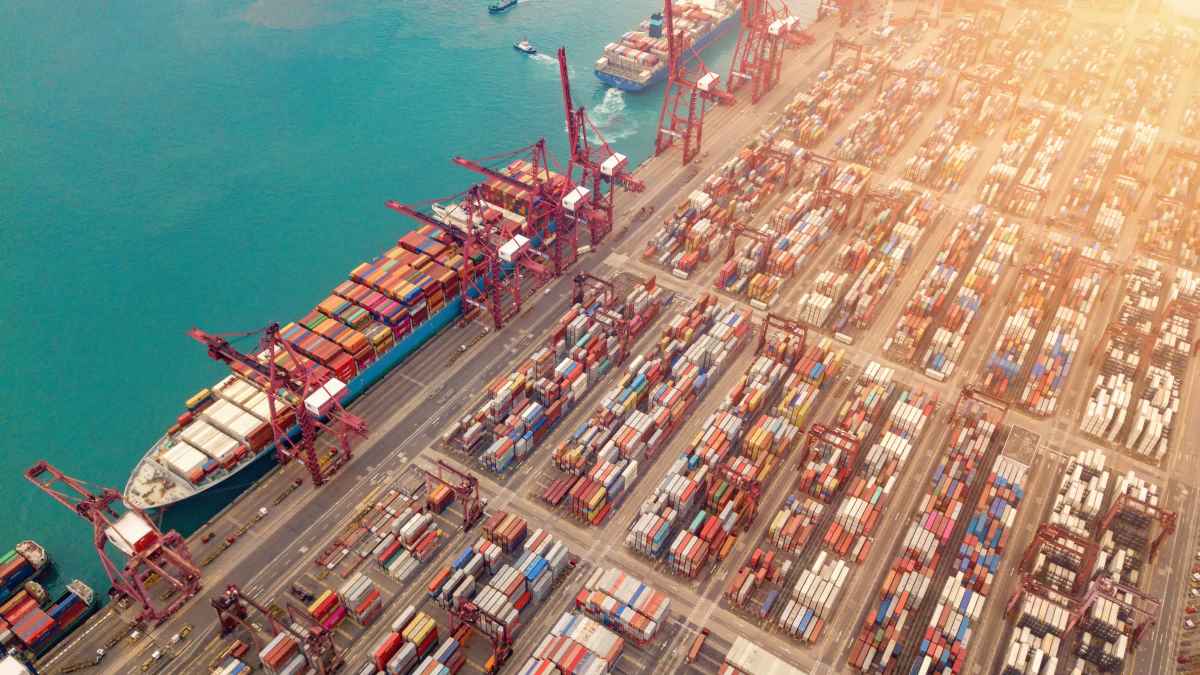
When global trade flows normally, Port Community Systems (PCS) are often viewed as efficiency tools. They digitize paperwork, connect stakeholders, reduce delays, and improve visibility across port ecosystems. However, the true impact and strategic importance of PCS become most apparent when a crisis hits.

Whether caused by geopolitical conflict, canal restrictions, rerouted shipping lanes, cyber risk, labor disruption, or sudden regulatory shifts, modern supply chain shocks remind us that ports without strong digital coordination struggle to adapt, whereas ports with robust PCS infrastructure are better positioned to keep cargo moving. In today’s environment, PCS has become a critical infrastructure.

Disruption is not an exception anymore

Global maritime trade has entered a more volatile era where disruption is structural. Let’s review the recent events to understand the scale of impact:

  • Around 2,000 ships were reportedly stranded during the recent Strait of Hormuz (https://apo-opa.co/4dii0lb) crisis.
  • The Red Sea crisis (https://apo-opa.co/4dz5gFA) led to more than 190 attacks on vessels by late 2024, forcing widespread rerouting and increasing transit times by up to two weeks.
  • The Suez-linked corridor (https://apo-opa.co/4dz5gFA), which carries roughly 10–12% of global maritime trade, experienced sharp volume declines during the disruption.
  • Supply chains across the Middle East, Africa, and Europe faced cascading effects, including congestion, cost increases, and schedule instability.

At the same time, the global port industry itself is undergoing rapid transformation. According to the International Association of Ports and Harbors (IAPH), ports are accelerating digitalization and strengthening resilience capabilities in response to geopolitical and operational uncertainty. This is the new reality: routes shift, volumes spike, and conditions change faster than traditional systems can handle.

Why PCS matters most during a crisis

When vessel schedules collapse, or cargo volumes suddenly spike, physical infrastructure alone is not enough. Cranes, berths, gates and yards also need coordination. That is where PCS becomes the backbone of resilience.

A PCS is not just a digital tool; rather, it’s a shared operational layer. It connects shipping lines, terminals, customs, freight forwarders, transport operators, and authorities through a single data environment, enabling synchronized decision-making across the ecosystem.

Instead of exchanges through emails, phone calls, Excel files, or siloed systems that generate delays and errors, the PCS enables seamless and real-time coordination.

1. Real-time visibility across the ecosystem

When vessels are delayed or rerouted, fragmented communication becomes a liability.

PCS enables real-time visibility across:

  • vessel arrivals and berth planning
  • cargo status and documentation
  • customs readiness and inspections
  • gate operations and inland logistics

Instead of fragmented updates, stakeholders operate from a shared, trusted data environment.

When shipping lanes shift overnight, policies change, and when uncertainty increases, the strongest ports are the ones that are the most ‘connected’

In a crisis, the speed of information becomes the speed of recovery.

2. Faster decision-making under pressure

Sudden disruptions create immediate operational stress:

  • surges in transshipment volumes
  • yard congestion risks
  • inspection bottlenecks
  • inland transport delays

Without digital coordination, responses are reactive and slow.

With PCS, ports can dynamically allocate resources, adjust workflows, and reprioritize cargo flows using real-time data and coordinated processes.

3. Customs and border continuity

Cargo cannot move if border agencies cannot move.

According to joint guidance from the World Customs Organization (WCO) and International Association of Ports and Harbors (IAPH), interoperability between Customs systems and PCS is essential for coordinated border management, risk control, and secure data exchange (https://apo-opa.co/3PLcs9P).

In crisis conditions, this becomes critical. Governments must introduce new controls, risk filters, or emergency procedures quickly, without disrupting trade flows. PCS enables this  balance.

4. Trust and transparency for the market

Importers, exporters, and carriers can tolerate disruption more than uncertainty. What they need is visibility.

PCS provides transparency across the supply chain, allowing stakeholders to track cargo status, anticipate delays, and plan accordingly. This transparency builds trust and reduces the systemic risk of panic-driven inefficiencies.

Operational resilience is the key

As we all know, the classic PCS discussions focus on key KPIs such as:

  • reduced turnaround time
  • fewer documents
  • lower administrative cost
  • faster truck processing

But today, the most important KPI is “readiness”: If a major trade corridor shifts tomorrow, can your port ecosystem adapt in real time?

To answer “Yes” to this question, a future-ready PCS should include:

  • real-time event management
  • integrated stakeholder communication
  • predictive congestion alerts
  • interoperability with customs and regulatory systems
  • scalable architecture for demand spikes

“For years, ‘efficiency’ was key when it comes to PCS. However, today, the key is ‘resilience’… When shipping lanes shift overnight, policies change, and when uncertainty increases, the strongest ports are the ones that are the most ‘connected’… Therefore, we should treat PCS as a crisis backbone of trade, not an IT efficiency initiative.
[Alioune Ciss, CEO, Webb Fontaine]

The Next Evolution: Intelligent PCS

PCS is now entering a new phase. Next-generation systems are evolving into data-driven platforms that support predictive analytics, AI-enabled decision-making, and proactive risk management (https://apo-opa.co/4eQ93Rg).

In other words, today, ports need systems that help orchestrate responses. Solutions such as Webb Ports (https://apo-opa.co/42F3gqq) from Webb Fontaine reflect this shift. By connecting all port stakeholders through a unified platform, anticipating congestion before it happens, simulating operational scenarios, and optimizing resource allocation dynamically, we enable faster coordination, better visibility and more agile responses when disruptions occur.

Distributed by APO Group on behalf of Webb Fontaine.


Continue Reading

Trending