Connect with us
Anglostratits

Business

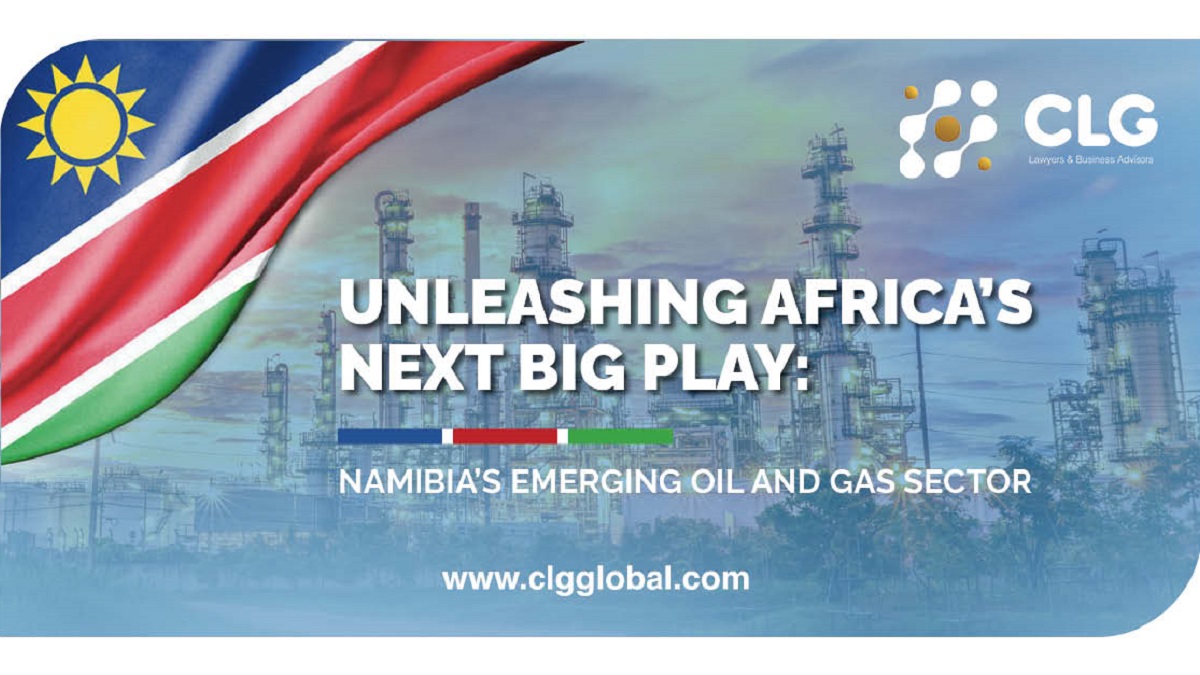
Unleashing Africa’s Next Big Play: Namibia’s Emerging Oil and Gas Sector (By Rachel Mushabati)

Published

on

Namibia

One of the primary drivers of Namibia’s attractiveness as an investment destination is its supportive government and investor-friendly policies

JOHANNESBURG, South Africa, September 18, 2024/APO Group/ — 

By Rachel Mushabati, Senior Associate Attorney, CLG Namibia (www.CLGGlobal.com).

Namibia, a nation renowned for its breath-taking scenery and abundant wildlife, is becoming more and more well-known for its booming oil and gas industry. Namibia is quickly rising to the top of Africa’s oil and gas exploration and investment destinations because to notable discoveries and a favourable investment climate. Here are some reasons for investors to be interested in Namibia’s developing economy and how business advice and strategic law might improve investment prospects.

A Treasure Trove of Potential

Namibia’s oil and gas sector has garnered international attention due to its substantial potential. Recent exploratory drilling has revealed promising reserves off the coast, particularly in the Namibian offshore region. After several years of extensive exploration, Namibia realized its first oil discoveries. In early 2022, Shell, QatarEnergy, and NAMCOR made a landmark discovery in the deep-water well in the Orange Basin, offshore southern Namibia. This was followed by another significant find in 2023, when TotalEnergies, QatarEnergy, and NAMCOR discovered light oil with associated gas on the Venus prospect, also in the Orange Basin. In 2024, Galp Energia, Custos, and NAMCOR further solidified Namibia’s status with a high-quality light oil discovery in the Mopane-1X well, located in the same prolific basin.[1] These discoveries, alongside notable formations such as the Kudu Gas Field, have positioned Namibia as a key player in the global energy market. The country’s geological formations, particularly in the Orange Basin, have demonstrated significant hydrocarbon potential, making it an attractive destination for exploration and production.[2]

Government Support and Favourable Policies

One of the primary drivers of Namibia’s attractiveness as an investment destination is its supportive government and investor-friendly policies. The Namibian government has implemented a range of initiatives to foster a conducive environment for oil and gas investments. Namibia’s Investment Promotion Act[3] is a pivotal component in the country’s strategy to attract and support investors. This comprehensive legislation provides a range of incentives to enhance the financial viability of projects and reduce initial costs[4]. It also ensures robust legal protections, safeguarding investors’ property rights and offering non-discriminatory treatment compared to domestic investors. By streamlining licensing processes and providing one-stop-shop services[5], the Act simplifies the investment process and reduces bureaucratic hurdles. Additionally, it supports priority sectors such as oil and gas, reinforcing Namibia’s commitment to fostering a transparent, stable, and investor-friendly environment. Namibia’s commitment to creating a stable and attractive investment environment is evident through its proactive approach in engaging with international investors and offering competitive terms.

Strategic Location and Infrastructure

Namibia’s strategic location along the Atlantic Ocean provides a crucial advantage for oil and gas operations. The country’s well-developed port infrastructure, particularly the Port of Walvis Bay, facilitates efficient export and import processes.[6] Additionally, Namibia’s proximity to key international markets enhances its appeal as a hub for energy resources. The development of supporting infrastructure, such as pipelines and storage facilities, further strengthens Namibia’s position as a key player in the global energy supply chain.

Economic Growth and Sustainable Investment Opportunities in Namibia’s Oil and Gas Sector

Investing in Namibia’s oil and gas sector not only presents a wealth of economic opportunities but also aligns with the principles of sustainability and responsible investment. The sector’s expansion is expected to stimulate ancillary industries such as construction, logistics, and technology, benefiting local businesses through increased demand for related services and products. The influx of foreign investment is anticipated to drive job creation, infrastructure development, and overall economic growth. Concurrently, Namibia places a strong emphasis on sustainability and environmental stewardship. The government and industry stakeholders are committed to responsible investment practices that protect local communities and ecosystems. Investors who prioritize these practices will not only contribute to positive environmental and social outcomes but also bolster their own reputation and long-term success in the market.

Conclusion

Namibia’s emerging oil and gas sector offers a compelling opportunity for investors seeking to capitalize on new and promising markets. With its substantial hydrocarbon potential, favourable government policies, strategic location, and burgeoning economic opportunities, Namibia is poised to become a prominent player in the global energy arena. The sector’s growth is anticipated to drive significant benefits across various ancillary industries and create widespread economic development. Additionally, the emphasis on sustainability and responsible investment practices aligns with global standards, ensuring that investments contribute positively to local communities and the environment.

However, successfully navigating this promising landscape requires expert guidance. Engaging with local legal and business advisory services can provide investors with crucial insights, help manage regulatory complexities, and enhance overall investment strategies. By leveraging the expertise of these advisory services, investors can maximize their potential for success and make a meaningful contribution to Namibia’s oil and gas sector. For those ready to explore the opportunities in Namibia’s oil and gas industry, the time to act is now. With the right expertise and strategic approach, investors can unlock substantial rewards and play a pivotal role in the growth of this exciting sector.

Namibia’s oil and gas sector has garnered international attention due to its substantial potential


[1] NAMCOR. Press Releases. Retrieved from https://apo-opa.co/3XO3SZ4. Last accessed 5 September 2024.

[2] Koning, T. “The Orange Basin, Deepwater Namibia- What’s Going on with Its Resources, Reserves and Future Production of Natural Gas?”. Retrieved from https://apo-opa.co/3XMKCv1. Last accessed 6 September 2024.

[3] Namibia Investment Promotion Act 9 of 2016

[4] Namibia Investment Promotion Act Section 4 (4)

[5] Namibia Investment Promotion Act Section 7

[6] Namport. “Welcome to the Port of Walvis Bay”. Retrieved from https://apo-opa.co/3Xq02UC. Last accessed 6 September 2024.

Distributed by APO Group on behalf of CLG.

Business

Afreximbank Posts Robust Q1 2026 Results with 25% Growth in Net Income and Improved Profitability

Published

on

Afreximbank

The results demonstrate continued resilience, disciplined balance sheet management and strong deal execution despite a challenging global operating environment

The growth in net interest income and profitability demonstrates the strength of our operating model and the continued relevance of our mandate

CAIRO, Egypt, May 22, 2026/APO Group/ –African Export-Import Bank (“Afreximbank” or the “Bank”) (www.Afreximbank.com) and its subsidiaries (the “Group”) announced its results for the three months ended 31 March 2026. The results demonstrate continued resilience, disciplined balance sheet management and strong deal execution despite a challenging global operating environment.


The Group continued to expand its lending activities in Q1 2026, resulting in total credit exposure growing by 2% to reach a portfolio of US$42 billion, up from US$41 billion as of 31 December 2025. This performance reflects Afreximbank’s leading role as a Development Finance Institution (DFI) in financing trade and trade-enabling infrastructure, and its strategic contribution to economic resilience across Africa and the Caribbean.

Average loans and advances for Q1 2026 stood at US$32 billion, up 8% compared to the same period in the prior year, driving the recorded growth in interest income. The Group’s liquidity position remained strong, with cash and cash equivalents of US$5.6 billion, representing 14% of total assets, consistent with FY2025 and above the Bank’s strategic minimum.

Asset quality also remained strong, with the non-performing loan (NPL) ratio at 2.40%, broadly in line with 2.43% at FY2025 and below industry average.

Shareholders’ funds increased to US$8.6 billion at 31 March 2026, up from US$8.4 billion at FY2025, supported by internally generated capital of US$268.9 million and new equity investments received during the quarter, underscoring the Bank’s continued ability to mobilise capital from its shareholders in support of its growth and development mandate.

The Group delivered strong profitability during the quarter.  Notwithstanding declining benchmark rates, total interest income rose by 14% year-on-year to reach US$813.6 million, while net interest income increased by 24% to US$510.0 million, compared with US$411.2 million in the first quarter of 2025. The Group’s cost-to-income ratio remained contained at 19%, well within the Group’s strategic ceiling of 30%. As a result, Profit for the period increased to US$268.9 million, up from US$215.4 million in Q1 2025.

The Group continued to maintain a strong capital position, with a capital adequacy ratio of 23% as at 31 March 2026, in line with the Bank’s long-term capital management targets.

During the quarter, Afreximbank continued to demonstrate its counter-cyclical role in response to external shocks. In March 2026, the Bank launched a US$10 billion Gulf Crisis Response Programme to help member countries mitigate adverse spillover effects from the Gulf crisis. The facility is designed to support liquidity, stabilise trade and payments, and address supply-side disruptions, particularly in energy, tourism and aviation, fertilisers, food and other critical imports.

The Bank also continued to deploy targeted financing and advisory support to strengthen trade flows, industrial capacity and economic resilience across Africa and CARICOM. Regional integration received further momentum following South Africa’s ratification of the Bank’s Establishment Agreement in February 2026, bringing one of Africa’s largest and most diversified economies into the Bank’s membership and giving the Bank full continental coverage.

Highlights of the results for Afreximbank Group are shown below:

Financial Performance Metrics

Q1’2026

Q1’2025

Gross Income (US$ million)

874.1

784.9

Net Income (US$ million)

268.9

215.4

Return on average equity (ROAE)

13%

12%

Return on average assets (ROAA)

2.62%

2.38%

Cost-to-income ratio

19%

16%


Financial Position Metrics

Q1’2026

FY’2025

Total Assets (US$ billion)

41.7

42.3

Total Liabilities (US$ billion)

33.0

33.9

Shareholders’ Funds (US$ billion)

8.6

8.4

Non-performing loans ratio (NPL)

2.40%

2.43%

Cash/Total assets

14%

14%

Capital Adequacy ratio (Basel II)

23%

          23%


Mr. Denys Denya, Afreximbank’s Senior Executive Vice President, commented:

“Against a backdrop of continued global uncertainty, heightened geopolitical risks and tight financial conditions, the Group delivered a resilient first-quarter performance, underpinned by disciplined balance sheet management, sound asset quality and strong capital and liquidity buffers. The growth in net interest income and profitability demonstrates the strength of our operating model and the continued relevance of our mandate. Our swift launch of the US$10 billion Gulf Crisis Response Programme further underscores Afreximbank’s counter-cyclical role in supporting member countries during periods of disruption. We remain focused on stabilising trade flows, easing liquidity pressures and advancing the industrial and economic transformation of Africa and the Caribbean.”

Distributed by APO Group on behalf of Afreximbank.

Continue Reading

Business

Via Licensing Alliance Expands Voice Codec Program with New Licensee, New Licensors, Publishes Comprehensive Pool Rate Structure

Published

on

Via Licensing Alliance

SAN FRANCISCO, CALIFORNIA, UNITED STATES – Media OutReach Newswire – 22 May 2026 – Via Licensing Alliance (Via) today announced continued momentum for its Voice Codec patent pool, including the addition of a new unnamed licensee and new licensors, NovaVoice Limited and Cordial IP, further growing the program’s patent stack and market penetration from its initial five, large global licensors.

The addition of the new licensee, unnamed at this time, reflects growing industry adoption of the collaborative licensing pathway Via’s Voice Codec program creates for accessing IP rights to critical voice technologies. This addition reflects a growing market uptake of advanced voice technologies, including EVS and IVAS, driven by rising demand as 5G and 5G-Advanced technologies are adopted worldwide.

Additionally, Via continues to prioritize transparency and has published its full rate structure for the Voice Codec pool, providing further clarity and predictability for implementers and to the broader market. For implementers, the full rate structure allows for complete visibility as they consider the appropriate royalty structure to choose from to meet their product level costs, evaluate future growth paths for their product lines, or plan their geographical expansion plan needs. This level of disclosure not only reduces uncertainty in licensing decisions but also enables more consistent benchmarking, reinforcing confidence in fair, market-aligned SEP licensing practices. The program’s royalty rates are listed on Via’s website at https://www.via-la.com/licensing-programs/voice-codec/#license-fees.

The addition of the new licensors indicates increased interest from patent holders in licensing their voice technology SEPs through highly efficient, aggregated licensing vehicles such as patent pools. Future growth in both the licensor list and the number of patents consolidated through the pool license will continue to enhance the value of the Voice Codec License for implementers. Via’s Voice Codec program licensors are listed here: https://www.via-la.com/licensing-programs/voice-codec/#licensors.

Via’s Voice Codec pool covers Enhanced Voice Services (EVS), which supports voice communications across more than one billion and growing active devices globally, as well as Immersive Voice and Audio Services (IVAS), which will play a central role in next-generation voice and spatial audio applications.

“We are pleased to welcome these new entrants to our pool, which signal continued growth and momentum our Voice Codec program,” said Kevin Mack, President of Via Licensing Alliance. “This pool license offers strong value relative to other market options and represents the only collaborative licensing solution for EVS and IVAS technologies, making it a smart and efficient pathway for companies seeking to license critical voice capabilities.”

EVS remains a foundational technology for high-quality voice communications in 5G and 5G-Advanced networks, with adoption continuing to expand as 5G, 5G-Advanced and future network iterations reach global scale. As spatial audio and advanced voice technologies expand into 6G and a broader range of non-cellular devices, the importance of IVAS technologies is expected to increase, with Via’s pool offering an early and effective licensing pathway.

For more information about the Voice Codec patent pool, including information for prospective licensees, please visit https://www.via-la.com.

About Via Licensing Alliance:
Via Licensing Alliance is the collaborative licensing leader, dedicated to accelerating global technology adoption, fostering participation, and generating return on innovation with balanced licensing solutions for innovators and manufacturers of all sizes around the globe. Via has operated dozens of licensing programs for a variety of technologies. Via is an independently managed company owned by industry-leading participants with over 25 years of intellectual property licensing leadership. For more information about Via, please visit https://www.via-la.com.


Continue Reading

Business

Joint statement welcoming the Republic of Togo’s announcement on Visa facilitation for African nationals

Published

on

Togo

The AfCFTA Secretariat and Afreximbank commend the Government and people of the Republic of Togo for hosting Biashara Afrika 2026 and for their continued commitment to advancing Africa’s economic integration agenda

LOMÉ, Togo, May 21, 2026/APO Group/ –The AfCFTA Secretariat and African Export-Import Bank (Afreximbank) (www.Afreximbank.com) welcome the announcement by the Government of the Republic of Togo, under the leadership of H.E. Faure Essozimna Gnassingbé, President of the Council of the Republic of Togo, regarding measures to facilitate visa-free entry for all nationals of African States holding valid passports, as announced by the Minister of Security on 18 May 2026.

The announcement was made in Lomé on the sidelines of Biashara Afrika 2026, the continent’s premier trade and business platform, which has brought together policymakers, private sector leaders, investors, and stakeholders from across Africa to advance dialogue on intra-African trade, investment, and regional integration.

Throughout the engagements, participants underscored the importance of facilitating the movement of African citizens, entrepreneurs, and investors as an important enabler of intra-African trade and economic cooperation. Against this backdrop, the announcement reflects the growing continental momentum towards strengthening connectivity and deepening African integration.

The AfCFTA Secretariat and Afreximbank, to which Togo is a State Party and a Member State, envision a continent where goods, services, capital, and people move more freely across borders in support of an integrated African market. Measures that facilitate mobility and connectivity continue to contribute towards advancing the broader mandate of both institutions; the attainment of the aspirations of Agenda 2063.

The AfCFTA Secretariat and Afreximbank commend the Government and people of the Republic of Togo for hosting Biashara Afrika 2026 and for their continued commitment to advancing Africa’s economic integration agenda.

Distributed by APO Group on behalf of Afreximbank.

Continue Reading

Trending