

Business
The Prime Minister Presides Over the Award Ceremony of the Winners of the National Competition and the World Championship of Invention
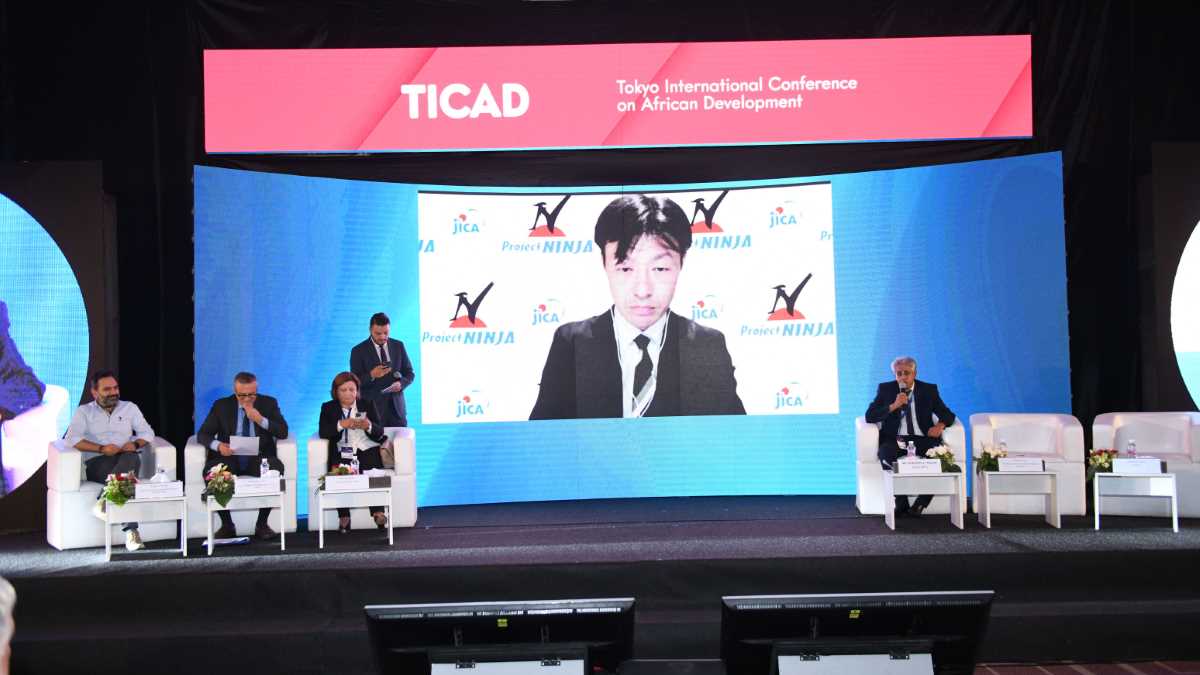
The exhibition saw the participation of 15 countries of different nationalities, including African countries, among which Tunisia
TUNIS, Tunisia, September 23, 2022/APO Group/ —
The Ministry of Industry, Mines and Energy, in collaboration with the Ministry of Higher Education and Scientific Research and under the chairmanship of the Head of Government, Najla Bouden, organized on 1 and 02 September 2022, the event TUNISIA TICAD INNOVATION 2022 “Crossroads of Business and Innovation in Africa. In this context, the Head of Government presided over the opening of the International Exhibition of Innovation, Research and Invention, as well as the award ceremony of the 3rd edition of the National Competition of Invention and the 1st World Championship of Invention and Scientific Research, as part of the parallel events to the Tokyo Conference for Development in Africa -TICAD 8. These events were organized by the Agency for the Promotion of Industry and Innovation (APII) (http://www.TunisieIndustrie.nat.tn), in the presence of the ambassadors of Japan, Egypt and the European Union, the President of UTICA, high-level official delegations, national and international organizations, institutions and funding and investors.
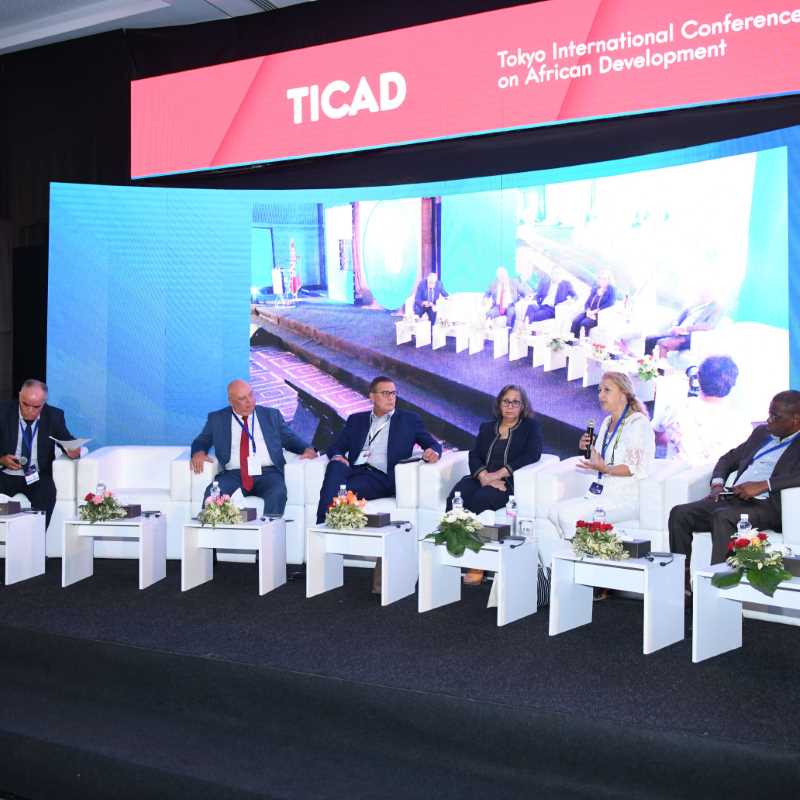
The exhibition saw the participation of 15 countries of different nationalities, including African countries, among which Tunisia. The best innovations and research candidates for the third edition of the National Competition of Invention and the first World Championship of Invention and Scientific Research, as well as startups and innovative companies especially in the sectors and services of automotive components and aerospace, were reviewed, in addition to the participation of support structures involved in the system of innovation, research and technology promotion.
The Prime Minister together with the Minister of Industry, Mines and Energy presented the prizes to the winners of the National Invention Competition in its third edition and the World Invention Championship, both competitions were evaluated by an international jury of experts of different nationalities, the results of which resulted in the crowning of a set of individual and institutional inventions within the framework of the national competition and the victory of candidates from different countries within the framework of the World Invention Championship, as follows :
3rd edition of the National Invention Contest
CATEGORY “INDIVIDUAL INVENTOR”
1st prize – Mr. Sofiane BEN ABDALLAH
Invention: Digital system for voice warning of road drivers by infrared digital road signs
2nd prize – Mr. Hamadi BEN MIM
Invention : Propeller alternator that charges the batteries of electric cars
3rd prize – Ms. Fatma AROUSSI
Invention : Waterproof stockings and leg prosthesis fixers
CATEGORY “INSTITUTIONAL INVENTOR”
1st prize – Ms. Erij MESSAADI– Institut Pasteur de Tunis
Invention : Lebecetin (LCT), a molecule derived from snake venom, as a neovascularization inhibitor in the treatment of ocular diseases, cancers or inflammatory disorders with neovascular component
2nd prize – Ms. Basma HADJ KACEM– Biotechnological Center of Sfax.
Invention : Pharmaceutical preparation with high anti-hemorrhagic power
3rd prize – Ms. Nidhal SALEM– Borj Cedria Biotechnology Center
Invention : Process for obtaining a meat bioconservative based on a natural colorant
1st International Championship of Invention and Scientific Research
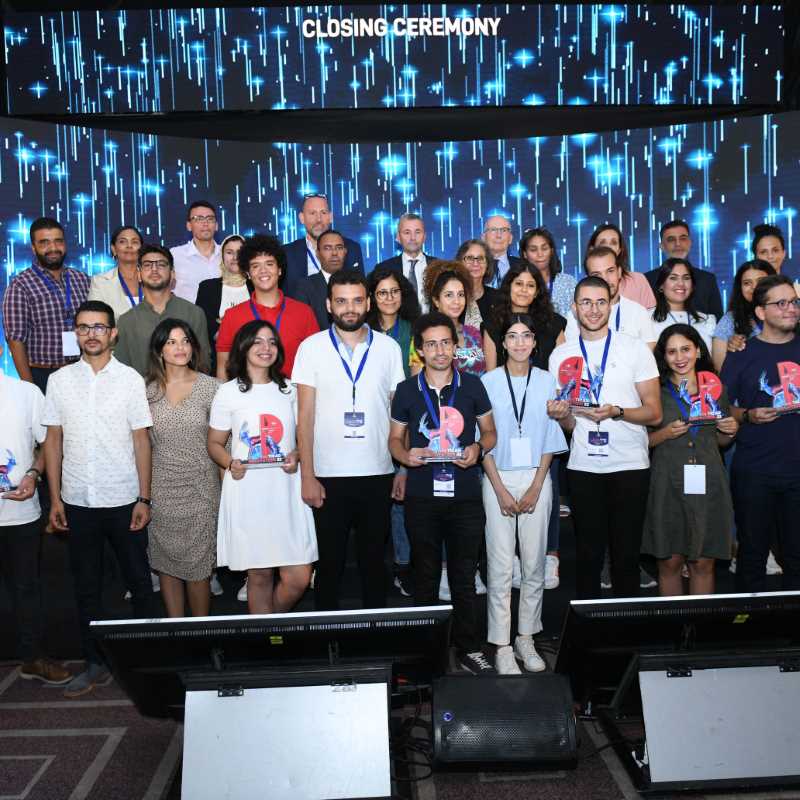
The winners of the World Championship were crowned with world prizes and titles such as the “Europe Prize” awarded by the European Union, the “Africa Prize” awarded by the African Development Bank (ADB) and the “Tunisia Prize” awarded by the Deposit and Consignment Office and funded by the World Bank.
CATEGORY “INVENTOR”
1st prize – (TUNISIA)
Ms. Basma HADJ KACEM
Invention : Pharmaceutical preparation with high anti-hemorrhagic power
2nd prize – (KUWAIT)
Ms. HAWRAA MAIRZA
Mr. Talel AL HIZAMI,
Mr. Mohamed Salah EL DHAFIRI
Mr. Abderrazak EL KHALAF
Mr. Mohamed Nawef EL BAHR
Invention : Special Machines based on IOT technology
3rd prize – KINGDOM OF SAUDI ARABIA
Ms. HESSA ABDALLAH EL HUWEISH
Invention : Tool for identifying ocular inclinations
CATEGORY “RESEARCHER”
1st prize – TUNISIA
Ms. YOSR GHOZZI
Mr. ADEL MOHAMED ALIMI
Ms. IKHLASS BEN AYED
Mr. SABER MASMOUDI
Mr. TARAK MOHAMED HAMDANI
Invention : Application to search for similar dysmorphic images
2nd prize – JORDAN
Mr. FADI CHAHROURI
Invention : Design of low voltage integrated circuits
3rd prize
TUNISIA – Mr. EL AKRAM HAYOUNI
Invention : Development of an intensive breeding system of edible insect species to initiate the basis of tomorrow’s human and animal food.
JORDAN – Ms. ALAA YOUSSEF GHIDHAN
Invention : Nanotechnological applications in medicine
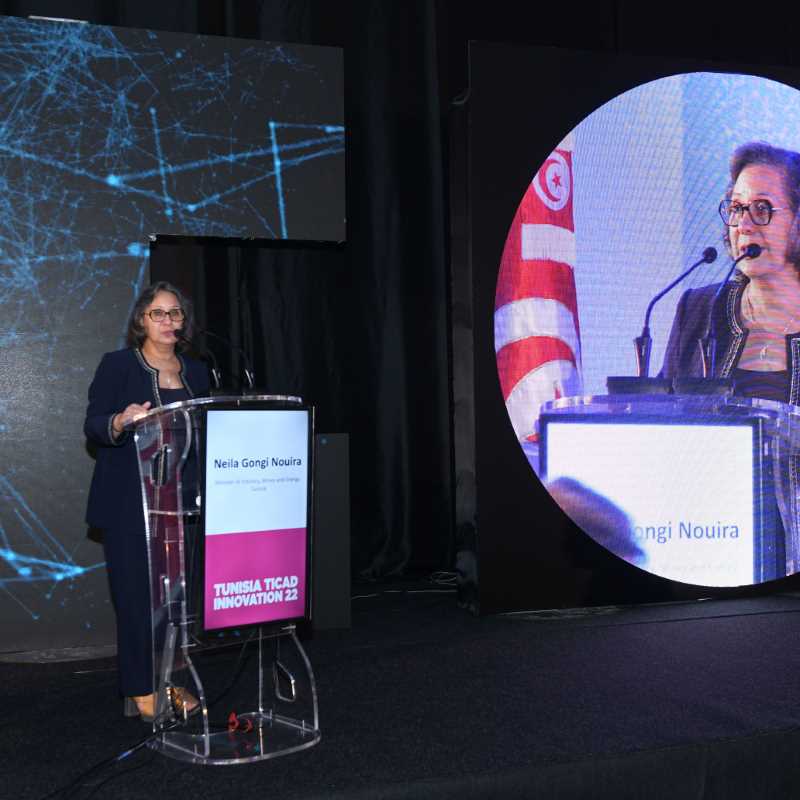
These prizes were awarded by the European Union, the African Development Bank, the World Bank, the Deposit and Consignment Office, the Abdelwahab Ben Ayed Foundation, the structures and support institutions under the Ministry of Industry, Mines and Energy, as well as by the Global Universal Innovations (GOIDI) and the International Federation of Invention (IFIA)
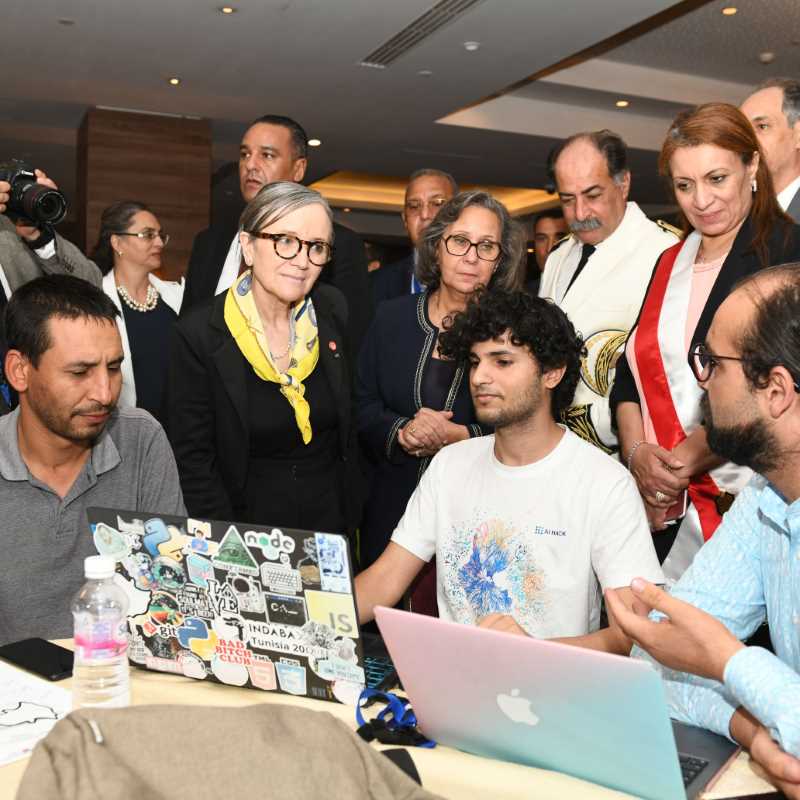
The Prime Minister also visited the pavilion of startups specializing in technology sectors and useful innovations in the fields of environment, green economy, artificial intelligence and health. She also visited the Automotive Hackathon area, which brings together several teams of engineers specialized in the field of information software for the development of innovative software in the automotive components sector, which allowed her to meet young innovative creators capable of creating inventions with high added value for the future of a smart industry based on innovative and groundbreaking rules.
The following is a list of the winners of the awards presented by the Minister of Industry, Mines and Energy and awarded by the German Cooperation Program:
Hackathon « HACK AFRICA AUTOMATIVE »
I. First challenge –
Challenge sponsor: VISTEON
Smart troubleshooting application
1st Laureate
As the results expected by the challenge holder and the organizers were not achieved, the first prize for the selected challenge (will not be awarded)
2nd Laureate
NEURODATA team consisting of : Yassine Hamdaoui – Bacem Ben Hamdaoui – Feriel Haouala
II. Second challenge
Challenge sponsor: FRACAMA
Mastery of the requirements in terms of “carbon Foot print”
1st Laureate
BOTVERSE team consisting of : Eya kaabachi – Semah kadri – Chaima khemiri – Fares moalla – Moez bouchoucha
2nd Laureate
The Prime Minister together with the Minister of Industry, Mines and Energy presented the prizes to the winners of the National Invention Competition
LAB DIGITAL BONTAZ team consisting of : Jemli Ghassen – Mohamed Ali Hosni – Ahlem Mahmoud – Imen Ben Samir – Mohamed Weslati
III. Third challenge
Challenge sponsor: StartupGateX and ACTIA AFRICA
SMART ASSISTANCE CAR DASHBOARD USING AI TECHNOLOGY
1st Laureate
TONOM team consisting of : Achraf gazzeh – Ahmed marnissi – Oussema jlassi – Meryem soltani – Khawla soltani
2nd Laureate
Bug Busters team consisting of : Zahra Soula – Maudhaffer Bouallegui – Dorra Makhloufi – Yasmine Daly – Nour Sbaoul
TEAMCAD team consiseting of : Mohamed ali zormati – Hana ben Ghezail – Yassine ayadi – Ranim saidi – Anis ben ghanem
Pitching Sessions
Among the side events organized is a matchmaking gathering of startups in the fields of technological innovation, under the joint organization of the APII and the Startup Tunisia Foundation, which focuses on the promotion of projects, the creation of a space for exchange and networking of young researchers and funding. These projects include:
| Startup | Sector | Founder | |
| Sghartoon | EdTech | Hidayet Ayadi | A learning application for children using interactive cartoons, exercises and games, with content adapted for dyslexic children. |
| Bako Motors | Automobile | Boubaker Siala | Bako Motors manufactures electric vehicles, with a solar power system, to ensure a range of 40 km per day, and offers professional adaptation solutions for a rapid entry into electric mobility. |
| Pixii Motors | Mobility | Anis Fkih | Manufacture of an intelligent two-wheeled electric scooter designed for two people with a removable battery, including an intelligent dashboard combining software and hardware engineering. |
| Ezzayra Solutions | AgriTech | Yasser Bououd | Development and integration of technological products for agriculture. Software, hardware and robotics. |
| KUMULUS | GreenTech | Iheb Triki | Kumulus specializes in building machines the size of mini-fridges, producing 30 liters of drinking water per day using only solar energy and atmospheric humidity. |
| Wattnow | Energy solutions | Malek Attallah | Wattnow offers an IoT power monitoring and control solution that helps businesses reduce waste and improve energy efficiency |
| Historiar | Creative Tech | Houda BAKIR et Jihed Makni | HistorIAR relies on artificial intelligence and augmented reality to offer a mobile application for “immersive augmented tours” to visitors of archaeological and heritage sites. |
| Med.tn | HealthTech | Issam Bellaj | Med.tn is a platform for making appointments, medical directory and teleconsultation. |
| NextAv | Mobility | Hichem Mokni | NextAV provides innovative solutions and services for aerial mapping and photography, starting from ultralight aircraft to large-scale drones. |
| RoboCare | Agritech | Imen Hbiri | Robocare offers a solution to the rapid spread of diseases in greenhouse plants and the extensive use of pesticides. Robocare detects diseases at an early stage using spectral technology, which will improve the quality and quantity of crops and reduce the use of pesticides. |
| Cynoia | Business management | Nassreddine Riahi | Cynoia is a platform that brings together all your communication and collaboration tools under one roof, simply and efficiently. |
Recommendations from the TUNISIA TICAD INNOVATION 2022:
1/ Perpetuate TTINN 2022 to ensure annual follow-up of the TICAD International Conference preparatory actions focusing on economic themes and priorities for Africa’s transformation through innovation and industrialization.
2/ Consolidate through the establishment of the Africa-Japan Symposium on Society, Science and Technology (AFJASSST), a multidisciplinary international conference, which will focus on economic, technical, scientific and technological innovation in partnership with TICAD member countries.
3/ Establishing a network of technoparks, incubators and school innovation centers:
This includes the establishment of networks of technoparks, schools, high schools, universities and incubators connected in Africa for the promotion of regional and international partnerships in all high value-added sectors and investments in knowledge and innovation with TICAD countries and the rest of the world, drawing on Japanese expertise in this field.
4/ Creation and launching of the initiative of creating an Invention Industrialization Fund and a platform bringing together researchers and industrialists on the African continent.
5/ Annual organization of the International Championship of Invention and Scientific Research by the international organizing committee composed of Everest International for Invention (member of Global International Development Investment), Agencies and International National Financial Institutions. The headquarters of this committee will be in Tunisia. The applications of the countries wishing to host the 2nd edition of the international championship of invention and scientific research will be known later.
All these events will only be possible if a national and international steering committee associated with the TICAD organizing committee is quickly set up in partnership with the countries of the African continent.
It is worth highlighting that the event featured several workshops on various industry and innovation axes, including one on technology transfer strategies, another on water, energy and material sciences for sustainable development in Africa, as well as on biotechnology, health, food, agriculture, information and communication technologies, as well as innovative relationships between personal medicine, genetic engineering, nanotechnology and innovations, and the Crowdfunding project.
Of the 2,985 who registered, 1,583 attended the event, with 764 online attendees, 253 partnership applications and 89 exhibitors. The organizers of the event have sought to strengthen the role of Tunisia as a strategic partner of Africa and promote its presence in the scientific field to the international community, in partnership with Japan and the TICAD countries, and technology transfer to developing countries.
Distributed by APO Group on behalf of Agence de Promotion de l’Industrie et de l’Innovation.










Business
SLB commissions new fluids systems plant in Pemba to support Mozambique’s offshore energy development

Business
South African Energy Storage Association (SAESA) welcomes 4,600 MW battery storage prioritisation and calls for integrated energy planning

Business
Afreximbank welcomes launch of Africa Credit Rating Agency as an important step in strengthening Africa’s financial architecture
-
 Business5 days ago
Huawei and Qualcomm Announce Broad Patent License Agreement
-

 Business4 days ago
Cautious optimism returns to agency-side strategy as influence with clients grows
-

 Energy5 days ago
Malawi, Kenya, Eswatini Bring State Ambitions to African Mining Week (AMW) 2026’s National Mining Companies Forum
-

 Business5 days ago
African Energy Chamber (AEC), Ground State Market Solutions Sign Memorandum of Understanding (MoU) to Advance Canadian LNG, LPG Supply to Africa
-
Business5 days ago
Liberia Petroleum Regulatory Authority (LPRA) to Showcase Liberia’s 2026 Offshore Licensing Round in Cape Town
-
Business4 days ago
Africa’s Biggest Energy Movement Returns to Cape Town Next Week
-
Energy4 days ago
Kosmos Energy Chief Executive Officer (CEO) Andrew Inglis to Receive Mohammed S. Barkindo Lifetime Achievement Award at African Energy Week (AEW) 2026
-

 Events5 days ago
“Future Resonance — ShanghaiEye Night” Brings Shanghai to Washington, Fosters People-to-People Exchange Across the Pacific