Connect with us
Anglostratits

Business

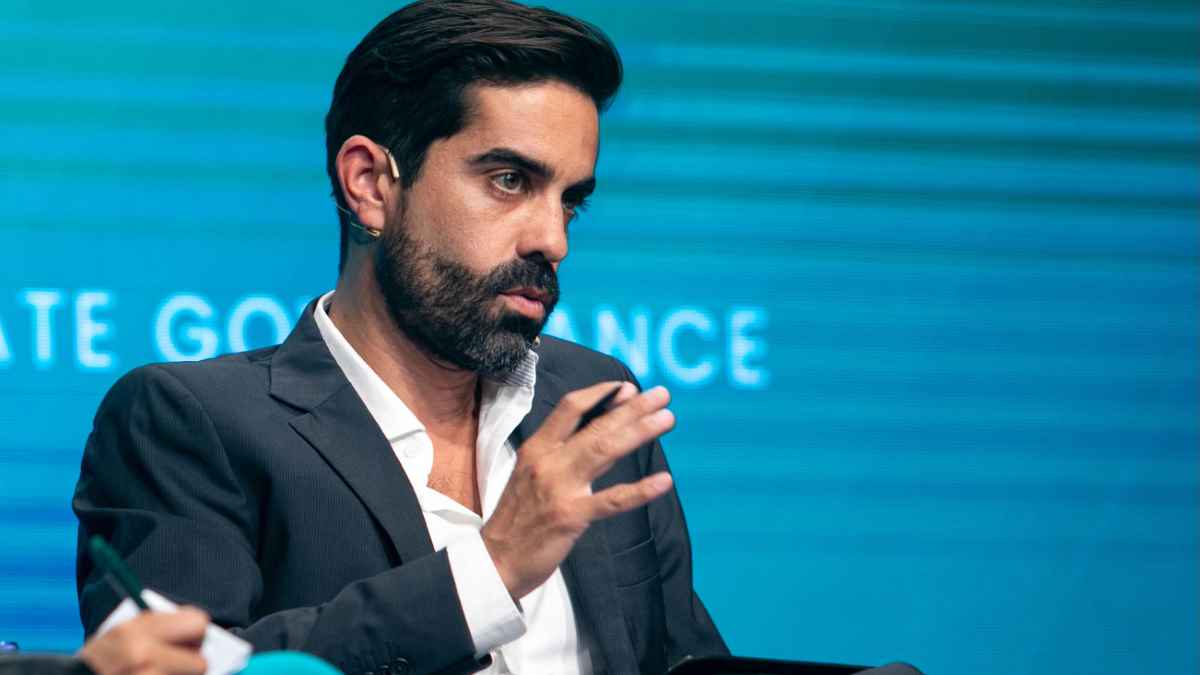
The Perception Tax: Africa’s Most Expensive Misconception (By João Gaspar Marques)

Published

on

tax

For companies with significant African exposure or ambitions, the perception tax is a structural drag on performance and profit

JOHANNESBURG, South Africa, March 23, 2026/APO Group/ —By João Gaspar Marques — Executive Director, Strategic Advisory, APO Group (https://APO-opa.com).

There is a cost that does not appear on any balance sheet and yet is one of the most consequential expenses a company operating in Africa will incur. I call it the Perception Tax: the financial and strategic penalty paid by organisations that price African markets on the basis of assumption rather than intelligence.

It is, in every meaningful sense, a tax on ignorance. And unlike most taxes, it is entirely avoidable.

The Mechanism

The perception tax operates through a simple but destructive logic. In the absence of credible, granular market intelligence, decision-makers default to the available narrative – and the available narrative on Africa is often wrong in its generalisations. It is a painfully outdated tragedy that the continent continues to be treated as a unified landscape of risk, rather than 54 distinct nations with their own regulatory frameworks, political cultures, growth trajectories, and investment dynamics. The macro obscures the micro, and the micro is where the opportunity lives.

Consider the geography of it. Investing in France is different from investing in Finland. The US is not Mexico. So why would Benin and Botswana, as far apart physically, politically, economically, and culturally as Belgium is from Belarus, be perceived under the same optics? Yet, again and again, that is precisely what we see in investment discussions from London to New York.

The consequences of this tax are very real. The cost of access to capital rises for projects that do not warrant a premium. Decisions are delayed while companies wait for clarity that a generalistic analysis cannot provide. First-mover advantage, objectively the most sought-after edge in developing economies, is being blindly surrendered to competitors with better intelligence and market understanding. For companies with significant African exposure or ambitions, the perception tax is a structural drag on performance and profit.

Reading the Numbers

In February 2025, the African Development Bank commissioned Moody’s Analytics to assess fourteen years of infrastructure investment performance across regions. Africa’s rate of loss stood at 1.7%, the lowest in the world. Latin America registered approximately 13%. Eastern Europe, 10%. By any objective measure, Africa is among the most reliable destinations for infrastructure investment on the planet.

Yet the cost of capital across African markets remains three to four times higher than in comparable regions. Investors are demanding a premium that the facts on the ground do not justify, and the assets they pass on are being acquired by those who read about the numbers rather than the headlines.

I call it the Perception Tax: the financial and strategic penalty paid by organisations that price African markets on the basis of assumption rather than intelligence

Tony Elumelu, whose investment portfolio spans power, financial services, and healthcare across four continents, puts it plainly: “There’s nowhere else we get the kind of returns on investments as what we make in Africa.” The competitive advantage belongs to those who see opportunity where others see risk.

What It Looks Like in Practice

A developer assessing a project in East Africa sees currency volatility, a complex political transition, and a regulatory environment difficult to understand at first. The standard response is to demand a higher return, shorten financing tenors, or cancel the decision entirely. Less competitive, slower, potentially deal-killing. A competitor with on-the-ground intelligence reads the same market differently. That country has maintained institutional continuity across successive governments. The local partner has a strong operational track record. Local financing partners are prepared to co-invest. The project proceeds on better terms, ahead of the market. The perception tax has been paid, by the first company, to the second.

This is not hypothetical. Helios Investment Partners, one of Africa’s most successful private equity funds, built a portfolio exceeding $3 billion by entering markets the global consensus had written off as too risky, reading them instead for what they actually were. Kenya illustrates what happens when this information gap closes. Five years of regulatory reform moved the country 52 positions up the World Bank Ease of Doing Business Index. Foreign investment followed, consistently and at scale. The risk did not disappear. It was understood.

This pattern repeats across the continent. Markets once characterised as high-risk by international capital are, on closer inspection, simply markets that had not yet been properly read. The investors who looked carefully enough to see the difference captured returns that reflected the advantage of having done so. Those who were hesitant arrived later, at higher valuations, paying the perception tax in full.

The Broader Implication

The perception tax compounds. Delayed investment means delayed market development, which reinforces the perception of unreadiness, which delays further investment. The gap between Africa’s perceived risk profile and its actual commercial fundamentals does not close on its own. It closes when enough informed capital enters a market to shift the consensus, which is precisely when the opportunity for asymmetric returns begins to narrow.

The African Continental Free Trade Area represents a $3.4 trillion market with a population approaching 1.5 billion people. The continent holds the critical minerals on which the global energy transition depends. The question is not whether capital will eventually flow toward these opportunities. It will. The question is who will have established a position before generalised knowledge eclipses profit opportunity.

A Different Approach

The companies that consistently outperform in Africa share a common characteristic: they treat market intelligence as a primary investment, not a nice-to-have. They distinguish between structural risk, which must be priced, and noise, which must be filtered. They understand that the information gap between perception and reality is not a permanent feature of African markets. It is a temporary condition which will reward those who close it first. Closing that gap is precisely why we designed APO Group’s advisory practice.

The perception tax is also the perception premium. The same asymmetry that penalises the ill-informed rewards the well-informed. For the investor or corporate decision-maker prepared to engage with local markets at the level of detail that strategic decisions require, Africa offers something increasingly rare in global markets: a genuine informational edge.

The opportunity was always there. The edge belongs to those who are bothered to look.

Distributed by APO Group on behalf of APO Group Insights.


Business

Aurionpro expands its multi-country transaction banking engagement with Diamond Trust Bank (DTB)

Published

on

Aurionpro

Aurionpro’s upgraded iCashpro platform for DTB delivers a unified digital experience across payments, trade, virtual accounts, and real-time reporting, enhancing straight-through processing, visibility, and control for both the bank and its corporate customers

MUMBAI, India, April 30, 2026/APO Group/ –Aurionpro Solutions Limited (www.AurionPro.com) (BSE: 532668 | NSE: AURIONPRO)a global leader in banking technology, announced the expansion and upgrade of its transaction banking engagement with Diamond Trust Bank (DTB), to modernize and enhance the bank’s corporate transaction banking capabilities across multiple countries.

Download Document: https://apo-opa.co/4edHUaC

This multi-country transaction banking upgrade covering Kenya, Uganda, and Tanzania aligns with DTB’s intent to enhance customer experience, streamline operations, and support growing transaction volumes as it expands its regional corporate banking footprint. DTB continues to focus on building a more agile, ‘digital-first’ banking experience, particularly around payments for its corporate customers across Africa, and is now well positioned to scale these capabilities. As part of its broader transformation agenda, the bank has been steadily investing in platforms that enhance scale, reliability, and service consistency across markets.

Through this partnership, we are proud to lead the next era of transformation in transaction banking, helping DTB enhance operational agility

Aurionpro’s upgraded iCashpro platform for DTB delivers a unified digital experience across payments, trade, virtual accounts, and real-time reporting, enhancing straight-through processing, visibility, and control for both the bank and its corporate customers. By enabling DTB to standardize and scale its transaction banking operations across countries, the platform ensures consistent service levels, stronger control, and improved efficiency. It also supports enhanced user experience, advanced security, and the flexibility to introduce new features as DTB expands its regional transaction banking footprint.

Murali Natarajan (https://apo-opa.co/48trPdk), Managing Director & CEO, DTB Kenya   commented: “We are delighted to strengthen and broaden our partnership with Aurionpro Solutions as part of DTB’s ongoing digital transformation journey across multiple markets. Our focus on innovation, operational excellence, and customer-centricity continues to guide our technology investments. This upgrade strengthens our transaction banking capabilities, enabling us to deliver greater value to our customers through robust digital channels and seamlessly integrated experiences.”

Ashish Rai, Group CEO, Aurionpro Solutions, commented: “We are pleased to deepen our multi-country engagement with Diamond Trust Bank and support the next phase of its transaction banking modernization. As DTB continues to scale across markets, platform resilience and consistency become paramount. Through this partnership, we are proud to lead the next era of transformation in transaction banking, helping DTB enhance operational agility, deliver superior experiences to corporate customers, and create long-term value across geographies.”

He added, “Aurionpro’s iCashpro lays a strong digital foundation for transaction & wholesale banks across the globe to grow their corporate and SME client portfolio today, while creating a clear roadmap for next- generation capabilities in AI-driven insights, advanced automation and API-led connectivity for businesses in Kenya and across Africa.”

Distributed by APO Group on behalf of Aurionpro Solutions Ltd.


Continue Reading

Business

Minerals Council Chief Executive Officer (CEO) Joins African Mining Week (AMW) as South Africa Improves Sectorial Investment Climate

Published

on

Energy Capital

Minerals Council CEO to share insights on policy, infrastructure and investment trends shaping South Africa’s mining industry

CAPE TOWN, South Africa, April 30, 2026/APO Group/ –The upcoming African Mining Week (AMW) conference will feature Mzila Mthenjane, CEO of the Minerals Council of South Africa, as a speaker. Scheduled for October 14 – 16, 2026 in Cape Town, the event will bring together global investors, policymakers and industry leaders, with Mthenjane’s participation highlighting the council’s commitment to engaging international stakeholders and promoting investment across South Africa’s mining sector.

His participation comes at a critical moment as the Minerals Council works closely with government on finalizing the Mineral Resources Development Bill 2025, a policy framework aimed at strengthening the country’s mining investment climate and the sector’s contribution to GDP. According to the council, the revised legislation will support new investment across the value chain as South Africa seeks to mobilize R2 trillion over the next five years to unlock its critical minerals potential.

The policy reforms come amid shifting production trends in the sector. In 2025, South Africa recorded declines in gold and platinum group metals output of 1.9% and 4.1%, respectively. The new regulatory framework is expected to strengthen public-private partnerships and stimulate investment, enabling South Africa to increase production and capitalize on strong global commodity prices. Increased private sector investments is crucial with South Africa seeking targeting to unlock an estimated R40 trillion in untapped iron ore potential as well as maintain its position as the world’s leading producer of chrome and manganese.

At AMW 2026, Mthenjane is expected to outline these trends, providing insights into how the council is contributing to addressing challenges disrupting the sector. Infrastructure and energy costs remain key concerns for industry players. To support the energy-intensive sector, South Africa approved a 35% reduction in electricity tariffs for major ferrochrome producers, helping stabilize an industry that has faced significant cost pressures after electricity prices surged by roughly 900% since 2008.

Logistics constraints are also a priority area for reform. South Africa’s economy is losing an estimated R1 billion per day due to inefficiencies across rail and port infrastructure. As a result, the government is considering measures supported by the Minerals Council to increase private sector participation in logistics. Planned reforms include rail modernization initiatives targeting 250 million tons of freight capacity by 2029, alongside port upgrades and private operator participation aimed at strengthening mineral exports and improving supply chain efficiency.

Beyond infrastructure and policy reforms, the Minerals Council is advocating for stronger exploration investment to support long-term industry growth.

At AMW, Mthenjane is expected to highlight these developments and outline the steps required to reinforce South Africa’s position in the global minerals supply chain. His insights will offer investors and stakeholders a timely perspective on opportunities within the country’s mining sector.

Distributed by APO Group on behalf of Energy Capital & Power.

Continue Reading

Energy

Seychelles Targets Energy Investment Push as Minister Jérémie Joins African Energy Week (AEW) 2026 as a Speaker

Published

on

African Energy Chamber

Seychelles energy minister will speak at AEW 2026, positioning her to highlight reforms, renewable projects and investment opportunities as the island nation advances its transition toward a diversified energy system

CAPE TOWN, South Africa, April 29, 2026/APO Group/ –Marie-May Jérémie, Minister of Environment, Climate, Energy and Natural Resources for Seychelles will participate as a speaker at this year’s African Energy Week (AEW) 2026, taking place from October 12–16 in Cape Town. Her participation underscores the country’s growing role in shaping Africa’s small-island energy transition agenda.

Minister Jérémie’s presence at AEW 2026 comes at a critical time as Seychelles accelerates efforts to reduce its heavy reliance on imported fossil fuels. The event provides a platform to attract investment, strengthen policy alignment and showcase bankable projects, positioning the country as a viable destination for private-sector participation in island energy systems.

Seychelles is demonstrating how policy reform and innovation can unlock investment in constrained environments

In May last year, international finance institution the World Bank approved the Renewable Energy Acceleration Program, a seven-year initiative aimed at modernizing the grid and increasing renewable energy penetration to 15% by 2030. The program focuses on unlocking private capital while strengthening transmission infrastructure to accommodate variable renewable energy sources.

Project development is gaining traction in the country, particularly in innovative technologies suited to Seychelles’ land constraints. The 5.8 MW Seysun Lagoon floating solar PV project, developed by independent renewable power producer Qair, is under construction and expected online in 2026.

Alongside renewables, Seychelles continues to pursue upstream opportunities to diversify its economy. The government approved new exploration entrants in 2025 and extended exiting petroleum agreements, while securing an infrastructure partnership with China. Multilateral estimates suggest over $800 million in investment will be required over the next 25 years.

Regulatory reform is central to this transition, with Seychelles introducing an independent power producer framework to open the market to private developers. Standardized power purchase agreements, grid access reforms and strengthened public-private partnership structures are being implemented to improve transparency, reduce risk and accelerate project bankability across solar, storage and emerging wind opportunities.

“Minister Jérémie’s participation highlights the strategic importance of island nations in Africa’s broader energy transition,” says NJ Ayuk, Executive Chairman, African Energy Chamber. “Seychelles is demonstrating how policy reform and innovation can unlock investment in constrained environments. Her insights will be critical to advancing dialogue on resilient, low-carbon energy systems across the continent.”

Distributed by APO Group on behalf of African Energy Chamber.

Continue Reading

Trending