Connect with us
Anglostratits

Business

Sonatrach-ExxonMobil Gas Deal to Open New Play in the Ahnet-Gourara Basin

Published

on

Sonatrach

The deal signifies a pivotal step in Algeria’s hydrocarbon development, marking a strategic partnership aimed at tapping into the nation’s gas reserves

JOHANNESBURG, South Africa, May 24, 2024/APO Group/ — 

Algeria’s state oil company Sonatrach and energy major ExxonMobil have signed a deal to develop two major gas fields in southern Algeria’s Ahnet and Gourara basins. The agreement, signed by Sonatrach’s Chief Executive Rachid Hachichi and ExxonMobil’s Head of Exploration John Ardill represents a milestone in Algeria’s energy sector, highlighting substantial progress and newfound opportunities for investment. Both parties will prioritize technological advancements alongside the adoption of best sustainability practices and environmental protection measures.

As the voice of the African energy sector, the African Energy Chamber (AEC) strongly supports this agreement and its role in fostering collaboration between international oil companies (IOC) and African nations. Such partnerships are vital for unlocking Africa’s vast energy potential – a focus of the upcoming African Energy Week (AEW): Invest in African Energy in Cape Town from November 4-8.

AEW: Invest in African Energy is the platform of choice for project operators, financiers, technology providers and government, and has emerged as the official place to sign deals in African energy. Visit www.AECWeek.com for more information about this exciting event.

Algeria’s partnership with ExxonMobil signifies a pivotal moment for the country’s energy landscape

Algeria, a key gas exporter to Europe, is strategically positioning itself as a player in the global energy market through the facilitation of collaborations with IOCs. The anticipated synergy with ExxonMobil is set to bolster Algeria’s capability to address escalating energy needs. In 2022, Algeria led Africa in natural gas production, reaching a record 132.7 billion cubic meters. The country’s output continued to rise, exceeding 136 billion cubic meters in 2023, with natural gas contributing two-thirds of its total oil equivalent production. Through comprehensive exploration campaigns and targeted initiatives, the nation aims to unlock untapped reserves, fostering partnerships and driving sustainable development across its energy sector.

Algeria’s proactive engagement with IOCs and utilization of technological advancements position it to effectively leverage its abundant natural resources to meet the increasing energy demands of both domestic and international markets. These developments are encouraged by the nation’s Hydrocarbon Law, implemented in 2019, which aims to simplify fiscal terms to entice investment and accelerate exploration efforts. In addition to ExxonMobil, these measures have enticed other players to invest. Multinational energy company Chevron is showing interest in tapping into Algeria’s gas-rich Ahnet, Gourara and Berkine basins, while Indonesia’s national oil company Pertamina plans to invest over $800 million in the Menzel Lejmat Nord block. Pertamina hopes to drill 12 oil wells in Block 405a. Additionally, TotalEnergies signed an MoU with Sonatrach last month to develop gas resources in the North-East Timimoun region, focusing on cost reduction and emissions management.

Meanwhile, Algeria is set to invest $50 billion in oil and gas projects by 2027, aiming to boost production from assets like the Hassi R’Mel gas field and bring new developments online. Sonatrach has recently initiated phase two of the southwest gas project, launching three key fields – Hassi Ba Hamou, Hassi Tidjerane, and Tinerkouk.

Algeria’s strategic approach to develop its oil and gas resources will be complemented by ExxonMobil’s extensive experience and longstanding commitment to energy development in Africa. ExxonMobil has a rich history of over a century of operations in Africa, demonstrating a longstanding commitment to the region’s energy development. Since 2006, the company has pledged more than $46 billion to investments across the continent, underscoring its dedication to driving economic growth and sustainable energy solutions across the continent. The partnership between Algeria and ExxonMobil will therefore be instrumental in enhancing exploration efficiency, optimizing production processes, ensuring sustainable resource utilization practices and leveraging the company’s extensive experience and track record in managing complex energy projects across Africa.

“Algeria’s partnership with ExxonMobil signifies a pivotal moment for the country’s energy landscape. It underscores the potential for collaboration between African nations and IOCs to unlock energy resources, ultimately driving sustainable development and eliminating energy poverty across the continent,” states NJ Ayuk Executive Chairman of the AEC. “By forging such partnerships, Algeria not only secures access to advanced technologies and expertise but also positions itself as a regional gas exporter to European nations.”

This partnership signifies a crucial effort to revitalize Algeria’s energy sector, presenting opportunities for responsible and sustainable utilization of its abundant natural resources. This year’s AEW theme – Energy Growth through an Enabling Environment – perfectly aligns with Algeria’s approach to attracting investment and fostering sustainable energy practices through partnerships. This signifies Algeria’s commitment to energy sustainability, resonating with the broader objectives of the AEW: Invest in African Energy.

Distributed by APO Group on behalf of African Energy Chamber.

Business

Liberia Launches 2026 Offshore Licensing Round, Offering 15 Blocks to Investors

Published

on

Liberia

The Liberia Petroleum Regulatory Authority is inviting qualified companies to negotiate offshore exploration opportunities, with submissions closing April 15, 2027

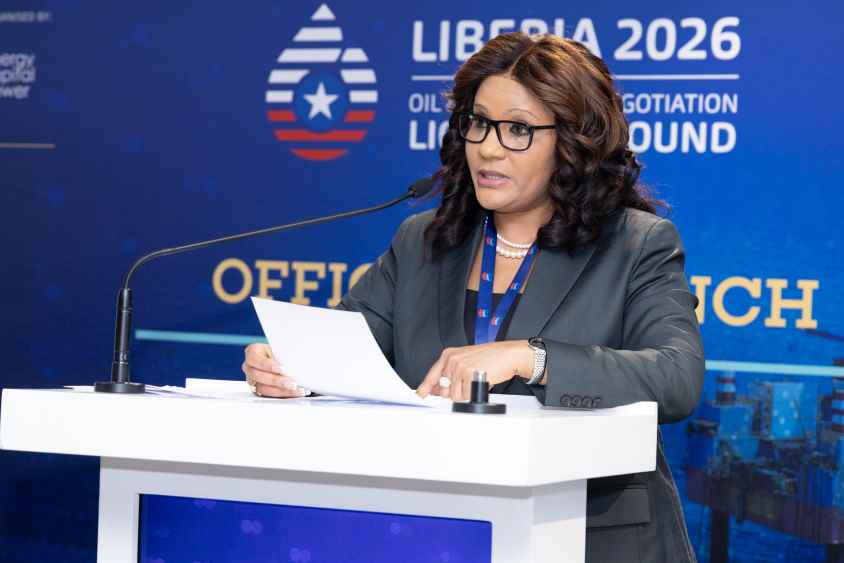
CAPE TOWN, South Africa, October 15, 2026/APO Group/ –Liberia has launched its 2026 Offshore Direct Negotiation Licensing Round, offering 15 offshore blocks across the Liberia and Harper basins as the country seeks to attract exploration investment and advance the development of its petroleum sector.


Announced on October 14 in Cape Town alongside African Energy Week 2026 and African Mining Week, the round was launched by the Liberia Petroleum Regulatory Authority (LPRA) and organized by Energy Capital & Power (ECP). The campaign invites qualified companies to pursue individual blocks through direct negotiations, with the licensing process closing on April 15, 2027.

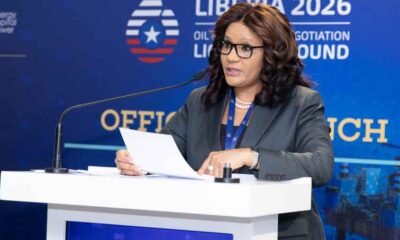
LPRA Director General Marilyn T. Logan called on investors to submit letters of intent and highlighted the potential for exploration success to shape Liberia’s petroleum industry.

“Our petroleum system works,” Logan said. “Whichever company makes the first discovery will play a significant role in the history of our country.”

15 Offshore Blocks Available for Negotiation

The licensing round comprises twelve blocks in the Liberia Basin – LB-1, LB-2, LB-3, LB-7, LB-12, LB-13, LB-14, LB-18, LB-19, LB-20, LB-21 and LB-23 – and three in the Harper Basin – LB-25, LB-28 and LB-33.

The acreage targets Cretaceous structures, deepwater basin-floor fans and structural closures along Liberia’s Atlantic margin. The offering provides investors with opportunities to evaluate frontier exploration prospects in a region with established petroleum system indicators and potential for further discoveries.

The round is supported by more than 80,000 km of seismic data, including over 50,000 line-km of 2D seismic and 31,000 km² of 3D surveys, alongside gravity, magnetic and well-log datasets.

Geophysical data company TGS has reprocessed 12,000 km of 2D seismic using Pre-Stack Depth Migration, as well as 5,100 km² of 3D seismic data, to improve subsurface imaging and support prospect evaluation.

“There’s a working petroleum system offshore Liberia,” said Jason Robinson, Managing Director at ENARJI and former Director of Business Development at TGS. “It’s been a prolific system across the margin and there are significant fan-plays that go out into the very deepwater.”

There’s a working petroleum system offshore Liberia

Direct Negotiations Offer Flexible Entry

Under the direct negotiation framework, qualified companies can pursue individual blocks and negotiate proposed exploration programs with the LPRA. Applicants must demonstrate technical capability, financial strength and relevant offshore experience.

The process is governed by Liberia’s 2014 Petroleum Exploration and Production Act and its 2019 amendments. The framework is designed to provide investors with a route to acreage access while maintaining qualification requirements and regulatory oversight.

Fiscal terms and regulatory predictability were highlighted as important considerations for prospective investors. LPRA Deputy Director General for Finance Robert Sonkarlay said the authority is prepared to accommodate changing market conditions and the needs of participating companies.

“Investors are not just looking to find attractive fiscal terms; they’re also looking for fiscal predictability,” Sonkarlay said. “We can assure that our terms are flexible and benchmarked. We will ensure that our terms adapt to changing markets and the needs of interested participants.”

LPRA Board Member Kau Dorilae also emphasized the importance of investor engagement and consistency in the country’s investment framework. She noted that prequalification remains valid for five years, allowing companies to establish eligibility before pursuing specific block opportunities.

Government Backs Offshore Exploration Campaign

Liberian President Joseph Nyuma Boakai reaffirmed the government’s support for the licensing round in a prerecorded address delivered during the launch.

“Today, I assure you that the journey you are about to begin with Liberia through the LPRA carries the full support of the Liberian government and is guided by principles that this administration is dedicated to stand for,” Boakai said.

Preparations for the campaign included an investor day in Houston on August 19, 2026, followed by the opening of prequalification on August 28. The campaign forms part of Liberia’s efforts to engage international exploration companies and attract investment into its offshore petroleum resources.

With 15 blocks available through direct negotiations, the 2026 licensing round provides a structured pathway for qualified companies to assess Liberia’s offshore potential and advance discussions on exploration opportunities.

For information on the licensing round and prequalification requirements, visit the LPRA’s official licensing round page (https://apo-opa.co/47kJzXe) or contact lpra2026submission@lpra.gov.lr.

Distributed by APO Group on behalf of Energy Capital & Power.


Continue Reading

Business

International Oil Companies (IOCs) Call for Regulatory Interventions to Streamline Upstream Investment in South Africa

Published

on

International Oil Companies

TotalEnergies has called for faster resolution of offshore licensing appeals as government outlines plans to unlock domestic resources and industry players push for regulatory certainty to accelerate upstream and downstream investment

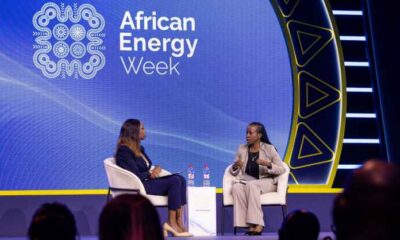
CAPE TOWN, South Africa, October 15, 2026/APO Group/ –International oil companies active in South Africa have called for government intervention to streamline regulations and address appeal-related licensing delays that continue to constrain investment in the country’s upstream sector. Speaking during a panel discussion sponsored by the South African National Petroleum Company (SANPC) at African Energy Week (AEW) 2026, industry leaders highlighted the need for predictable policy, infrastructure investment and faster project approvals to unlock South Africa’s petroleum potential.


Magali Pailhé, Managing Director of TotalEnergies EP South Africa, identified regulatory appeals as a major obstacle to offshore exploration, contrasting South Africa’s limited drilling activity with neighboring Namibia.

“Today, we have blocks offshore in the Orange Basin that TotalEnergies has proven in Namibia, but are blocked in various stages of appeal. We need to unblock these so the potential can be realized,” she said. “In Namibia, 25 wells have been drilled since 2022, while in South Africa, only three since 2014. The industry is here, but the appeals need to be addressed to allow investment to flow.”

TotalEnergies holds exploration interests across the Orange Deepwater Basin, Deep Western Orange Basin and Block 3B/4B. Pailhé emphasized that unlocking domestic oil and gas production could stimulate job creation, infrastructure development and industrial growth.

Responding to the broader investment challenge, Phumzile Mgcina, South Africa’s Deputy Minister of Mineral and Petroleum Resources, emphasized the government’s commitment to strengthening regulatory frameworks and converting resource discoveries into commercial production.

“We have the resources but have not yet converted enough of them into energy, economic opportunities and improved livelihoods. We need investment, infrastructure and policy incentives,” she stated, identifying SANPC as a key instrument for advancing petroleum development and energy security.

Policy is a non-negotiable and is absolutely required to unlock the investment needed in the downstream and fuels market

Godfrey Moagi, CEO of SANPC, outlined the company’s integrated strategy spanning upstream exploration, gas development, refining and distribution. He pointed to estimates of 27 billion barrels of crude resources and 260-300 trillion cubic feet of gas, alongside potential production of 1.3 million barrels per day, underscoring the scale of the country’s undeveloped resource base.

Downstream investment emerged as another priority as South Africa’s reliance on imported fuels continues to rise. According to the Central Energy Fund, imports now meet approximately 61% of domestic fuel demand, compared with 22% in 2019.

Funlola Abe Folukoya, Head of Trading & Origination at bp Southern Africa, highlighted the importance of infrastructure connecting coastal import terminals with inland markets, alongside consistent policy implementation.

“Policy is a non-negotiable and is absolutely required to unlock the investment needed in the downstream and fuels market,” she said, noting that implementation delays and regulatory misalignment continue to affect long-term investment decisions. bp recently secured a 25-year agreement covering operations at Durban’s Island View Terminal.

Bader Al Lamki, CEO of ADNOC Distribution, similarly called for transparent, investment-friendly policies that reflect changing market conditions. His remarks follow ADNOC Distribution’s agreement to acquire Shell Downstream South Africa in a transaction valued at approximately $1 billion, subject to regulatory approvals.

Anish Patel, South Africa Business Development Executive at ExxonMobil, warned that declining pipeline gas supplies from Mozambique and growing gas-to-power demand could significantly widen South Africa’s supply deficit. With national gas demand potentially more than tripling by 2050, he identified LNG imports as a critical solution.

ExxonMobil recently signed a heads of agreement with Zululand Energy Terminal to advance a proposed LNG import facility at Richards Bay, with Patel emphasizing that predictable policy frameworks are essential to securing investment.

Andrew Masuwa, Client Relations – Southern Africa at Afreximbank, closed the discussion by highlighting the bank’s $14 billion South Africa country program as an opportunity to mobilize financing for refining and infrastructure development. Citing refinery investments in Nigeria and Angola, he emphasized that South Africa has significant scope to rebuild domestic processing capacity and reduce import dependence.

Distributed by APO Group on behalf of African Energy Chamber.


Continue Reading

Business

Guinea Targets Five Alumina Refineries by 2030 as African Mining Nations Push Local Processing at African Mining Week (AMW)

Published

on

Guinea

The country has three alumina refineries under construction, while Uganda and Egypt are advancing regional mineral processing and logistics strategies to capture greater value from Africa’s resources

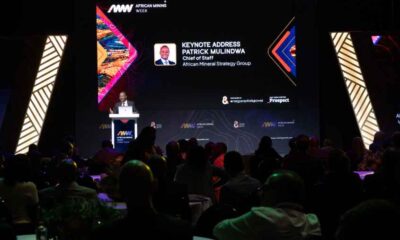
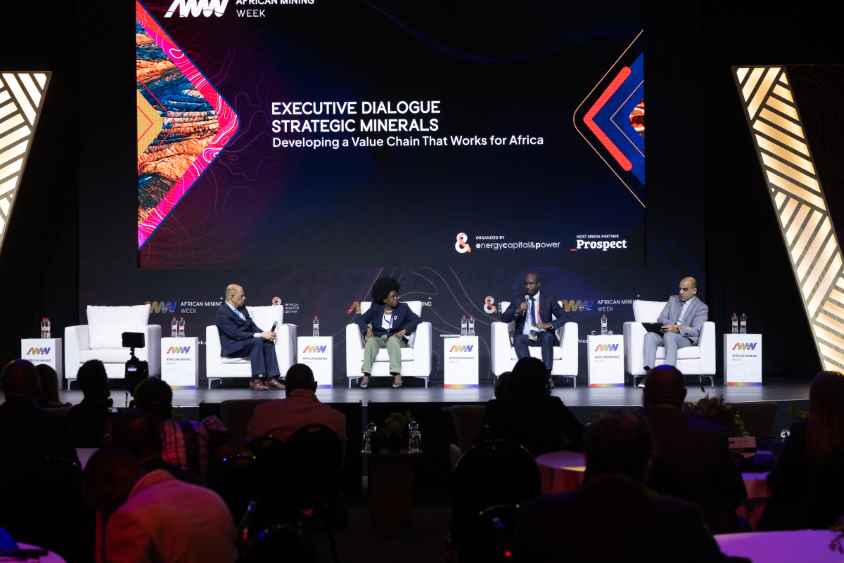
CAPE TOWN, South Africa, October 15, 2026/APO Group/ –Guinea-Conakry plans to have five operational alumina refineries by 2030, with three already under construction, Daouda Diakité, Senior Adviser to Guinea’s Minister of Mines and Geology, announced during a ministerial panel at African Mining Week (AMW) 2026 in Cape Town on Wednesday.


The target forms part of Guinea’s Simandou 2040 strategy, which aims to transform the country from a raw mineral exporter into a regional processing and industrial hub. Under the plan, Guinea is targeting between seven and eight million tons of annual alumina production capacity by 2030, alongside investments in steel manufacturing, power generation and downstream infrastructure.

“Simandou 2040 is a strategy to shift from being a raw material exporter to developing a strong processing base that can sustain the country’s downstream sector. To achieve this, we are encouraging investment in domestic aluminum and steel production, as well as power projects that can support downstream development.,” he stated.

The strategy seeks to leverage Guinea’s extensive bauxite and iron ore resources to establish domestic processing industries, creating new opportunities for investment in refining, industrial infrastructure and electricity supply.

Diakité said the country is also advancing plans for domestic steel production linked to the Simandou iron ore project, with feasibility work underway.

“The steel from Simandou has to be processed in Guinea, and we are finishing the feasibility study for that,” he added.

We are encouraging investment in domestic aluminum and steel production, as well as power projects that can support downstream development

Guinea is also working to operationalize a gold refinery, expanding its downstream ambitions beyond bauxite and iron ore.

Uganda is similarly positioning mineral processing as a driver of industrial growth and regional trade. Monica Musenero Masanza, Minister of Energy and Mineral Development, said the country is leveraging 10 gold refineries to provide processing services to neighboring East African markets.

“Rather than every nation enduring the high cost of building refineries, Uganda offers a regional solution. We allow our East African neighbors to bring gold in tax-free for toll processing, and because our operations run on excess renewable energy, the final product is truly green gold,” she stated.

Beyond gold, Uganda is expanding domestic processing capacity for tin, targeting 99.9% purity, while advancing iron ore and phosphate beneficiation to support infrastructure development and agriculture.

“Uganda’s rapid development requires massive amounts of steel and fertilizer. With 14 companies lined up to produce steel billets from local iron ore and active plans to process our phosphate reserves, we are adding value to our minerals directly to build our infrastructure and fuel our agricultural needs,” Masanza added.

Meanwhile, Egypt is positioning itself as a logistics and infrastructure partner for African mineral-producing countries, with plans to strengthen connections between mining operations, processing facilities and international markets.

Mohamed Zada, Deputy Minister for Strategic Industries, highlighted opportunities for cross-border investment in power generation, port infrastructure and mineral transport networks to support the continent’s expanding downstream sector.

“Egypt’s strategic location makes it a natural logistics hub. By partnering across the continent to build power plants and seaport infrastructure, we can optimize supply chains and bring Africa’s finished mineral products to global markets,” he stated.

The announcements at AMW 2026 highlight a growing emphasis on developing the refining, manufacturing and logistics infrastructure required to retain more mineral value within Africa, opening new investment opportunities across the continent’s mining value chain.

Distributed by APO Group on behalf of Energy Capital & Power.


Continue Reading

Trending